


5Feb10

Auteur Blitz

Television technology now ensures that you can see action on the football field from every possible vantage point, but you’ve never seen the Super Bowl from the fresh auteurist angles proposed in this delightful new short from Slate’s video site, SlateV.com. Written, produced, and edited by Andrew Bouvé, the video muses, “What would it look like if famous filmmakers ‘directed’ the Super Bowl?” The possibilities are endless, but the five directors imitated here are Quentin Tarantino (a visceral study of life in cartoon motion), David Lynch (think disembodied cackling and images running in reverse), Wes Anderson (yellow-tinged storybook flourish, set to the Kinks), Jean-Luc Godard (black-and-white, vaguely New Wave–y, starring . . . Kirk Douglas?), and, our favorite, Werner Herzog, whose Grizzly Man narration turns the sport into nature footage, with such commentary as “In all the faces of all the Bears I discover no kinship, no understanding, no mercy” and “What looks playful could be desperation.” Check it out, play by play, below.

Film_408w_breathless_w160

Breathless

Jean-Luc Godard

1960

90 min

Black and White

1.33:1

Burdenofdreams_w160

Burden of Dreams

Les Blank

1982

95 min

Color

1.33:1

5 Comments

5Feb10

Robert Altman: The Oral Biography BY DAVID STERRITT

Robert Altman: The Oral Biography (Knopf) begins with an epigram that pretty well sums up Altman’s attitude toward “truth” and “realism” in cinema and life. “I don’t think anybody remembers the truth, the facts,” the great filmmaker said. “You remember impressions.”

That describes Mitchell Zuckoff’s book, as well. He wanted to write an authorized biography, but Altman would consent only to a series of recorded interviews that Zuckoff could use to produce a sort of assisted Altman memoir—an incomplete memoir, since Altman insisted on leaving his private life out of the picture. Zuckoff soon realized it was impossible to separate the personal and the professional, in this case above all others. “I don’t direct, I watch,” Altman said near the end of his life. “[T]he real reward [of filmmaking] is the process of doing it and the people that you do it with.” Zuckoff also saw how false it would be to force Altman’s zigzagging career into a linear narrative. “Stories don’t interest me,” Altman remarked more than once.  

Film_230w_3women_w160

3 Women

Robert Altman

1977

124 min

Color

2.35:1

Shortcuts_w160

Short Cuts

Robert Altman

1993

187 min

Color

2.35:1

0 Comments

4Feb10

A Decade in Review

Pedro Costa's COLOSSAL YOUTH

For the past couple of months, critics and movie lovers have been madly assessing the first decade of film of the twenty-first century, offering lists of its best movies—and we’re happy to report that many of Criterion’s contemporary titles have been making the cut. Sight & Sound is the latest to join in the celebration, with a best-of-the-decade retrospective in its new February issue. Editor Nick James introduces the list—determined collaboratively by the S&S editorial team—by considering “the directors, the countries, the trends and technological changes that are shaping the new global cinema.” The final lineup of thirty films, featured along with excerpts of pieces on them from the magazine’s archives, includes the Criterion releases Colossal Youth (“Surely destined to have a resounding influence on the future of European independent filmmaking,” writes Jonathan Romney), In the Mood for Love (which Amy Taubin calls “exquisite, fragile”), and Yi Yi (Tony Rayns: “No narrative outline can hope to convey anything of the novelistic density of character and incident in Edward Yang’s wonderful film, or the richness”).

Wide-ranging decade wrap-up polls have also recently appeared in Film Comment (which mentioned, in addition to those above, The Royal Tenenbaums, In Vanda’s Room, Summer Hours, and Fat Girl) and on indieWIRE.com (vote-getters there also included A Christmas Tale, Hunger, George Washington, Ratcatcher, and Traffic). Meanwhile, the Cinematheque Ontario is holding an ongoing film series titled The Best of the Decade: An Alternative View. As chief curator James Quandt explains on the Cinematheque’s site, to arrive at the final program, “we surveyed a deluxe panel of over sixty film curators, historians, archivists, and programmers.” Unsurprisingly, these selections include In the Mood for Love, Colossal Youth, In Vanda’s Room, and Yi Yi. The series runs through February 23.

Film_147w_inmoodlove_w160

In the Mood for Love

Wong Kar-wai

2000

98 min

Color

1.66:1

Film_339w_yiyi_w160

Yi Yi

Edward Yang

2000

173 min

Color

1.85:1

Cy_filmw_colossalyouth_w160

Colossal Youth

Pedro Costa

2006

156 min

Color & Black and White

1.33:1

2 Comments

3Feb10

J. D. Salinger, Movie Lover

In the wake of J. D. Salinger’s death last week, at age ninety-one, appreciations of the reclusive Catcher in the Rye author will undoubtedly be sprouting up for quite some time. A new remembrance from Lillian Ross, in the New Yorker’s “Talk of the Town,” is a particularly personal take, full of small, rich details only a friend would be able to relate. One point that caught our eye was this: “Salinger loved movies, and he was more fun than anyone to discuss them with.” Not a surprise, perhaps, but we were tickled by the fact that he had fondnesses for Anne Bancroft, Brigitte Bardot (“a cute, talented, lost enfante”), and Grand Illusion, which he said he had seen ten times. Another highlight in Ross’s lovely little piece: a quote from a letter in which Salinger tells her that he took his kids to a showing of Robinson Crusoe at London’s Palladium theater, mainly because “that’s where the last scene of The 39 Steps was set.”

Film_56_39steps_w160

The 39 Steps

Alfred Hitchcock

1935

86 min

1.33:1

P_w160

Grand Illusion

Jean Renoir

1937

114 min

Black and White

1.33:1

0 Comments

2Feb10

Out of Print Sale

Dear Criterion collectors,

Our three least favorite initials: OOP. Since we launched the Criterion Collection more than twenty-five years ago, we’ve endeavored to keep everything we’ve published in print. But despite our efforts to renew rights, we are losing a large group of titles from StudioCanal at the end of March, and we wanted to give you advance notice that our editions will be going out of print. Until we’re out of stock, we will be offering these titles at an additional $5 off on our website. The titles are going to Lionsgate, and we don’t know when they may be rereleased. As ever, we will continue to try to relicense the films so that they can rejoin the collection sometime in the future.  

27 Comments

1Feb10

Press Notes: Roberto Rossellini’s War Trilogy

The critics agree that Criterion’s release of Roberto Rossellini’s War Trilogy, featuring major restorations of the unassailable landmarks of Italian cinema Rome Open City, Paisan, and Germany Year Zero, is something of a landmark itself. As Dave Kehr reminds us in his New York Times review of the collection, these are films “that helped to lay the foundations of modern cinema,” and “for decades now it’s been impossible to see Rossellini’s War Trilogy, as the films have come to be called, in any kind of decent condition . . . Which is why I’m feeling particularly grateful to the Criterion Collection for its newest release.”

GQ’s Tom Carson is similarly appreciative: “Roberto Rossellini’s War Trilogy is the most thrilling DVD release I expect to write up in 2010 . . . Rediscovering how great they really are is a welcome shock. In movie terms, this was where the second half of the twentieth century began.” Also mightily impressed is DVD Beaver’s Gary Tooze, who writes, “I feel Criterion’s 500th spine number, Roberto Rossellini’s War Trilogy, is one of their most important releases . . . ever.” Tooze notes that this “may very well be the best these three films have looked for over fifty years,” and finishes his review by saying, “This has our highest recommendation as one of Criterion’s greatest releases.” And this just in, from the Los Angeles Times’ Sam Adams.

Film_497w_romeopencity_w160

Rome Open City

Roberto Rossellini

1945

100 min

Black and White

1.37:1

Film_498w_paisan_w160

Paisan

Roberto Rossellini

1946

120 min

Black and White

1.33:1

Film_499w_germanyyearzero_w160

Germany Year Zero

Roberto Rossellini

1948

71 min

Black and White

1.33:1

4 Comments

27Jan10

Press Notes: Chantal Akerman in the Seventies

Fans of our release of Jeanne Dielman, 23, quai du Commerce, 1080 Bruxelles last year can get a healthy second dose of Chantal Akerman with our new Eclipse Series 19: Chantal Akerman in the Seventies, which features five groundbreaking works that came out in the years just before and just after that domestic-space masterpiece, including News from Home, Je tu il elle, and Les rendez-vous d’Anna. It’s an “inarguably vital Eclipse box set,” trumpets GreenCine’s Aaron Hillis as a prelude to his new podcast interview with Akerman. The brilliant Belgian filmmaker also turns up in an interview for Moving Image Source with Melissa Anderson, who writes, “Thanks to Chantal Akerman in the Seventies, viewers can finally see the other vital, rarely screened films that the director made during that groundbreaking decade of her career.”

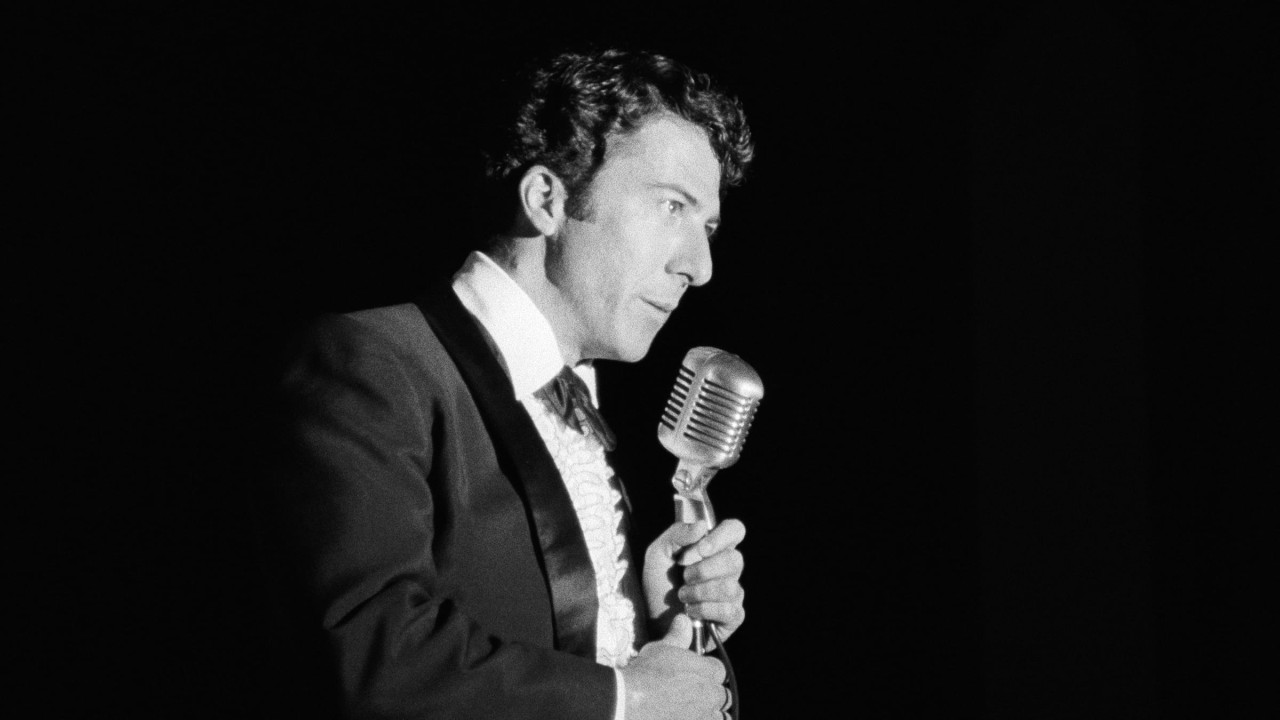
In the Los Angeles Times, Dennis Lim praises the films in the box set as “sensual and severe in equal measure, notable both for their formal rigor and their emotional intensity,” before proclaiming Akerman’s News from Home “one of the all-time great New York movies.” And we’ll leave the last word to Gay City NewsSteve Erickson, who says, simply, “No one else made films like hers.”

More from the Onion’s A.V. Club.

4FEB10: Praise from the New York Times’ Dave Kehr.

Film_akerman_chambre_w160

La chambre

Chantal Akerman

1972

11 min

Color

1.33:1

Film_akerman_hotel_w160

Hotel Monterey

Chantal Akerman

1972

62 min

Color

1.33:1

Film_akerman_jetuilelle_w160

Je tu il elle

Chantal Akerman

1975

86 min

Black and White

1.33:1

Film_akerman_news_w160

News from Home

Chantal Akerman

1976

85 min

Color

1.33:1

Film_akerman_anna_w160

Les rendez-vous d'Anna

Chantal Akerman

1978

127 min

Color

1.66:1

1 Comments

27Jan10

Like Flying Blind Without Instruments:
On the Turning Point in Paris, Texas
BY WIM WENDERS

This piece first appeared in the 1991 Wim Wenders collection The Logic of Images: Essays and Conversation (Faber and Faber), translated by Michael Hofmann.

The story’s about a man who turns up somewhere in the desert out of nowhere and returns to civilization. Prior to filming, we drove the length of the entire U.S.–Mexican border—more than 1,500 miles. Finally, we decided to shoot in an area called Big Bend, in the southwest of Texas. Big Bend is a national park with incredibly beautiful mountains, through which the Rio Grande flows. That’s the river the “wetbacks” have to swim. As it turned out, we didn’t film there, because when we were looking over the area again from above, in a helicopter, the old pilot, a local guy, told us there was an area a little way off called the Devil’s Graveyard. This godforsaken patch of ground wasn’t even entered on our maps, and it turned out to be a gigantic, abstract dream landscape. There are no police, and most of the immigrants who swim across there just die in the desert because there’s not a drop of water anywhere in it. So that’s where we started our film; that’s where we see Travis for the first time. After he collapses with exhaustion, he’s picked up by his brother. The first place they go is a little hamlet of about twenty houses called Marathon. It has a hotel, where Walt drops Travis, and goes off to buy him some new clothes. But when Walt gets back, his brother has taken off again. The next, slightly bigger, place that Walt and Travis pass through on their way from Texas to Los Angeles is Fort Stanton, a town with a couple of thousand inhabitants. We tried to arrange the film in such a way that all sizes and types of American towns appear in it.  

Film_501w_paristexas_w160

Paris, Texas

Wim Wenders

1984

147 min

Color

1.78:1

1 Comments

27Jan10

Paris, Texas:
On the Road Again
BY NICK RODDICK

I have been going to press screenings at the Cannes Film Festival for more than twenty-five years, but only twice have I been absolutely sure—blindingly, heart-racingly certain—that I have just seen the future winner of the Palme d’Or. Cannes is a distorting lens that can give an undeserved boost to an ambitious but flawed film, just as it can smother a smaller or more conservative one. But on those occasions, there was no room for doubt; it was like falling in love.

My first such love affair was with Paris, Texas, shown in 1984 (the second was with Emir Kusturica’s Underground, a decade later). The festival jury, which that year included the veteran cinematographer Henri Alekan, who would go on to shoot Wings of Desire for Wim Wenders, duly awarded it the Palme d’Or; it even garnered the affection of a far more persnickety group, winning the International Critics Prize. The awards were all the more surprising in that the film is an unabashed love letter to America, coming halfway through the Reagan era, when Europe in general, and filmmakers in particular, were anything but pro-American. Of course, one might argue that Paris, Texas is in love with a certain idea of America. But in truth, Wenders would probably not have concerned himself with that distinction: the personal always trumps the political in his films.  

Film_501w_paristexas_w160

Paris, Texas

Wim Wenders

1984

147 min

Color

1.78:1

0 Comments

26Jan10

By George: An Interview with
Project Shaw’s David Staller

David Staller

Today, most people’s knowledge of George Bernard Shaw doesn’t extend much further than his classic comedy Pygmalion. But the legendary playwright and theater critic (1856–1950) wrote more than sixty plays. In February, we at the Criterion Collection will do our part to bring some of these works back to the public consciousness with the release of the Eclipse series George Bernard Shaw on Film, featuring three adaptations of Shaw plays: Major Barbara, Caesar and Cleopatra, and Androcles and the Lion, all graced with the author’s superior wit.

We’re not the only ones touting Shaw these days: for the past four years, actor, playwright, and Shaw aficionado David Staller has been working tirelessly to ensure that the writer’s enormous achievements aren’t forgotten. In 2006, with his theater company, the Gingold Theatrical Group, he began Project Shaw, which consisted of monthly public readings of every Shaw play, featuring major actors and held at the Players Club on Gramercy Park South in New York. The group finally finished the series in December 2009, and is kicking off a new Shaw season this week, featuring a selection of the most requested titles (first up: 1894’s Arms and the Man). I had a conversation with Staller about Shaw’s legacy, what his work can mean to readers and viewers today, and how he used cinema to get his message to a wider audience.—Michael Koresky  

Shaw_box_film_majorb_w160

Major Barbara

Gabriel Pascal

1941

131 min

Black and White

1.33:1

Shaw_box_film_caesar_w160

Caesar and Cleopatra

Gabriel Pascal

1945

138 min

Color

1.33:1

Shaw_box_film_andronocles_w160

Androcles and the Lion

Chester Erskine

1952

98 min

Black and White

1.33:1

1 Comments

2010 01 02 03 04 05 06 07 08 09 10 11 12

2009 01 02 03 04 05 06 07 08 09 10 11 12

2008 01 02 03 04 05 06 07 08 09 10 11 12

2007 01 02 03 04 05 06 07 08 09 10 11 12

2006 01 02 03 04 05 06 07 08 09 10 11 12

2005 01 02 03 04 05 06 07 08 09 10 11 12

2004 01 02 03 04 05 06 07 08 09 10 11 12

2003 01 02 03 04 05 06 07 08 09 10 11 12

2002 01 02 03 04 05 06 07 08 09 10 11 12

2001 01 02 03 04 05 06 07 08 09 10 11 12

2000 01 02 03 04 05 06 07 08 09 10 11 12

1999 01 02 03 04 05 06 07 08 09 10 11 12

1998 01 02 03 04 05 06 07 08 09 10 11 12

1997 01 02 03 04 05 06 07 08 09 10 11 12

1996 01 02 03 04 05 06 07 08 09 10 11 12

1995 01 02 03 04 05 06 07 08 09 10 11 12

1994 01 02 03 04 05 06 07 08 09 10 11 12

1993 01 02 03 04 05 06 07 08 09 10 11 12

1992 01 02 03 04 05 06 07 08 09 10 11 12

1991 01 02 03 04 05 06 07 08 09 10 11 12

1990 01 02 03 04 05 06 07 08 09 10 11 12

1989 01 02 03 04 05 06 07 08 09 10 11 12

1988 01 02 03 04 05 06 07 08 09 10 11 12

1987 01 02 03 04 05 06 07 08 09 10 11 12

1986 01 02 03 04 05 06 07 08 09 10 11 12

1985 01 02 03 04 05 06 07 08 09 10 11 12

1984 01 02 03 04 05 06 07 08 09 10 11 12