Stanley Kwan: Ladies Man
Share
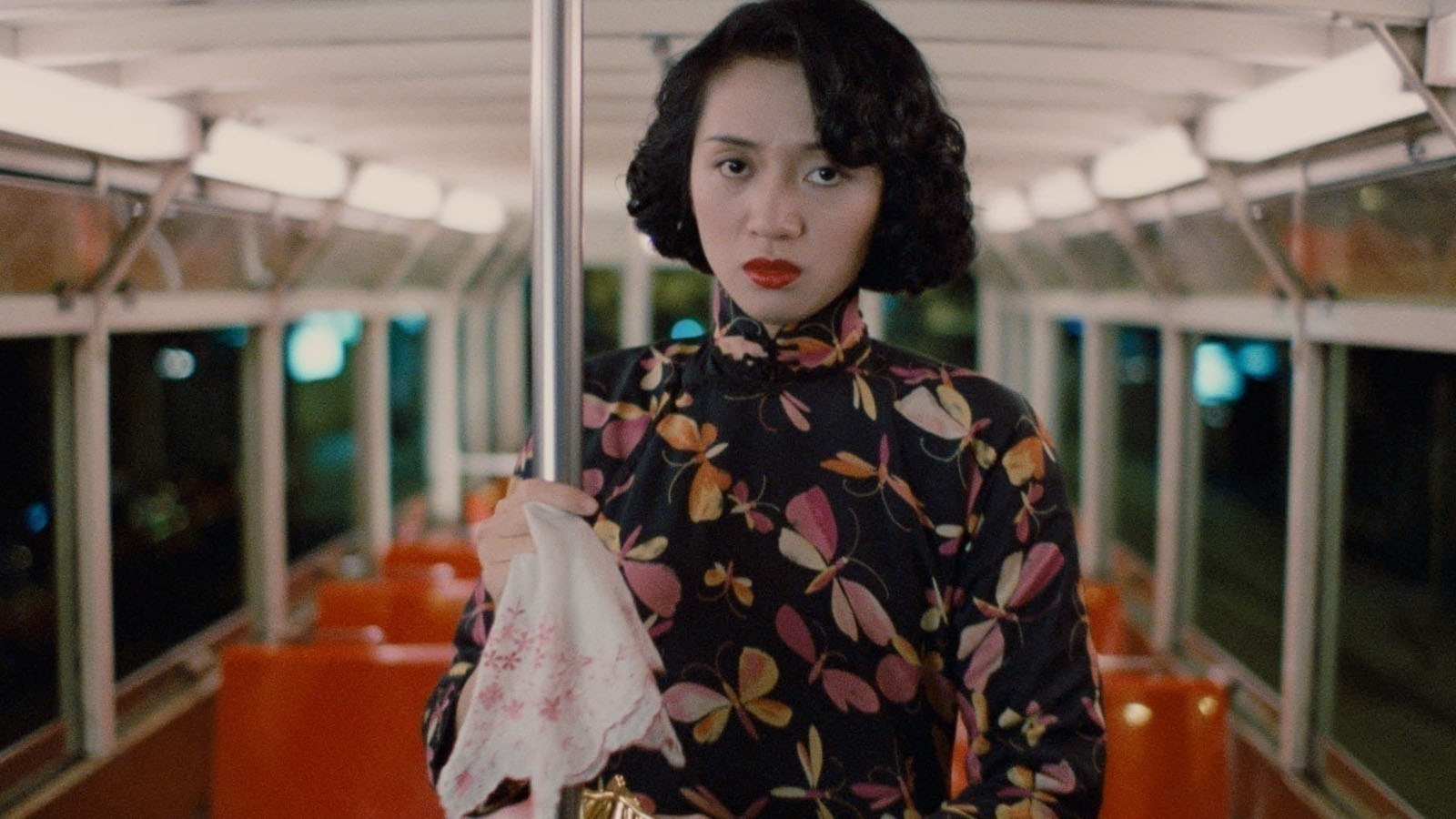
Cora Miao and Chow Yun-Fat star in Stanley Kwan’s first feature, Women (1985), as a married couple who separate after she discovers that he’s been having an affair with a younger woman. “Will there be more like her?” she asks. And he responds by etching out characters on an early-model computer monitor: “I swear you are my only beloved wife!”
Writing about this scene for Notebook, Saffron Maeve observes that “this bleak digital poem evokes the director’s ongoing preoccupations with networks of urban Chinese women and the men who disappoint them. Women has a loose kinship with Clare Boothe Luce’s 1936 play, The Women, which also surveys infidelity and divorce within a framework where men exist only abstractly. Luce omits male characters entirely, while Kwan allows men to roam this story as losers and liars.”
On Thursday, Women will open Stanley Kwan: Ladies Man, a seven-film retrospective that Asia Society will present in New York through Sunday. Programmer Inney Prakash points out that Kwan has attributed his affinity for “engaging, multi-dimensional female characters” to growing up under “the dominant influence of his mother and sisters.”
At home, we should add, because, as Aliza Ma has noted, it was with his father that Kwan went to the movies when he was a child. Starting out as an actor, Kwan was eventually drawn to the action behind the camera, becoming a script supervisor and assistant director and “working with Hong Kong New Wave titans such as Patrick Tam (Nomad, 1982) and Ann Hui (Boat People, 1982). He soon became one of the most trusted and sought-after collaborators among important directors of Hong Kong cinema’s golden era.”
On Friday, critic Phoebe Chen will introduce Love Unto Waste (1986), featuring Tony Leung Chiu-wai, in one of his earliest starring roles, as a playboy who has been hanging out with three women friends when one of them is found dead. Chow Yun-fat plays the inspector called on to unravel the mystery and the complex network of relationships within this tight cluster.
Kwan is “one of the cinema’s truest romantics,” writes Dennis Lim. “In Rouge [1987], his third feature, and in later films including Center Stage (1991) and Red Rose White Rose (1994), Kwan does not merely tell stories of the lovestruck and the heartsick; he translates their overflowing emotions into an expressive language of desire, characterized by sinuous camera moves and patterned light and shadow.”
“Queen of Cantopop” Anita Mui Yim-fong and Leslie Cheung Kwok-wing, regarded as one of the foundational performers in the genre, star in Rouge as doomed lovers in 1930s Hong Kong. They enter a suicide pact, but only she goes through with it. Fifty years later, she reemerges as a ghost and asks a couple of journalists (Alex Man Chi-leung and Emily Chu Bo-yee) to help her find the man she left behind when she went “below.”
The plots of Kwan’s films are “conundrums of desire, infatuation, boredom, and disillusionment, invariably founded on questions about the strength and durability of emotional commitments,” wrote Tony Rayns in a 1990 assessment of “a burgeoning filmography not unworthy of a latter-day George Cukor or a less cynical Fassbinder.” Writing for Film Bulletin, Rayns noted that Full Moon in New York (1989) “sustains a ‘political’ reading as a commentary on the relationship between China, Taiwan, and Hong Kong while charting the development of a friendship between three Chinese women in Manhattan.”
Those women are played by Maggie Cheung, Sylvia Chang, and Siqin Gaowa, and in Center Stage, Cheung plays Ruan Lingyu, one of the great stars of Chinese cinema in the silent era. Center Stage focuses on the early 1930s, when Ruan’s career was peaking while her private life was in turmoil. She was only twenty-four when she killed herself in 1935. Kwan breaks the gorgeous spell cast by his conjuring of the period with passages in which he and Cheung discuss their approach to reenacting the professional and personal turns in a tragic life.
“Few biopics have so eloquently interrogated the very foundations of the genre,” wrote Andrew Chan a few years ago for 4Columns: “our desire for intimacy with the stars and our sense of being entitled to knowledge of their personal lives. Even as the preproduction conversations between Kwan and his cast take the form of studious research, they still revolve around the paraphernalia of a gossip industry that capitalizes on those same appetites—inert artifacts and secondhand accounts that turn Ruan into a mannequin of history. Just as unnerving is how Center Stage evokes the loneliness of the performer, who is forever caught between the emotional transparency her art demands and the privacy she requires to protect those emotions.”
Filmmaker Isabel Sandoval (Lingua Franca, Moonglow) will introduce Sunday’s screening of Red Rose White Rose (1994), a film that Variety’s Derek Elley found to be Kwan’s “most emotionally resonant and deeply realized work since his name-making Rouge.” Winston Chao stars in the adaptation of Eileen Chang’s novella as a man returning to 1930s Shanghai from Europe, sparking up an affair with one woman (Joan Chen)—whom he thinks of as his “red rose”—before marrying another, his “white rose” (Veronica Yip). Writing for Time Out, Tony Rayns noted that Christopher Doyle’s “hallucinatory cinematography accentuates the plot’s twists of the knife.”
The series will wrap on Sunday with Lan Yu (2001), introduced by Andrew Chan. Released five years after Kwan came out in his documentary Yang ± Yin: Gender in Chinese Cinema and shot secretly in Beijing, Lan Yu is a melodrama based on a wildly popular novel published anonymously on the internet in the late 1990s. The film opens with businessman Chen Handong (Hu Jun) thinking back to the 1980s “and to the night he met young architecture student Lan Yu (Liu Ye), freshly arrived in Beijing from the country and ripe for mentoring and more,” as Ryan Gilbey wrote in the Guardian in 2023. “The older man warns his toy boy not to get attached. ‘When two people know each other too well, it’s time to separate,’ he says—then signally fails to heed his own advice.”
Don’t miss out on your Daily briefing! Subscribe to the RSS feed.