

1Sep10

BFI Scores with Nino Rota Retro

Starting today at London’s BFI Southbank, the legendary Italian composer Nino Rota will be honored with a monthlong retrospective of films that feature his magisterial music. Rota is probably best known for his collaborations with Federico Fellini on such films as Amarcord, 8½, and La dolce vita and for his iconic melodies for Francis Ford Coppola’s The Godfather, but his sensational scores have also buoyed the work of Franco Rosi, Franco Zefferelli, Edward Dmytryk, and Luchino Visconti. It’s the latter’s The Leopard that this short video piece from the BBC waxes most lyrical over, and it’s worth a look—and a listen.


8½

Federico Fellini

1963

138 min

Black and White

1.85:1

The Leopard

The Leopard

Luchino Visconti

1963

185 min

Color

2.21:1

Amarcord

Amarcord

Federico Fellini

1974

123 min

Color

1.85:1

Categories: News

0 Comments

1Sep10

Criterion Caption Contest

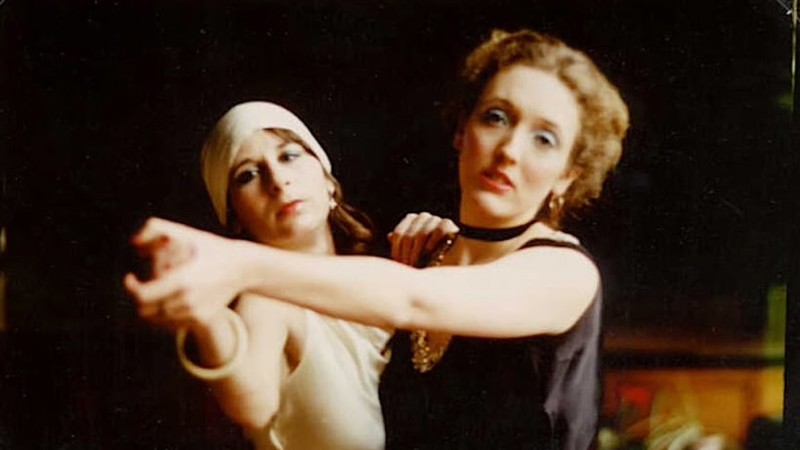
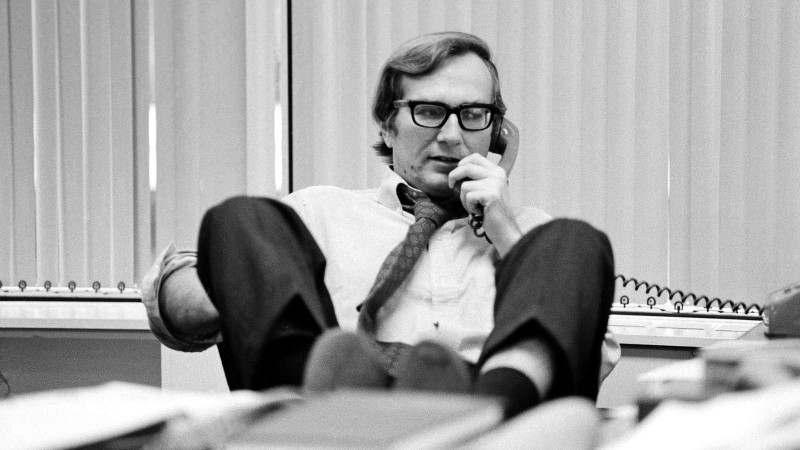
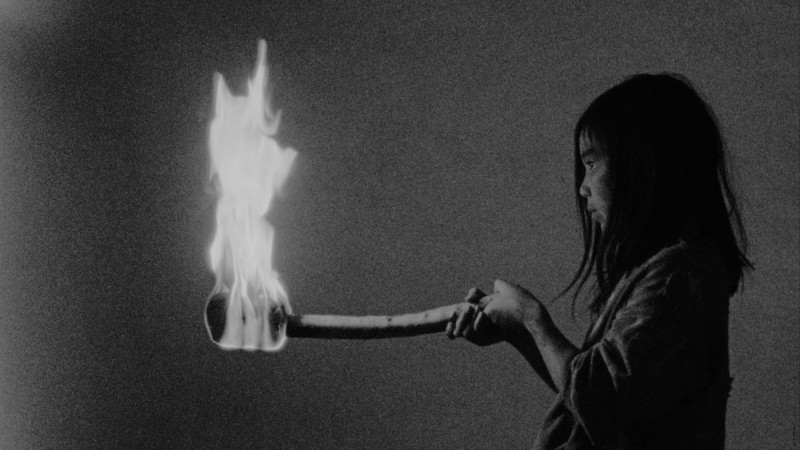
Feeling pithy? Give us a hand in creating brief taglines for the ads below for upcoming Criterion releases (and see examples of what we’re looking for in the slide show). Come up with as many or as few lines as you’d like, leave them in the comments, and we’ll choose our favorites. Winners will receive a single- or double-disc DVD/Blu-ray of their choice.

Examples:


.

  Read more Icon_readmore

Categories: Contests

512 Comments

31Aug10

Press Notes: L’enfance nue

In a review for the Los Angeles Times, Dennis Lim provides some context for the work of Maurice Pialat, whose first film, L’enfance nue, is out on Criterion DVD: “Recognized in France as one of the major filmmakers of the second half of the twentieth century, Pialat (1925–2003) belonged to the same generation as Jean-Luc Godard, Eric Rohmer, and the other leading figures of the French New Wave.” Lim goes on to call the feature debut of this chronicler of the lives of wayward, fragmented people “one of the most moving films about childhood ever made” and “one of the most tough-minded . . . It establishes the searching sensibility that would characterize Pialat’s cinema, bruisingly alive and fully in the moment.”

Slant’s Fernando Croce also deems L’enfance nue to be the brilliant herald of a great career, plus makes a intriguing connection to another Criterion release: “Maurice Pialat’s piercing first feature introduces the Gallic master’s mix of laceration and delicacy . . . The film is remarkable for its vivid, uncondescending snapshots of working-class life and, in its loving observation of Marie-Louise and René Thierry (real-life foster parents more or less playing themselves), the fullest portrait of an elderly couple since McCarey’s Make Way for Tomorrow. DVD Town’s Christopher Long is even more unstinting in his praise, exclaiming “This is a fantastic film. L’enfance nue deserves to be considered one of the great debut features of the last half century, a thunderbolt heralding the arrival of a distinctive visionary. Damn it, I can’t resist saying it: L’enfance nue is a masterpiece.”

More praise from DVD Talk.

1937

92 min

Black and White

1.33:1

L’enfance nue

L’enfance nue

Maurice Pialat

1968

83 min

Color

1.66:1

Categories: Press Notes

0 Comments

30Aug10

N+1 Plus Film

The arts/culture/politics journal n+1 has launched a new online film supplement, N1 FR, which it tantalizingly proposes to “publish semi-regularly, although we’re not sure yet what semi-regularly means in this case.” The wide-ranging and thoughtful inaugural installment contains some great pieces. In one of them, Criterion contributor Chris Fujiwara grapples with the idea of what contemporary cinema is (“Classical narrative filmmaking has become impossible. Contemporary mainstream Hollywood cinema merely confirms this proposition with its endless remakes, sequels, sequels to remakes, and remakes of sequels, its grand-scale repetition-compulsion machine,” and “If the outstanding films are never all visible at the same time until the window of their contemporaneity has closed, it means they are truly contemporary only for a small group of people—critics, programmers, and distributors.”). Fujiwara also gives a shout-out to Olivier Assayas’s Summer Hoursas an example of a new kind of collaboration between museums and film—and another to Robert Bresson, as an archetype of the filmmaker who is both timeless and contemporary.

Other Criterion-related highlights from the issue: Christine Smallwood reports on the experience of watching Jeanne Dielman, 23, quai du Commerce, 1080 Bruxelles by the light of her texting neighbor’s cell phone (as prelude to a marvelous piece on Claire Denis and the happy impossibility of total escape into a movie), and Jeanette Samyn and Jonathon Kyle Sturgeon hold forth on the epistolary nature of the work of Pedro Costa, with a nod to the title of our box set Letters from Fontainhas: Three Films by Pedro Costa.

Categories: Clippings

1 Comments

27Aug10

Friday Repertory Roundup

Lucky West Coasters can swoon to Rock Hudson on the big screen this coming week. Two magnificent melodramas from Douglas Sirk, All That Heaven Allows and Written on the Wind, will be splashed across screens at, respectively, Seattle’s Metro Landmark Theatre and San Francisco’s Castro Theater, both on Wednesday, September 1.

They’re just two of a handful of eye-popping color classics available from Criterion that will be playing theatrically over the next seven days. Moviegoers in Paris and London hankering for vivid Technicolor are in luck: the Cinémathèque française in Paris screens the sparkling comedy Heaven Can Wait on August 29 as part of a continuing Ernst Lubitsch series; the BFI Southbank in London will be showing a new digital restoration of Visconti’s lustrous The Leopard (pictured), starting August 27 and running all the way through September 29; then, as part of its Deborah Kerr retrospective, BFI will also present Powell and Pressburger’s dazzling tongue-in-cheek epic The Life and Death of Colonel Blimp on September 1. Read more Icon_readmore

Categories: Screenings

1 Comments

25Aug10

Still Kubrick

Long before Stanley Kubrick was Stanley Kubrick!, he was a young photographer for Look magazine, snapping for the publication starting at age seventeen. A collection of two hundred pictures that Kubrick took between 1945 and 1950 will be on view in Venice as part of the exhibition Stanley Kubrick Fotografo. Curated by Rainer Crone, the show, opening at the Instituto Veneto on August 28 and running through November 14, is the first of its kind, spotlighting a previously largely unstudied aspect of Kubrick’s life and career. Click here for more info—and to see a few beautiful black-and-white shots.

Paths of Glory

Paths of Glory

Stanley Kubrick

1957

88 min

Black and White

1.66:1

Spartacus

Spartacus

Stanley Kubrick

1960

196 min

Color

2.35:1

Categories: News

6 Comments

24Aug10

The Docks of New York: On the Waterfront By Luc Sante

The Docks of New York is one of those orphaned silents, released in 1928, the very end of the era. Apparently, it was previewed the same week as Al Jolson’s The Singing Fool, his first “all-talking” picture, the follow-up to The Jazz Singer and the highest-grossing film of the year. While The Singing Fool enjoyed an exclusive New York premiere, with eleven-dollar orchestra seats and special souvenir tickets, The Docks of New York wasn’t so much as mentioned by the New York Times until two years later, and then by the paper’s Paris correspondent, when it and von Sternberg’s Underworld were all the rage over there. It never became the rage over here.

But if 1928 was the end of the silent era, it was also its apex. It was the year of Buster Keaton’s The Cameraman and Steamboat Bill, Jr., Chaplin’s The Circus, Victor Sjöström’s The Wind, Dreyer’s The Passion of Joan of Arc, Fritz Lang’s Spies, Dovzhenko’s Arsenal, Eisenstein’s October, Marcel L’Herbier’s L’argent, Tod Browning’s West of Zanzibar, Frank Borzage’s Street Angel, von Stroheim’s Queen Kelly and The Wedding March, King Vidor’s The Crowd and Show People, and Jean Epstein’s The Fall of the House of Usher, among others. Some of these films managed to be hits in the face of the tide of technological change, while others took decades to be recognized as classics, but all of them are distinguished by a common mastery of form, a confidence and sophistication about the medium, a plateau of achievement from which there was seemingly nowhere to go but sideways.

The Docks of New York is one of those that became famous by accumulated rumor over the years—famous being a relative term, since it came to be considered von Sternberg’s best film in some quarters, while most people still had no idea he had made any pictures before The Blue Angel (1930). In fact, he had made nine movies by then, eight silents and one sound picture, although four of the silents are now lost, including the one that immediately preceded The Docks of New York, a gangster picture called The Drag Net (1928), and the one that immediately followed it, his last silent, The Case of Lena Smith (1929), of which all we have are a brief fragment, a few tantalizing stills, and the suggestion that it in some way derived from the director’s memories of his early childhood in Vienna. Another lost film is The Sea Gull (1926), also known as A Woman of the Sea, which is lost, it is rumored, because Chaplin, who commissioned it for his former paramour Edna Purviance, disliked it and destroyed the negative. The Docks of New York was, in its time, the least successful of the four silents that survive, and also the most personal. For all their idiosyncrasies, Underworld and The Last Command both drew substantial audiences, the first for its ripped-from-the-headlines curiosity value, the latter for Emil Jannings and the nostalgia for prewar grandeur and epaulets then in vogue. The Docks of New York was not lacking in mass appeal, but it was a trifle late, as well as, perhaps, a touch more poetic than the crowds were willing to countenance. Read more Icon_readmore

The Docks of New York

The Docks of New York

Josef von Sternberg

1928

75 min

Black and White

1.33:1

Categories: Film Essays

1 Comments

24Aug10

The Last Command: Illusions and Delusions By Anton Kaes

Josef von Sternberg’s The Last Command (1928) was first and foremost a star vehicle for Emil Jannings, the internationally known, Swiss-born actor, who had left Germany in October 1926 to work for Paramount Pictures. During his two and a half years in Hollywood, Jannings made seven films, six of which are considered lost except for small fragments and a trailer. The only one that fully survives is The Last Command, his second American feature, which premiered in January 1928, about half a year after his Hollywood debut, The Way of All Flesh (directed by Victor Fleming). His performances in these two works earned him the first-ever Academy Award for best actor, in 1929.

While von Sternberg was still relatively unknown in 1928—The Last Command was only his second major film (after Underworld, 1927)—Jannings, ten years older, had already starred in fifty German films. These included such melodramas as Ernst Lubitsch’s Passion (1919, a.k.a. Madame DuBarry), F. W. Murnau’s The Last Laugh (1924), and E. A. Dupont’s Variety (1925), all of which were widely seen and admired in the United States. The Last Command, like these earlier films, tells the story of the downfall and humiliation of a despotic man, and Jannings again fills the role with the theatrical intensity he learned in his years of expressionist stage acting at Max Reinhardt’s Deutsches Theater in Berlin. What counted in that mode of performance was not realism but visual impact, projecting the inner world onto the outer in abstracted, stylized, and distorted ways that expressed the essence of a character’s state of mind, and a broad subjectivity that saw the world (at the time wracked with war and revolution) as fragmented and disjointed. In his German films, when abject suffering grips his oversize body, Jannings personifies debasement and degradation. Von Sternberg seems to have been fascinated by Jannings’s acting style and persona and did not restrain them in The Last Command. Instead, he used the actor’s histrionic theatricality to explore the power of performance and filmic illusion themselves—a subject he would continue to mine for the rest of his career. Read more Icon_readmore

The Last Command

The Last Command

Josef von Sternberg

1928

88 min

Black and White

1.33:1

Categories: Film Essays

0 Comments

24Aug10

Underworld: Dreamland By Geoffrey O’Brien

In a photograph of Josef von Sternberg from 1937, he looks like a character from one of his own films: a turbaned magus with elegantly trimmed beard and mustache, holding a cigarette as he gazes out obliquely, with the hint of an ironic expression too remote to be called a smile. It remains difficult to separate von Sternberg from the mythology that began to form around him early in his career, largely, if not entirely, with his encouragement. The “von,” for instance, was not his by birth but was tacked on to his name to add an extra flourish to the credits of a 1924 film (By Divine Right) on which he had assisted director Roy William Neill—it wasn’t Sternberg’s idea, but he embraced it from the start. The aristocratic moniker helped establish his image as another exotic European import, when in fact his roots as a filmmaker were purely American.

He was born in Vienna in 1894, but his family came to America seven years thereafter, and although he did return to Austria between the ages of ten and fourteen, it was in Fort Lee, New Jersey, that he made his first tentative steps into the film business. He came to film almost randomly, as a repairer of damaged celluloid, an appropriately technical job for someone whose technical mastery was evident from his earliest efforts. He worked, virtually from the start, at all aspects of filmmaking, as cutter, cameraman, and screenwriter, and aspired always to combine those functions and more. Of The Scarlet Empress (1934), he would later remark, not untypically: “With one exception, every detail, scenery, paintings, sculptures, costumes, story, photography, every gesture by a player, was dominated by me.”

The first film he directed, The Salvation Hunters (1925)—a low-budget independent feature coproduced with the English actor George K. Arthur—caught the attention of Charlie Chaplin and launched von Sternberg into a directorial career that initially seemed to unravel as rapidly as it had taken shape. He signed to M-G-M and made a film, The Exquisite Sinner, that was later largely reshot by another director; its follow-up, The Masked Bride, was abandoned by von Sternberg (in Andrew Sarris’s account, “he turned his camera toward the ceiling and walked off the set”) and finished by someone else. Chaplin then engaged him to make The Sea Gull (1926) but, for reasons never fully clarified, suppressed the film after a single public screening (the only print known to survive appears to have been subsequently destroyed for tax reasons). At this early stage, von Sternberg had already acquired his unshakable reputation as a self-vaunting artist and tyrannical taskmaster, driving his actors through endless retakes and striving, as he always would, for a monopoly of creative control. “If Sternberg set out to inspire general dislike,” Kevin Brownlow has written of the filmmaker’s relations with his Hollywood colleagues, “he succeeded impressively.” (William Powell, after starring in The Last Command, had it written into his contract that he was never again to be directed by von Sternberg; Joel McCrea walked off the set of The Scarlet Empress after a single encounter.) Read more Icon_readmore

Underworld

Underworld

Josef von Sternberg

1927

81 min

Black and White

1.33:1

Categories: Film Essays

0 Comments

23Aug10

A shaft of white light used properly can be far more effective than all the color in the world used indiscriminately.”

– Josef von Sternberg

Categories: Quotes

0 Comments

Recent Comments

“Paths of Glory-Trench Connection”
—Gary Fowles on Criterion Caption Contest, 18 minutes ago

“The Magician: Persona Magic”
—Roy Harris on Criterion Caption Contest, 20 minutes ago

“HOUSE : When Scooby-Doo meets Dario Argento”
—ty on Criterion Caption Contest, 42 minutes ago

“The Magician: Slight of Hand. Paths of Glory: DaxShame! House: Bloody Geisha The Darjeeling Limited: Three for Tea”
—Ray on Criterion Caption Contest, about 1 hour ago

“House: Get Ahead in Real Estate Paths of Glory: Trials of Defeat The Darjeeling Limited: Fraternal Training The Magician: Magical Misery”
—Craig Bennett on Criterion Caption Contest, about 1 hour ago

Archives

2010 01 02 03 04 05 06 07 08 09 10 11 12

2009 01 02 03 04 05 06 07 08 09 10 11 12

2008 01 02 03 04 05 06 07 08 09 10 11 12

2007 01 02 03 04 05 06 07 08 09 10 11 12

2006 01 02 03 04 05 06 07 08 09 10 11 12

2005 01 02 03 04 05 06 07 08 09 10 11 12

2004 01 02 03 04 05 06 07 08 09 10 11 12

2003 01 02 03 04 05 06 07 08 09 10 11 12

2002 01 02 03 04 05 06 07 08 09 10 11 12

2001 01 02 03 04 05 06 07 08 09 10 11 12

2000 01 02 03 04 05 06 07 08 09 10 11 12

1999 01 02 03 04 05 06 07 08 09 10 11 12

1998 01 02 03 04 05 06 07 08 09 10 11 12

1997 01 02 03 04 05 06 07 08 09 10 11 12

1996 01 02 03 04 05 06 07 08 09 10 11 12

1995 01 02 03 04 05 06 07 08 09 10 11 12

1994 01 02 03 04 05 06 07 08 09 10 11 12

1993 01 02 03 04 05 06 07 08 09 10 11 12

1992 01 02 03 04 05 06 07 08 09 10 11 12

1991 01 02 03 04 05 06 07 08 09 10 11 12

1990 01 02 03 04 05 06 07 08 09 10 11 12

1989 01 02 03 04 05 06 07 08 09 10 11 12

1988 01 02 03 04 05 06 07 08 09 10 11 12

1987 01 02 03 04 05 06 07 08 09 10 11 12

1986 01 02 03 04 05 06 07 08 09 10 11 12

1985 01 02 03 04 05 06 07 08 09 10 11 12

1984 01 02 03 04 05 06 07 08 09 10 11 12