Two Linklaters and a Series
Share

With French New Wave, Curated by Richard Linklater, the Austin Film Society series opening today and running through the end of the month, the AFS cofounder offers six titles as supplemental viewing to Nouvelle Vague, his sprightly telling of the story behind the making of Jean-Luc Godard’s Breathless (1960). Linklater’s other film of 2025, Blue Moon, will see a limited theatrical release on October 17 before opening wide on October 24. Nouvelle Vague will follow on October 31 before it lands on Netflix on November 14, and both films are screening as Spotlight presentations at the New York Film Festival.
Breathless is, as Dudley Andrew has written, “the definitive manifesto of the New Wave.” By the time it opened in four Parisian theaters in the spring of 1960, “Claude Chabrol had come out with two successes even before the triumph of François Truffaut’s The 400 Blows and Alain Resnais’s Hiroshima mon amour at Cannes in spring 1959. But Breathless sealed the movement, defining it as simultaneously aggressive and nonchalant, adolescent and sophisticated.”
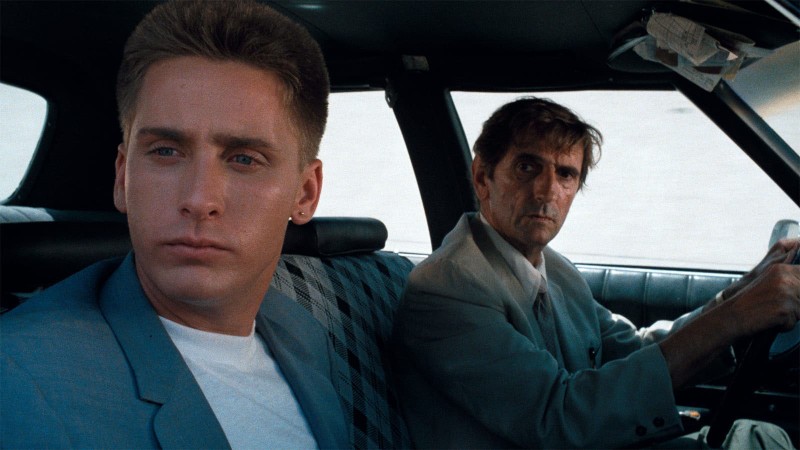
The AFS series opens with The 400 Blows, which Bong Joon Ho has called “the most beautiful feature film debut in the history of cinema.” In Resnais’s Last Year at Marienbad (1961), Jonas Mekas found “the missing link between the commercial dramatic film and the experimental, poetic cinema.” Masculin féminin (1966) is “suffused with an air of desperate romanticism that overlaps with the political and social violence of the era,” writes the New Yorker’s Richard Brody, “and Godard’s stark, spare, concentrated methods have a disillusioned clarity that feels close to documentary—and like a first-person narrative of a young person’s struggle for a place in the world, and of the cinematic effort to craft it.”
Restoration projects launched in 2022 revived the reputations of Jacques Rozier and Jean Eustache, each of whose films in the AFS series are centered on love triangles. The AFS page for Rozier’s Adieu Philippine (1962) opens with a declaration from Linklater: “It’s my new favorite French New Wave film.” Eustache’s The Mother and the Whore (1973) is “an intensely interior movie,” writes Lucy Sante, “in both senses of the term, as well as very Parisian, less through photographic evocation than in the way that great cities determine everything about the social and cultural lives of their citizens.” The series wraps, of course, with Breathless.
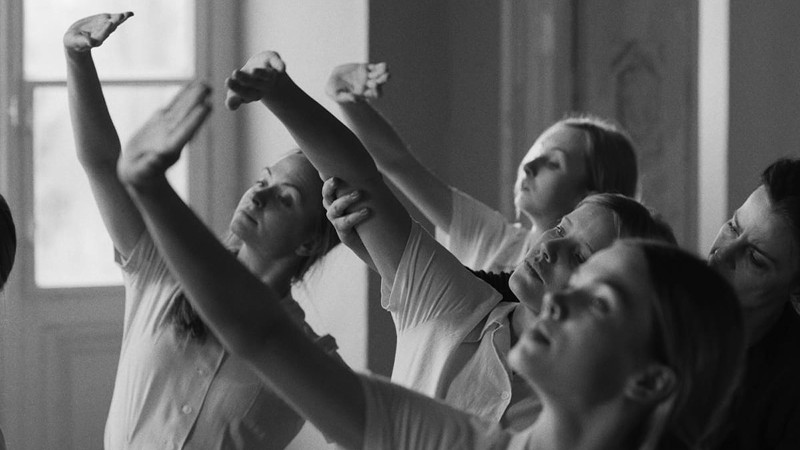
Nouvelle Vague, “performed almost entirely in French and filmed in black-and-white,” as Justin Chang writes in his profile of Linklater in this week’s New Yorker, “is arguably the most elaborately counterintuitive act of cinematic homage ever attempted. Where Godard and his collaborators exulted in their freedom, Linklater was intent on painstaking accuracy. Godard fed his actors lines between takes; Linklater, per long-standing practice, rehearsed with his for weeks before filming started. Godard and Coutard shot the streets of Paris more or less as they found them; Linklater and his team relied on production design and visual effects to recreate those findings.”
“But Linklater’s approach is not museological,” Leonardo Goi assured Notebook readers in a dispatch from Cannes. “For all his fanatical attention to detail and faithfulness to Breathless’s style, the director leaves his performers ample room to breathe life into these characters and steer Nouvelle Vague away from a mere recreation of its ur-text and its authors. Throughout, there’s a sense of a filmmaker watching with wide-eyed wonder as a gaggle of reckless youngsters set out to do what they love, and in the process change the medium forever.”
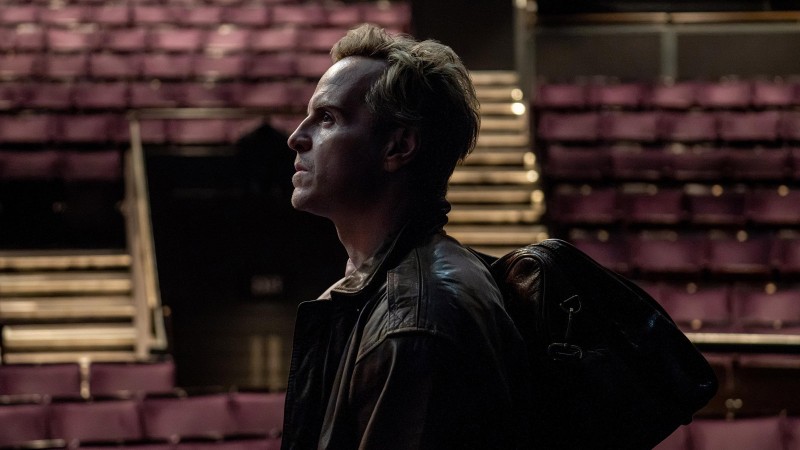
“The general mood is that of being in on something with Godard and company, making Nouvelle Vague a bit of a caper film,” wrote Nicolas Rapold for Sight and Sound. A few months earlier, Rapold sent in a review of Blue Moon from Berlin, where Andrew Scott won a Silver Bear for his supporting performance as Richard Rodgers, the composer whose first collaboration with librettist and lyricist Oscar Hammerstein II (Simon Delaney), the smash hit musical Oklahoma!, premiered on March 31, 1943. Rodgers’s previous writing partner, Lorenz Hart (Ethan Hawke), was there, but slipped out before the final curtain to get an early start on the afterparty.
Hawke, “somehow compressed to Hart’s five feet and crowned with a comb-over,” wrote Rapold, “pours unflagging energy into playing the writer of ‘My Funny Valentine,’ ‘The Lady Is a Tramp,’ ‘Manhattan,’ and the earworm of the title ‘Blue Moon.’ In the film’s extended first third, he is the genius at the end of the bar at Sardi’s restaurant in New York, regaling his tiny audience (bartender, pianist, and essayist E. B. White) with stories, snipes, romantic avowals, and writerly commentary on his loves and hates in song and screen. The inspired Hawke is always on, and the usual seamless imitation of the biopic is not the point of his brilliant capture of Hart’s virtuosity.”
Blue Moon is “a one-night-only character study brimming with intellect, passion, sorrow, and bold, idiosyncratic personality,” writes Nick Schager at the Daily Beast. “It’s not just for musical theater historians; as talkative as his Before trilogy, Linklater’s latest is a moving and multifaceted ode to a bygone era and an artist whose creativity and contradictions were equally titanic.”
“There’s tragedy here but Hart is complicated, and Hawke plays him with nasty bite as well as verbal flourish,” writes the New York Times’ Manohla Dargis in a piece on how she’s come around over the years to an appreciation of an actor she once disliked. Hawke’s Hart “uses words to dazzle, shock, and cut, but his cramped physicality suggests an alarming desiccation. Hart looks like he’s collapsing inward, like a rotting peach. Blue Moon is about loss but, like other Hawke-Linklater movies, it is also about time.”
Don’t miss out on your Daily briefing! Subscribe to the RSS feed.