




30Sep09

On the Road With Jane Campion

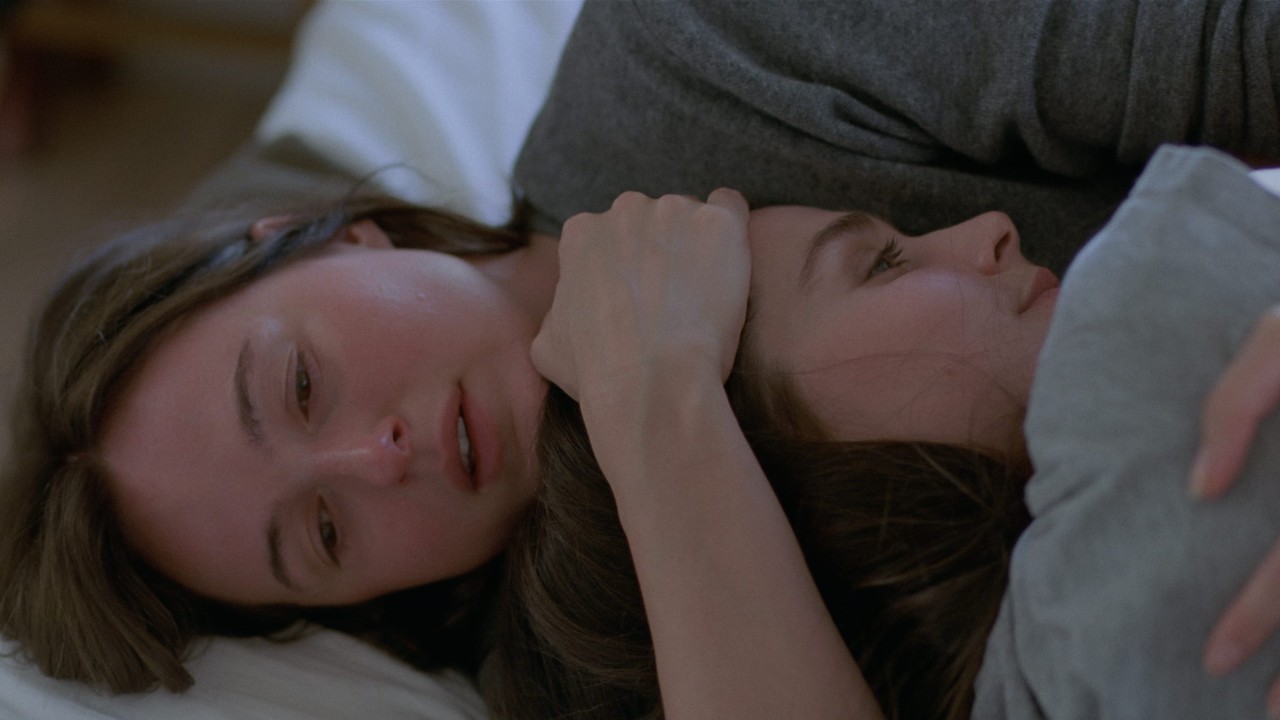
It’s been six years since Jane Campion last directed a feature film, but her earthy, melancholy new Bright Star, about the romance between poet John Keats and his great love, Fanny Brawne, was well worth the wait. And now that Bright Star is receiving near-universal acclaim, our friends at New York magazine have put this trailblazing New Zealand director (whom we’ve always had a bit of a thing for) back in the spotlight, presenting her early Cannes-award-winning short An Exercise in Discipline: Peel (1982) on its Vulture blog. As blogger Bilge Ebiri notes, Peel is included as an extra on the Criterion special edition of Sweetie (“still one of the most gorgeous DVDs we’ve ever seen,” he nicely adds), along with her other early shorts, Passionless Moments and A Girl’s Own Story. As you’ll see below, Peel entertainingly displays many of what would become Campion’s touchstones: familial and gender power dynamics, eccentric visual compositions, and, uh, women peeing in public.

Film_301w_angelattable_w160

An Angel at My Table

Jane Campion

1990

158 min

Color

1.78:1

Film_356w_sweetie_w160

Sweetie

Jane Campion

1989

99 min

Color

1.85:1

0 Comments

29Sep09

PRESS NOTES: HOMICIDE

David Mamet’s Homicide is many things: an introspective character study, an examination of racial and religious identity, a conspiracy thriller—and also, as critics have been noting, a damn good cop drama. “Homicide is the rare big-screen policier that can stand up to The Shield, The Wire, Hill Street Blues, and Homicide: Life on the Street,” raves Noel Murray of the Onion’s AV Club in his review of the film, now available as a Criterion special edition DVD. “The plot is fiendishly clever—full of misdirection and unexpected turns, culminating in a devastating ending—and the dialogue contains some of Mamet’s choicest one-liners . . . It’s one of the greatest ‘pull up a bar stool and let me tell you the damnedest thing’ cop anecdotes of all time.” Amanda Mae Meyncke of Film.com also recommends this “complicated foray into a dark world populated by hard-nosed cops and cryptic occurrences” for its noirish narrative: “This film is a must-see for any Mamet enthusiast but stands on its own as an excellent detective story with remarkably high stakes.”

Film_486_homicide_w160

Homicide

David Mamet

1991

101 min

Color

1.85:1

0 Comments

29Sep09

Ingmar Bergman’s Belongings Sold at Auction

bergman auction

In Stockholm, an auction of personal belongings from the estate of the great director Ingmar Bergman has just ended. The items ranged from parts of his daily life—his writing desk and wastepaper basket—to the chess set used in The Seventh Seal.

Bukowskis, the Swedish auction house operating the event, posted on Twitter twenty-two hours ago:

"The Ingmar Bergman auction is now over and 337 very special lots have new lucky owners. Thank you all."

The 337 lots for sale were auctioned for a total of 18 million Swedish kronor (approximately $2.6 million). The famous Irving Penn portrait, above, fetched 520,000 SEK ($74,200), while the Golden Globe statuette the filmmaker won for Autumn Sonata brought 48,000 SEK ($6,800). The most prized items were the Seventh Seal chess set and a wooden model of the Royal Dramatic Theatre in Stockholm. Each sold for 1 million SEK (about $140,000).

Bergman auction chess set

The 1/50 scale wooden model of the Royal Dramatic Theatre lights up and includes a tiny Bergman figurine seated on the balcony:

Other items included an 1870 magic lantern that looks very similar to the one in Fanny and Alexander and its accompanying set of ten glass plates for projection (the two lots sold for a total of $130,000):


A paper jumping jack given to Bergman by his grandson ($4,100):


A photograph by John Bryson of Bergman on the set of Jaws ($7,400):


A 1920s Marland film projector ($17,800):


And there seemed to be plenty of bidders eager to ensure that their own worst ideas end up in the same place that Bergman’s did. His wastepaper basket sold for $1,500:

Seventhsealw_w160

The Seventh Seal

Ingmar Bergman

1957

96 min

1.33:1

Film_60w_autimnsonata_w160

Autumn Sonata

Ingmar Bergman

1978

90 min

Color

1.66:1

Film_477_bergmansisland_w160

Bergman Island

Marie Nyreröd

2006

83 min

Color & Black and White

1.77:1

2 Comments

25Sep09

PEDRO COSTA IN LONDON

One of contemporary cinema’s most daring and uncompromising artists, Pedro Costa is being honored with a complete retrospective at the Tate Modern in London, a rare distinction for a filmmaker still in his prime. The series, which starts today and runs through October 4, includes not only all of the fifty-year-old Portuguese director’s work—nine films in total, from 1989’s O sangue to his current Ne change rien—but also programs of movies that have inspired him: by Godard, Eustache, Warhol, and Straub and Huillet. Costa has been getting a lot of other attention recently too. One Hundred Thousand Cigarettes: The Films of Pedro Costa, a book of writings on his work, was just published in Portugal. And the Cinémathèque française is busy preparing its own retrospective, slated for January. In honor of the Tate show, Sight & Sound has run an interview with Costa by Kieron Corless and an in-depth career analysis by Quintín in its October issue, and in the Guardian, Peter Bradshaw touts Costa as the “Samuel Beckett of world cinema.” This week also sees the release of O sangue on DVD in the UK from Second Run. Criterion will release a box set of Costa’s Fontainhas Trilogy—Ossos, In Vanda’s Room, and Colossal Youth—also including the shorts Tarrafal and The Rabbit Hunters, in early 2010.


1 Comments

24Sep09

Jarmusch at ATP

For the second year in a row, Barry Hogan and Deborah Kee Higgins, the organizers of All Tomorrow’s Parties, the committedly independent, globe-trotting music festival, invited the Criterion Collection staff to build an HD cinema for the event’s U.S. venue, Kutsher’s Country Club in New York’s Catskill Mountains. Director Jim Jarmusch came upstate for the music program, which included shows by the Flaming Lips, Suicide, Animal Collective, Sufjan Stevens, Iron and Wine, Deerhunter, and Boris, but when Criterion screened his 1989 Mystery Train, Jim stopped by to talk to the crowd, which included the Lips’ Wayne Coyne. We got it all on tape—here are some highlights.


MUSICIANS AS ACTORS


ROBERT MITCHUM AND IGGY POP


ROBERTO BENIGNI AND THE SONS OF LEE MARVIN

14 Comments

23Sep09

TORONTO DISPATCH: CLOUZOT LOST AND FOUND BY MICHAEL KORESKY

from Michael Koresky

One enters any major film festival with hopes of discovering a budding auteur, a new voice from some previously unheard-from part of the world—a Julián Hernández or Corneliu Porumboiu or Bong Joon-ho. At this year’s Toronto International Film Festival, however, the greatest revelation for me was of an entirely different nature: an incomplete work from a well-known director dead already for thirty-two years. Henri-Georges Clouzot’s Inferno is the result of a dazzling effort by French movie historian and renowned preservationist Serge Bromberg to bring to audiences the footage from the Diabolique director’s famously unfinished 1964 film L’enfer in some semblance of narrative form. The result is a fascinating behind-the-scenes documentary and look at Clouzot’s genius (which, if you live in the New York area, you can see for yourself, at the New York Film Festival, on October 4).

According to Bromberg’s opening narration, the project was born when he found himself stuck in an elevator with Clouzot’s widow, Inès de Gonzalez, who told the famed film gleaner that she had in her possession 185 cans of original camera negative from the L’enfer shoot, never completed for various reasons, including the lead actor’s walking off the set and the director’s sudden (nonfatal) heart attack. What Bromberg discovered was truly remarkable, and incontrovertible evidence that the film might indeed have been as groundbreaking as Clouzot had always promised it would. The story of L’enfer, which came to Clouzot during a bout of insomnia, involves the paralyzing jealousy a man, Marcel (played by Serge Reggiani), feels toward his new wife, Odette (Romy Schneider), and the pathologically possessive depths to which he sinks during a summer vacation at the famed Côte d’Azur hotel la Colombe d’Or.  

Film_35w_diabolique_w160

Diabolique

Henri-Georges Clouzot

1954

116 min

Black and White

1.33:1

Img_lecorbeau_w160

Le Corbeau

Henri-Georges Clouzot

1943

91 min

Black and White

1.33:1

P_w160

The Wages of Fear

Henri-Georges Clouzot

1953

147 min

Black and White

1.33:1

Film_193w_quaidesorfevres_w160

Quai des Orfèvres

Henri-Georges Clouzot

1947

106 min

Black and White

1.33:1

2 Comments

18Sep09

Gervaise: True Grit BY MICHAEL KORESKY

321_015

Director René Clément had conveyed the darker aspects of human nature in 1952’s heartbreaking Forbidden Games, which became an international, award-winning hit despite the rawness and melancholy of its antiwar message. The bitter irony and willingness to grapple with the grittier side of life that informed that film were even more pronounced in Gervaise, his 1956 adaptation of Émile Zola’s L’assommoir—commonly referred to in English as The Dram Shop, though that’s not a strict translation of the colloquial, arcane title, a nineteenth-century term for a cheap liquor shop derived from the verb assommer, “to bludgeon or render senseless.”

Such an expression feels wholly appropriate for the uncompromising experience that is Gervaise, which, while not impeccably faithful to its source, is widely considered to be one of the most accurate film representations of Zola’s writing and sensibility. Though there have been nine film versions of L’assommoir (the first as early as 1902, with Ferdinand Zecca’s Les victimes de l’alcoolisme), Gervaise remains the most acclaimed. Perhaps this is because Clément and the prolific, proudly left-wing screenwriting team of Jean Aurenche and Pierre Bost (La symphonie pastorale) were the perfect match for Zola’s brand of social realism and his unerring attention to the struggles of the working class. Winnowing the book down from approximately five hundred pages, Aurenche and Bost still manage to capture a sense of epic struggle in the story of washerwoman Gervaise (Austrian Maria Schell, winner of best actress at the Venice Film Festival for her role), who is determined to run a laundry business of her own in an impoverished quartier of Paris in 1877.

Gervaise’s desperate efforts to establish financial independence and a presence in the neighborhood are met with enormous setbacks, beginning with a rooftop accident sustained by her steeplejack husband, Coupeau (François Périer), which necessitates expensive doctor visits and leads to his increasingly crippling alcoholism. Clément depicts her fragile existence in an accumulation of impressively mounted scenes, from a violent, sudsy fight with her laundress nemesis Virginie (Suzy Delair), to a tense birthday celebration disrupted by Coupeau’s tipsy boisterousness, to his terrifying final, DTs-fueled explosion. Clément refuses to soften the brutality or consequence, right up through the devastating conclusion, when his focus shifts to Gervaise’s young daughter, Nana.

Here, at the end of the film, Clément reaffirms, in the briefest but most powerful of moments, not only his gift for eloquently directing child actors, as so memorably illustrated in Forbidden Games, but also that film’s fatalistic view that children bear the failures and mistakes of their parents’ world. And by ending on the image of Nana scampering freely, without supervision, through the Parisian streets, attracting neighborhood boys with ribbons in her hair, Clément, Aurenche, and Bost remind us that the little girl—who can’t help but recall Games’s angelic yet corrupted Brigitte Fossey—will grow up to be one of Zola’s most memorable characters, the prostitute protagonist of the 1880 novel Nana.

Film_eah4_gervais_w160

Gervaise

René Clément

1956

117 min

Black and White

1.33:1

0 Comments

18Sep09

Le jour se lève:
Working-Class Hero
BY MICHAEL JOSHUA ROWIN

351_055

Le jour se lève was Marcel Carné’s fourth collaboration with screenwriter and poet Jacques Prévert and their third entry in the poetic realism cinema movement, following their vanguard Drôle de drame and Port of Shadows. Both of those films were widely admired, but Le jour se lève turned into something bigger, one of the most influential French films of the prewar period and to this day an unvarnished classic. Poetic realism’s bleak outlook reflected the waning of Popular Front idealism as fascism began to spread throughout Europe. Carné’s vision was not explicitly political, however. Foreshadowing film noir’s more oblique pessimism and flashback-laden regret, Le jour se lève starred Jean Gabin as working-class everyman François, who murders in the name of love. Still, it was too much for French authorities, who saw the emotional subtext as potentially subversive. The film was banned in December 1939, as war approached, and again under Nazi occupation.

Vital to the realization of Carné’s realist-romantic vision was Alexandre Trauner, the self-proclaimed “artisan” production designer, who had an enormous influence on French cinema in the thirties and who would work with Carné on the classic Children of Paradise (1945). Constructing sets true to working-class milieus while also helping to impart character psychology through careful attention to atmospheric details, Trauner was able to manifest Carné’s twin impulses. It was Trauner who insisted on constructing François’ apartment without movable walls—making filming extremely difficult—and shooting real bullets through them for the film’s finale. And his demands paid off: the claustrophobic, vividly threatening environment perfectly evokes François’ mental state.

By 1939, Gabin was already the most popular French actor of his generation. Rugged, handsome, and convincing playing the kinds of common people who flocked to his movies, he is undoubtedly the soul of Carné’s film, which hinges on the sympathy it is able to draw for a perpetrator of a passionate crime. Gabin uses his talents to magnificent effect here, winning us over without ever forcing innocence or luckless ignorance. Many have attempted to imitate his artless brand of masculine sensitivity, but none has ever succeeded quite so grandly.

P_w160

Le Jour se lève

Marcel Carné

1939

93 min

1.33:1

1 Comments

18Sep09

Mayerling: Star-Crossed BY MICHAEL KORESKY

553_014

Almost twenty years before they enacted such splendid suffocation in Max Ophuls’s swoony masterpiece The Earrings of Madame de . . . , the agelessly glamorous Charles Boyer and Danielle Darrieux first starred together in another tear-jerking big-screen romance. Giving them each one of their most radiant roles, Mayerling was a star-crossed-lovers tale based on a true story, one that’s unimaginably tragic and, even more than a century later, debated. From a novelization by Claude Anet of the events surrounding the apparent 1889 suicide pact of Archduke Rudolf, heir to the Austrian throne, and his lover, Maria Vetsera, a baron’s daughter he was forbidden to see, Mayerling spins vivid, evocative melodrama.

Despite the delicate material, Mayerling avoids outright sensationalism thanks to the sensitive direction by Anatole Litvak. Though little remembered today, Litvak has a formidable biography: A Jew born in Kiev, he studied philosophy in Saint Petersburg before moving to Germany in the late twenties to work in the movies (including editing for G. W. Pabst). Upon the Nazis’ rise to power, he fled, hatching a successful directing career in both England and France with Gaumont, and then proceeding to Hollywood, where he became an acclaimed, Oscar-nominated director, husband to Miriam Hopkins, and collaborator on Frank Capra’s Why We Fight films during World War II. He even served in the U.S. Army, heading up the photography division that documented the D-day landing in Normandy. Once in Los Angeles, Litvak was, according to David Thomson, “a great womanizer, a Hollywood socialite, and a dashing figure.” None of this would have been possible if not for Mayerling, the success that got him noticed in America and led to his first studio contract, at Warner Bros.

It was not only Mayerling’s flamboyant central tragedy (which occurred at the royal hunting lodge that gives the film its title) that attracted the leftist Litvak to the material, but also the story’s politics: more than just a Romeo and Juliet–like romance, the film also touches on the repression of liberal activism in nineteenth-century Vienna by reigning emperor Francis Joseph. The emperor’s only son, Boyer’s Rudolf, is introduced being accidentally rounded up along with a group of student protesters, which also includes his friend the left-wing journalist Szeps, the monarchy’s public enemy number one.

Further outraging the authorities and alienating him from his father and his livelihood (Rudolf states at one point that the crown and his happiness are “unfortunately irreconcilable”) is his adulterous affair with the seventeen-year-old Maria, whom he meets one night at the Prater, and who initially doesn’t recognize him as the crown prince. Their love, of course, is the central concern of the film, and Litvak portrays it as an impossible romantic ideal, cloaked in doubt and shadows, leading inexorably to a sad conclusion—the events of which are still disputed by some, who suspect Rudolf and Maria were victims of political conspiracy.

The real-life aftermath is well-known and even more tragic: in Rudolf’s absence, the crown was inherited by his cousin Archduke Franz Ferdinand, whose assassination incited World War I. But Litvak stays focused on the beautiful lovers—their wordless glances, their surreptitious meetings. The truth about their demise may never be known, but Litvak’s Mayerling remains a stirring dramatization and a lovely reminder of the beauty of two screen legends.

Mayerling_film_still_w160

Mayerling

Anatole Litvak

1936

91 min

Black and White

1.33:1

0 Comments

16Sep09

Homicide: What Are You, Then? BY STUART KLAWANS

1197_023

Words are the trained fleas in David Mamet’s sidewalk circus—dirty words, often bloodstained, usually swarming, that perform their acrobatic stunts for gawkers who will likely get their pockets picked. That’s the reputation, anyhow. More than thirty years after he made his name, “Mamet” to most people still means the playwright of incantatory, foulmouthed masculine aggression: author of the grimly chucklesome American Buffalo and Glengarry Glen Ross, with their low and middling businessmen raging and scheming for money, and also of the Hollywood satire Speed-the-Plow, with its nicely tanned producers doing the same. From the latter play, and an associated history of authorial grumblings, many conclude that Mamet has resigned himself to performing his film work with the left hand, leaving the right to collect the checks.

He will license others to translate his playwright’s words into movies, but he won’t stoop to direct these films himself—except when he does, as with the deliberately stagelike Oleanna. Otherwise, it’s commonly thought that he tosses off his directorial film projects as entertainments (in Graham Greene’s sense of the term) that are frankly, if playfully, constructed as con jobs on the audience. Outwardly, these films bear a resemblance to Mamet’s plays, in being about men (except for the female lead in House of Games) who live in a gritty, present-day America (except for the genteel, century-old English milieu of The Winslow Boy) where nothing matters more than the ruthless professionalism of both the author and the protagonist (except in the political thriller Spartan, where the whole point is to see professionalism do itself out of a job). Unlike the plays, though, Mamet’s films are said to be best when they revel in their own compromised and mercenary nature, as if they were cinematic auto shows—gleaming displays of plot machinery set up to give you pleasure in being sold a bill of goods. In this view of Mamet’s film career, The Spanish Prisoner, his romp through the deceptions of an utterly corrupt world, must be his exemplary picture—unless, of course, it would be another elaborate con game, the political satire Wag the Dog, which someone else directed, based on a novel that Mamet didn’t write.  

Film_486_homicide_w160

Homicide

David Mamet

1991

101 min

Color

1.85:1

3 Comments

2009 01 02 03 04 05 06 07 08 09 10 11 12

2008 01 02 03 04 05 06 07 08 09 10 11 12

2007 01 02 03 04 05 06 07 08 09 10 11 12

2006 01 02 03 04 05 06 07 08 09 10 11 12

2005 01 02 03 04 05 06 07 08 09 10 11 12

2004 01 02 03 04 05 06 07 08 09 10 11 12

2003 01 02 03 04 05 06 07 08 09 10 11 12

2002 01 02 03 04 05 06 07 08 09 10 11 12

2001 01 02 03 04 05 06 07 08 09 10 11 12

2000 01 02 03 04 05 06 07 08 09 10 11 12

1999 01 02 03 04 05 06 07 08 09 10 11 12

1998 01 02 03 04 05 06 07 08 09 10 11 12

1997 01 02 03 04 05 06 07 08 09 10 11 12

1996 01 02 03 04 05 06 07 08 09 10 11 12

1995 01 02 03 04 05 06 07 08 09 10 11 12

1994 01 02 03 04 05 06 07 08 09 10 11 12

1993 01 02 03 04 05 06 07 08 09 10 11 12

1992 01 02 03 04 05 06 07 08 09 10 11 12

1991 01 02 03 04 05 06 07 08 09 10 11 12

1990 01 02 03 04 05 06 07 08 09 10 11 12

1989 01 02 03 04 05 06 07 08 09 10 11 12

1988 01 02 03 04 05 06 07 08 09 10 11 12

1987 01 02 03 04 05 06 07 08 09 10 11 12

1986 01 02 03 04 05 06 07 08 09 10 11 12

1985 01 02 03 04 05 06 07 08 09 10 11 12

1984 01 02 03 04 05 06 07 08 09 10 11 12