
25Jun07

Personal Effects:
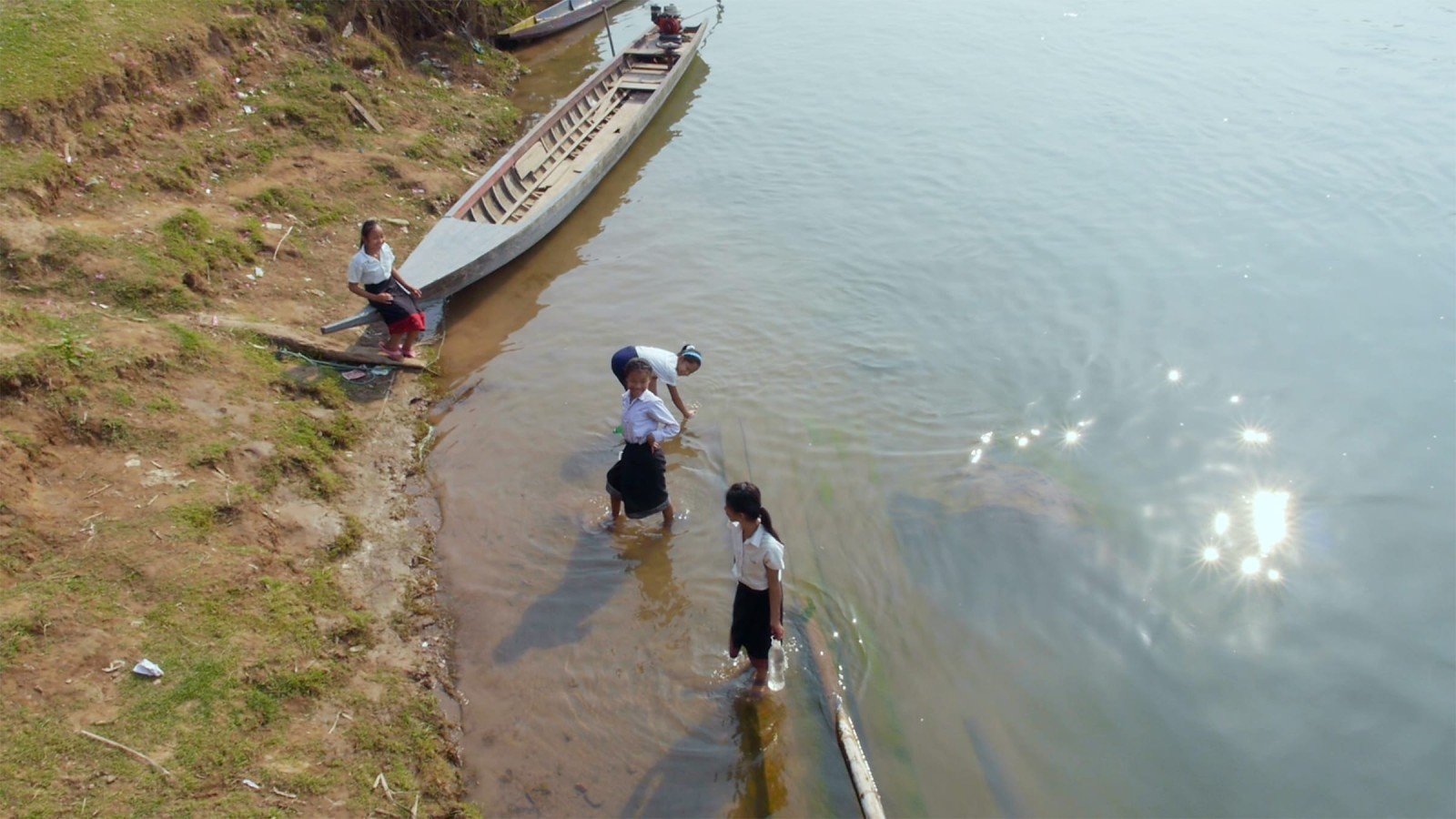
The Guarded Intimacy of Sans Soleil
BY JONATHAN ROSENBAUM

1002_015.tif“The Sorbonne should be razed and Chris Marker put in its place.” —Henri Michaux

“Contrary to what people say, using the first person in films tends to be a sign of humility: ‘All I have to offer is myself.’” —Chris Marker

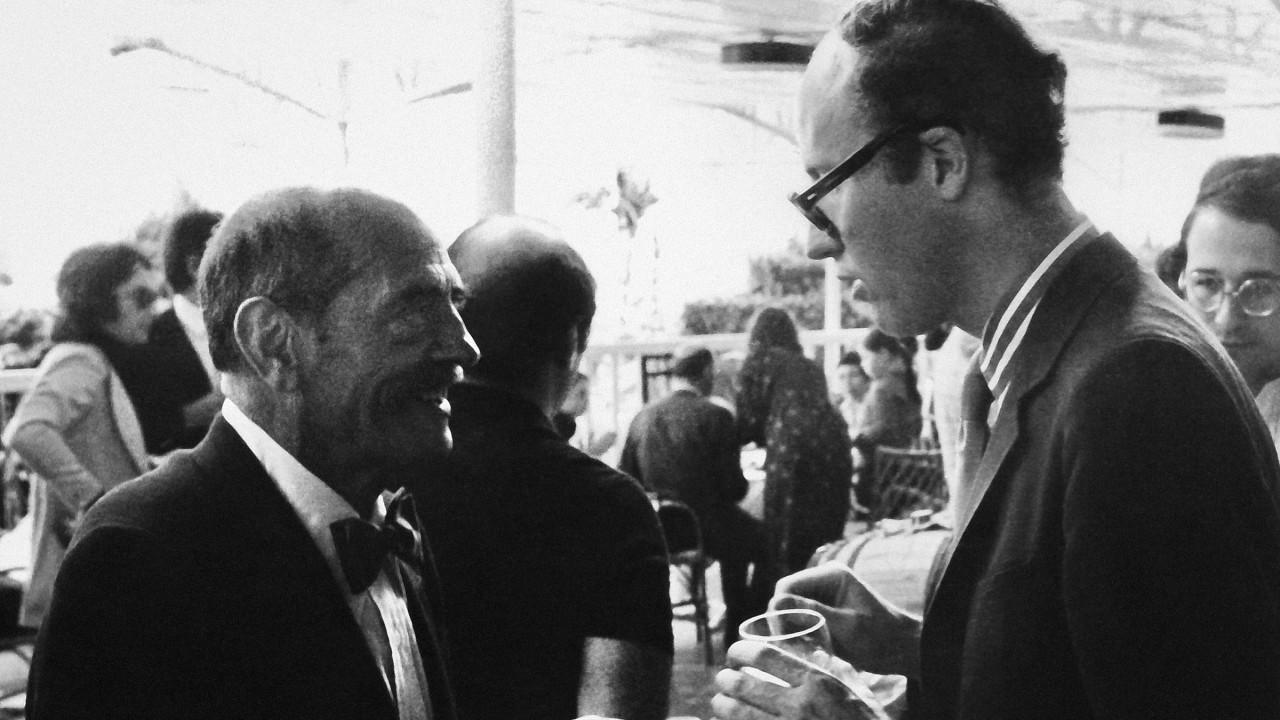
Even though few film essayists are more mythological than Chris Marker, it might help to clarify some matters if a couple of the more persistent myths surrounding his legend were undermined a little. On the first page of her recent and useful book about him, Chris Marker, Nora M. Alter (to whom I owe the above Michaux quotation) alludes to his “reclusive nature.” Without quite wishing to refute her, I’d like to point out that she and I both met Marker in the 1990s—she at his Paris residence, at his invitation; me at the highly convivial Festival of the Midnight Sun in northern Finland, above the Arctic Circle, a film event that he attended with some regularity for a spell—and reclusive isn’t the first adjective that would spring to my mind, especially for someone as socially oriented as Marker. This recalls Thomas Pynchon’s cautionary words: “My belief is that recluse is a code word generated by journalists . . . meaning, ‘doesn’t like to talk to reporters.’”

Sanssoleil_w160

Sans soleil

Chris Marker

1983

100 min

Color

1.66:1

0 Comments

25Jun07

La Jetée: Unchained Melody BY JONATHAN ROMNEY

However you define Chris Marker's 1963 short La Jetée—philosophical fiction, genre exercise, treatise on cinematic time—one fact is unavoidable: it resembles few other films. In fact, La Jetée does not define itself as a film at all—its credits identify it as “un photo-roman.” This means literally a “photo-novel,” but usually denotes those photographed comic strips popular in magazines of the 1950s and 1960s, especially in Europe. The label “photo-roman” suggests that what we are watching ought to be a static object—a book, rather than a film (when La Jetée was issued in book form, by Zone Books in 1992, it bore a new subtitle proclaiming its filmic origin: “ciné-roman”). Taking the form of apocalyptic science fiction typical of the cold war era, La Jetée is a story told in black-and-white stills, accompanied by music, sound effects, and voice-over narration. It contains only one brief shot of filmed motion, and one moment in which the camera appears to move, pulling back from the opening still of the pier or observation deck at Paris Orly Airport (the jetée itself).

La Jetée's narrative—in which an unnamed hero, living in a Parisian postwar radioactive wasteland, is sent back in time by scientists to find sustenance or a source of energy—is a Möbius strip, returning paradoxically to its point of origin to swallow its own tail and engender itself once more. Because these missions follow the route of inner space, via the travelers’ memories, “the man whose story we are telling” is considered an especially apt subject: he is fixated on a single memory. As a child, he witnessed an unexplained scene of violence at Orly Airport, involving a man falling and the shocked reaction of a beautiful woman.  

P_w160

La Jetée

Chris Marker

1962

28 min

Black and White

1.33:1

1 Comments

25Jun07

Chris Marker: Memory’s Apostle BY CATHERINE LUPTON

La Jetée (1963) and Sans Soleil (1983) made a tidy twenty years apart, are the twin peaks of Chris Marker’s creative achievements and his best-loved and most widely seen films. But who is Chris Marker? Writer, photographer, editor, filmmaker, videographer, and digital multimedia artist, Marker was until recently one of cinema’s better-kept secrets, famously reclusive and shrouded in protective layers of legend and pseudonym. The whisper of his adopted name was for those in the know a password to another country: an alter ego of the everyday modern world, transfigured by the insight of a wise, funny, and profoundly humane intelligence, populated with owls, cats, and mysteriously beautiful women, a place where, as we learn in Sans Soleil, “every memory can create its own legend.” Today, thanks to a growing body of exhibitions, film festival retrospectives, and publications, the secret is becoming more extensively known and shared, and Marker is garnering recognition as one of the most significant and seminal figures of contemporary visual culture. Yet this octogenarian polymath remains a tantalizingly impenetrable enigma. Still active, and utterly uninterested in resting publicly on the laurels of his long and remarkably varied creative life, Marker retains an allure that is amplified by the fact that only a handful of his works are widely circulated and seen, especially outside his native France.

When Marker came to make La Jetée, in 1962, he was already in the process of confounding the expectations set up by his early career. Emerging first as a critic, poet, and novelist in the ferment of postwar Paris, Marker moved into photography and filmmaking in the 1950s, supported by a modest but effective state funding structure for short-film production that also assisted his close friends and fellow filmmakers Alain Resnais and Agnès Varda. By the early 1960s, Marker had gained a reputation as the director of a handful of idiosyncratic personal travel documentaries: A Sunday in Peking (1956), Letter from Siberia (1958), Description of a Struggle (1960, about Israel), and Cuba sí! (1961). Through these films, Marker honed a distinctive style of inquisitive, offbeat cultural reportage, which adopted an engagingly intimate tone of address and cunningly played on the separation of images from voice-over commentary to question the ways in which different nations and cultures are represented—both for themselves and to others. One famous sequence in Letter from Siberia shows footage of a Yakutsk town bus, road menders, and a squinting passerby three times, with three different commentaries: a pro-Soviet eulogy showcasing progress and efficiency, an anti-Soviet critique emphasizing backwardness and discomfort, and an “objective” sketch of Marker’s own impressions—which, he is quick to point out in the film, has no more purchase on the truth of Siberia than any of the others. As film critic André Bazin noted when he reviewed the film in Cahiers du cinéma, the main force at work in Letter from Siberia was a penetrating intelligence, one that wore its erudition gracefully and was unafraid to upset ideological sacred cows. Bazin’s assessment served to cement Marker’s association with that singular branch of documentary called the essay film, which might be defined as setting out to depict the process of thinking around a given subject, with all its attendant messiness, hesitations, and sudden insights intact.  

P_w160

La Jetée

Chris Marker

1962

28 min

Black and White

1.33:1

Sanssoleil_w160

Sans soleil

Chris Marker

1983

100 min

Color

1.66:1

0 Comments

19Jun07

WWRWFD? BY ISSA CLUBB

One of the blessings (and curses) of working at Criterion is that every film we put out inspires a passionate response from someone, somewhere. Knowing how deeply people feel about a movie as I’m producing the DVD leads to some very nervous moments, and usually a sleepless night or two, before the disc hits the shelves. I’m always worried about the possibility of a technical error, in addition to wondering if the disc’s special features tell the whole story, or if the cast list might have someone’s name wrong.

So I suppose it’s something of a relief to have a controversy crop up before I even have to have menu text in to the editorial department. As many of you already know, Criterion has obtained the DVD rights to the restoration of Rainer Werner Fassbinder’s monumental 1980 epic Berlin Alexanderplatz, which premiered at this year’s Berlin Film Festival. We plan to release it this fall.

Recently there has been quite a dispute surrounding this restoration, specifically regarding whether the film has been rendered too bright. A site I read every day, Greencine Daily, has devoted several posts to the topic, mostly laying out the case for the plaintiff, as it were. As a result, many of you have written in to ask about our plans for the DVDs.  

1 Comments

18Jun07

Eclipse Series 3:
Late Ozu
BY MICHAEL KORESKY

Yasujiro Ozu had already directed forty-five features by the time he started work on Early Spring, in 1955, but the artistic and commercial success of his previous film, Tokyo Story (1953), had rejuvenated him. Considered an emotional and technical refinement of the motifs he had honed over a twenty-six-year career, Tokyo Story became a catalyst for what many Ozu scholars consider his most accomplished, and certainly one of his most fertile, periods. Beginning with Early Spring, Ozu directed at least one film a year until his death, in 1962, a narrative cycle that extended his recurrent themes of intergenerational conflict and familial crisis but with an increasing respect and sympathy for the younger characters. This marked a break following Tokyo Story, which viewed the dissolution of family through the eyes of an elder generation (albeit one shown as increasingly inessential). With his signature aesthetic minimalism, Ozu delicately calibrated many of his final films as ongoing dialogues between children trying to navigate burgeoning adulthood and parents still set in a more traditional frame of mind.

This shift in perspective was not simply the result of the evolving sensibilities of Ozu and longtime coscreenwriter Kogo Noda. At first, there were also practical, studio-imposed reasons. For Early Spring, Ozu was encouraged by executives at Shochiku Company to skew younger and cast bigger names, to appeal to Japan’s newly emerging youth culture. And initially, Ozu’s films of this period reflected a certain hesitancy to completely engage with this new generation. Somewhat anomalous in Ozu’s career, for this reason and for their more overtly sensationalist elements, Early Spring and Tokyo Twilight (1957) feature twentysomething protagonists and lack dominant parental authority figures. Yet their conflicted or traumatized central characters, put through unrelentingly grim narratives, are unable to achieve complete independence from family or societal expectations. Early Spring deviates the most from the familial narratives of this late cycle of Ozu’s work, more reminiscent of the Japanese salaryman film tradition. For Early Spring, Ozu stated, “I tried to portray the pathos of the salaryman’s life as society undergoes transformation."  

Earlyspring_2_w160

Early Spring

Yasujiro Ozu

1956

145 min

Black and White

1.33:1

Endofsummer_1_w160

The End of Summer

Yasujiro Ozu

1961

103 min

Color

1.33:1

Equinoxflower_1_w160

Equinox Flower

Yasujiro Ozu

1958

118 min

Color

1.33:1

Lateautumn_1_w160

Late Autumn

Yasujiro Ozu

1960

128 min

Color

1.33:1

Tokyotwilight_1_w160

Tokyo Twilight

Yasujiro Ozu

1957

141 min

Black and White

1.33:1

0 Comments

18Jun07

WR, Sex, and the Art of Radical Juxtaposition BY JONATHAN ROSENBAUM

Between the mid-1960s and the mid-1970s, it was generally felt among Western intellectuals and cinephiles that cutting-edge, revolutionary cinema came from Western Europe, Latin America, and the United States. Among the touchstones were Jean-Luc Godard’s films in France, Newsreel’s agitprop documentaries and their spin-offs (like Robert Kramer’s Ice and Milestones) in the United States, such diverse provocations as Lindsay Anderson’s If.... and Godard’s 1+1 in the United Kingdom, and, in Latin America, films like Lucía (Cuba), The Hour of the Furnace (Argentina), and Antonio das Mortes (Brazil).

By contrast, the wilder politicized art movies coming out of Eastern Europe at the time—such as those of Vera Chytilová, Miklós Jancsó, and Dušan Makavejev—were treated as curiosities, aberrations that wound up getting marginalized by default. The fact that they came from Communist countries made them much harder for Westerners to place, process, and understand; in most cases, an adequate sense of context was lacking.  

1971

85 min

Color

1.33:1

0 Comments

18Jun07

Sweet Movie: Wake Up! BY DAVID STERRITT

693_021.tif

Whatever you’ve heard about Sweet Movie, the audacious and outrageous political comedy by Yugoslav filmmaker Dušan Makavejev, there’s a good chance it’s wrong.

Ever since this mischievous masterpiece had its Cannes premiere, in 1974, ill-advised pundits have been calling it uncouth, uncivilized, and offensive. Offensiveness is one of its great strategies, to be sure, but critics who call it a nonstop orgy of odious acts couldn’t have looked very closely at what’s actually on the screen. Far from gratuitous, Sweet Movie is an artistically earnest, politically savvy film that uses every means at its disposal—deadly serious one moment, wildly hilarious the next—to jolt viewers out of lazy, hazy mind-sets that stifle freedom, creativity, and bliss.

Why has Sweet Movie been so hard for some people to get a handle on? One reason is that it’s exactly what it promises to be—a truly trailblazing film committed to breaking cinematic rules and blurring artistic boundaries. Sweet Movie is smart and witty and complex, asking spectators not only to watch and listen but to get onto its radically offbeat wavelength. The more you open up your heart and mind, the more exhilarating you’re likely to find it. Still, it is undeniably a drastic and daunting film—a touchstone for Makavejev’s devotees, a target for his detractors, and a source of lively debate for people who admire him greatly but think this picture simply goes too far.  

Sweetmovie_w160

Sweet Movie

Dušan Makavejev

1974

98 min

Color

1.66:1

0 Comments

16Jun07

If....: School Days BY DAVID EHRENSTEIN

So claimed Rudyard Kipling in "If—," a poem he wrote in 1909, redolent of privilege, “Empire,” and all the “values” Lindsay Anderson’s identically titled 1969 film abhors. One line sports a special pertinence to Anderson: "If you can dream—and not make dreams your master." For If.... is about both dreaming and mastering, revolting against the status quo and daring to imagine what it might be like to put something else in its place. That, in essence, was what the 1960s were all about. And that’s what If.... does in practice—tear down the wall of sleep that separates imaginative mental activity from active waking life. Unlike a dream, however, If.... tells a story with an identifiable beginning, middle, and end. But it’s relayed through what Anderson calls “an atmosphere of poetic license,” where "reality" and "fantasy" converge and become one. In other words, a cinematic realization of the May 1968 watch cry imagination au pouvoir.

The imaginations in question belong to Mick Travis (Malcolm McDowell) and his friends Wallace (Richard Warwick) and Johnny (David Wood), senior classmen at a British public school that, while nominally supervised by adults, is in fact run by the Whips, specially appointed fellow seniors. Our heroes’ revolt against this establishment, led by the imperious Rowntree (Robert Swann) and the snobbish Dennison (Hugh Thomas), wins them allies in Bobby Philips (Rupert Webster), a young beauty much sought-after by the Whips, and a nameless young girl (Christine Noonan), who in the film’s unforgettable climax joins the boys in battle, wielding firearms right along with them on the school’s roof.  

Film_391w_if_w160

If....

Lindsay Anderson

1968

112 min

Color & Black and White

1.66:1

0 Comments

11Jun07

The Two of Us: War and Peace BY DAVID STERRITT

As usual, François Truffaut knew exactly what made a great film great. For twenty years, he wrote in 1967, he had been waiting for “the real film” about the Nazi occupation of France, showing the French majority “who were involved neither in the collaboration nor the Resistance, who did nothing, either good or bad,” except survive. And that’s what he found in Claude Berri’s witty, intelligent comedy-drama The Two of Us, which he placed among a handful of important films that “seek to conquer truth.”

The Two of Us also stands with the most striking directorial feature debuts in French film history. Berri entered filmmaking a few years after Truffaut and the other French new-wave revolutionaries, missing out on the tide of publicity they generated with their early features. But he quickly made up for lost time, writing and directing a long list of memorable movies, some of which (such as Uranus and Lucie Aubrac, both made in the 1990s) return to the theme of French life under the occupation. His filmmaking reached a pinnacle in 1986, with Jean de Florette and Manon of the Spring. Along the way, he also founded a production company (Renn Films) and a distribution outlet (AMLF), and produced movies for many of the biggest names in European cinema, including Patrice Chéreau and Roman Polanski.  

Film_388w_twoofus_w160

The Two of Us

Claude Berri

1967

87 min

Black and White

1.66:1

0 Comments

11Jun07

Here, There, and Everywhere BY PETER BECKER

Over the past month or so, it seems as though glancing references to Criterion are popping up everywhere. This morning, I saw Bob Stein, one of the original founders of Criterion, in New York magazine, being interviewed for his fashion sense. And the other night, both actresses in the stage musical of Grey Gardens (spine no. 123), Mary Louise Wilson and Christine Ebersole, won Tony Awards for their performances. As Little Edie, Ebersole won for best leading actress in a musical, beating out Donna Murphy, who plays Lotte Lenya in LoveMusik, which concerns the love affair between Lenya and composer Kurt Weill. Their shared breakthrough came with Bertolt Brecht and Weill's The Threepenny Opera. Pabst's film of Threepenny, featuring Lenya, is soon to be spine no. 405 in the Criterion collection. And last week, Middlesex author Jeffrey Eugenides wrote a beautiful piece in the New Yorker’s summer fiction issue about his mother taking him to see Walkabout (Spine no. 10) as a kid, neither of them having any idea what they were going to see.

And, of course, there was the Cannes sixtieth-anniversary tribute film, Chacun son cinéma, for which thirty-three filmmakers each contributed a three-minute short evoking something essential about cinema. The film was stuffed with references to the warhorses of world cinema, so there were plenty of spine numbers in evidence, but no reference came as a bigger surprise than the presence, in the Coen brothers' segment, of not one but two posters for the Essential Art House retrospective that has been going around as a celebration of Janus Films’ fiftieth anniversary. One features Jules and Jim (spine no. 281), the other The Seventh Seal (spine no. 11). Both are clearly visible through most of the film, as a cowboy who doesn't know his way around art-house cinema chooses between The Rules of the Game (spine no. 216) and a Turkish film called Climates that Zeitgeist brought out this year. No one could have been prouder than we—except maybe Zeitgeist. Spoiler alert: the cowboy picks Climates.

0 Comments

2009 01 02 03 04 05 06 07 08 09 10 11 12

2008 01 02 03 04 05 06 07 08 09 10 11 12

2007 01 02 03 04 05 06 07 08 09 10 11 12

2006 01 02 03 04 05 06 07 08 09 10 11 12

2005 01 02 03 04 05 06 07 08 09 10 11 12

2004 01 02 03 04 05 06 07 08 09 10 11 12

2003 01 02 03 04 05 06 07 08 09 10 11 12

2002 01 02 03 04 05 06 07 08 09 10 11 12

2001 01 02 03 04 05 06 07 08 09 10 11 12

2000 01 02 03 04 05 06 07 08 09 10 11 12

1999 01 02 03 04 05 06 07 08 09 10 11 12

1998 01 02 03 04 05 06 07 08 09 10 11 12

1997 01 02 03 04 05 06 07 08 09 10 11 12

1996 01 02 03 04 05 06 07 08 09 10 11 12

1995 01 02 03 04 05 06 07 08 09 10 11 12

1994 01 02 03 04 05 06 07 08 09 10 11 12

1993 01 02 03 04 05 06 07 08 09 10 11 12

1992 01 02 03 04 05 06 07 08 09 10 11 12

1991 01 02 03 04 05 06 07 08 09 10 11 12

1990 01 02 03 04 05 06 07 08 09 10 11 12

1989 01 02 03 04 05 06 07 08 09 10 11 12

1988 01 02 03 04 05 06 07 08 09 10 11 12

1987 01 02 03 04 05 06 07 08 09 10 11 12

1986 01 02 03 04 05 06 07 08 09 10 11 12

1985 01 02 03 04 05 06 07 08 09 10 11 12

1984 01 02 03 04 05 06 07 08 09 10 11 12