

26May08

The Lion Has Wings: The Lion Triumphant BY IAN CHRISTIE

Britain’s heraldic coat of arms features two creatures, a lion and a unicorn, which have often been taken to symbolize the qualities of strength and imagination. As Britain stood on the threshold of a long-dreaded war in 1939, Alexander Korda decided to show what cinema could do to rally the nation and win support around the world.

The Lion Has Wings was an extraordinary achievement, a feature-length film that traced how Britain came to be at war with Germany and showed how the first battles of that war, one offensive and the other defensive, might be fought—all done in less than eight weeks. This feat was accomplished through the combined styles of two very different men: Korda, with his flamboyant love of big gestures, and Ian Dalrymple, whose quiet diplomacy as an editor and producer pulled it together in record time.

War in Europe had long been expected, in spite of British prime minister Neville Chamberlain’s desperate effort to strike a deal with Hitler in September 1938. A year later, after Czechoslovakia had been swallowed, Hitler unleashed his blitzkrieg on Poland, and Britain issued an ultimatum that expired on September 3. A week before this, Korda had gathered his key staff at Denham Studios and told them he had promised Winston Churchill—newly recalled to government and a politician whom Korda had supported during his “wilderness years”—that he would produce a propaganda film within a month of war being declared.  

Film_431w_thiefofbagdad_w160

The Thief of Bagdad

Ludwig Berger, Michael Powell and Tim Whelan

1940

106 min

Color

1.33:1

0 Comments

26May08

The Thief of Bagdad: Arabian Fantasies BY ANDREW MOOR

1124_002.jpg

For centuries, a double helix of fact and fiction about the East has spiraled into legend and entered the West’s popular imagination. Inevitably, cinema quickly tapped into a reservoir of oriental tales to quench its thirst for romantic fantasy, adventure, and spectacle. From early classics such as D. W. Griffith’s Intolerance (1916), Rudolph Valentino’s The Son of the Sheik (1926), and Cecil B. DeMille’s Cleopatra (1934), cinema was fascinated with the East, and picture palaces fixed an idea of it—sexy, strange, excessive, exotic—in people’s minds. Raoul Walsh’s The Thief of Bagdad (1924), which starred Douglas Fairbanks, provided the British-based, Hungarian-born producer Alexander Korda with a model for what he wanted to achieve fifteen years later, when he came to make his own version of the story: a supremely confident demonstration of mesmerizing visual effects, this time in Technicolor, boasting what his production company could do, and all wedded to a story of childlike adventure and genuine escapism.

Korda’s The Thief of Bagdad has the dazzling palette of Disney’s 1930s animations, and although it has crossover appeal to adults and children, like Disney’s Snow White and the Seven Dwarfs (1937), and The Wizard of Oz (1939), it has become a classic beloved particularly by the young, not least because of the winning charm of its teenage hero, played by Sabu. It was Korda’s all-out attempt to reestablish himself in the industry, a big-budget splash of a film with state-of-the-art tricks, adopting the popular fantasies about the East but tailoring them for a young audience, as he had with Elephant Boy in 1937. Can this, though, fairly be called Korda’s film? Surely, yes, The Thief of Bagdad is as securely linked to its producer’s name as its near contemporary Gone with the Wind is to Selznick’s. A number of directors worked on it, including Michael Powell, and we can certainly see in it early traces of Powell’s style, but it was Korda who held the complicated production together. It was his expensive gamble and primarily his achievement.  

Film_431w_thiefofbagdad_w160

The Thief of Bagdad

Ludwig Berger, Michael Powell and Tim Whelan

1940

106 min

Color

1.33:1

0 Comments

19May08

Eclipse Series 9:
The Delirious Fictions of William Klein
BY MICHAEL KORESKY

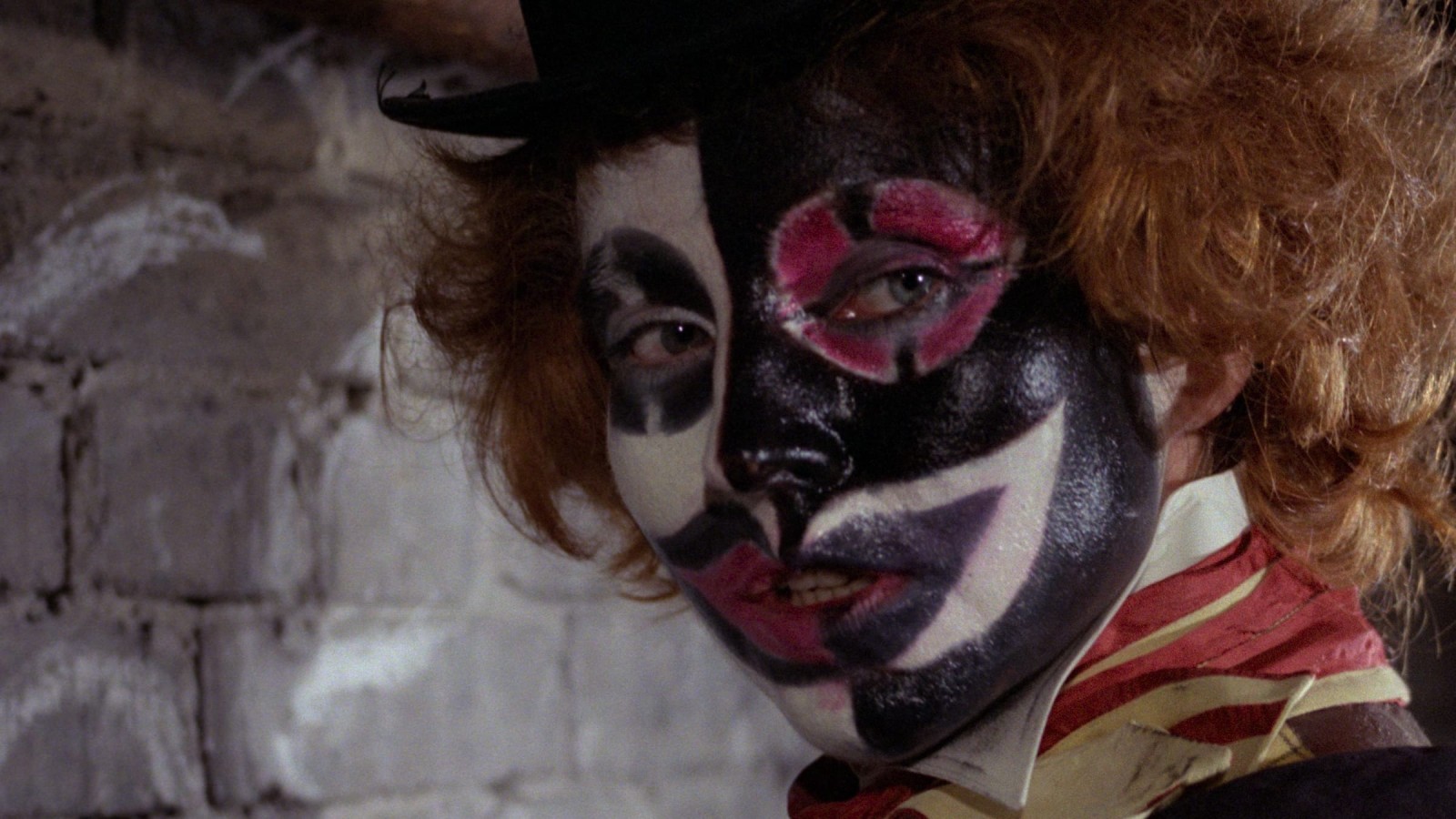
Top fashion models literally bleeding from sharp-edged aluminum dresses. A comic-strip American superhero oozing stigmata. A naked couple poked, prodded, and electroded for the delectation of the TV-viewing public. These are some of the images from the fiction films of American expatriate in Paris William Klein, mostly known in the United States for his early experimental photography and his later documentary films. But Klein also directed some of the most accomplished big-screen social satires of the sixties and seventies.

The grandson of Jewish Hungarian immigrants, Klein was born and raised in New York and planned to be a painter from an early age. He first went to Paris in 1946, to attend the Sorbonne on the GI Bill, and the experience was transformative: he studied briefly with painter Fernand Léger, and also met his future wife, Jeanne Florin, on his second day there. In the early fifties, an exhibition of Klein’s first abstract photos caught the eye of American Vogue’s legendary art director, Alexander Liberman, who offered him not just a magazine contract but also financing for a personal project—Klein wanted an image diary of his return to New York, captured in gritty, violent street photography.  

Modelcouple_1_w160

The Model Couple

William Klein

1977

101 min

Color

1.66:1

Mrfreedom_2_w160

Mr. Freedom

William Klein

1969

92 min

Color

1.66:1

1966

101 min

Black and White

1.66:1

0 Comments

12May08

The Fire Within: Day of the Dead BY MICHEL CIMENT

761_002

When he shot The Fire Within in the spring of 1963, Louis Malle had already established a strong reputation. Incredibly precocious, he won a Palme d’Or at the age of twenty-four, at the 1956 Cannes Film Festival, for the underwater documentary The Silent World, photographed and codirected with oceanographer Jacques Cousteau. One year later he anticipated the French New Wave with Elevator to the Gallows, scored by Miles Davis and starring a young Jeanne Moreau, who also starred in his next film, The Lovers, which won a Special Jury Prize at the Venice Film Festival in 1958 and created a scandal with its explicit eroticism. His follow-up, an audacious 1960 adaptation of Raymond Queneau’s farcical novel Zazie dans le métro, further proved his fondness for literary sources, and 1962’s Vie privée created a stir by featuring Brigitte Bardot in one of her more complex roles.

Yet despite his commercial and critical success, Malle felt dissatisfied with his career thus far. Probably his apprenticeship with Robert Bresson, for whom he was assistant director on A Man Escaped (1956), had instilled in him a high exigency for the practice of his art. He was also aware of the eclecticism of his style, as well as of his themes, while newcomers like Godard and Truffaut had imposed a stronger personality. Now thirty, Malle seemed to be hiding behind literary adaptations, which looked like aesthetic variations with no real focus. The son of a wealthy family of industrialists from the north of France, Malle felt ill at ease with his bourgeois upbringing, and unlike some of the directors coming from Cahiers du cinéma (Truffaut, Rohmer, et al.), with their right-wing inclinations, he was decidedly opposed to the war in Algeria and the Gaullist regime, even producing the overtly political first feature of his friend Alain Cavalier, Le combat dans l’île.  

Film_430w_fireswithin_w160

The Fire Within

Louis Malle

1963

108 min

Black and White

1.66:1

0 Comments

12May08

The Fire Within: Pale Fire BY PETER COWIE

If ever an actor could reconcile his natural-born swagger with a kind of pervasive lethargy it was Maurice Ronet. This gave him a distinctive presence in the French cinema for more than twenty years, even if he eschewed the lure of stardom per se, preferring parts that suggested rather than stated a character’s intentions. In The Fire Within (1963) Louis Malle found in the sexy, exasperating Ronet an alter ego, just as Truffaut had found his Léaud, and Godard his Belmondo, confessing many years later, “There was a strange osmosis between us.”

Yet despite making over one hundred films, Ronet would never achieve the iconic celebrity—or notoriety—of Alain Delon, Jean-Claude Brialy, or indeed Jean-Paul Belmondo. In his early twenties he’d caught the eye in Jacques Becker’s Rendez-vous de juillet (1949), as an idealistic student in Paris. Ronet didn’t have the chance to shine, however, until Malle—whom he had met at the 1956 Cannes festival—cast him in Elevator to the Gallows (1957). When he played the glib young man willing to carry out a meticulously planned murder for the sake of his mistress, his controlled talent finally emerged.

Six years later, when Malle was preparing for The Fire Within, Ronet lobbied hard to get the role of Alain Leroy. (Malle had rejected Ronet for the romantic lead in 1958’s The Lovers, but he was ideally suited for Leroy.) Diffident, contemplative, and detached from the energy of the entertainment business, Ronet saw in Leroy a mirror image of himself, suffering as he was from a severe drinking problem. Indeed, throughout his life Ronet remained a charmeur, drawn to the “good life” as a moth to a flame.  

Film_430w_fireswithin_w160

The Fire Within

Louis Malle

1963

108 min

Black and White

1.66:1

1 Comments

12May08

The Lovers: Succès de scandale BY GINETTE VINCENDEAU

759_037

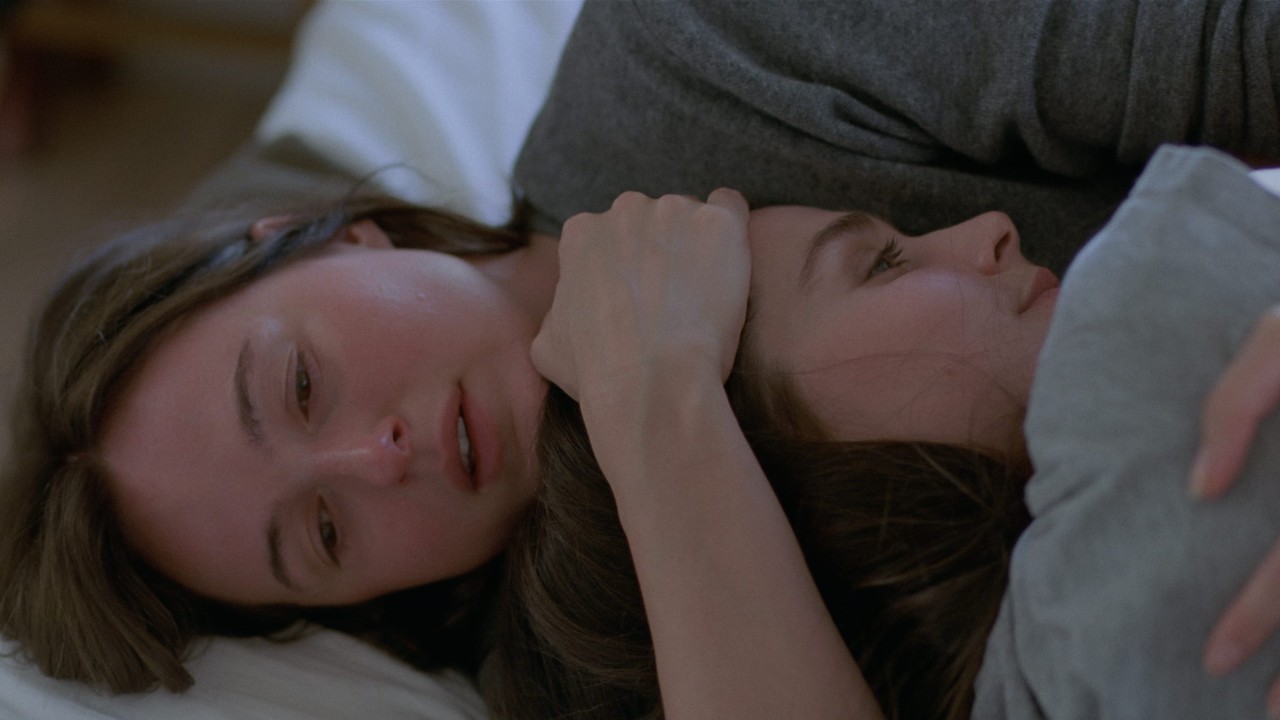
When it came out in November 1958, The Lovers scandalized conservative France, just as it had outraged Catholic Italy at the Venice Film Festival two months earlier. At the same time, the film solidified the reputations of director Louis Malle and star Jeanne Moreau, both having already triumphed earlier that year with Elevator to the Gallows. They would go on, separately, to glittering careers, but The Lovers would remain a landmark of the early French New Wave, even if Malle’s relationship to that movement would be tangential. Fifty years on, it may be hard to understand the shock waves The Lovers created with its “frank” depiction of a woman’s sexual pleasure, but in the context of late-1950s France, it was a bombshell, all the more so as Malle embedded his portrait of a woman’s “liberation” within a trenchant satire of the high bourgeoisie. Today the film also speaks vividly of both the modernization of France and the revolution in French cinema that Malle and Moreau were spearheading.

Jeanne Tournier (Moreau) is the bored wife of haughty provincial press magnate Henri (Alain Cuny). She begins an affair with Raoul (José Luis de Villalonga), a snobbish polo player whom she sees on increasingly frequent visits to Paris, ostensibly to stay with her socialite friend Maggy (Judith Magre)—who actually encouraged the affair—neglecting her husband and young daughter. One weekend Henri, who probably suspects her liaison, summons Jeanne back home, where (much to her annoyance) he has invited both Raoul and Maggy. On the road from Paris, her car breaks down; she is rescued and driven home by Bernard (Jean-Marc Bory), a young, relaxed archaeologist, whom Henri also invites to stay. Bernard initially shows indifference and even hostility toward Jeanne and her world, but keenly observes the uneasy atmosphere in the house as tensions between wife, husband, lover, and friend become palpable. A night of passionate love between him and Jeanne, however, changes everything. In the morning they leave together, while the others, stunned, look on.
 

Film_429w_lovers_w160

The Lovers

Louis Malle

1958

90 min

Black and White

2.35:1

0 Comments

2009 01 02 03 04 05 06 07 08 09 10 11 12

2008 01 02 03 04 05 06 07 08 09 10 11 12

2007 01 02 03 04 05 06 07 08 09 10 11 12

2006 01 02 03 04 05 06 07 08 09 10 11 12

2005 01 02 03 04 05 06 07 08 09 10 11 12

2004 01 02 03 04 05 06 07 08 09 10 11 12

2003 01 02 03 04 05 06 07 08 09 10 11 12

2002 01 02 03 04 05 06 07 08 09 10 11 12

2001 01 02 03 04 05 06 07 08 09 10 11 12

2000 01 02 03 04 05 06 07 08 09 10 11 12

1999 01 02 03 04 05 06 07 08 09 10 11 12

1998 01 02 03 04 05 06 07 08 09 10 11 12

1997 01 02 03 04 05 06 07 08 09 10 11 12

1996 01 02 03 04 05 06 07 08 09 10 11 12

1995 01 02 03 04 05 06 07 08 09 10 11 12

1994 01 02 03 04 05 06 07 08 09 10 11 12

1993 01 02 03 04 05 06 07 08 09 10 11 12

1992 01 02 03 04 05 06 07 08 09 10 11 12

1991 01 02 03 04 05 06 07 08 09 10 11 12

1990 01 02 03 04 05 06 07 08 09 10 11 12

1989 01 02 03 04 05 06 07 08 09 10 11 12

1988 01 02 03 04 05 06 07 08 09 10 11 12

1987 01 02 03 04 05 06 07 08 09 10 11 12

1986 01 02 03 04 05 06 07 08 09 10 11 12

1985 01 02 03 04 05 06 07 08 09 10 11 12

1984 01 02 03 04 05 06 07 08 09 10 11 12