

22May06
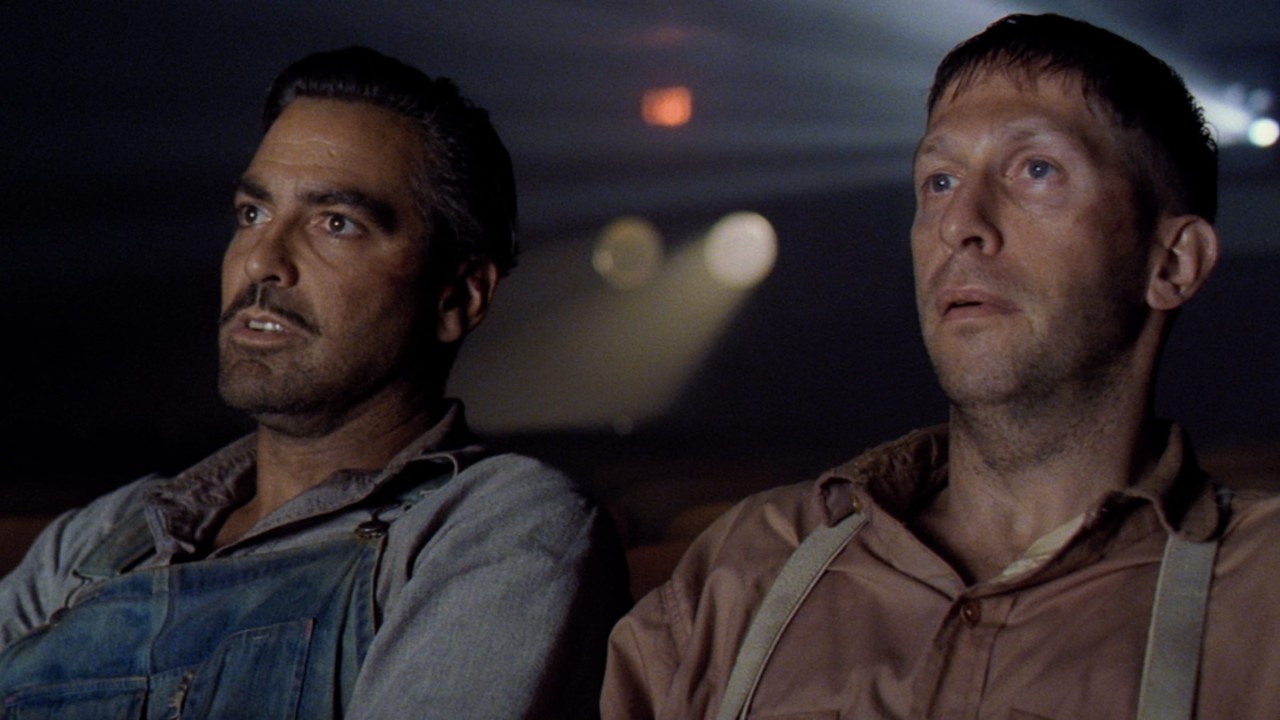
The current popularity and cultural importance of documentaries would have been inconceivable in 1976, when Harlan County USA briefly ignited commercial movie screens. It was the dawn of the blockbuster age: the buzz around Jaws had barely receded, and Star Wars loomed on the horizon. Although realistic dramas still attracted mass audiences—as evidenced by Dog Day Afternoon, All the President’s Men, and Network—feature-length nonfiction remained an essentially highbrow pursuit. During the mid-seventies, only a handful of docs per year were released theatrically, almost exclusively in art-house venues. Despite an uproar over Hearts and Minds, Peter Davis’s 1974 dissection of the Vietnam debacle, press coverage was sporadic at best, and television had scaled back its earlier commitment to documentary programming.
Barbara Kopple’s detailed analysis of a Kentucky mine workers’ strike is unmistakably of this time—a virtual hub of urgent themes, formal tendencies, political debates, and material practices that define post-sixties documentary in America. But unlike other docs of the period, its theatrical distribution and relatively wide appeal generated considerable public support; it is still the only nonfiction film to have played the New York Film Festival, won an Academy Award, and been granted a listing on the National Film Registry. Moreover, its compelling dramatic structure, hybrid visual style, and rejection of fly-on-the-wall impartiality anticipate key developments in contemporary nonfiction. Despite its modest subject and visual resources, Harlan County USA encompasses an extraordinarily broad and complex aesthetic agenda whose influence can be felt in later fictional movies—including Norma Rae (1979) and Harlan County War (2000)—as well as political docs.
22May06

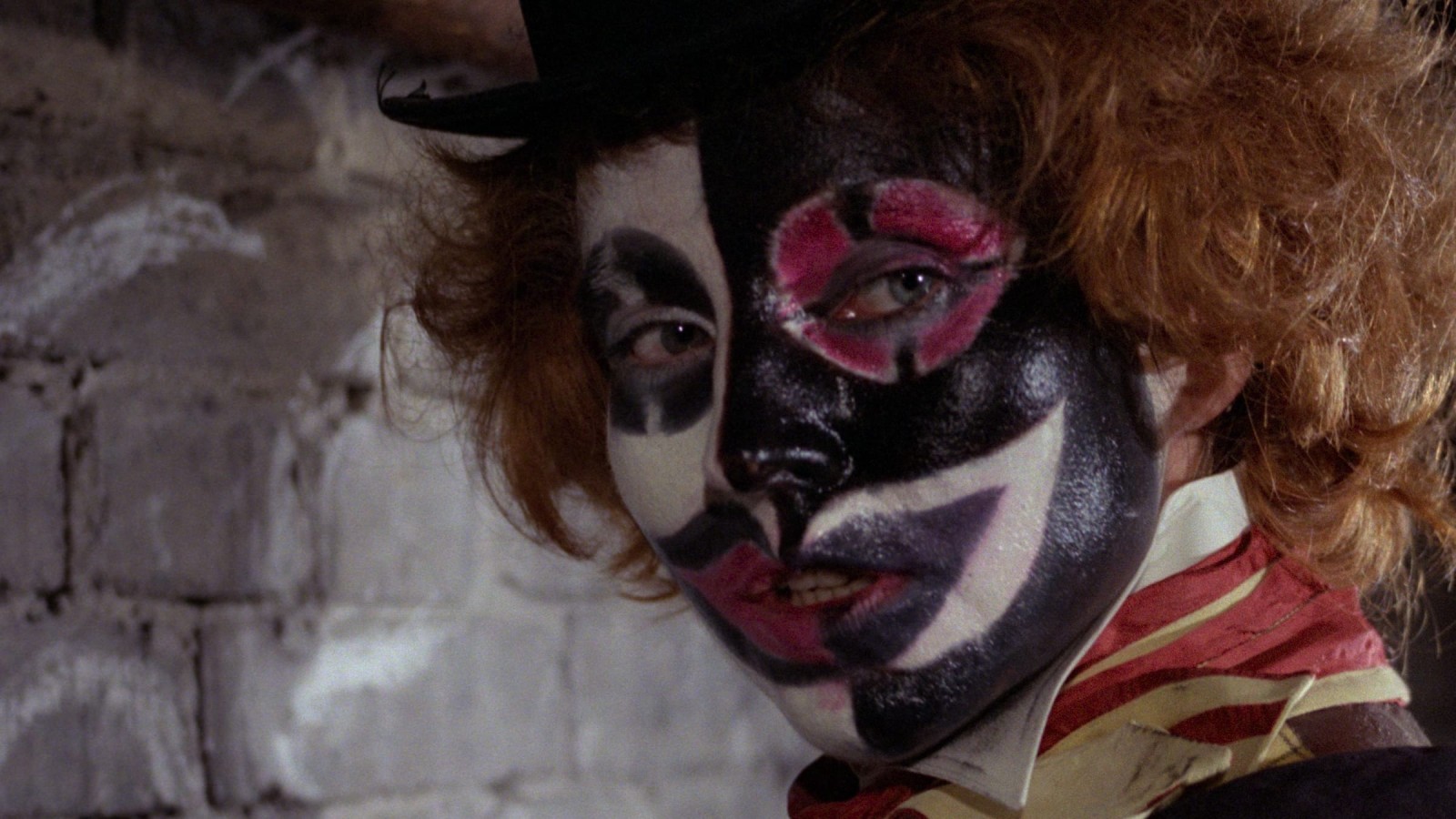
Luis Buñuel shot Viridiana in the early months of 1961, in his native Spain. It was the first film he had made there since his departure for the United States and Mexico in 1939, and he was much criticized for embarking on this return at a time when the fascist dictator Francisco Franco still ruled. How could Buñuel, the protester, the loyalist, and the long-term exile, work in the enemy’s country, even if that country was also his own? But he clearly had his reasons.
A contemporary cartoon that circulated widely showed him, in its first frame, arriving in Spain to be greeted by a beaming Franco. In the background a man is protesting loudly. In the second frame, Buñuel hands over to Franco a box wrapped with a broad, fancy ribbon. The man in the background continues to protest. In the third and last frame, the box has exploded in Franco’s face, and Buñuel is leaving. The protester is speechless. This is pretty much what happened, although the director did say in his autobiography that Franco himself reportedly didn’t especially object to the film. Buñuel added wryly, “To tell the truth, after all he had seen, the film must have seemed very innocent to him.”
8May06
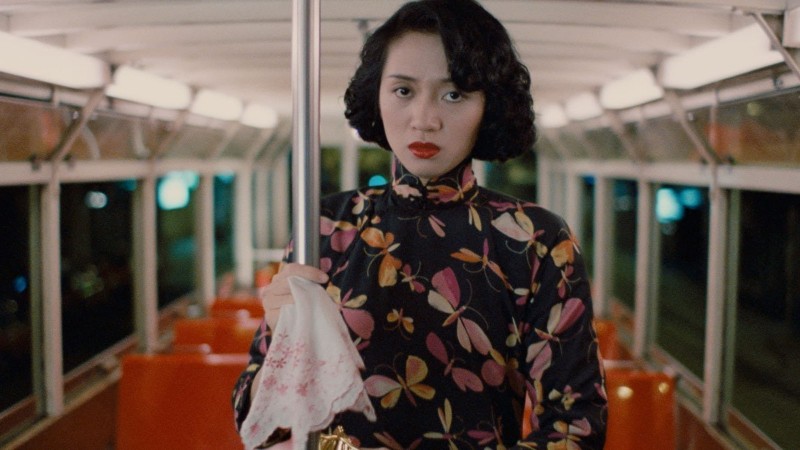
Maybe it is something to do with the sensual seductiveness of cinema: as new-millennium Americans, we care nothing for Japanese poetry, little for Japanese painting and fiction, and certainly too much for Japanese cartoons, and yet Yasujiro Ozu, the least sensational filmmaker of all time, remains on our docket, calm as ever, seething with semispoken disappointments, visually blocking out Nipponobourgeois life maps with guileless wisdom. By all rights, an Asian artist of such sublime restraint should have been long forgotten in our ethnocentric, hyperventilating digital-viscera mind-set, but here he still is, evoking new scholarship, igniting theatrical retrospectives all over again, being lovingly and enthusiastically bronzed on DVD, one precious film at a time. An enormous amount of literature has been generated about Ozu’s work, but a few line items need to be reaffirmed: He is one of the very few cinema giants you could never accuse of pretension (Jean Renoir, Luis Buñuel, and Robert Bresson are the others). He remains movies’ most disciplined creative voice—a matter of no small magnitude in a medium naturally prone to the infantilization of noise, speed, and bright colors. Each film is a raw lesson—new in our presence, if not terribly different than twenty others—intended to realign in our hearts what movies are good for.
It’s a cliché now to posit Ozu as the “most Japanese” of that nation’s great directors, but it still seems true. His focus on the society’s transitional struggles, quotidian living spaces, and enjoyable norms was not only unflagging (more than fifty films in a thirty-five-year career) but embodied in the very shape of his compositions and in the reasoning behind his cuts. But it’s not Japaneseness per se that draws us; why would it, after all? It is something more fundamental—a quintessential aspect of the medium, a breath-catching nexus of time elapsed and empathies shared. It just so happens that Ozu’s Zen-infused sensibility translates on film to something like the art form’s nascent formal beauty: patiently watching little happen, and the meditative moments around the nonhappening, until it becomes crashingly apparent that lives are at stake and the whole world is struggling to be reborn.Like many Ozu movies, Late Spring (1949) is a triumph of sympathetic, respectful clarity and a surgical strike at the heart, but it also stands alone as a turning point in his development as a sociopolitical artist. It is, first of all, the magisterial archetype for the shomin-geki—the “modern family drama”—a genre Ozu helped define and that remains his kingdom to reign. (To genre-ize Ozu at all seems odd, so intense is his formal signature. Even so, drama is the odd word out here; the textures of Japanese life and the rhythmic bolero of Ozu’s stories deliberately subsume the dramatic in favor of the internal.) But the family in that equation wasn’t exactly what it was before the war, and Late Spring is the first of his films made after those horrors to try to imagine what Japanese domesticity might look like in this new world. Comparatively (by an Ozu measure), Record of a Tenement Gentleman (1947) and A Hen in the Wind (1948)—his first two postwar works—are scabrous portrayals of a corrupt, demilitarized, firebombed landscape that swallows the vulnerable. It was as if Ozu needed to vent the war’s pus from his psyche. With Late Spring, he dresses the wound and moves toward his true aesthetic protocol; life during the reconstruction is viewed by way of the quiet tensions of generational conflict.