




23Apr07

Eclipse Series 2:
The Documentaries of Louis Malle
BY MICHAEL KORESKY

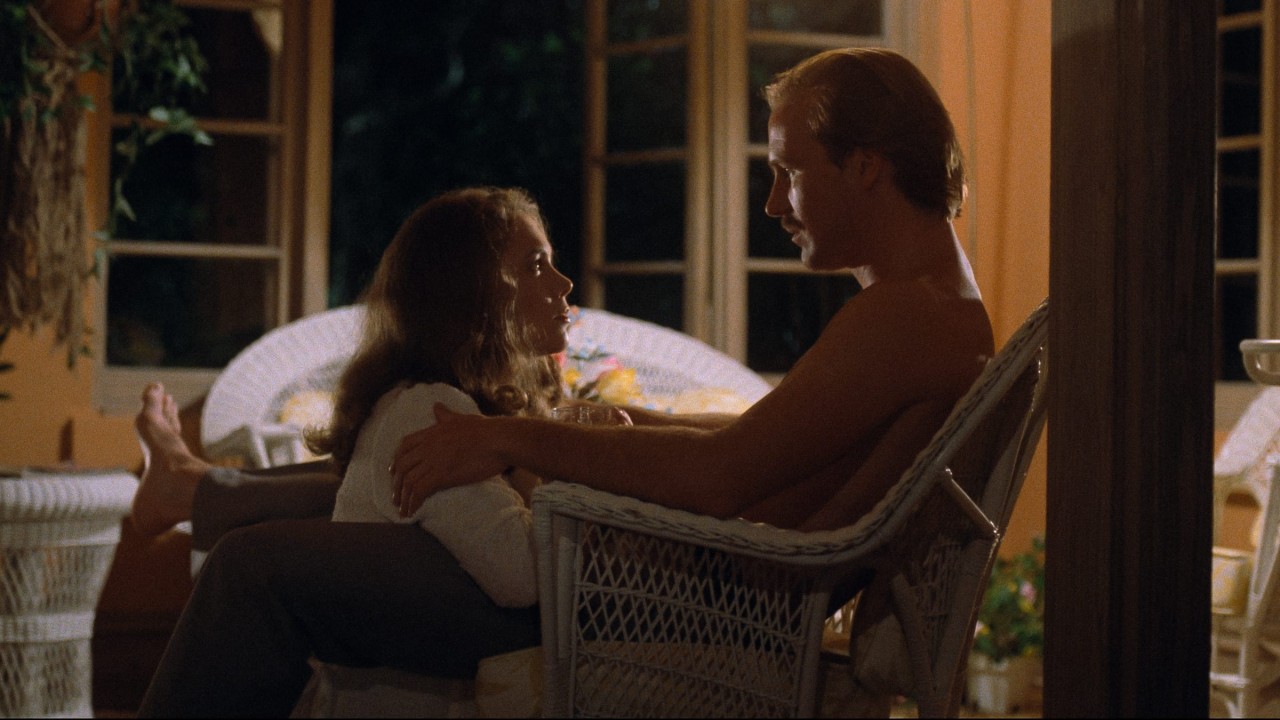
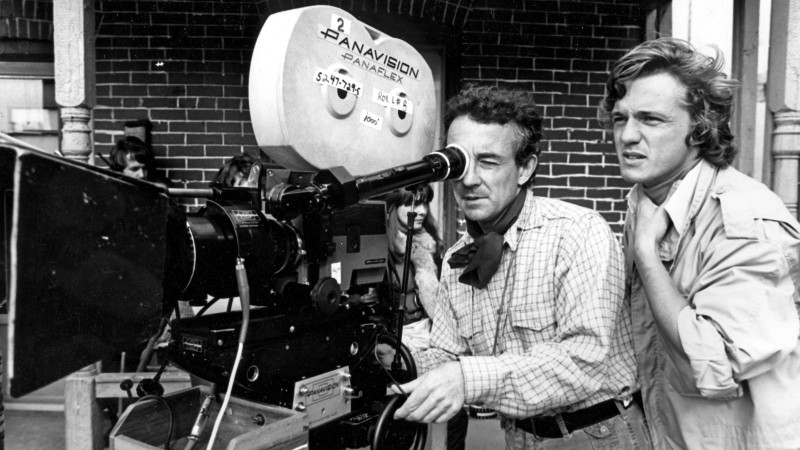
Deservedly celebrated for the astonishingly diverse array of narrative features he made over a nearly forty-year career, Louis Malle was in fact even more multifaceted than this body of work suggests. For alongside such well-known, and disparate, dramas as the cool noir Elevator to the Gallows (1958), the erudite My Dinner with Andre (1981), and the heartbreaking, autobiographical Au revoir les enfants (1987), this masterful director quietly sustained a parallel career in nonfiction film, which both informed and stood counterpoint to his more mainstream fare. Malle, indeed, started out in documentary: at age twenty-three, when he was a film student, he was asked by undersea explorer Jacques Cousteau to collaborate on the nature film The Silent World. This auspicious debut went on to win both the 1956 Cannes Palme d’or and the 1957 best documentary Oscar. Malle handled much of the underwater cinematography himself, with the searching, inquisitive nature that would become the trademark of his greatest investigatory works.

He didn’t return to documentary until 1962, when, after the critical failure of his film Vie privée, he grabbed a camera and for four months shot footage amid the violence in Algeria. Though he never edited it together, the experience persuaded him to reenter, as he called it, “the real world.” That same year, he took a small crew to observe the Tour de France and ended up with the quick-cutting, energetic short Vive le Tour, a commemoration of his country’s most watched sporting event as well as a personal reflection on one of his favorite pastimes. Malle later called Vive le Tour a “happy experience,” but it was only after he undertook the epic Phantom India, in 1968, that he established his documentary philosophy, adopting certain tenets of cinéma direct—improvisation, minimal crew, the refusal to organize reality—and applying them to a fairly consistently class-conscious, outsider perspective  

1986

81 min

Color

1.33:1

Calcutta_02_w160

Calcutta

Louis Malle

1969

99 min

Color

1.33:1

Godscountry_01_w160

God’s Country

Louis Malle

1985

89 min

Color

1.33:1

Humaintrothumain_01_w160

Humain, trop humain

Louis Malle

1973

72 min

Color

1.33:1

Phantomindia_01_w160

Phantom India

Louis Malle

1969

363 min

Color

1.33:1

1974

95 min

Color

1.33:1

Viveletour_01_w160

Vive le tour

Louis Malle

1962

19 min

Color

1.33:1

0 Comments

16Apr07

La haine and after:
Arts, Politics, and the Banlieue
BY GINETTE VINCENDEAU

To start on a personal note: I wrote a book about La haine that came out in November 2005, just as the Paris suburbs (banlieue) erupted in an unprecedented wave of violence. Every night, as in the Bob Marley song we hear over the credits, there was burning and looting and clashes with the police—which I could hear as I was staying with my parents, who live next to one of these “difficult” suburbs. Thus the book, which coincided with the tenth anniversary of the film, proved timely for unexpected reasons. The convergence of Mathieu Kassovitz’s film and social unrest, however, was nothing new: at the time of its release, in 1995, La haine was already, and controversially, linked to suburban violence and police bavures (slipups). The explosive contents of the film, its unusually young creative team (Kassovitz and the three lead actors were in their twenties), the fact that it gained the prestigious mise-en-scène prize at Cannes, its huge popular success, and the “media circus” that followed turned La haine into a phénomène de société that reached beyond its cinematic value. This black-and-white chronicle of twenty-four hours in the life of a mixed-race young male trio from a run-down banlieue has resonated ever since.

Kassovitz started writing the script of La haine on April 6, 1993, the day Makome M’Bowole, a young man from Zaire, was shot while in police custody in the eighteenth arrondissement of Paris. He wondered “how a guy could get up in the morning and die the same evening, in this way.” M’Bowole’s officially “accidental” death is one of the many bavures that have plagued the French police in recent decades. More than three hundred mortal “slipups” have been recorded since 1981—common enough to have become a topic for comic films. For Kassovitz, however, they were no cause for laughter. Before M’Bowole, another famous case, that of Malik Oussekine, in 1986, had had particular resonance for him, and it is referred to in the opening montage. The narrative spring of La haine is the shooting of a young beur (a second-generation North African) by the police during the riots that open the film. His death in the hospital propels Vinz (Vincent Cassel), Hubert (Hubert Koundé), and Saïd (Saïd Taghmaoui) on an eventful journey through their suburban estate (cité) and then central Paris, ending in shocking violence. In the process, the film shows clashes between police and youth, and in one famous scene, two policemen sadistically molest Hubert and Saïd while a trainee policeman watches. No wonder La haine instantly, and despite Kassovitz’s denials, acquired the reputation of being antipolice. As the daily Libération reported, after the Cannes gala evening at which the film received a standing ovation, “uniformed police supposed to form a double ceremonial parade [. . .] ostensibly looked toward the sea; in other words, they turned a hateful back to the team who made the film that hates them.” La haine is punctuated by a ticking clock and by Hubert’s story of a man in free fall—Kassovitz’s metaphor for the banlieue as social time bomb.  

Hain_w160

La Haine

Mathieu Kassovitz

1995

96 min

Black and White

1.85:1

1 Comments

16Apr07

La haine: Kassovitz vs. Sarkozy BY MATHIEU KASSOVITZ AND NICOLAS SARKOZY

In November 2005, riots spread throughout the suburbs of Paris following the accidental deaths of two teenagers in the poor banlieue district of Clichy-sous-Bois. Running from police, who had broken up their football game to conduct ID checks and questioning (this sort of action was allegedly frequent and lengthy), the two boys, who were of North African Muslim descent, hid in a power substation and were electrocuted. Whether or not the two young men were indeed victims of racial discrimination by police, their deaths set off a chain reaction of violence, looting, and rioting in schools, gyms, and police stations.

The world expected a response from Mathieu Kassovitz, whose film La haine ten years earlier had ignited debates about tensions between police and immigrant communities. Kassovitz decided to go public via his blog. He used his first post to take right-wing minister of the interior Nicolas Sarkozy to task, specifically for his remark that the rioters were “scum” and that they should be blasted out of the banlieues “with a fire hose.” Sarkozy responded, and the following dialogue resulted.  

Hain_w160

La Haine

Mathieu Kassovitz

1995

96 min

Black and White

1.85:1

0 Comments

16Apr07

Brute Force: Screws and Proles BY MICHAEL ATKINSON

Here we are in the dark territories again, the republic of bitternesses and bile known as noir, squaring our jaws against an amoral universe and roaming the rain-wet, lightless American City as if it were a circle of the inferno where backstabbers, goldbricks, and unfortunates march in closed patterns and puzzle their fate. What does noir mean to us now? The long second childhood the genre enjoyed as retro co-optations, remakes, advertising totems, and comic-book riffs has come and gone it seems (the superselfconscious likes of Sin City notwithstanding), allowing us to return to the original films themselves, in pristine, remastered DVD form, by the bargeload. Dozens of favorite noirs sit comfortably on the culture’s top shelf today, like bottles of antique brandy, while the box-office champs of the same era (Forever Amber, The Jolson Story, The Road to Rio, Samson and Delilah, The Greatest Show on Earth, White Christmas, etc.) have been long dismissed and largely forgotten. This greatest of all American film genres still speaks to our modern doubts, and remains ever cool.

Jules Dassin’s Brute Force (1947) has a particular edge—not only is it arguably the meatiest and most resonant prison film ever made in this country, but it also exudes a startling degree of metaphoric frisson. For one thing, it draws explicit parallels to the Nazi encampment experience, making it one of the first Hollywood films to explore, even by proxy, those fresh wounds (preceded, as far as I know, only by Gregory Ratoff’s 1945 Constance Bennett vehicle Paris Underground). From the storm-battered credits overture (surely one of the most atmospheric openings of the forties) to the vision of the prison’s gun towers and giant front gates, the long black raincoats of the guards, and the concept of Hume Cronyn’s nebbishy, fake-cultured, torture-happy Nietzschean captain, Dassin’s nasty, intimate film fairly shivers with fascist portents. It’s indicative that, singularly among prison film characters, the cons we meet (escape plotter Burt Lancaster, romantic Whit Bissell, centrist gang leader Charles Bickford, urbane playboy John Hoyt, manly martyr Howard Duff, huddled as if in a tribal tent) are all morally righteous men with large hearts, either guilty of a harmless crime, of thievery in the name of love, or not guilty of anything we’re told about at all. Their bonded, self-sacrificial brotherhood plays more like the dynamic between grunts in a POW camp, where the staff screws are always the only enemy.  

Film_383w_bruteforce_w160

Brute Force

Jules Dassin

1947

98 min

Black and White

1.33:1

0 Comments

16Apr07

Overlord: Man Versus Machine BY KENT JONES

820_280.tif

Few national cinemas have confronted the issue of preparedness for war with the creative vigor that England’s has displayed. Thorold Dickinson’s Next of Kin (1942), Alberto Cavalcanti’s Went the Day Well? (1942, from a story by Graham Greene), and, of course, Michael Powell and Emeric Pressburger’s wartime output are distinctive for the ingeniousness with which they fuse the English character itself with the know-how, cunning, and courage required to defend against the impending threat of a vicious enemy. The spiritual fortitude so beautifully portrayed in these films, reduced to its essence by Powell in his remarkable five-minute short An Airman’s Letter to His Mother (1941), is moving today in a way that many analogous American films of the period no longer are. The English films’ robust response to the challenge of creating propaganda is moving in and of itself—collectively, they offer a complex portrait of a people whose foibles, shortcomings, and nearsightedness finally underscore an essential nobility.

Stuart Cooper’s unjustly forgotten and now happily resurrected 1975 Overlord seems to me to be directly linked to those earlier films, despite the fact that it was made for vastly different reasons and under wholly distinct circumstances. It’s as if the stoic/pragmatic spirit of that earlier time, also to be found in English literature (think of Ford Madox Ford’s World War I–era Parade’s End), had survived the transposition to modern cinema, specifically the strain initiated by Alain Resnais with the somber uncertainties and temporal splintering of Hiroshima mon amour (1959). Overlord, with its continual refrain of a soldier’s vision of his own probable annihilation, its ominous flash-forwards, and its striking mix of fiction and documentary, certainly has its place among the great death-driven modernist narratives of its era (Nicolas Roeg’s 1973 Don’t Look Now and Sam Peckinpah’s films come immediately to mind), and it has a clear kinship with Kevin Brownlow’s similarly handmade “period epics” It Happened Here (1966) and Winstanley (1975). Yet the most striking aspect of Overlord is the survival of that much earlier wartime era’s quiet exaltation.  

Overlord_w160

Overlord

Stuart Cooper

1975

84 min

Black and White

1.66:1

1 Comments

2009 01 02 03 04 05 06 07 08 09 10 11 12

2008 01 02 03 04 05 06 07 08 09 10 11 12

2007 01 02 03 04 05 06 07 08 09 10 11 12

2006 01 02 03 04 05 06 07 08 09 10 11 12

2005 01 02 03 04 05 06 07 08 09 10 11 12

2004 01 02 03 04 05 06 07 08 09 10 11 12

2003 01 02 03 04 05 06 07 08 09 10 11 12

2002 01 02 03 04 05 06 07 08 09 10 11 12

2001 01 02 03 04 05 06 07 08 09 10 11 12

2000 01 02 03 04 05 06 07 08 09 10 11 12

1999 01 02 03 04 05 06 07 08 09 10 11 12

1998 01 02 03 04 05 06 07 08 09 10 11 12

1997 01 02 03 04 05 06 07 08 09 10 11 12

1996 01 02 03 04 05 06 07 08 09 10 11 12

1995 01 02 03 04 05 06 07 08 09 10 11 12

1994 01 02 03 04 05 06 07 08 09 10 11 12

1993 01 02 03 04 05 06 07 08 09 10 11 12

1992 01 02 03 04 05 06 07 08 09 10 11 12

1991 01 02 03 04 05 06 07 08 09 10 11 12

1990 01 02 03 04 05 06 07 08 09 10 11 12

1989 01 02 03 04 05 06 07 08 09 10 11 12

1988 01 02 03 04 05 06 07 08 09 10 11 12

1987 01 02 03 04 05 06 07 08 09 10 11 12

1986 01 02 03 04 05 06 07 08 09 10 11 12

1985 01 02 03 04 05 06 07 08 09 10 11 12

1984 01 02 03 04 05 06 07 08 09 10 11 12