

30Mar09

Danton: The Worst of Times BY LEONARD QUART

285-081

Among the great Polish filmmakers—Krzysztof Kieslowski, Krzysztof Zanussi, Agnieszka Holland, Roman Polanski—Andrzej Wajda stands out as the one most concerned with national identity and memory. Of course his large body of work also includes films that are more psychological and romantic in nature, such as Innocent Sorcerers (1960) and Maids of Wilko (1979), but his international reputation rests on his striking and profound portraits of Poland’s public life and history, from his fifties War Trilogy—A Generation, Kanal, and Ashes and Diamonds—to his most recent film, Katyn (2007), depicting the systematic Soviet massacre of fifteen thousand members of the Polish officer corps during World War II.

While most of his films depict contemporary Poland or the tragic, formative World War II years, Wajda has also made a number of films set in the more distant past, including his epic about early nineteenth-century Poland, Ashes (1965), and the controversial Promised Land (1975), which recounts the cancerous growth of late nineteenth-century Lodz into a booming industrial city. Danton (1983), on first glance, might seem to be one of these straightforward period films, and, strangely, not about Poland at all. But in fact, Wajda’s tale of the battle between two of the French Revolution’s titanic figures, Danton and Robespierre, is an intense political allegory on the futility of violent revolution, with clear parallels to twentieth-century Poland.  

Danton_w160

Danton

Andrzej Wajda

1983

136 min

Color

1.66:1

0 Comments

30Mar09

HAPPY BIRTHDAY, VOLKER!

Here’s a quick birthday shout-out to Academy Award–winning, New German Cinema trailblazing Volker Schlöndorff, who turns seventy today. The tireless Schlöndorff is reportedly celebrating in (his) style: he’s currently on a reading tour through Germany, promoting his new autobiography, Light, Shadow and Movement: My Life and My Films (published in German by Carl Hanser Verlag). We’ll raise a glass to you in New York!

Film_177w_losthonor_w160

The Lost Honor of Katharina Blum

Volker Schlöndorff and Margarethe von Trotta

1975

106 min

Color

1.77:1

Film_279w_youngtorless_w160

Young Törless

Volker Schlöndorff

1966

87 min

Black and White

1.77:1

Film_234w_tim-drum_w160

The Tin Drum

Volker Schlöndorff

1979

142 min

Color

1.77:1

Film_192w_coupdegrace_w160

Coup de grâce

Volker Schlöndorff

1976

98 min

Black and White

1.66:1

1 Comments

27Mar09

STILL RIDING THE WAVE

Thanks to IFC Daily’s David Hudson for tipping us off to a couple of top-notch articles this week marking the fiftieth anniversary of the French New Wave. That’s right, it was fifty years ago, in May to be precise, that François Truffaut’s The 400 Blows shook up the establishment at the Cannes Film Festival. It was also the year Alain Resnais’ Hiroshima mon amour was released, and that Jean-Luc Godard took to the streets to shoot Breathless. Sure, some have set the beginning of the movement a year or two earlier (even as far back as Agnès Varda’s La Pointe Courte, made in 1954), but what’s the harm in celebrating! Which is what BFI Southbank is doing with a special series, simply called Nouvelle Vague, the occasion for the pieces in the Guardian and Time Out London.

“No one in the year 2009 will make a better film than The 400 Blows, Hiroshima mon amour, or Jules and Jim. No one will make a more daring film than Pierrot le fou, Alphaville, or Weekend. No one will make a more adventurous film than Paris Belongs to Us or a more influential film than Breathless,” declares Joe Queenan in his retrospective piece for the Guardian. Well, maybe not, but some filmmakers are still giving it their all, including Mike Leigh, whom Trevor Johnston interviewed for the Time Out London tribute, in which the director recounts the major influence the New Wave had on his career. “Before I arrived down here, I’d never seen a subtitled film,” he says of coming to London in 1960. “With Godard’s Breathless in particular, it was the real, fundamental, anarchic, status quo–challenging, breathing-real-air aspect of it which resonated with me. It keyed into an aspiration I’d had for some time.” Leigh also discusses the New Wave’s influence on British cinema of the sixties, such as A Taste of Honey and If...., and his particular love for Cléo from 5 to 7 and Jules and Jim.

0 Comments

26Mar09

PREORDERS ARE BACK!

We have some good news: preorders are back at criterion.com! We’ve worked out some kinks in the system, and starting today you can once again order upcoming Criterion titles and your credit card won’t be charged until your order is ready to ship.

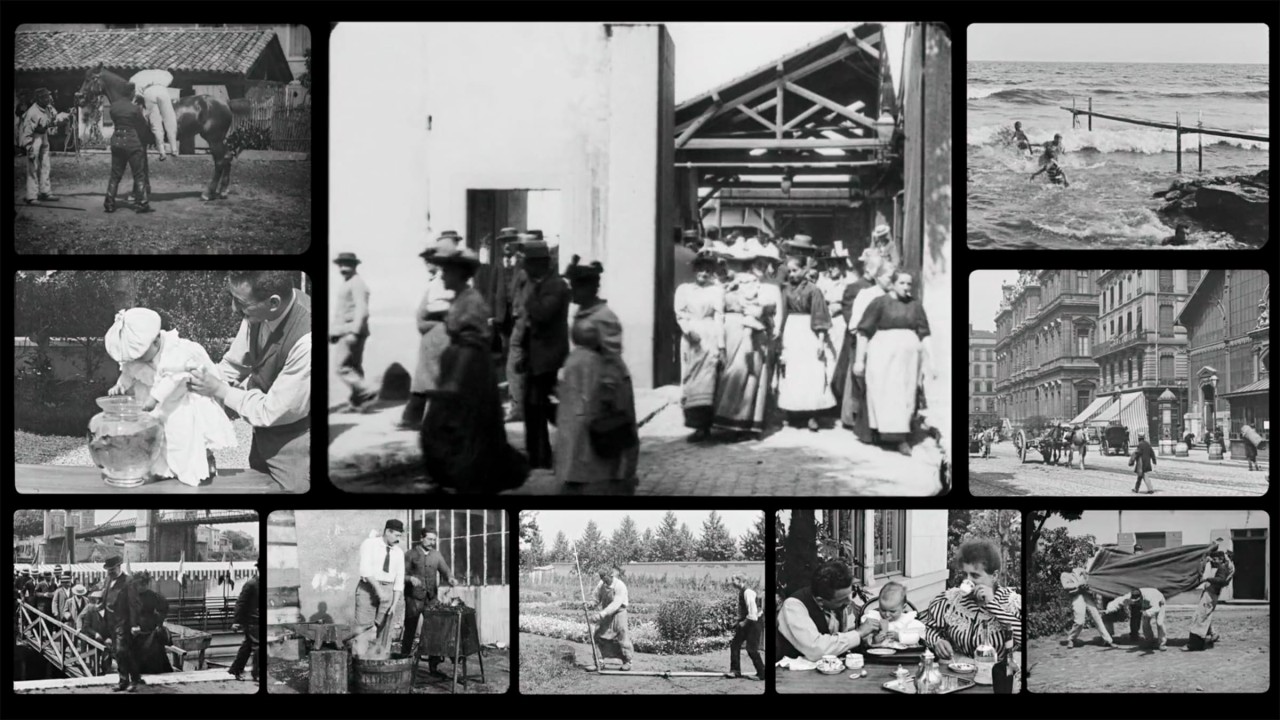
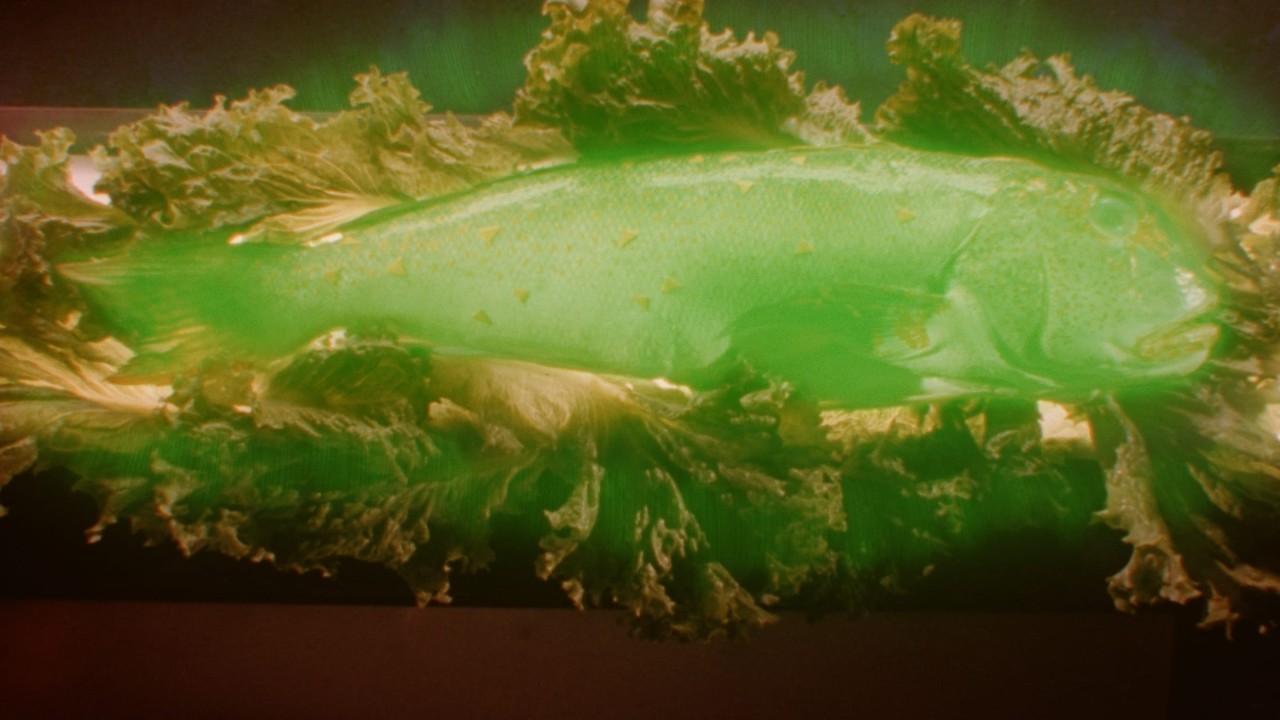
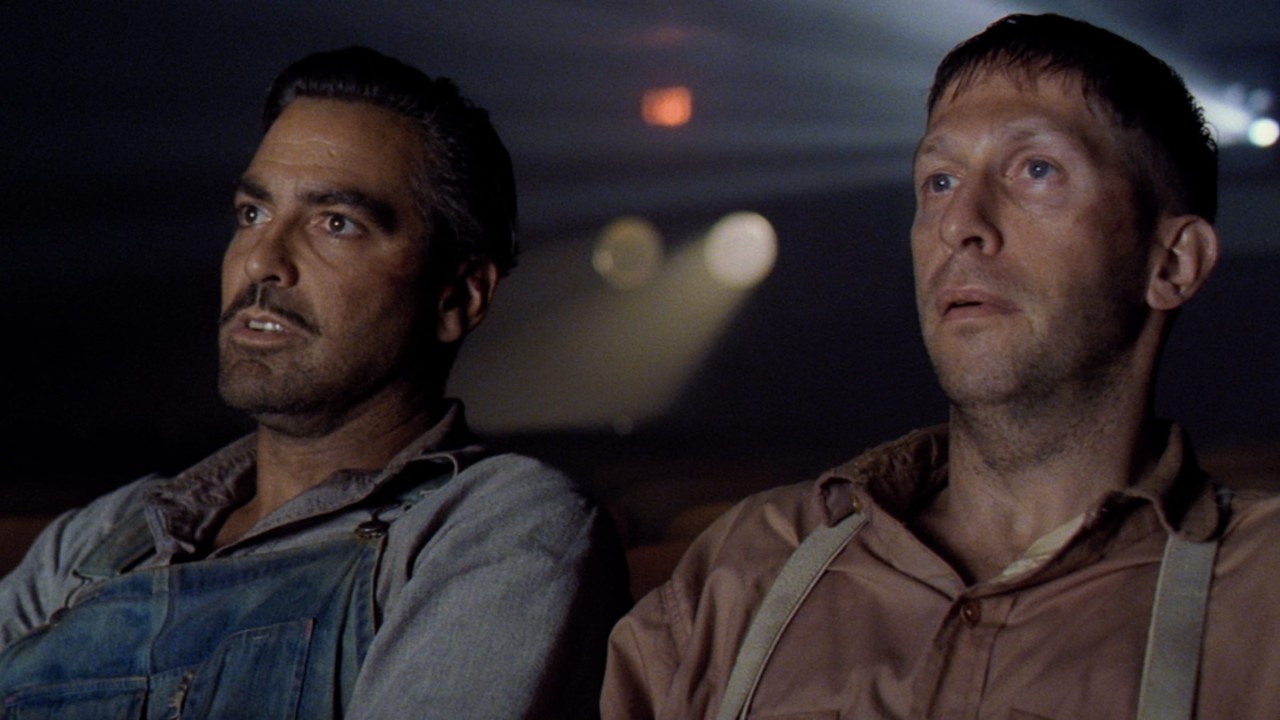
Here are some of the titles available for preorder now: the Korda Eclipse series, featuring Charles Laughton’s Oscar-winning, mutton-munching role in The Private Life of Henry VIII; a lost gem of 1970s cinema starring Robert Mitchum, The Friends of Eddie Coyle, which director Peter Yates has said is even better than his more familiar classic Bullitt; an early Stephen Frears thriller, The Hit, starring Terence Stamp, John Hurt, and Tim Roth; John Huston’s long-unavailable adaptation of Flannery O’Connor’s Wise Blood; Science Is Fiction: 23 Films by Jean Painlevé, which features mind-bending visuals and a ninety-minute original score by Yo La Tengo; and David Fincher’s dreamy, Oscar-winning The Curious Case of Benjamin Button, starring Brad Pitt. And for those who aren’t afraid to get down and dirty, we have a collection of Shohei Imamura’s underworld classics—Pigs, Pimps & Prostitutes: 3 Films by Shohei Imamura—as well as Nagisa Oshima’s notoriously explicit erotic masterpiece In the Realm of the Senses and its chilling companion piece Empire of Passion. Happy viewing!

1 Comments

25Mar09

A Dassin Dossier

J. Hoberman’s got a sharp and snazzy piece in the New York Times on American expat director Jules Dassin—just in time for Film Forum’s fifteen-film retrospective of his career. The blacklisted filmmaker of black-hearted crime dramas (and a couple of hot-blooded comedies), Dassin, who died last March at the age of ninety-six, is celebrated by Hoberman both for his classic postwar noirs (Night and the City, Thieves’ Highway) and his lesser-known works, like Up Tight, a rare, late-sixties black-power updating of John Ford’s The Informer that will be showing at Film Forum.

Film_273w_thieveshighway_w160

Thieves’ Highway

Jules Dassin

1949

94 min

Black and White

1.33:1

Film_274w_nightcity_w160

Night and the City

Jules Dassin

1950

101 min

Black and White

1.33:1

Film_383w_bruteforce_w160

Brute Force

Jules Dassin

1947

98 min

Black and White

1.33:1

Film_380w_nakedcity_w160

The Naked City

Jules Dassin

1948

96 min

Black and White

1.33:1

Film_115w_rififi_w160

Rififi

Jules Dassin

1955

118 min

Black and White

1.33:1

0 Comments

24Mar09

Watch Criterion and Die!

With a sense of urgency, and a touch of morbidity, Yahoo! Movies has put out a list of “100 Movies to See Before You Die.” “To choose the titles for the list,” write Yahoo!’s editors, “we considered factors like historical importance and cultural impact. But we also selected films that we believe are the most thrilling, most dramatic, scariest, and funniest movies of all time.” As it turns out, sixteen of those one hundred are titles from the Criterion Collection—not a bad percentage!—including some obvious selections (Seven Samurai) and some very welcome surprises (In the Mood for Love). Check out the full list, presented as a photo gallery, here. (For the record, the other fourteen Criterion picks are: The 400 Blows, 8 1/2, The Battle of Algiers, Bicycle Thieves, Breathless, Do the Right Thing, Grand Illusion, The Lady Eve, M, Rashomon, The Silence of the Lambs, The Third Man, This Is Spinal Tap, and Wild Strawberries.)

1 Comments

23Mar09

Truffaut’s Changing Times:
The Last Metro
BY ARMOND WHITE

600_002

The Last Metro was the most crowd-pleasing film of François Truffaut’s latter career, sweeping an armload of prizes at France’s Oscar equivalent, the César Awards. It was also as personal a film as he had ever made, and that denotes the film’s distinction: it is a private memoir graced with popular appeal. In it Truffaut conjures his memories of the German occupation of France, culling from his schoolboy years and his lifelong infatuation with the creative arts. Although the subject of the occupation had certainly been broached before in French film, it was still not a popular one at the time, with culturewide shame over collaboration lingering. But Truffaut, departing from the paranoid melodrama of Henri-Georges Clouzot’s 1943 Le corbeau and the psychological examination of Louis Malle’s 1974 Lacombe, Lucien—to name two well-known examples—took a guiltless approach to the heroism and nonheroism of that grim period. He invoked nostalgia and supplied relief. In 1970, he had told France-Soir: “For me, who was an adolescent at the time, the image of France cut in two, divided into Germans and Resistance fighters, is false. I see a much calmer France.” This story of the Théâtre Montmartre putting on a production in 1942, while under the heavy surveillance of Vichy collaborators, focuses on the different troupe members’ more intimate and peculiar acts of valor. Catherine Deneuve plays Marion Steiner, the actress wife of the Théâtre Montmartre’s Jewish director, Lucas Steiner (Heinz Bennent), who hides from the Nazis in a cellar beneath the stage. Marion and the theater’s acting director, costume designer, stage manager, and other performers are joined by Bernard Granger (Gérard Depardieu), a rising star at the Grand Guignol, to mount a play called The Vanished Woman, with staging notes from Lucas. For Bernard, a member of the underground Resistance, the Théâtre Montmartre fulfills two needs, for new acting challenges and wartime radicalism. He views both romantically.

The film is romantic in the broadest and most specific senses of the term, exploring several levels of heroism among both patriots and lovers. Its concept reflects the influence of one of Truffaut’s favorite films, Jean Renoir’s 1953 The Golden Coach, a celebration of theater that follows a traveling commedia dell’arte troupe in South America. (Lucas Steiner is first rumored to have left France for South America.) Truffaut also named his production company Les Films du Carrosse, paying tribute to Renoir and expressing the New Wave’s modernist engagement with film history. That complex self-consciousness is apparent from The Last Metro’s opening scenes, which mix documentary footage with period re-creations, including shots of contemporary film posters (Christian-Jaque’s La symphonie fantastique, Bel Ami, Louis Delluc’s Fièvre, Emil Jannings in Le président Krüger), to impart the texture of life during the occupation.  

Film_462w_elastmetro_w160

The Last Metro

François Truffaut

1980

131 min

Color

1.66:1

Film_242w_goldencoach_w160

The Golden Coach

Jean Renoir

1953

103 min

Color

1.33:1

1 Comments

19Mar09

The Grey Ladies Are Back!

Greygardens

1 Comments

18Mar09

Dodes’ka-den:
A Conversation with Teruyo Nogami

Writer, critic, and film lecturer Teruyo Nogami also served as one of Akira Kurosawa’s principal assistants. Hired as script supervisor on 1950’s Rashomon, Nogami went on to work on all of Kurosawa’s subsequent films, later chronicling their unique relationship in her 2001 illustrated memoir Waiting on the Weather: Making Movies with Akira Kurosawa. We asked Nogami to recall what it was like on the set of Dodes’ka-den, a film that came at a crucial point in the master filmmaker’s life. Nogami also contributed original sketches, inspired by Dodes’ka-den, for this release.

Can you tell us a few stories from the film’s production?


A lot did happen, but one episode that particularly stands out in my mind came on the first day of shooting. That was April 23, 1970. The previous year, after Kurosawa was let go as director of Twentieth Century Fox’s Tora! Tora! Tora!, a rumor got started that his mental health was deteriorating, so to lay that notion to rest he needed to make a good film. With the help of many people, now he was finally able to do that. Production got started on his first film in five years, after Red Beard, with a scene where the character Rokuchan is driving an imaginary streetcar. They rehearsed it again and again, and at last they were ready for a take. Kurosawa’s voice rang out: “Places!” Then, after a pause, “Action!” His voice had a quaver in it, even a hint of tears. When the crew and cast heard him, everyone thought, Ah, the old Kurosawa is back. The mood was electric. I’ll never forget how moving it was.

Did Kurosawa have any concerns or hesitations about working in color?

Well, Kurosawa was also a painter, you know, so of course he enjoyed the chance to use color for the first time. I remember
he told the crew to come to work in colorful clothes. He said that now that we were working in color, we might as well have a good time. For the colors on the set, he had an assistant hold a paint box while he held the brush and painted for all he was worth.  

Film_465w_dodeskaden_w160

Dodes’ka-den

Akira Kurosawa

1970

144 min

Color

1.33:1

6 Comments

17Mar09

Something to Crow About

Remember Uncle Monty’s “horrible shack,” that forbidding slab of stone and mortar Marwood and Withnail escape to in the cult classic Withnail and I? Well, the real name of that Lake District cottage is Crow Crag, and after years of dilapidation, it has a new proprietor, who’s planning to turn the cult destination (Withnail fans have been making pilgrimages to it for years, even scribbling dialogue from the film on its window boards) into a cozy getaway. You can read all about it in this story in the Guardian, and maybe soon you’ll be able to visit its tearoom and holiday accommodations.

Withnailw_w160

Withnail and I

Bruce Robinson

1986

108 min

Color

1.85:1

0 Comments

2010 01 02 03 04 05 06 07 08 09 10 11 12

2009 01 02 03 04 05 06 07 08 09 10 11 12

2008 01 02 03 04 05 06 07 08 09 10 11 12

2007 01 02 03 04 05 06 07 08 09 10 11 12

2006 01 02 03 04 05 06 07 08 09 10 11 12

2005 01 02 03 04 05 06 07 08 09 10 11 12

2004 01 02 03 04 05 06 07 08 09 10 11 12

2003 01 02 03 04 05 06 07 08 09 10 11 12

2002 01 02 03 04 05 06 07 08 09 10 11 12

2001 01 02 03 04 05 06 07 08 09 10 11 12

2000 01 02 03 04 05 06 07 08 09 10 11 12

1999 01 02 03 04 05 06 07 08 09 10 11 12

1998 01 02 03 04 05 06 07 08 09 10 11 12

1997 01 02 03 04 05 06 07 08 09 10 11 12

1996 01 02 03 04 05 06 07 08 09 10 11 12

1995 01 02 03 04 05 06 07 08 09 10 11 12

1994 01 02 03 04 05 06 07 08 09 10 11 12

1993 01 02 03 04 05 06 07 08 09 10 11 12

1992 01 02 03 04 05 06 07 08 09 10 11 12

1991 01 02 03 04 05 06 07 08 09 10 11 12

1990 01 02 03 04 05 06 07 08 09 10 11 12

1989 01 02 03 04 05 06 07 08 09 10 11 12

1988 01 02 03 04 05 06 07 08 09 10 11 12

1987 01 02 03 04 05 06 07 08 09 10 11 12

1986 01 02 03 04 05 06 07 08 09 10 11 12

1985 01 02 03 04 05 06 07 08 09 10 11 12

1984 01 02 03 04 05 06 07 08 09 10 11 12