
17Mar08

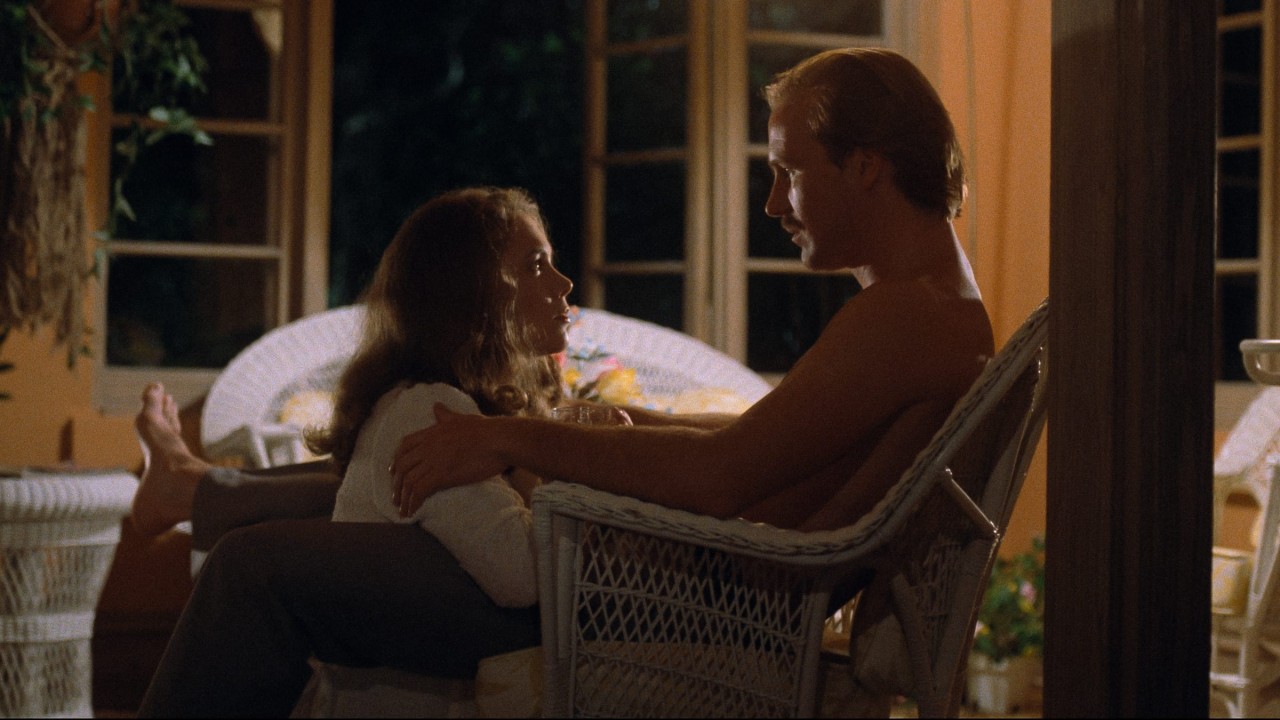
Asked by French journalists in a 2001 interview what recent films he most admired, Brian De Palma named Ang Lee’s 1997 The Ice Storm. It was surprising to hear one of the leaders of a filmmaking revolution that aimed at transforming American cinema in the sixties single out as exemplary a work by a Taiwanese-born director whose first three films were in Mandarin, but De Palma was right. Ten years after it was made, The Ice Storm looks like the best American film of the nineties.
There were other great American films in that decade, of course—the words “Groundhog Day!” will no doubt spring to the lips of many an indignant film lover—but The Ice Storm occupies a special place among them because it offers a vision of a turning point in the country’s history. Most of the events of the film take place on Thanksgiving Day 1973, the tenth anniversary of the JFK assassination, which lit the fuse for the sexual, cultural, and political revolts that exploded in the late sixties. As the characters prepare to celebrate Thanksgiving, the country is already sliding onto the downward slope that would lead to the end of that heady era.
17Mar08

During the Second World War, when Hiroshi Teshigahara was a schoolboy, Japan’s cities—above all his hometown, Tokyo—were mercilessly firebombed. He, and his future associates in countless artistic undertakings, returned to a landscape of bleak ruins. The adolescent Hiroshi was particularly attuned to his environment. His father, Sofu, was the iemoto, or “master,” of an international chain of ikebana (flower arranging) schools and was also an avant-garde artist to whom aspects of landscape were of signal importance. While growing up, Hiroshi had been exposed to art books, paintings, and the conversation of artistic visitors from all over the world. These encounters prepared him for an inevitable education as an artist after the war. In art school he developed his skills as a draftsman and painter, laying the groundwork for his future activities as a multidiscipline artist.
His generation was charged with building a way to exist in the desperate circumstances they had inherited. Myriad groups formed and dissolved, dedicated to passionate discussion and sometimes group demonstrations. Hiroshi was in the thick of it, listening, expounding, and living a bohemian life. Prominent survivors of the prewar avant-garde, who had spent all their youth in Paris, exhorted young artists to build a totally new culture, expunging all memory of the militaristic milieu of their childhood. Hiroshi listened. He heard, and never forgot, the message of Taro Okamoto: extreme contrasts, “violently dissonant” relations, conflict and opposites, must be held in balance. Okamoto also spoke of what he called “total art,” and was largely responsible for the pronounced tendency of Hiroshi and his friends toward a union of all genres—a modern adaptation of Wagner’s Gesamtkunstwerk.
17Mar08

The 1960s were a heady time for Italian cinema. On the one hand, you had the postwar art-house powerhouses—Rossellini, De Sica, Visconti, Fellini, and Antonioni—all operating in full gear, with a younger crop (Pasolini, Zurlini, and Scola) bringing up the rear. On the other hand, you had an imitable strand of popular, cynical Italian comedy, by such polished directors as Alberto Lattuada, Pietro Germi, Mario Monicelli, and Dino Risi. The auteurs versus the craftsmen, you might oversimplify the situation by saying. In retrospect, however, commercial comedies such as Germi’s Divorce Italian Style, Lattuada’s Mafioso, Monicelli’s Big Deal on Madonna Street, and Risi’s Il sorpasso have come to be regarded as cinematic masterworks in their own right, every bit as complex and personal as those by the art-house auteurists.
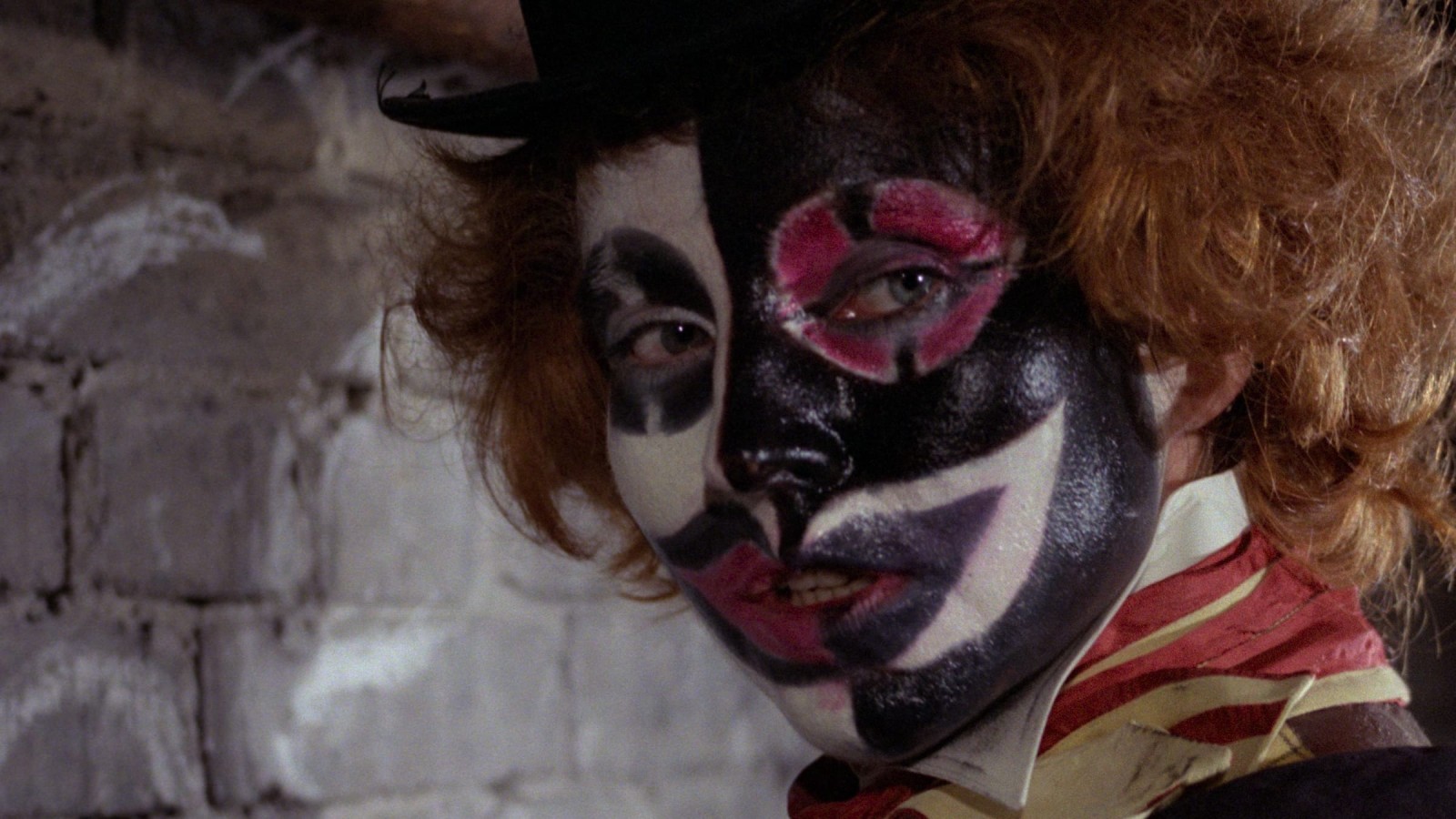
Lattuada is an especially interesting case. Brought up by his father, the composer Felice Lattuada, in an opera-drenched atmosphere, he trained as an architect, but was movie mad and helped start Italy’s first film archive. He began his directorial career by making literary adaptations in the “calligraphist” manner—the Italian equivalent of what the French new wave disdainfully called “the cinema of quality”—partly to evade the Fascist censors. After Italy was liberated by the Allies, Lattuada called for a neorealist cinema: “We are in rags? Then let us show everybody our rags,” he wrote. He directed neorealist melodramas such as The Bandit and Without Pity, but his first real masterpiece was undoubtedly Variety Lights (1950). This bittersweet comedy about a troupe of traveling players—often erroneously attributed to Fellini, who wrote the script and is credited alongside Lattuada as codirector—was actually a full-fledged demonstration of Lattuada’s flair for exposing the weakness of masculine vanity and the strength of female opportunism. It also demonstrated what Lattuada himself called his main theme: the isolation of the individual, attempting to pursue a glimmer of happiness, in the face of society’s opposing pressures to conform.
17Mar08
Up until the early 1960s, Italian cinema represented the Mafia as a mythological and mysterious phenomenon (and thus not without a certain amount of fascination), in stories told as if they were westerns set in Sicily, as in Pietro Germi’s In the Name of the Law (1949). But in 1962 two films were released that challenged this prevailing attitude: first, Francesco Rosi’s Salvatore Giuliano, and later in the year, Mafioso, by Alberto Lattuada. Although coming from diametrically opposed perspectives, both films set out to describe the criminal society of the Cosa Nostra without softening, much less idealizing, the merciless and brutal reality of la piovra—“the octopus.” And both films were huge successes on the Italian peninsula, among the top ten box office hits that year. The public demonstrated its sensitivity to the fact that there was an endemic evil in the country, something that was still hidden behind a curtain of silence and censorship, which these films unveiled in all its violence and intrigue.
Rosi’s film is a painstakingly documented reconstruction of the nefarious relationships between the Mafia, banditry, and economic and political power in Sicily between 1943 and 1950. The story of the bandit Giuliano and the schemes that led to his assassination becomes a vehicle for piecing together the puzzle of a real event that was atrociously typical and ominous, not least because no one was punished. Lattuada’s film also recounts a true story. The author of the film’s scenario, the painter Bruno Caruso, had in fact known the protagonist—the hired assassin—and had even painted a portrait of him, yet remained ensconced in the secrecy of the omertà that protects the Cosa Nostra. If Rosi’s film has the appearance of a documentary (notwithstanding the fact that it was filmed entirely on sets), Lattuada’s film reinvents what happened with grotesque stylistic elements that do not deform or change reality but unveil the events in a harsher light, exposing their deeper essence.
11Mar08
There’s no real rhyme or reason to explain which Criterion films I end up watching. For example, I saw Breathless over the holiday break after Abbey convinced me to give Godard a chance. Then I watched The Seventh Seal in January because, after sending out so many replacement DVDs for the Bergman Masterworks set, I felt compelled to watch a film whose popularity was quite literally tangible. And after transcribing Yukio Mishima’s powerful novella Patriotism (which will accompany the film version’s DVD release this summer), I was keen to watch a screener to see how Mishima translated his story for the screen.
Maybe it’s the aftereffect of a long, dreary February, maybe it’s the recent passing of my beloved cat Jackie Chan, or maybe it’s just what happens when you see some “serious” movies after a steady diet of sci-fi and romantic comedies, but I couldn’t help but notice the unmistakable theme of death in all three films. What struck me most was the variety of approaches (from subtle to graphic) and characters (from different nations and walks of life) the three directors used in order to examine the universal subject of human demise. Of course death isn’t an uncommon happening in Criterion DVDs—quite the opposite—but the sense of balance I felt after seeing these three examples was unexpected.