

18Mar05

In the late 1970s, during the long years of waiting for international and domestic funding to come together to produce Kagemusha, Akira Kurosawa returned to the pastime of his youth—he painted. Working fast and furiously, each day turning out scores of sketches and paintings, Kurosawa accumulated a unique body of work that was born as much out of despair and frustration as from a passion to create. One after another, he pulled from his mind’s eye the images he visualized for the epic drama and set down on paper the scenes he ached to re-create on film.
Kurosawa began his career as a painter and had always been skilled at drawing. He decided he wanted to be an artist in his teens and later became increasingly associated with what came to be called the “Japan Proletariat Artists Group.” Strongly influenced by the mannerist styles of contemporary German Expressionism and Soviet Realism, young Kurosawa’s painting style was forthright and dramatic: human figures rendered in powerful calligraphic lines and bold primary colors. His decision in the late 1930s to turn from painting to film was impelled by many factors, including intensified political pressures from the Japanese militarist government against artists and liberal writers, the need to find a more stable livelihood, and the suicide of his elder brother, who had been deeply engaged in the film industry.
14Mar05
In the history of cinema, there have been several notable collaborations between a director and an actress over a series of films. Think of D.W. Griffith and Lillian Gish back in the silent era, Josef von Sternberg and Marlene Dietrich in the early 1930s, Jean-Luc Godard and Anna Karina at the time of the French New Wave. Without going into theories of the “male gaze,” it may be said that in these cases the woman is a figure of beauty, an object of contemplation for the man behind the camera. This doesn’t mean that she is merely an object, a passive recipient of the camera’s attention. Gish was a great actress, and though neither Dietrich nor Karina can claim as much, all three are, not least for their beauty, commanding screen presences, figures of special power. They have a hold on the beholder, whether director or spectator.
The collaboration between Michelangelo Antonioni and Monica Vitti is of a rather different kind. Not that Vitti isn’t beautiful, but her presence is less commanding than that of Gish, Dietrich, or Karina, her beauty more tentative, which is in keeping with the unsettled, questioning beauty of Antonioni’s visual style. And in her films with him, Vitti is as much beholding as beheld. Unlike those other actresses, she is identified with the director as the beholder behind the camera, whose gaze she doubles. Other male directors have adopted the point of view of a female character, but none has made a woman his surrogate in the way that Antonioni has Monica Vitti.
14Mar05
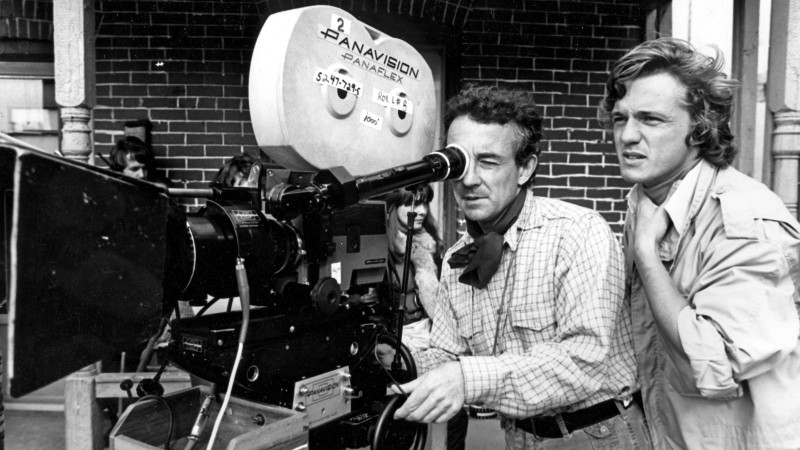
The first time I put an eye behind a camera (a 16mm Bell & Howell), it was in a lunatic asylum. The head of the institution was a great big hulk of a man with a face so ravaged by time that it resembled those of his patients. I was still living then in the quiet old town of Ferrara where I was born, a wonderful little town in the Po Valley. A number of my friends and myself had decided to make a documentary on the insane. The director of the asylum was most anxious to be of service; he even went so far as to roll himself over the floor to show us how his patients reacted under certain provocations. But I was determined to make a documentary that would include the inmates themselves. I was so insistent on this point that he finally said, “Okay, let’s try it.”
So we set up the camera, got the lights ready, and placed the inmates around the room in preparation for the first shot. I must say that they were very cooperative in following our instructions and extremely careful not to make any mistakes. They helped us move things around, and I was really quite surprised by their efficiency and good will.
Finally, I have the order to turn on the lights. I was a bit nervous and anxious. Suddenly, the room was flooded with light, and for an instant the inmates remained absolutely stationary, as though they were petrified. I have never seen such expressions of total fear on the faces of any actors. The scene that followed is indescribable. The inmates started screaming, twisting, and rolling themselves over the floor—just as the head of the asylum had demonstrated earlier. In no time at all, the room became an inferno. The inmates tried desperately to get away from the light, as if they were being attacked by some kind of prehistoric monster. The same faces that had kept madness within human bounds in the preceding calm were now crumpled and devastated. And this time we were the ones who stood petrified at the sight. The cameraman didn’t even have the strength to turn on the motor, nor I to give an order. It was the head of the asylum who yelled, “Stop, turn off the lights!” And as the room became silent and subdued, we saw a slow and feeble movement of bodies that seemed to be in their final stages of agony.
14Mar05
A director is naturally a man like everyone else. Yet his life isn’t normal. For us, seeing is a necessity. For a painter, too, the problem is to see. But while the painter has to discover a static reality, or even a rhythm, perhaps—but a rhythm stopped in midair—the problem for a director is to catch reality an instant before it manifests itself and to propound that movement, that appearance, that action as a new perception. It isn’t sound: words, noise, music. It isn’t an image: scenery, an expression, a motion. But an indecomposable whole.
When we say that the persons we approach are all potential characters, over whose faces pass expressions, from whose mouths come lines—that places are not just images but rhythms, vibrations; that everyday events very often take on symbolic meanings—we must add that it is the relationships of all those things among each other in time and space that make sense to us. It is the tension that forms among them.
This is, I think, a very special way of being in contact with reality. To lose this contact, or rather to lose this “way,” can mean sterility.
14Mar05
Kihachi Okamoto’s The Sword of Doom is likely to strike the innocent viewer as an exercise in absurdist violence, tracking the career of a nihilistic swordsman from his gratuitous murder of a defenseless old man to his final descent into what looks like a rehearsal for global annihilation, as, in a kind of ecstasy, he slaughters a seemingly endless army of attackers both real and phantasmal. The extreme but stylized violence of Okamoto’s film epitomizes a style of Japanese filmmaking that profoundly influenced such directors as Sam Peckinpah and Sergio Leone, and it would be easy—and not entirely inaccurate—to read the film in the light of the cynical antiheroic trends that surfaced in genre films all over the world in the 1960s and surmise that it represented the same kind of break with heroic tradition as, say, spaghetti Westerns. It should be kept in mind, however, that The Sword of Doom is only the most recent episode derived from a long line of stage and film versions of an immensely long, structurally meandering novel that has remained popular ever since the appearance of its first installments a year after the death of the Meiji emperor (the ruler who oversaw Japan’s transition from hermetically sealed feudal state to modern industrialized nation) and whose ostensible theme is religious.
The novel, Daibosatsu Toge (The Pass of the Great Buddha, The Sword of Doom’s Japanese title), originated as a newspaper serial in 1913 and continued to appear for three more decades; forty-one volumes were published before it was left uncompleted at the death of its author, Kaizan Nakazato (1885–1944). Nakazato, a sometime telephone operator and assistant teacher, avowed himself a literary disciple of Fyodor Dostoevsky and Victor Hugo and was deeply influenced by Christianity and Socialism; he was a pacifist during the Russo-Japanese War, and kept himself aloof from cultural entities associated with the military government in the 1930s and ’40s. His novel was intended as an expression of Mahayana Buddhism, with the earthly actions of its characters, and most especially of the demonic swordsman Ryunosuke Tsukue—nothing more than the working out of karmic law. The political background—the struggle of various shadowy groups either to uphold the power of the Shogunate or to bring about the restoration of direct imperial rule—is itself only one layer in Nakazato’s cosmic vision, in which the hero’s seemingly evil path is dictated by forces beyond his control. However, Ryunosuke is one of those characters who seems to have escaped from his author’s control, taking on a life of his own––an icon of popular culture as an embodiment (in the words of the scholar Cécile Sakai) of “the fascination of Evil...which gives him his seemingly paradoxical charisma.” Ryunosuke is the archetypal fallen angel of early modern Japan, a figure who elicits sympathetic identification by the uncompromising intensity with which he follows his path, even if the path seems to lead into darkness.
14Mar05
Your vigilance as an artist is an amorous vigilance, a vigilance of desire.
—Roland Barthes to Michelangelo Antonioni, 1979
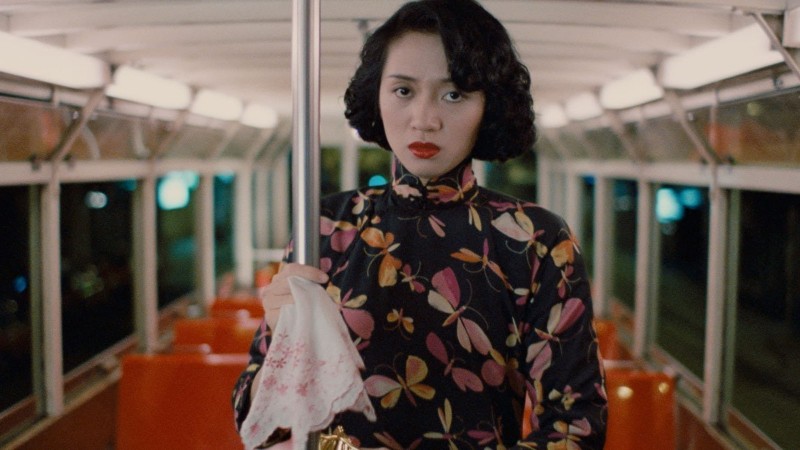
It’s lamentable that Michelangelo Antonioni, one of the most fashionable vanguard European filmmakers during the sixties, has mainly been out of fashion ever since. Part of this may be due to the sixties themselves—an era of artistic innovation when making ambitious films about the zeitgeist was still considered both possible and desirable—and all they’ve come to represent in ensuing decades. It seems that the curiosity and metaphysical doubts about the world, which resemble at times agnosticism about reality itself, are more easily tolerated when the glamour of that world is more readily apparent.
This was a time when intellectual activity about the zeitgeist could be debated, if not always welcomed, with Godard and Antonioni the two most commanding figureheads. L’eclisse (1962) appeared the year after Chronicle of a Summer, Last Year at Marienbad, and Paris Belongs to Us, the same year as The Exterminating Angel and Vivre sa vie, and the year before Contempt and Muriel—a period, in short, when large statements and narrative innovations often came together.
14Mar05
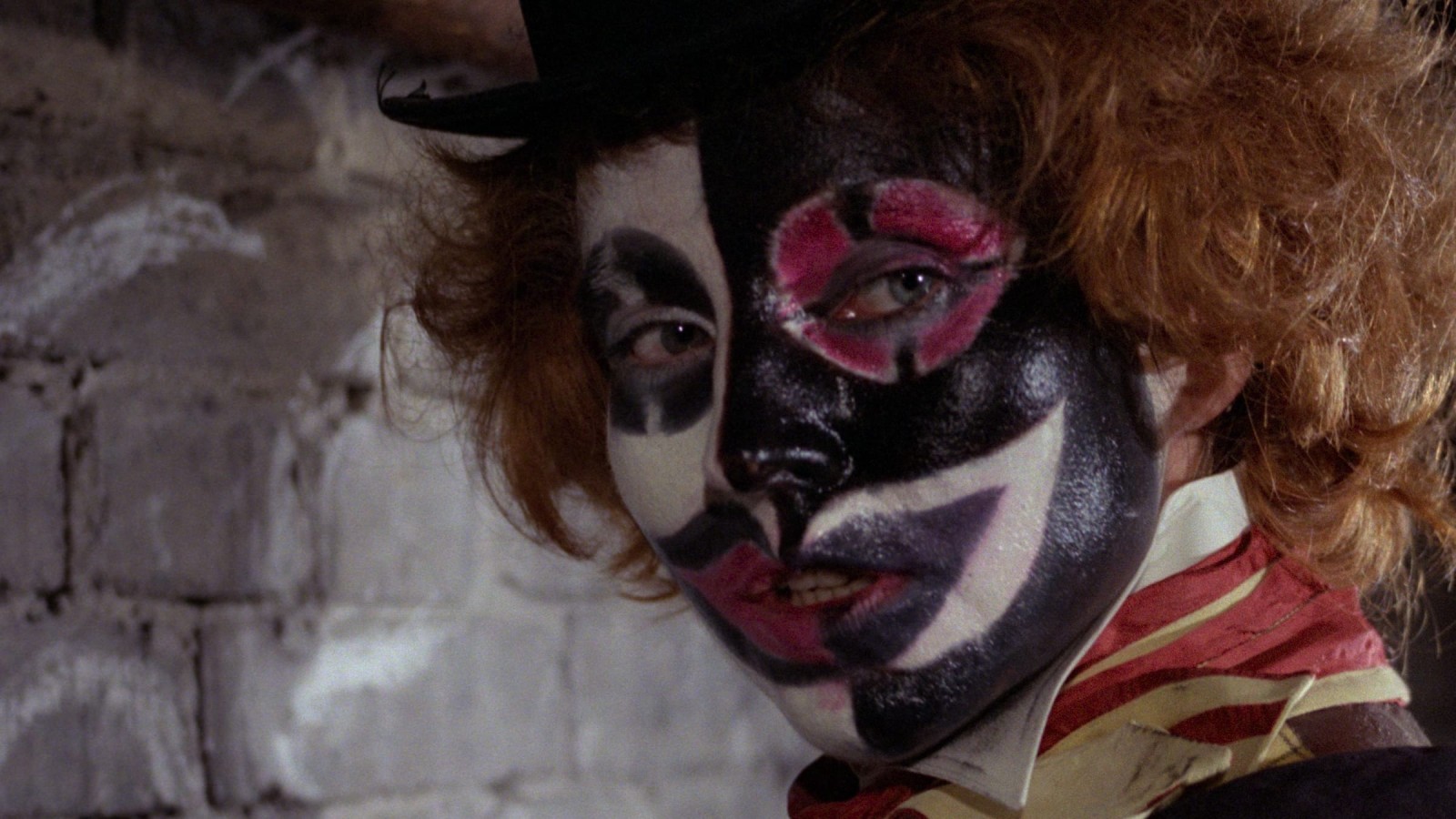
The appearance of Young Törless in 1966 signaled not only the debut of Volker Schlöndorff as a major international filmmaker but also the beginnings of what would become known as the New German Cinema, one of the most important film movements of the twentieth century. Through the early 1960s, Schlöndorff had apprenticed in France (where he’d been educated as a teenager) with several of the major figures in the French New Wave, including Louis Malle, Alain Resnais, and Jean-Pierre Melville. This connection would be a crucial springboard for Schlöndorff’s career, since it provided him with an early training in the stylistics and politics of an alternative cinema, while at the same time making him aware of his own country’s lack of an active national cinema. Appropriately, the first of the numerous international awards for Young Törless—Nantes’ Max Ophüls Prize—came from the country where he got his start.
Surrounding and suffusing Young Törless is an oblique but profound dialogue between modern Germany and its twentieth-century heritage. In the 1920s and early 1930s, Germany boasted one of the most dynamic and influential cinemas in the world, located most famously in the power and presence of Ufa Studios, which provided the creative space for directors such as Fritz Lang and G.W. Pabst. The massive loss and trauma that Nazi Germany bequeathed the nation after World War II, however, resulted, in the 1950s, largely in a cinema of “rubble films” (topical postwar works set in a destroyed Germany), heimatfilm (escapist tales of love and family set in the countryside), and Hollywood imports. On February 28, 1962, at the Eighth West German Short Film Festival, a group of twenty-six filmmakers and critics publicly acknowledged these historical ruins and the absence of a cultural home for a modern German cinema when they presented the Oberhausen Manifesto, a document often credited with announcing the start of the New German Cinema, crystallized in its powerfully rhetorical admission and demand: “The old cinema is dead. We believe in the new.” Several years later, Young Törless would become, for many, one of the first and most convincing responses to this famous call to arms, as it paved the way for a multitude of other films that, in very different manners, would investigate the terms of the present by uncovering the losses, repressions, and denials of the German past. While the realistic style of Young Törless appears more traditional than the more radical experiments of other New German filmmakers who followed (such as Rainer Werner Fassbinder and Werner Herzog), Young Törless stands out as a remarkably subtle and chilling depiction of a psychological and social history that modern Germany, until then, had often sought to deny.
4Mar05
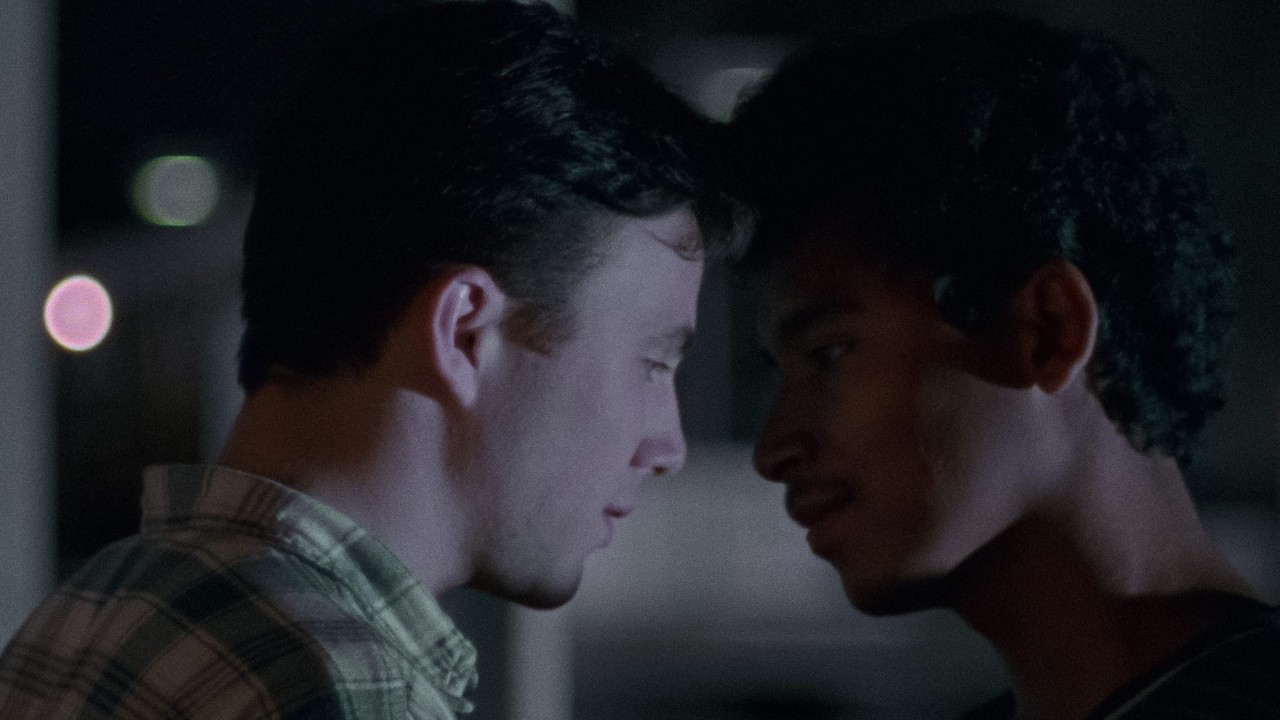
It’s night in the desert. Mike (River Phoenix), a teenaged hustler given to bouts of narcolepsy, and Scott (Keanu Reeves), a slumming preppy prince, are huddled around a campfire. “I just want to kiss you, man,” says Mike softly. The words and the barely audible sound of his voice, caught between hope and despair, speak to anyone—forget about gender or sexual orientation—ever ripped apart by unrequited love. For all the flannel and Gor-Tex, the scene is a startlingly naked expression of lovelorn longing. Credit both Gus Van Sant, the director, and Phoenix, his perfect actor, with the heartbreak that floods My Own Private Idaho.
Released in 1991, Idaho was Van Sant’s third feature film and remains his most anarchic and, in many ways, ambitious. It’s certainly the film where his art school sensibility and the postmod-ernist aesthetics that dominated the art world during the seventies and eighties are most in play. Van Sant attended the Rhode Island School of Design from 1971 to 1975 (among his schoolmates were David Byrne and other members of the Talking Heads), shifting his focus from painting to film partway through his time there. The explosion of the sixties underground film scene was over, but Andy Warhol was still an influence, as were Kenneth Anger and other avant-garde film diarists who toted their 16mm and Super-8mm cameras everywhere. After a brief stab at working in the Hollywood film industry and a stint in advertising in New York, Van Sant made his first released feature, Mala Noche, in the early eighties, with roughly $20,000 of his own money. A gritty, lyrical black-and-white stunner about a gay skid-row store clerk’s obsession with a Mexican migrant worker, it caught the eye of some discerning Hollywood producers and led to his making his second, slightly more conventional feature, Drugstore Cowboy, starring Matt Dillon as the leader of a quartet of junkies who rob pharmacies to feed their habit. The toughness of both films, the director’s obvious empathy with alienated adolescents, and his talent for getting shockingly genuine perfor-mances from his actors helped him land the then teenage idols, Phoenix and Reeves, for My Own Private Idaho.
28Feb05
“A film about India without elephants and tiger hunts”—this was how Jean Renoir described what drew him to The River. Guided by Rumer Godden’s autobiographical novel, he rejected the India of exotic action and spectacle to make a meditative, almost mystical film set beside a tributary of the Ganges, whose success would launch a new era of portraying India on screen. After Renoir would come Roberto Rossellini in 1959 (although with elephants and a tiger in his documentary India), followed later by Louis Malle, Ismail Merchant and James Ivory, and Richard Attenborough. And, in 1984, David Lean came to make a belated screen version of the sixty-year-old E.M. Forster novel about Anglo-Indian misunderstanding, A Passage to India, which had shaped Renoir’s previous understanding of the country.
Just what an extraordinary achievement The River was should not be underestimated, especially considering the time and difficulty of its production in the late forties. The portrayal of India on Western screens up to this point had been almost exclusively based on British imperial history or fiction, ranging from Henry Hathaway’s Lives of a Bengal Lancer (1935) and Zoltan Korda’s The Drum (1938), to such Rudyard Kipling adaptations as MGM’s Kim (1950) and Soldiers Three (1951), both of which appeared around the same time as The River. Of course, these could have their own authenticity. Kipling, after all, had been born in India and shaped by his early childhood there; and Kim was filmed partly on location (and in Technicolor). However, it was a different kind of authenticity, still linked to the attitudes fostered by the British Raj. In 1947, under Mahatma Gandhi’s leadership, India finally achieved independence. But this triumph was marred by bitter religious conflict between Hindus and Muslims, which led to partition and the birth of Pakistan as a predominantly Islamic state, followed by the assassination of Gandhi as a reprisal by Hindu fanatics.