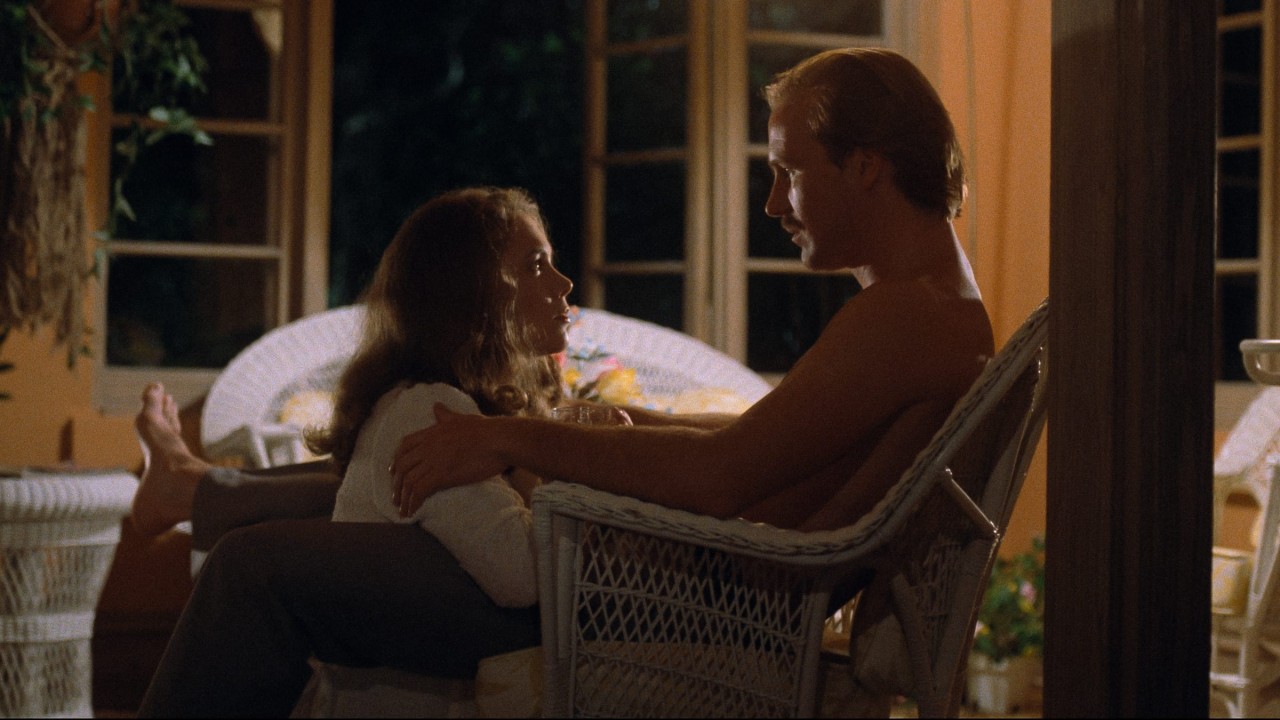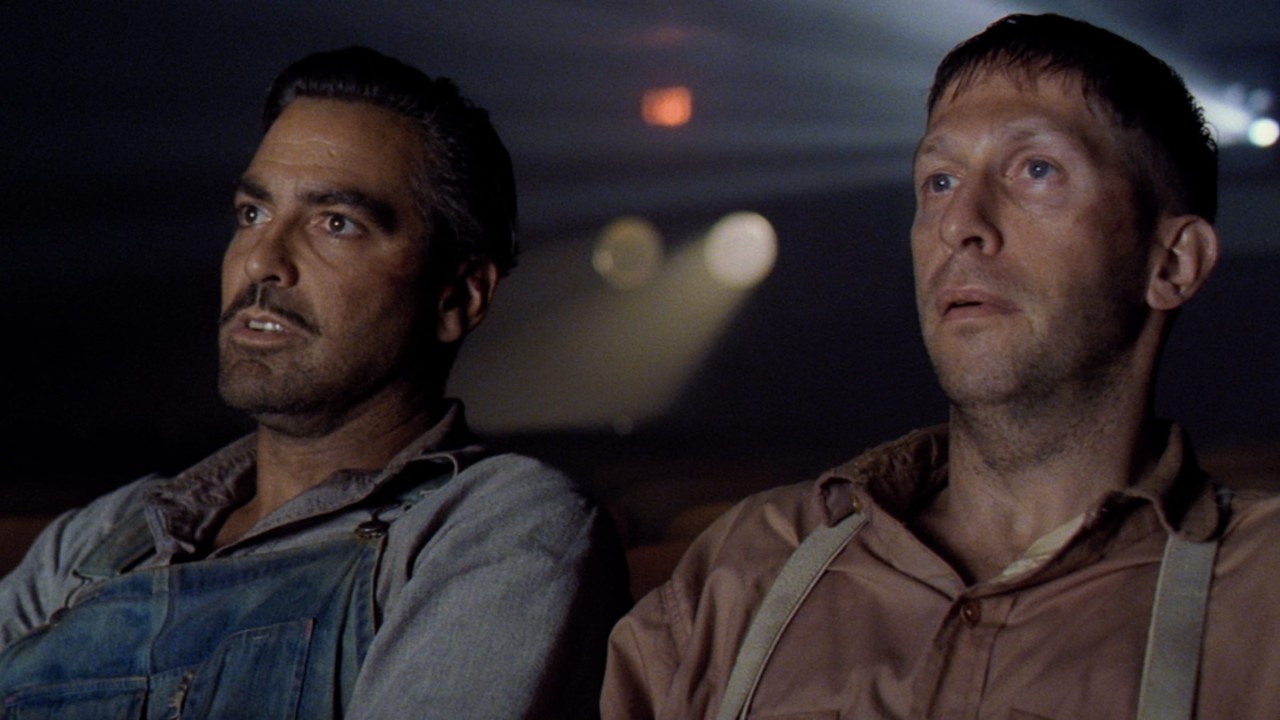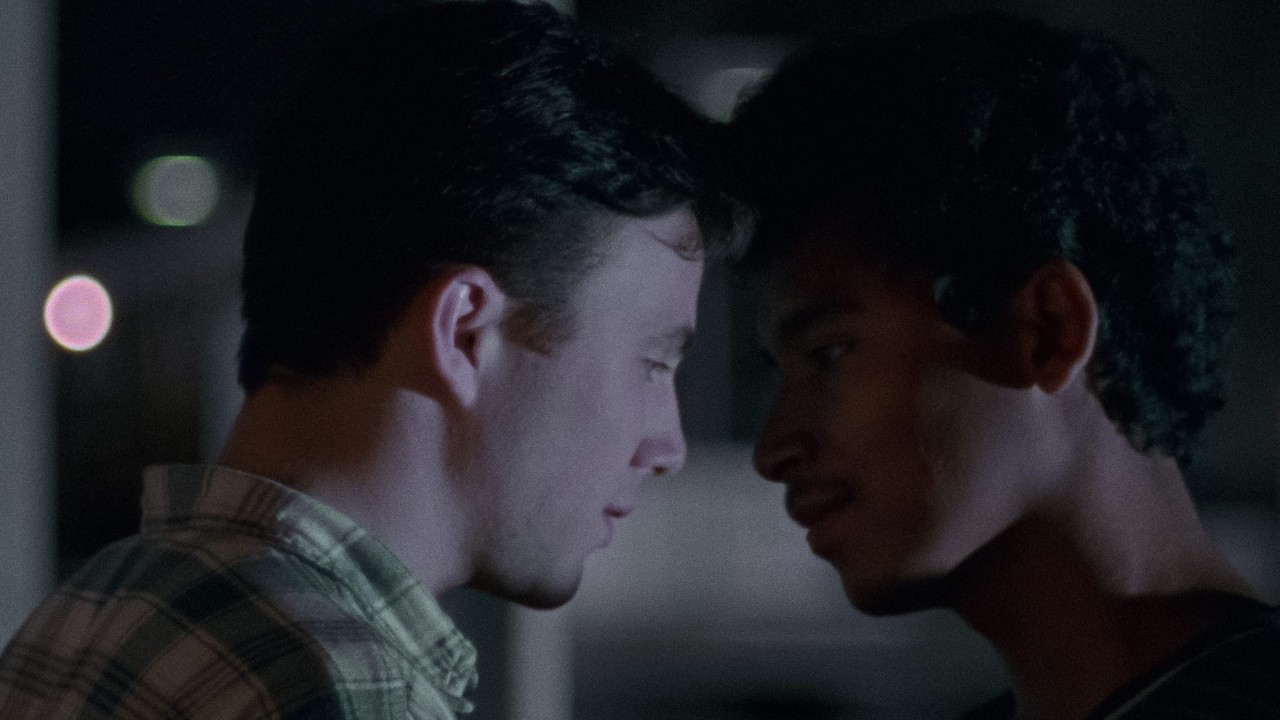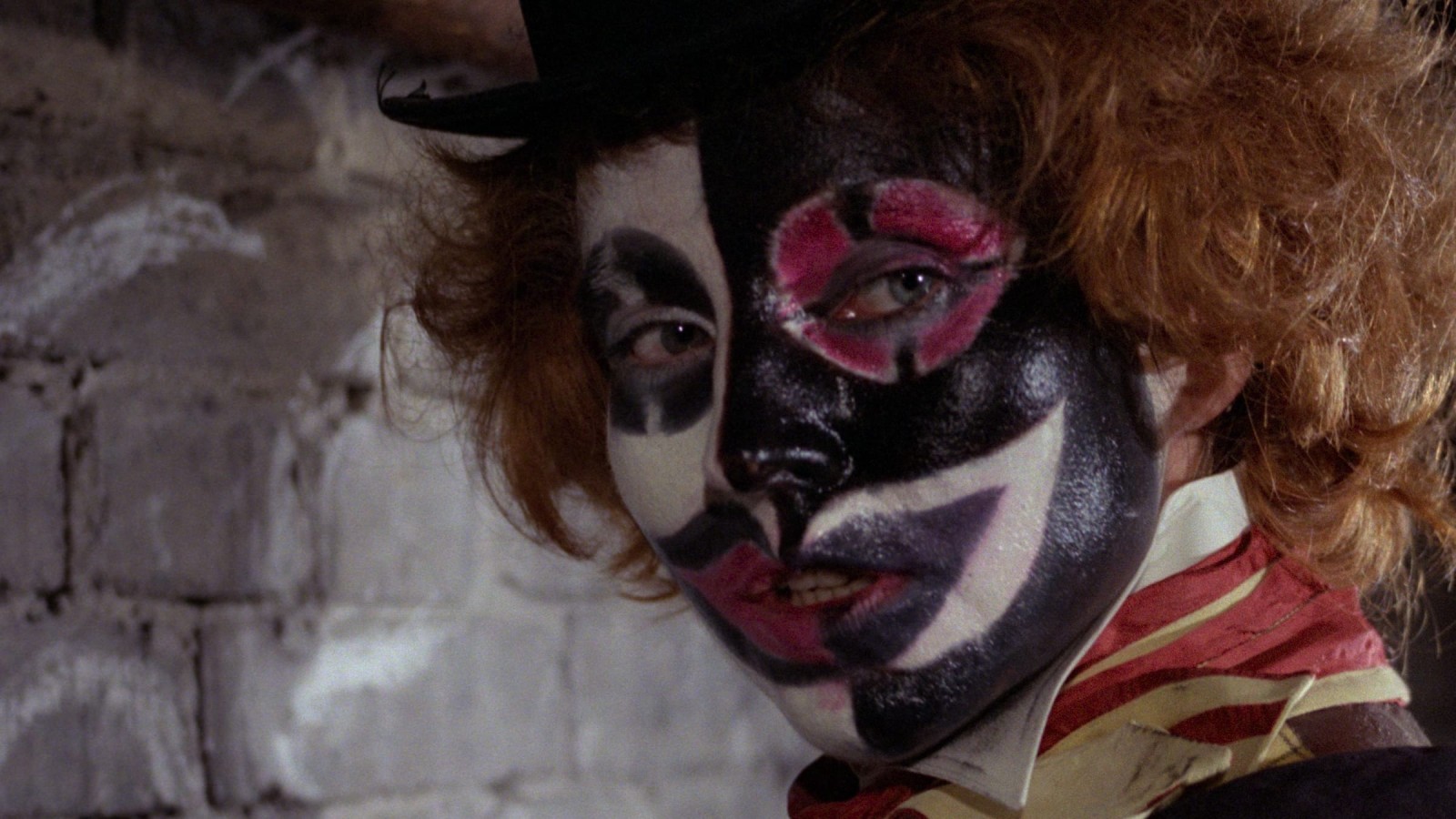

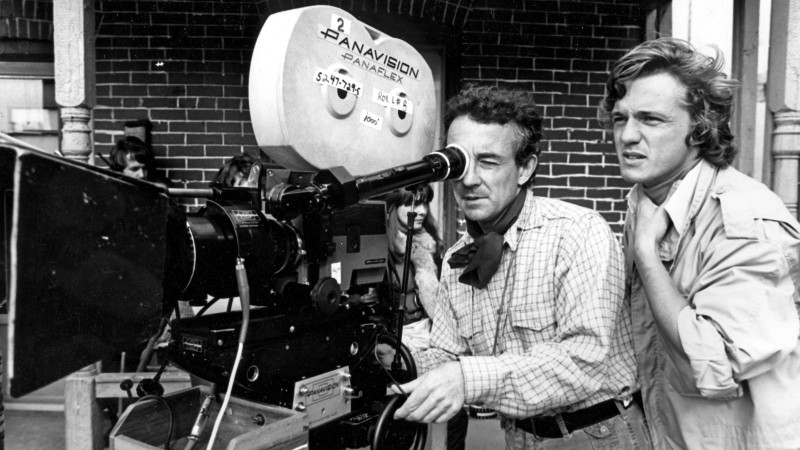




“Those are my goals, you know. To be smart, tasteless, and feeling. Something to shoot for.”
27Feb09
“Those are my goals, you know. To be smart, tasteless, and feeling. Something to shoot for.”
26Feb09
Criterion’s own Danny Walton was featured in his hometown Times-Picayune for a film he recently shot on location in the New Orleans area, his thesis project for the School of Visual Arts, here in New York City. It was a personal project all around, shot on numerous locations in and around the city—including his former high school—and featuring Danny’s sister in the starring role. He was able to be so ambitious in part because of local help, which the article proudly highlights, as well as recounting the trials Danny went through in the months preceding the shoot. It’s quite a story, and we here at Criterion are very proud of him as well!
0 Comments24Feb09
On January 12, French cinema lost one of its truest enablers. Claude Berri was as well-known for his support of cinema, both financial and critical, as he was for his own filmmaking. The actor turned director-writer-producer made twenty-three films (the multi-award-winning Manon of the Spring and Jean de Florette among them); produced with his company, Renn Productions, more than fifty (Roman Polanski’s Tess, Claude Miller’s The Little Thief, etc.), including some of the biggest-grossing films in French history; and served as president of the Cinémathèque française from 2003 to 2007.
His filmmaking career began with the short Le poulet (1965), about a boy whose parents bring home a new rooster to raise, for its nutritional value. But the little boy takes a liking to him and begins to tease his parents that the rooster is in fact laying eggs. This debut won Berri his only Academy Award and international fame overnight. In many ways, it set the tone for his first feature, The Two of Us (1967), for which Berri transformed his personal childhood experience of living undercover during the Nazi occupation of France into a surprisingly gentle and endearing film. For safekeeping, a Jewish boy is sent to live in the countryside with an older couple. Though the man, played by the great Michel Simon, is in fact a supporter of Vichy France and his dear Marshal Pétain, the unlikely twosome become friends and (to an extent) confidants.
In January of 2007, Berri agreed to be interviewed for our DVD release of The Two of Us, accompanied by Le poulet. It had been well over a year since our first letter of interest to him, during which time Berri had been recovering from a stroke and relearning to speak after the resulting paralysis. Yet he was still pushing forward with a new film production (Ensemble, c’est tout, with Audrey Tautou, released in 2007).
Our shot was set up and ready to go when Mr. Berri arrived. After a few urgent phone calls, he was able to sit down for the video interview. He told us sweet anecdotes about working with Simon, finding the young Alain Cohen, and returning to a story he himself had lived during the occupation. The interview lasted about forty-five minutes, and as soon as the camera stopped rolling, he was out the door to his next appointment, but not before a very sincere thank-you to us for keeping the spirit of his work alive. Claude Berri clearly never stopped working and made cinema his life.
23Feb09
“Those looking for a smart laugh at the expense of the geniuses who steered us into the economic ditch might like to have cinematic wit Luis Buñuel back from the dead,” writes Seth Colter Walls, in an unusual, intriguing feature in this week’s issue of Newsweek (and online) about the uncanny timing of our recent release of the Spanish surrealist’s The Exterminating Angel (and Simon of the Desert). “Downright prescient,” he calls the film’s depiction of class division, literalized in a bizarre dinner party where the haute bourgeois guests can’t leave and the servants, inexplicably compelled to flee, wait outside. “It’s hard not to watch and think about the months of often petulant-sounding debate over the economic crisis, with the rich and powerful on one side (congressmen, Wall Street CEOs) and the working folks (everyone in Detroit) on the other—while no one gets anything done.” Walls even calls in an expert to support his contention that surrealism flourishes during crises. “If things get any weirder out there,” he concludes, The Exterminating Angel, “could well wind up being 2009’s most indispensable film.”
0 Comments22Feb09
“If there’s such a thing as an ideal time of day to expose yourself to the deranging, hallucinatory visions of the Canadian filmmaker David Cronenberg, midnight might well be it,” writes critic and Criterion contributor Terrence Rafferty in a terrific New York Times tribute to those “mind-body-machine games” the director loves to play, a piece highlighting a Cronenberg midnight-movie series currently playing at Manhattan’s IFC Center. Of Naked Lunch he writes: “You have to be in a fairly savage mood to enjoy the movie’s grisly humor and reality-warping imagery, the kind of mood that can descend on you toward the end of a long, bad night, when everything around you starts to look creepy and alien, and your nerves are too frayed for sleep. That’s the Cronenberg state of mind.” Click here to read the whole piece, in which Rafferty also discusses the Criterion-released Videodrome and such other creepy-crawlies as The Fly, The Dead Zone, and eXistenZ.
2 Comments22Feb09
“Let me have men about me that are fat.”
—Julius Caesar, act 1, scene 2
Just as Raymond Chandler’s Philip Marlowe admired small, brave men who stick to their principles, I like—in the movies at least—heavyset, flamboyant types who walk and talk as if life were a poem, whether dainty or grating, lyrical or bombastic. Not least because they pose an alternative to “lean and hungry” male leads, Oliver Hardy, W. C. Fields, Orson Welles, Sydney Greenstreet, Raimu, Francis L. Sullivan, Robert Morley, Philippe Noiret, Burl Ives, and Robbie Coltrane have privileged cinema with their weighty presence.
Charles Laughton (1899–1962) would have been extraordinary whatever his girth, but ampleness lent him enormous emotional heft. The screen can barely contain him at times: when, in The Private Life of Henry VIII (1933), his disgruntled Henry bloody-mindedly mocks Tudor politesse by tossing hunks of cooked fowl over his shoulder; when his Captain Bligh, a porcine sadist who might have been drawn by the eighteenth-century cartoonist Thomas Rowlandson, tells Fletcher Christian (Clark Gable) that he’s “a mutinous dog” in Mutiny on the Bounty (1935); when his pumped-up Lancastrian bootmaker, who lords it over his daughters in Hobson’s Choice (1954), half dances home in a beery haze. Laughton harnessed his bulk to his characters’ emotions rhythmically.
6 Comments16Feb09
Whether trapped in a mansion or on a pillar, their characters aren’t going anywhere, and lambs and sheep have a habit of wandering into frame—Luis Buñuel’s The Exterminating Angel and Simon of the Desert make a perfect matched set indeed, as critics have been enjoying discovering, or rediscovering, on the occasion of our release last week of this pair of Mexican-era gems, for the first time in North America.
In the New York Times, Dave Kehr writes: “Long out of circulation, The Exterminating Angel (1962) and Simon of the Desert (1965) . . . remain among the most free-spirited of Buñuel’s films, fully recovering the nonnarrative liberty of his earliest work. These are both movies in which, by conventional terms, nothing much really happens, but a lot goes on.” Dennis Lim, in the Los Angeles Times, also joins the two films, calling them “the culminating glories of his Mexican period.”
“Beautiful, hilarious, prime Buñuel, on the last legs of his underrated and underexamined Mexico period,” enthuses Michael Atkinson at IFC Film News. And Armond White sums it all up: with this “double bill revival of surrealism,” he writes in the New York Press, “Buñuel bounces back into film culture with vigorous intelligence and pertinence. If you don’t know Angel and Simon, you don’t [know] what makes Buñuel matter—which means you don’t know how great movies can be.”
Read more at Vman, Greencine Daily, The Onion, and the San Francisco Chronicle.
1 Comments16Feb09

David Lean may not be known primarily for his comedies, but the two he made—1945’s Blithe Spirit, based on the Noël Coward play, and then Hobson’s Choice in 1954—were exceptional, combining expertly timed broad humor with his always refined sense of Englishness. The gorgeous black-and-white Hobson’s Choice is the more sublime of the two, ranking with the best Ealing Studio features of the period, well-known for their mirth and gentility. Yet it boasts a special distinction from the Ealing tradition, molded as it is by the sharp mind and artful hands of a meticulous cinematic visionary. By the time of Hobson’s Choice, Lean was a proven master of storytelling, not through “perfectionism” but his exacting creation of mood, established by concentration on tempo, ambience, environment, and detailed behavior.
No Ealing or Gainsborough comedy surpasses the polished gleam of Hobson’s Choice. Its brassy characters—blustery boot shop owner Henry Hobson (Charles Laughton), his stern eldest daughter, Maggie (Brenda De Banzie), and the timid shoemaker she marries, Will Mossop (John Mills)—are large-scale emblems of the British class system, representing its range of clashing types. Depicted with rousing vivacity, they inhabit an early twentieth-century setting that Lean conveys with his widely admired, signature sense of the real physical world; the polished-pewter beauty of Jack Hildyard’s black-and-white photography gives even the cobblestone streets a tactile dimension.
Lean developed this hyperrealism as part of his cinematic character portraiture—investigating British manners through archetypes that would be amusing and enlightening and, above all, as eminently recognizable as a Manchester street, an Edinburgh town house, a London flat. That was the gift of Lean’s apprenticeship with playwright and theater titan Noël Coward. They worked together on the 1942 World War II film In Which We Serve, and also collaborated on the patriotic overview This Happy Breed (1944), a derivation of Coward’s earlier British family epic Cavalcade (filmed by Frank Lloyd in 1933). The Lean-Coward films were not middlebrow jingoism; in each one, Lean showed an appreciation of how individual behavior—and the look of average lives—defines the national spirit. Theater suited Lean’s preference for framing characters in a way that makes it possible to understand their existential circumstance and spiritual nature—best exemplified by his adaptations of Coward’s plays, especially 1946’s atmospheric Brief Encounter.
0 Comments12Feb09
This week, French actor Jean Martin died at the age of eighty-six. Though he appeared in more than eighty films (including My Name Is Nobody and The Day of the Jackal), Martin is probably best remembered for his role as the French military chief, Colonel Mathieu, in Gillo Pontecorvo’s The Battle of Algiers, a “dry, punctilious performance . . . [that] sheds irony over the whole imperialist enterprise,” wrote Peter Matthews in his essay for the Criterion release. In this clip from our documentary on the making of the film, Pontecorvo and others recall the decision to cast Martin, the only trained actor in the film, and Martin himself shares anecdotes from the shoot, including about entering Algiers, parading at the head of three hundred paratroopers.
2009 01 02 03 04 05 06 07 08 09 10 11 12
2008 01 02 03 04 05 06 07 08 09 10 11 12
2007 01 02 03 04 05 06 07 08 09 10 11 12
2006 01 02 03 04 05 06 07 08 09 10 11 12
2005 01 02 03 04 05 06 07 08 09 10 11 12
2004 01 02 03 04 05 06 07 08 09 10 11 12
2003 01 02 03 04 05 06 07 08 09 10 11 12
2002 01 02 03 04 05 06 07 08 09 10 11 12
2001 01 02 03 04 05 06 07 08 09 10 11 12
2000 01 02 03 04 05 06 07 08 09 10 11 12
1999 01 02 03 04 05 06 07 08 09 10 11 12
1998 01 02 03 04 05 06 07 08 09 10 11 12
1997 01 02 03 04 05 06 07 08 09 10 11 12
1996 01 02 03 04 05 06 07 08 09 10 11 12
1995 01 02 03 04 05 06 07 08 09 10 11 12
1994 01 02 03 04 05 06 07 08 09 10 11 12
1993 01 02 03 04 05 06 07 08 09 10 11 12
1992 01 02 03 04 05 06 07 08 09 10 11 12
1991 01 02 03 04 05 06 07 08 09 10 11 12
1990 01 02 03 04 05 06 07 08 09 10 11 12
1989 01 02 03 04 05 06 07 08 09 10 11 12
1988 01 02 03 04 05 06 07 08 09 10 11 12
1987 01 02 03 04 05 06 07 08 09 10 11 12
1986 01 02 03 04 05 06 07 08 09 10 11 12
1985 01 02 03 04 05 06 07 08 09 10 11 12
1984 01 02 03 04 05 06 07 08 09 10 11 12