

25Feb08

The Last Emperor, or The Manchurian Candidate BY DAVID THOMSON

1165_022

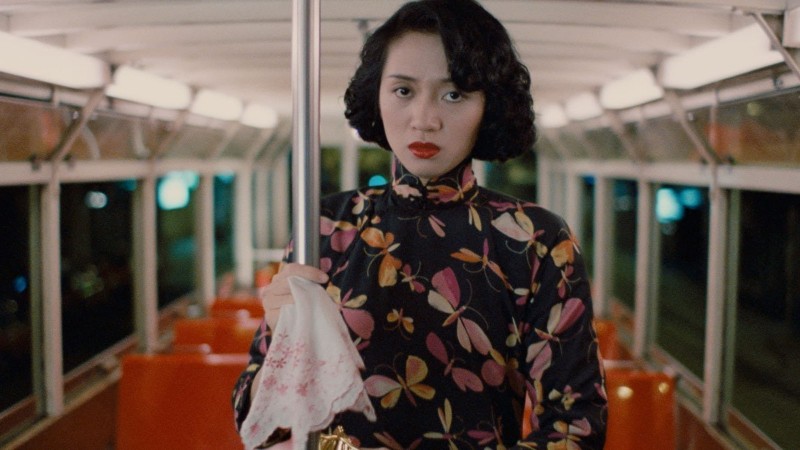
In the first few moments of Bernardo Bertolucci’s The Last Emperor, we get extreme versions of China, done in the film’s rigorous yet electrifying color scheme. We open in the drabbest years of Mao, with an innately gray column of political prisoners. Color hardly features until we see the blood eddying in the hand basin where Pu Yi—the lost emperor, the forlorn candidate—has tried to end his sad life. Then the past floods in, too, and we see armored horsemen, prancing gold statues, galloping into a palace. They could be figures from a Josef von Sternberg epic, or from one of those Hollywood films made in sublime ignorance of the place itself—“China! As vast as its legends!” How can a film about China be other than huge?

And now, here is The Last Emperor on DVD, the classic made for at least twenty-five million dollars. I know it seems paltry as a sum now, but try to restore yourself to that condition of wonder that meant so much to cinema—this is Chinese light (granted an Italian marinade); these are for the most part Beijing locations; this is indeed the inside of the Forbidden City when there was some reason to doubt it would ever be seen again. And this is a coproduction put together by that endlessly ingenious and high-minded English producer Jeremy Thomas, at a moment when it seemed unlikely that any large movie studio could get into China with the same lack of restrictions.  

Film_422w_lastemperor_w160

The Last Emperor

Bernardo Bertolucci

1987

160 min

Color

2.00:1

0 Comments

25Feb08

Emperor 2.0 BY PETER BECKER

We’re getting a huge amount of mail about our edition of The Last Emperor, specifically about the aspect ratio, which is 2:1. Some people seem to believe that we’ve lost our minds, forsaken our mission, and taken it upon ourselves to crop the sides off the picture. Others assume we just got careless. Either way, a rising chorus is asking how we could do this to Vittorio Storaro’s Academy Award–winning compositions. And to Bernardo Bertolucci’s framing. The answer is, we couldn’t, and we wouldn’t, and we didn’t do anything to violate the filmmakers’ wishes. This is the way the filmmakers want the film to be seen.

From the start of this project, Bertolucci has insisted that Storaro have ultimate approval of the mastering of the feature. This master was made in Rome under Storaro’s direct supervision, with Bertolucci’s approval. When we asked Storaro about the framing of the film, he unhesitatingly told us that the correct aspect ratio for The Last Emperor was 2:1, even though the film was commonly projected at 2.35:1. He told us that The Last Emperor was the first film he shot specifically for 2.0 framing, and Bertolucci backs him up. Our mission is to present each film as its makers would want it to be seen, and in this case the director and cinematographer asked that we release their film in the format they say they had always envisioned. We had quite a lot of discussion over this, and we certainly knew it would be controversial, but in the end the decision was not made by us. It was made, as it should be, by the filmmakers.  

Film_422w_lastemperor_w160

The Last Emperor

Bernardo Bertolucci

1987

160 min

Color

2.00:1

17 Comments

18Feb08

Pierrot le fou:
Self-Portrait in a Shattered Lens
BY RICHARD BRODY

417_framegrab

In February 1964, while shooting Band of Outsiders, Jean-Luc Godard announced his plans for a film based on a crime novel, Obsession, by the American writer Lionel White (translated into French as Le démon d’onze heures—literally, “The Eleven O’Clock Demon”). In an interview that month, Godard described it as “the story of a guy who leaves his family to follow a girl much younger than he is. She is in cahoots with slightly shady people, and it leads to a series of adventures.” Asked who would play the girl, Godard told France-Soir in 1964:

That depends on the age of the man. If I have, as I would like, Richard Burton, I will take my wife, Anna Karina. We would shoot the film in English. If I don’t have Burton, and I take Michel Piccoli, I could no longer have Anna as an actress; she would form with him a too “normal” couple. In that case, I would need a very young girl. I’m thinking of Sylvie Vartan.

Both Burton and Vartan (a nineteen-year-old pop singer) were unavailable, and when financing proved difficult to obtain, Godard asked Jean-Paul Belmondo, whom he had made a star with Breathless, to step in. But Belmondo was, and looked, even younger than Piccoli. So when Godard announced in New York in September 1964, when he was in town for the New York Film Festival, that Karina, his wife, would star alongside Belmondo, he was in fact creating an even more “normal” couple and definitively reorienting the tone of the film, as he subsequently explained in Cahiers du cinéma: “In the end the whole thing was changed by the casting of Anna and Belmondo. I thought about You Only Live Once, and instead of the Lolita or La chienne kind of couple, I wanted to tell the story of the last romantic couple, the last descendants of La nouvelle Héloïse, Werther, and Hermann and Dorothea."  

Film_421w_pierrotlefou_w160

Pierrot le fou

Jean-Luc Godard

1965

110 min

Color

2.35:1

1 Comments

18Feb08

Walker: Forced March BY LINDA SANDOVAL

1160_142

Actor and writer Linda Sandoval met Alex Cox in 1983, when her husband, Miguel Sandoval, was cast in Repo Man (she recalls that Cox phoned to say he had good news and bad news: the bad news was that Miguel was cast in Repo Man; the good news was that he got to shave his head). She has worked with many theater companies, including the Alley Theatre in Houston and the Mark Taper Forum in Los Angeles, and was artistic director of the Ensemble Studio Theatre Los Angeles as well as the Performing Arts Collective and the Actor’s Lab in New Mexico. She currently writes a column, Letter from Los Angeles, for Exterminating Angel Press. Linda and Miguel both worked with Cox on Walker and have remained friends with him all these years. Here she recounts one day during production of that film.

My character in the film is a kind of camp-following actress who performs Shakespeare. A small part. I spend a lot of time hanging around the hotel in Managua with not much to do and feeling a bit like a fifth wheel. So I’m flattered to be invited on the “forced march” with Ed Harris and Alex Cox and all of the actors who are to play Walker’s lowly band of mercenaries known as the Immortals. And I will be the only woman. How about that! This march is to ground the actors in the hardships of the time, to help us form relationships, to examine leading and following, to interface with the jungle, heat, exhaustion, survival, and the “real Nicaragua.”

Later on I’m not so flattered.

The wake-up call is at 4:30, with breakfast at 5:00. I carry a pack with two bottles of Evian water, Kleenex, and sunblock. We board a bus and head into the wilderness. I begin to feel a bit alarmed at how far we are being taken on this bus. Seems to me like the farther we drive, the farther we will have to walk.  

Film_423w_walker_w160

Walker

Alex Cox

1987

94 min

Color

1.85:1

0 Comments

18Feb08

Walker: Apocalypse When? BY GRAHAM FULLER

1160_123

At the climax of Alex Cox’s Walker (1987), a helicopter descends from the night sky onto a plaza where the colonial buildings are ablaze and an army of mercenaries is disintegrating. The chopper disgorges trigger-happy American combat troops and a CIA man who urges the U.S. passport holders on the ground to get on board . . .

This is not Saigon in 1975 but Granada, Nicaragua, in 1856, and the airlift is an anachronistic deus ex machina. Cox and the screenwriter Rudy Wurlitzer conceived their film about William Walker (Ed Harris), the Tennessee-born filibuster who ruled Nicaragua from 1855 to 1857, as a bloody comic opera cum parable to protest the Reagan administration’s support of the contra war against the democratically elected Sandinista government. Assigned to report on the production for the Village Voice, I arrived on the burning set at Granada around midnight on April 28, 1987. The news that the young American brigadista Benjamin Linder had been murdered by the contras near El Cua, in the Jinotega province, earlier in the day had not yet filtered through to the cast and crew. When it did, it sobered the atmosphere and reminded everybody why they were making the film.  

Film_423w_walker_w160

Walker

Alex Cox

1987

94 min

Color

1.85:1

0 Comments

13Feb08

Red, White, and Blog BY PETER BECKER

We’ve been getting some questions about the three children’s classics from Janus Films. One good customer writes: “I’m wondering what the situation with The Red Balloon, White Mane, and Paddle to the Sea is. They are listed on the Criterion press release as April titles, but they don’t appear on the Coming Soon page. Will they indeed be Criterion titles with spine numbers, or are they being released by some other branch of the Janus family? If it is the latter, can we expect future titles to follow suit?"

The short answers are: no, the current editions will not have spine numbers or supplemental features; and no, we do not have plans to bring out more Janus Films–branded straight editions at the moment. We are working on Criterion editions of The Red Balloon and White Mane, which we hope to have ready for the fall of this year, but Paddle to the Sea is not currently scheduled for a full special edition.

So why the different handling? Because these films are different. Yes, they are classics of world cinema, but they also need to reach a broad audience we don’t usually have to consider: children and their families. Most Criterion editions are geared toward a fairly sophisticated viewership, lovers of classic and contemporary cinema who want to explore the making of each film in depth. They are undaunted by subtitles, for example, and they value supplemental features like interviews with filmmakers and scholars that set each film in context. In contrast to the average Cannes Palme d’or winner, The Red Balloon needs to reach an audience that may not even know how to read! Much of what sets a Criterion edition apart will be lost on them. As with our Eclipse line, we didn’t want our own work style (and its commensurate cost) to keep these films from reaching their audience. We don’t expect anyone to go out and buy both editions—we’re not fans of double dipping either—but in this case wanted to make simple editions of the films available, keeping costs as low as possible, to encourage a broader audience of children and their families to try what we think are some of the best children’s films ever made.  

0 Comments

11Feb08

Eclipse Series 8:
Lubitsch Musicals
BY MICHAEL KORESKY

With the advent of sound, anything seemed possible in Hollywood in the late 1920s. Studios were eager to exploit the evolving medium’s new capabilities, and what better way to dazzle audiences’ ears and eyes than with full-out musicals? The first attempts at this new genre were “revues,” bare-bones, Tin Pan Alley narratives in which preexisting songs, haphazardly strung together, were often performed onstage and straight into the camera, such as in The Broadway Melody and Gold Diggers of Broadway (both 1929). The technique was presentational and primitive; to survive, the musical needed a more harmonious melding of form and content.

Enter Ernst Lubitsch, a German-Jewish director wooed to Hollywood in 1922 after a brilliant early career in Berlin. Lubitsch had grown into a major studio player, known for continental romantic comedies and period pieces, yet his 1929 Eternal Love had flopped, like other films that hadn’t yet made the switch to sound. Now contracted with Paramount (having left Warner Bros.), Lubitsch had the chance to reinvent himself in the sound cinema, and he did so by taking on a whole new form. Though today he is most fondly remembered for his later romantic comedies, typifying Hollywood filmmaking in its heyday, it should be known that Lubitsch was also a pioneer of the modern movie musical.  

Loveparade_1_w160

The Love Parade

Ernst Lubitsch

1929

109 min

Black and White

1.33:1

Montecarlo_2_w160

Monte Carlo

Ernst Lubitsch

1930

90 min

Black and White

1.33:1

Onehourwithyou_1_w160

One Hour with You

Ernst Lubitsch

1932

78 min

Black and White

1.33:1

Smilinglt_2_w160

The Smiling Lieutenant

Ernst Lubitsch

1931

89 min

Black and White

1.33:1

0 Comments

2010 01 02 03 04 05 06 07 08 09 10 11 12

2009 01 02 03 04 05 06 07 08 09 10 11 12

2008 01 02 03 04 05 06 07 08 09 10 11 12

2007 01 02 03 04 05 06 07 08 09 10 11 12

2006 01 02 03 04 05 06 07 08 09 10 11 12

2005 01 02 03 04 05 06 07 08 09 10 11 12

2004 01 02 03 04 05 06 07 08 09 10 11 12

2003 01 02 03 04 05 06 07 08 09 10 11 12

2002 01 02 03 04 05 06 07 08 09 10 11 12

2001 01 02 03 04 05 06 07 08 09 10 11 12

2000 01 02 03 04 05 06 07 08 09 10 11 12

1999 01 02 03 04 05 06 07 08 09 10 11 12

1998 01 02 03 04 05 06 07 08 09 10 11 12

1997 01 02 03 04 05 06 07 08 09 10 11 12

1996 01 02 03 04 05 06 07 08 09 10 11 12

1995 01 02 03 04 05 06 07 08 09 10 11 12

1994 01 02 03 04 05 06 07 08 09 10 11 12

1993 01 02 03 04 05 06 07 08 09 10 11 12

1992 01 02 03 04 05 06 07 08 09 10 11 12

1991 01 02 03 04 05 06 07 08 09 10 11 12

1990 01 02 03 04 05 06 07 08 09 10 11 12

1989 01 02 03 04 05 06 07 08 09 10 11 12

1988 01 02 03 04 05 06 07 08 09 10 11 12

1987 01 02 03 04 05 06 07 08 09 10 11 12

1986 01 02 03 04 05 06 07 08 09 10 11 12

1985 01 02 03 04 05 06 07 08 09 10 11 12

1984 01 02 03 04 05 06 07 08 09 10 11 12