




19Nov07
“They can’t possibly do anything to us. We’re British subjects.” One of the delights of The Lady Vanishes is the wit with which it pins down this form of insular mind-set. The passports may say British, but these are specifically English people, with not a hint of Welsh or Scottish or Irish, taking the train back home through a politically turbulent Europe in the late 1930s, sitting down to afternoon tea in the dining car punctually at 4:00 p.m. in the English manner. In their series of international encounters, this Englishness is represented admiringly (the lady of the title, Miss Froy), satirically (Charters and Caldicott, obsessed with the fortunes of England in cricket, and expecting all foreigners to speak the language), and searingly (the craven Todhunter, whose confidence that “they can’t possibly do anything to us” is followed by humiliation and death).
But while the English-foreign opposition is a structure that runs through the film, there are equally strong oppositions and clashes between the English. “It is impossible for an Englishman to open his mouth without making some other Englishman hate or despise him”: George Bernard Shaw wrote this in 1912, in the preface to his play Pygmalion (and he didn’t intend to exclude women). The encounters between the English in The Lady Vanishes are a series of variations on this theme. Shaw’s play centers on differences in accent and on the class distinctions they represent; and class is likewise a dominant theme in Hitchcock’s film, the basis of the savage behavior that underlies its comedic surface.
19Nov07

Ingmar Bergman made some outstanding films before Sawdust and Tinsel (1953). But that film, released in America under the meretricious title The Naked Night—and known in Sweden as The Clown’s Evening—was the first that no other director could have made. Uniquely Bergman, it’s a masterpiece that encapsulates much that was to come.
Here were real people, their lives expressionistically intensified. Along with camera work that boldly made things paler or darker (and richer in chiaroscuro than we were used to at the time), Sawdust and Tinsel boasted earthy yet somehow charged, poetically heightened dialogue, alternated with achingly eloquent silences, all of which would become part of the trademark Bergman style.
It should be remembered that before becoming a film director Bergman was deeply committed to the stage, first as an actor, then a director—and even while making movies he maintained a parallel career in theater. Sawdust and Tinsel thus holds a special place in Bergman’s canon, as it was the first film in which the director fully engaged with show business—here in both its upper, theatrical and lower, traveling-circus strata, from stage actors and directors to ringmasters and artistes. Though enfolded in its own stark class system, the world of performers that Bergman presents in Sawdust and Tinsel is nevertheless—like those in his later films The Seventh Seal (1957), The Magician (1958), and Fanny and Alexander (1982)—emblematic of our own.
19Nov07

In 2003, on the occasion of the Cinémathèque française’s complete retrospective of Ingmar Bergman’s work, ten filmmakers were invited to present one of his films that had a significant effect on them. Controversial French director Catherine Breillat (Fat Girl) selected Sawdust and Tinsel and, as a preamble, wrote a tribute to the film for the September 2003 issue of Cahiers du cinéma. The piece, excerpted below, was translated for this release by Ellen Sowchek.
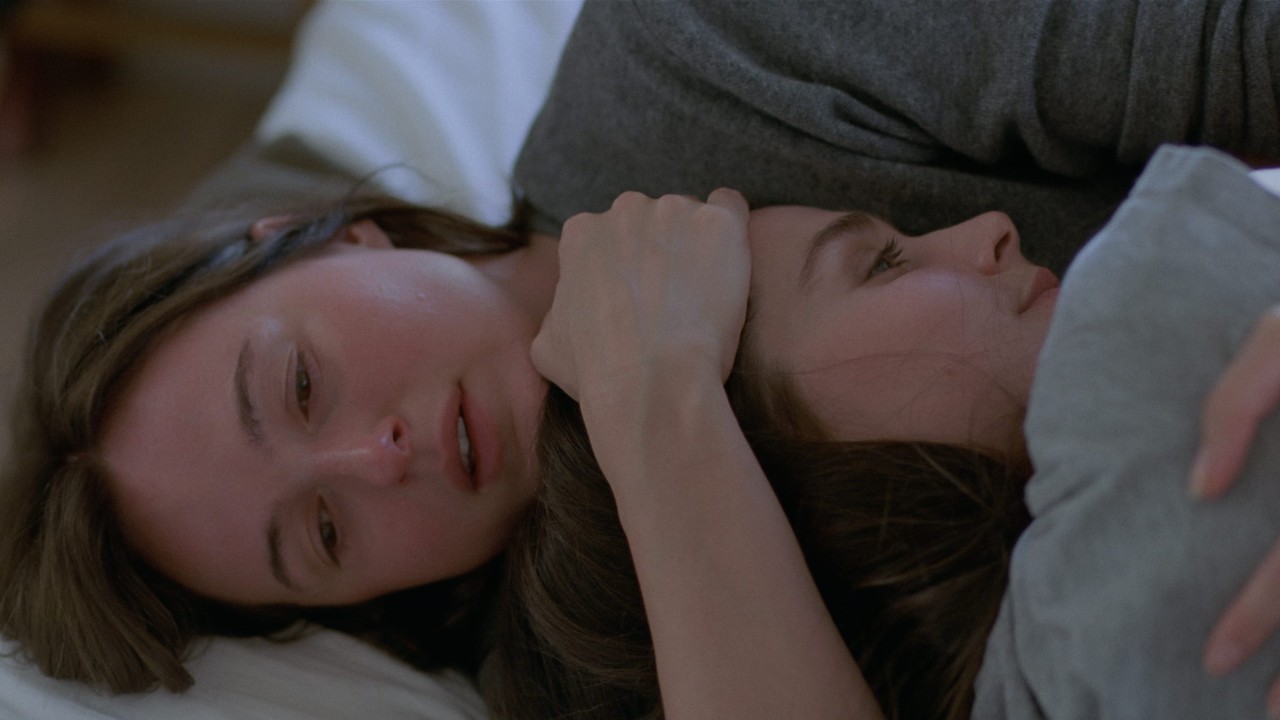
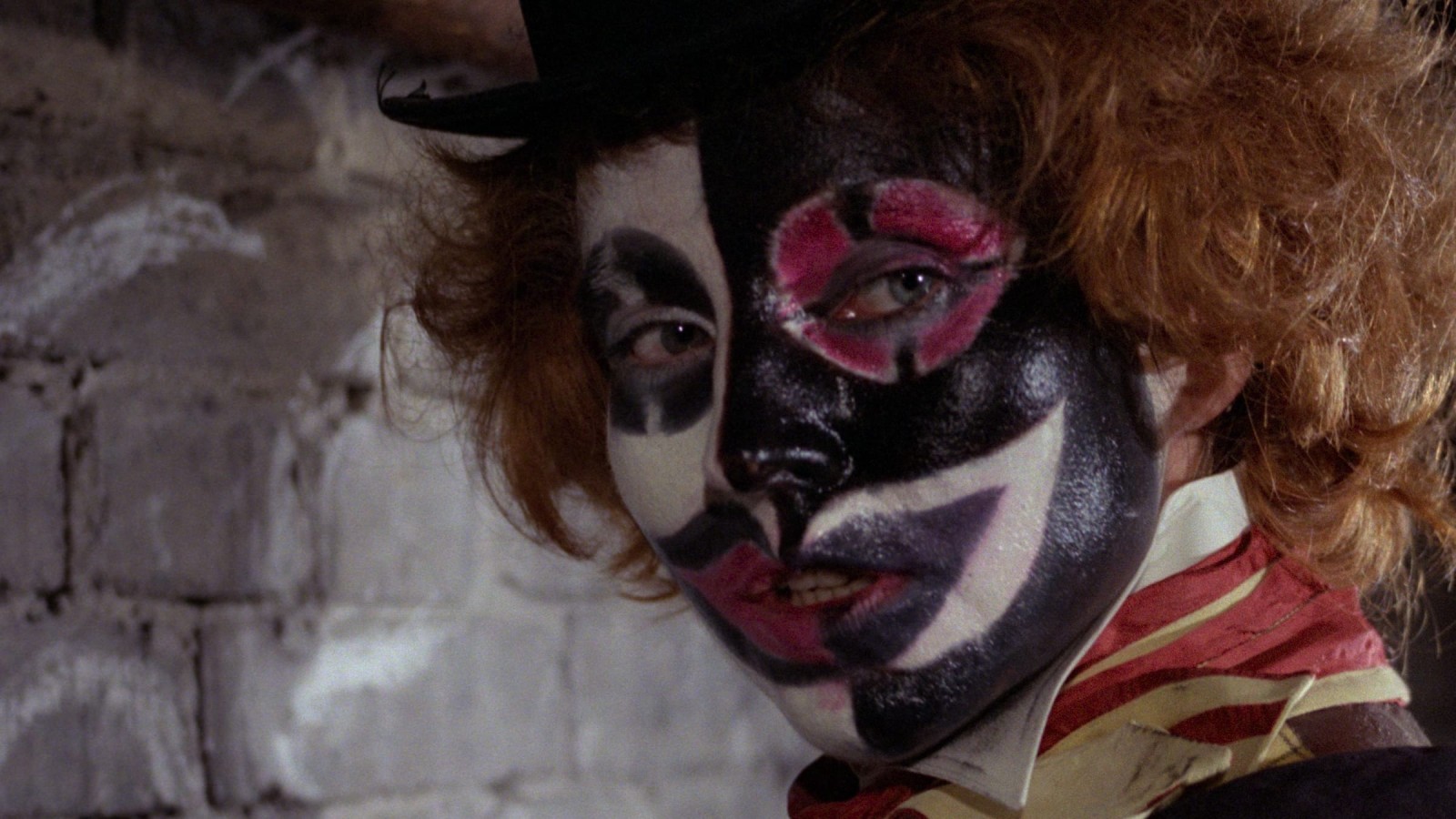
She has short brown bangs, abrupt and sophisticated, in the middle of her broad domed forehead. The hairstyle of a child or a she-devil: in my home, in my family, bangs are vulgar and strictly banned, as is any forelock, lovelock, or spit curl. Parts are straight, braids mercilessly tight in order to reduce any loosening and to show a presentable face to the world.
Vulgar, in reality that means sensual, perhaps enticing. In spite of that—in spite of the bangs—the actress has this childlike face of pure virginity, where no history of human belonging is written, with the inviolability of a statue; eyes like fissures cracked open by the light, purpurine lips discernible in the contrast between black and white. She stands to the left of the bed, in the foreground, and he is relegated to the background, despised, trivial, and yet desirable (because what can a statue desire if not to fall from its pedestal). This marmoreal beauty is coupled, badly of course—with Bergman, young girls are the pearls that are given to the swine.
19Nov07
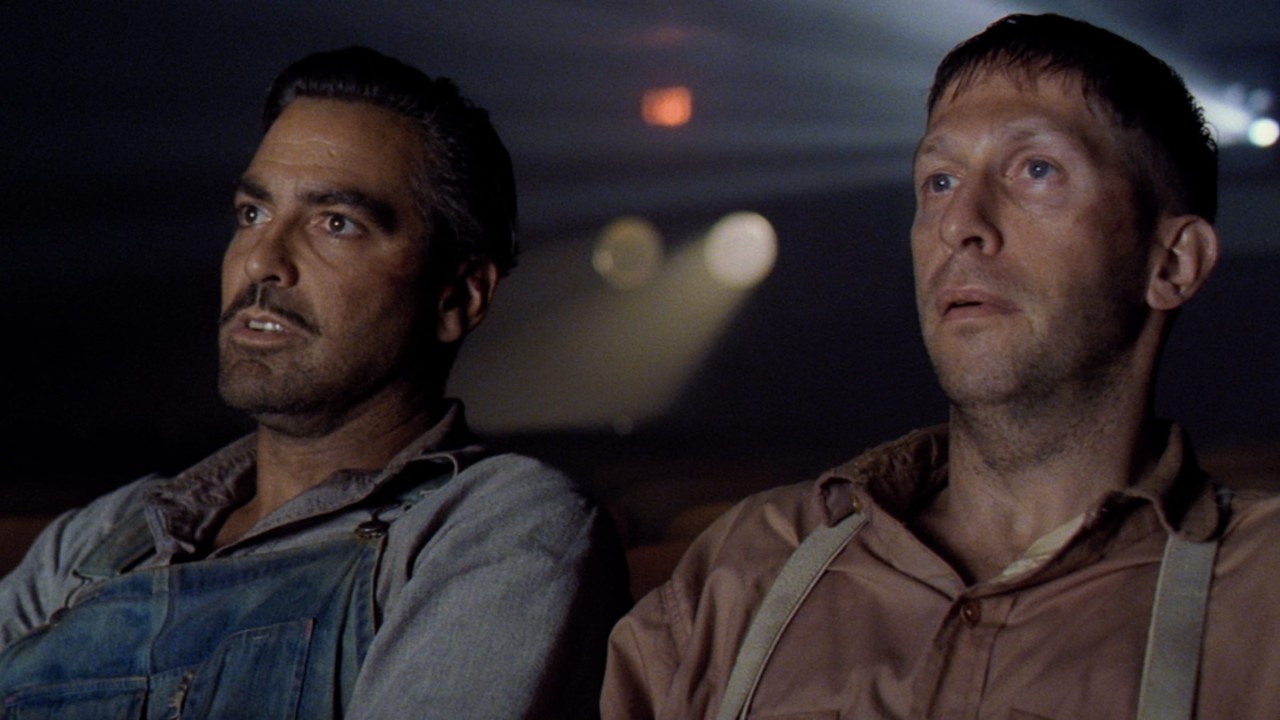
The set for Akira Kurosawa’s Drunken Angel (1948) consisted of a filthy sump surrounded by ruined buildings, shabby wooden houses, and the facade of a sleazy nightclub. It was a setting that could have been found almost anywhere in Tokyo in 1948, or any other bombed-out Japanese city where postwar life revolved around the teeming black markets. One of the wonders of the early postwar Japanese cinema was the public appetite for realism, and the pestilential sump, filled with toxic garbage, stood as a symbol for all that was rotten about life in the wake of a catastrophic wartime defeat. The cheap hookers lurking in the shadows, the young thugs fighting over territory, loot, and “face.” To have “face” in a particular district meant that you had the run of the place, taking what you needed for nothing and making huge profits off the backs of Japanese citizens who struggled to survive. Many of these petty (and not so petty) gangsters had been soldiers in a holy war to expand the glory of the Japanese Empire. Kamikaze pilots whose sacred suicide missions were aborted when surrender intervened became criminals exploiting the people for whose honor they had just months before sworn to sacrifice their lives. But some, in a perverse way, transformed their military code of honor into a gangland code that was just as deadly.
It is this criminal machismo that Kurosawa set out to explore and dramatize in Drunken Angel, his seventh film and, he felt, his official breakthrough in Japanese cinema. As he put it in his memoir, Something Like an Autobiography: “I wanted to take a scalpel and dissect the yakuza.” The yakuza in question is Matsunaga (Toshiro Mifune), a handsome thug who never has trouble finding women to love him, despite, or perhaps because of, his rude, domineering ways.
19Nov07
“They can’t possibly do anything to us. We’re British subjects.” One of the delights of The Lady Vanishes is the wit with which it pins down this form of insular mind-set. The passports may say British, but these are specifically English people, with not a hint of Welsh or Scottish or Irish, taking the train back home through a politically turbulent Europe in the late 1930s, sitting down to afternoon tea in the dining car punctually at 4:00 p.m. in the English manner. In their series of international encounters, this Englishness is represented admiringly (the lady of the title, Miss Froy), satirically (Charters and Caldicott, obsessed with the fortunes of England in cricket, and expecting all foreigners to speak the language), and searingly (the craven Todhunter, whose confidence that “they can’t possibly do anything to us” is followed by humiliation and death).
But while the English-foreign opposition is a structure that runs through the film, there are equally strong oppositions and clashes between the English. “It is impossible for an Englishman to open his mouth without making some other Englishman hate or despise him”: George Bernard Shaw wrote this in 1912, in the preface to his play Pygmalion (and he didn’t intend to exclude women). The encounters between the English in The Lady Vanishes are a series of variations on this theme. Shaw’s play centers on differences in accent and on the class distinctions they represent; and class is likewise a dominant theme in Hitchcock’s film, the basis of the savage behavior that underlies its comedic surface.
19Nov07
The Lady Vanishes is the film that best exemplifies Hitchcock’s often-asserted desire to offer audiences not a slice of life but a slice of cake. Even Claude Chabrol and Eric Rohmer, in their pioneering study of Hitchcock, for once abandoned the search for hidden meanings and—while rating it “an excellent English film, an excellent Hitchcock film”—decided it was one that “requires little commentary,” while François Truffaut declared that every time he tried to study the film’s trick shots and camera movements, he became too absorbed in the plot to notice them. Perhaps they were disarmed by pleasure, The Lady Vanishes being as pure a pleasure as the movies have offered; the ever-spirited Miss Froy, not long before she vanishes, remarks that her name “rhymes with joy,” and indeed the whole film breathes an air of delight like nothing else in Hitchcock. The central situation—the disappearance of a woman whose very existence is subsequently denied by everyone but the protagonist—may seem to provide the perfect matrix for the kind of paranoid melodrama that would proliferate a few years later, in the forties (in films like Phantom Lady, Gaslight, and My Name Is Julia Ross), but here the dark shadows of conspiracy are countered by a brightness and brilliance of tone almost Mozartean in its equanimity. Most of the time we are too exhilarated to be frightened.
The film arose in a more accidental way than was customary with Hitchcock. In 1937 he was at a turning point in his career. After making his way to the forefront of the British film industry with works like The Man Who Knew Too Much and The 39 Steps, he was already involved in negotiations with David Selznick that would soon take him to Hollywood. Still under contract to Gaumont British, however, and at loose ends for a script, he reached for a project already developed and in fact nearly filmed a year earlier by the American director Roy William Neill. Though Hitchcock and his wife, Alma Reville, made significant adjustments (notably with regard to the early hotel scenes and the final shoot-out), the script (freely adapted from The Wheel Spins, a rather unthrilling thriller by Ethel Lina White) is very much the work of the brilliant screenwriting team of Sidney Gilliat and Frank Launder, to whom especially can be credited the verbal richness of the comedy, whether it’s Miss Froy busying herself with “a most intriguing acrostic in The Needlewoman” or Basil Radford’s Charters expostulating: “After all, people don’t go about tying up nuns!” (With Hitchcock gone to America, it would be left to Gilliat and Launder—as writers, directors, and producers—to keep up something of that mix of wit and thrills on the home front.)
12Nov07
I The Anti–Television Film
“To listen to this, and to meditate on it, will be of benefit to many who, like Franz Biberkopf, live in a human skin, and, like this Franz Biberkopf, ask more of life than a piece of bread and butter.” —Alfred Döblin, from the preface to Berlin Alexanderplatz
It is once again time to think, to speak, and to write about this fifteen-hour film, which, at the onset of the eighties (that decade that would later bring with it an end to the cold war and a comeback for capital), enraged the national spirit and occasioned assaults by the yellow press and (in the wake of this) protests from “millions of television viewers” who felt themselves “robbed of their subscription fees” (Bild newspaper).
The public protest against this work, which everyone who was in the vicinity of Germany at the time remembers—and many remember the outrage even better than the film itself—was directed against the television stations, the filmmakers, the ensemble, and naturally, above all, against the director, Rainer Werner Fassbinder. Although the film’s alleged unacceptability in technical matters (it was accused of considerable flaws in image and sound quality) was thrust into the center of attention, these problems, it appeared, were hardly worthy of such a storm of indignation.
12Nov07
I’ve always been fascinated by the details of getting places. Bill Becker would often say that the best part of a trip for me was getting there and back—what happened while I was there was less important. Figuring out how to get from one place to another is a hobby—I read the OAG for fun—so the October newsletter’s trivia contest was my idea. I was overwhelmed by the number of people who responded to both questions, the first of which asked you to match ten films with the city in which they take place, and the second to find the shortest way to fly between all ten cities. When Peter and I started discussing the correct answer, we didn’t quite grasp the importance of which crossing to skip—Asia, the Atlantic, or the Pacific. The key was not to fly across Asia. The correct mileage was approximately 14,570 miles, depending upon which atlas you chose. You were entered in the winning drawing even if your mileage didn’t match exactly, as long as your trip started in Rome and ended in Taipei and didn’t fly across Asia. Thanks to everyone who entered. We realize it was a fair amount of work, so we issued three gift certificates instead of one.
As I said, I’ve always been taken by the idea of flying—waking up in the morning in New York and arriving in Los Angeles in time for a late breakfast. Had my eyesight not been so bad, I would have tried to become a pilot, but that wasn’t to be. I had a brief stint working at NASA, but spent all my time in the office and newsroom, so that didn’t scratch my itch all that well. Happily, traveling for work has been an exciting benefit of distributing films from around the world. For years, we had offices in both New York and Santa Monica, California. I would fly back and forth every other week. These were the days before 9/11, and flying was easy and fun. I got to know cabin crews. I would leave my Santa Monica office at 3:15 and still make the 3:45 flight, all the while racking up hundreds of thousands of miles and achieving Gold Elite status on Continental and 1k status on United.
31Oct07
After the mugginess of the New York City summer, and with the launch of the new Criterion web store and the New York Film Festival keeping us all plenty busy through the end of September, Western Australia was a breath of fresh air for me—literally. Everywhere I went, whether it was a winery (all right, a few wineries) or the beautiful port city of Perth or the iron mountains and gorges of Karijini National Park, I kept saying, “The air smells so good here!”
But my favorite thing about the trip by far was that I got to see lots of different animals. I’m lucky enough to have an Australian friend who showed me native fauna at the zoo, an animal park, and even in “the bush.” That last one may be a bit of a stretch, but compared to the densely populated tri-state area, staying in a cottage sixteen kilometers away from the nearest town (population 1,000) feels pretty rural. You can’t even get broadband out there! I definitely saw plenty of cute and/or deadly animals, including tiger snakes, kookaburras, emus, skinks, flocks of pink and gray cockatoos, and mobs of kangaroos. I didn’t see any sharks, but I met a man who’d been bitten by one, which is as close as I care to get.