

28Nov06

Home Away from Home BY PETER BECKER

Paris. We landed here yesterday at midday, and after a quick stop at our hotel, executive producer Fumiko Takagi and I headed straight to the offices of TF1 and Canal+ in Issy-les-Moulineaux for meetings. Issy is not what you think of when you think of Paris. For starters, it's not old. The part of Issy-les-Moulineaux we were visiting is essentially a newly refurbished commercial district on the southwestern outskirts of the city—big buildings of glass and chrome and marble with vaulting lobbies and impressive security arrangements. At one stop we received plastic identity cards with bar codes on them just to pass through the turnstiles in the lobby; we returned them, one hopes for recycling, on the way out. These companies are modern media powerhouses, and lest one forget it, the architecture is there to remind you.

We are here to meet with our licensors, the people who ultimately make our work possible by granting us the rights to work on their films. The mostly black-and-white classic films we're here to discuss are hardly the core of their business plans, but they are a critical part of what the French refer to as their patrimoine, their heritage, and especially with these big companies, handling these films is not just a matter of profit and loss, it's also a matter of honor and identity. We have brought with us a copy of the Essential Art House box set, our own patrimoine box set, our own patrimoine, along with a selection of the press we've been receiving for it, and I think it makes a difference to know that our association with these films is a matter of such pride to us as well. As we talk about emerging marketplaces, downloading, the HD disc format war, and the state of retail in America, it becomes increasingly clear that in the end, what we're really talking about is something much more personal to all of us: how to keep the classics alive for a new generation.  

0 Comments

27Nov06

Opening Pandora’s Box BY J. HOBERMAN

As a filmmaker, G. W. Pabst was attracted to issues and partial to naturalism. Starting with his 1923 fable The Treasure, this most cosmopolitan and protean of Weimar filmmakers produced a series of socially conscious and sexually frank silent movies. He engaged his times, fiddling with Freud (Secrets of a Soul, 1925) and later Brecht (The Threepenny Opera, 1931), as well as his medium. The Love of Jeanne Ney (1927), adapted from a novel by Ilya Ehrenberg, is among the culminating works of silent cinema—an ambitious attempt to synthesize Soviet montage, Hollywood action-melodrama, and German mise-en-scène.

Pabst’s content, that is, was typically his “star,” but he was also a brilliant director of actresses. He helped discover Greta Garbo, featured—along with the great Asta Nielsen—in his 1925 The Joyless Street, an internationally acclaimed drama of post–World War I disorder. He obtained Leni Riefenstahl’s most nuanced, least narcissistic performance, in the Alpine spectacular The White Hell of Pitz Palu (1929). And he virtually invented Louise Brooks, the minor Hollywood player whom he cast as the innocently wanton protagonist of Pandora’s Box. Adapted from expressionist playwright Frank Wedekind’s fin de siècle Lulu cycle, centered on the destruction wrought by unbridled female eros, Pandora’s Box would, in its shockingly modern, instinct-driven psychology, end up defining both director and actor.  

Film_358w_pandorasbox_w160

Pandora’s Box

Georg Wilhelm Pabst

1929

133 min

Black and White

1.33:1

0 Comments

23Nov06

Remembering Mr. Altman BY KAREN STETLER

I first met Robert Altman in person in 1999, when I was producing a series of video introductions featuring contemporary directors discussing their favorite Janus films. Altman was the first Criterion director to respond to our request. We had sent a list of 100-plus titles, and he had promised to set a date quickly and make his selections. But for the next six months my discussions with his office yielded no progress, until finally they told me that he was not going to have the time to participate at all. This seemed a surprising change of heart, so Bill Becker (who had known him for many years) queried him at a Christmas party. Altman’s response was basically: 'I was planning to do it and then I looked at the list of films. All those foreign films, Bill! I can’t talk about those. I don’t really like foreign films….'

Bill then asked me to check the list and try to suggest one specific title that Altman might potentially like. I came up with Rashomon, thinking he might be interested in the multiple points of view. I was surprised when he said yes immediately, and we shot the interview while he was working in L.A. Although he was busy, he had clearly spent some time preparing in advance. He gave us some lovely personal thoughts on the film, which typically led to his ideas about filmmaking and art in general. He also surprised me by mentioning Kurosawa’s direct influence on some of his own early work. It was clearly not really true that he did not like foreign films. (I think he was probably just reluctant to speak on someone else’s work, a concern for other directors in our Janus series as well.)  

Shortcuts_w160

Short Cuts

Robert Altman

1993

187 min

Color

2.35:1

0 Comments

20Nov06

The Double Life of Véronique:
Through the Looking Glass
BY JONATHAN ROMNEY

1048_023.tif

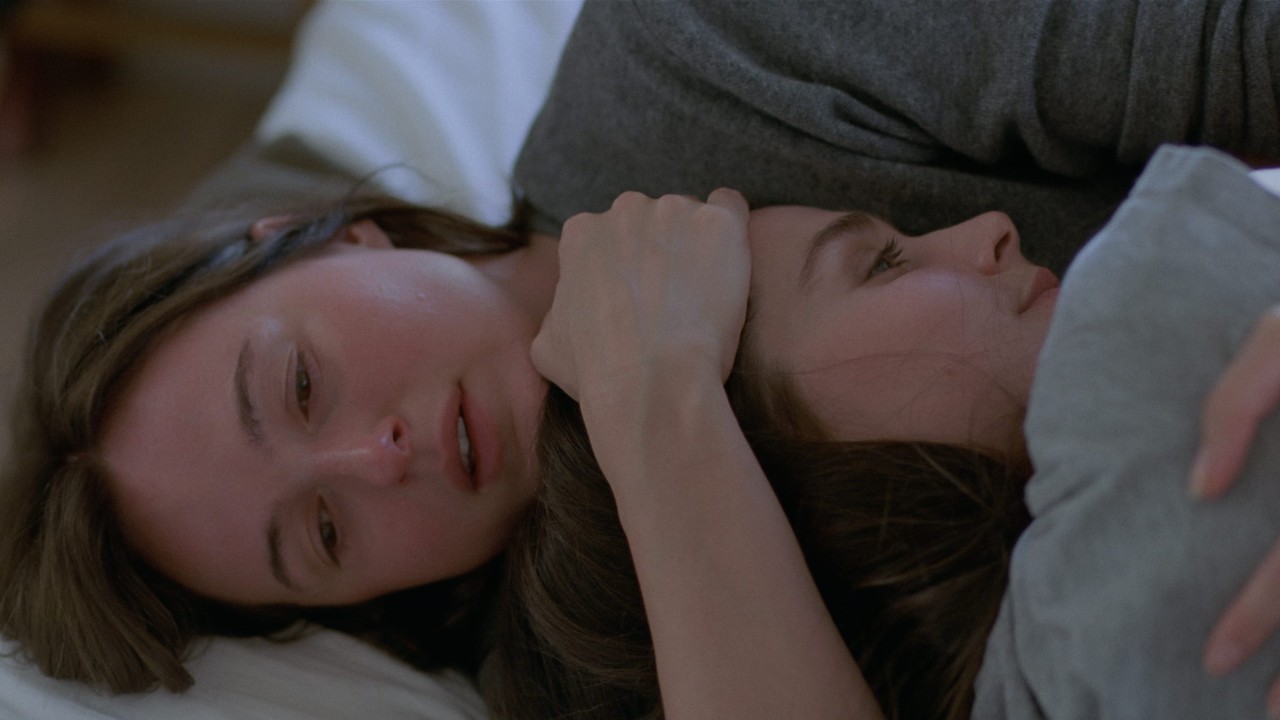
When Krzysztof Kieslowski’s The Double Life of Véronique was first screened in Cannes, in 1991, the critical reception was rapturous. Georgia Brown in the Village Voice declared, “Anything I say about [the film] is merely a labored minuet danced around my own ecstatic response.” Nigel Andrews of the Financial Times commented, “I believe we are being hypnotized in The Double Life of Véronique . . . How else to explain the ability of a French-Polish film with a nonsensical plot premise . . . to enthrall and enchant us like no European film in recent history?” As Andrews enthusiastically but warily suggests, Kieslowski’s film has the capacity to mesmerize. It invites analysis, yet it also encourages us, in its creation of a nebulous, numinous world, to bypass critical inquiry and to respond on a sensual, emotional, or even—if we are so inclined—spiritual level.

The Double Life of Véronique is remarkable for sustaining a delicate combination of simplicity and unfathomable complexity—or at least the impression of such complexity. Kieslowski defined the film’s subject matter to interviewer Danusia Stok thus: “The realm of superstitions, fortune-telling, presentiments, intuition, dreams, all this is the inner life of a human being, and all this is the hardest thing to film.” But he recognized the riskiness of the undertaking: this story, he commented elsewhere, “deals with things you can’t name. If you do, they seem trivial and stupid.” Put simply, the film explores this premise: two young women, one French, one Polish, are for all intents and purposes one and the same, and yet irreducibly different. The narrative is also, of course, an ingenious response to a professional challenge: how can a Polish director best face the demands of a European coproduction to be shot in his own country and in France?  

Doublelifeveronique_w160

The Double Life of Véronique

Krzysztof Kieslowski

1991

98 min

Color

1.66:1

1 Comments

20Nov06

Two Steps Away from the County Line . . . BY JONATHAN TURELL

It’s been a few weeks since Peter and I started this blog, and we are gratified that the response has been so positive. We debated for a while whether or not I should have hot-linked my email address last week, and I’m glad that I did. I received lots of feedback, all of which I tried to answer directly, and I’ve found the interaction interesting and informative. Also, we have to admit that we do check the forums (who wouldn’t read their own reviews?), and while the debate continues there, I’m happy to see that most people seem pleased.

I’ve gone back and taken a look at the letters addressed to Jon Mulvaney and me over the past couple of weeks and want to address some of them here. Topics that keep coming up ….

The new logo:
Some people like it, others don’t. Again, it was a very long debate in the office. We felt that we needed to make the change for several reasons, and here are a few. Many of the studios had adopted the top space on the box, and it was no longer unique to Criterion. The justified right bar was very hard to see in a small jpeg image online, and more and more people are shopping for DVDs that way. We wanted a mark that could easily integrate with our upcoming spring launch of the Eclipse line. The more time I spend with it and see some of the wonderful designs that incorporate the “C,” the more I like it. For the very few of you who have written that you’ll never buy another Criterion disc with the new logo, I think you’re missing some great movies.  

0 Comments

16Nov06

Beautiful People BY PETER BECKER

At the Museum of the Moving Image tonight, Peter Cowie is presenting his new book on Louise Brooks, Lulu Forever, and they are digitally screening our new Pandora's Box restoration with the Gillian Anderson score. I don’t think I’ve ever been so relieved to see a disc hitting the street. Pandora has been on the Criterion schedule since long before I started, but after thirteen years of laserdisc publishing and another eight years of DVD, we had never been able to come up with a version we felt was releasable. There was always something better just over the horizon: a better film element, a better version, a better restoration, a better score. In retrospect, I wish we’d put it out years ago in one of those more provisional versions and taken the heat for it, because even the versions we were rejecting were a good step up from the VHS tapes that were out there. At least I can say of the version that hits the street this week that we can’t make it any better than this—and just in time for what would have been her one-hundredth birthday. Happy birthday, Brooksie!

On Wednesday night, Isabella Rossellini and the Museum of Modern Art threw a birthday party of sorts for the centenary of Roberto Rossellini, complete with cake and cocktails at the Fendi store on Fifth Avenue and a MoMA screening of the newly restored print of Rome, Open City made by the Cineteca Nazionale in Rome. For Fendi, Isabella set up an extraordinary display of family photographs, taken by the likes of Cecil Beaton, Robert Capa, and Henri Cartier-Bresson, and they were giving out copies of her new book, In the Name of the Father, the Daughter, and the Holy Spirits. They were also showing the film she made with Guy Maddin, My Dad is 100 Years Old , on the huge, two-story wall of the staircase. Vintage Rossellini posters were everywhere. But the star of the evening was the new print at MoMA. All I can say is that it was a revelation. Everything I had always thought about the look of Rome, Open City turns out to be wrong. It is not gritty and grainy and mismatched. This print is smooth and even with tight, fine grain. There is only one dupe-y shot in the entire film. It seems impossible that Rossellini made such a professional, almost studio-looking image when working with mismatched stocks, short ends of leftover military film, and even some rolls (at least apocryphally) intended for still cameras. At the end of the evening, we were all marveling over what Sergio Toffetti and his team of restorers had done. “I have seen the film hundreds of times, but on this print I see shadows I never knew were there,” Isabella said. “Who knew that Italian neorealism would look so slick?”

0 Comments

13Nov06

One Step Ahead of the Shoeshine . . . BY JONATHAN TURELL

There’s a store called Stew Leonard’s near where I live. When you walk in, you can see the customer service rules hanging above the entrance. It’s simple—there are only two: Rule one: The customer is always right; Rule two: When in doubt, see rule one. About a third of the way through Citizen Kane, Kane publishes his declaration of principles on the front page of his newspaper, only to have it come back to haunt him years later. Ryan Air, an up-and-coming European airline, provides almost no customer service, happily standing behind its slogan: “You get what you pay for” (very little). So, what’s the right approach for Criterion?

I’ve always been the marketing partner, but as I wrote last time, Peter thinks a lot about marketing too, and we spend a lot of time talking about our customers. For years now, we’ve always been one step or more removed from them. We’d sell Criterion DVDs to wholesalers, who would in turn sell them to retail outlets, who would finally sell them to the Criterion viewer. Our contact was limited. In the early days, Jon Mulvaney would get mail with suggestions about titles and the occasional problem. More often than not, the mail went unanswered. Email changed all that. When Jon started getting mail online, we wanted him to answer every letter he got. This turned out not to be an easy task, as hundreds of letters would come in each week. Customer service took on a whole new meaning at Criterion. The instructions were to answer every email, except for the abusive ones. Problems with broken discs and missing inserts had to be answered quickly and with replacements. Criticism was to be shared with many people in the office in the hope of learning and doing better. Title suggestions, whether sent to Criterion under that heading or in a standard email, are all read, but maybe the least responded to. There’s not much to say to those except thank you. We look at all the suggestions and keep them all on file and go back to them. An interesting note: when we were trying to license Le samourai, the price for the film started to climb to a level at which we were not all that comfortable. We went back to the suggestions and searched for the title. We took some comfort in how many people had requested the title and finally upped our offer. I’m glad we did.  

1 Comments

9Nov06

Debates Around the Office BY JONATHAN TURELL

For years now, Peter has been the public face of Criterion. It’s great to have my partner fielding the brunt of the questions, sitting on the panels, and speaking poetically for all of us. We’ve been partners now for about a dozen years, and every once and while, I surface to the outside world. Most days start with a phone call between the two of us in which we lay out the day’s agenda. Peter is the editor-in-chief of Criterion; I handle more of the business side of things, but as we say to those we meet, we each know more about the other’s side of the business than we let on.

We discuss lots of things at Criterion. Whether it’s a major question (what titles to release in Criterion, the launch of a second line, when to start releasing DVDs in HD) or a small one (which hot movie to see over the weekend, salty snacks before lunch and sweet after or the other way around, McSteamy or McDreamy, Meredith or Izzy), there’s hardly anything we won’t discuss and debate.  

1 Comments

6Nov06

The Fallen Idol:
Through a Child’s Eye, Darkly
BY GEOFFREY O’BRIEN

306-026

The circumstances of our first encounters with movies are often as memorable as the movies themselves. Sometimes the juxtaposition of movie and circumstance seems merely accidental; but there are those films that change us enough that we can identify the first viewing as the precise moment when we became a different person. Carol Reed's The Fallen Idol (1948)—which I first saw on afternoon television, at an age close to that of the boy who is its protagonist—remains such a film for me, and I daresay for many who saw it at an appropriately early age. What it is like to see The Fallen Idol for the first time as an adult it is hard for me to imagine; seen in childhood, it was like a door swung ajar—whether deliberately or not—to reveal an adult world not yet suspected, and in the process to alter forever the self-awareness of the child spectator. To come back, years later, to the close-up of Bobby Henrey processing the overheard conversation of his beloved mentor, the butler Baines—“It makes no difference about the boy . . . Of course, he doesn’t understand”—is like being privileged to relive, over and over, the moment of realizing how thoroughly adults, even the most loved, pursue their own agendas.

Part of the effect has to do with Henrey himself, whose manifest nonprofessionalism sets him curiously apart from the rest of the very polished proceedings—in a way that deepens the film’s sense of missed connections. The film itself exemplifies the extraordinary craftsmanship of British cinema in the late forties, both behind the camera and in front of it. Even as a child, I could grasp that there was something extraordinary about the intricate surfaces created by Georges Périnal’s cinematography and Vincent Korda’s set designs and the sometimes harsh spareness of Graham Greene’s dialogue and Carol Reed’s direction. Ralph Richardson could make plausible the idea of Baines as irresistible idol because, in the fluid exactness of his gestures and line readings, he was, in fact, irresistible. The two women—Michèle Morgan, as the compassionate, suffering Julie, and Sonia Dresdel, as the terrifying and finally tragic Mrs. Baines—might have been competing deities of two different religions, overpowering images of Pity and Rage, respectively.  

Fallen_w_cleaned_w160

The Fallen Idol

Carol Reed

1948

95 min

Black and White

1.33:1

0 Comments

6Nov06

Honor Thy Father BY PETER BECKER

The New York Times ran a really nice piece about the Janus box this morning. It started on the front page of the Arts section and jumped to another half page inside. It featured big pictures from M, L'Avventura, Seven Samurai, The Virgin Spring, and Viridiana alongside an article by Dave Kehr that compares the set to Harvard's famous "five-foot shelf of books" and refers to the "central role Janus has played in American film culture." We couldn't have hoped for more. Kehr does a great job of articulating the purpose of the Essential Art House set and the role we hope it will play in continuing to introduce new audiences to classic cinema, but on a very personal level, what I like best about the piece is that it catches my father, William Becker, in his element, out at the American Film Market, looking for films.

My father has been at this since 1965, when he and his partner Saul Turell bought a prestigious but near-defunct company and started to build a film library. With Saul, and later Saul's son Jonathan (who started in 1981, not 1993 as the Times has it), he has devoted his life to Janus Films. It's been years since he's had to mind every little day-to-day thing in the company, but he is still very actively engaged in the life of the library. There is nothing that gives him more satisfaction than finding some lost treasure. At heart my father is a collector, and he is never so happy as when he is on the trail of something, and that's just where he was when the Times caught up with him.

When we set out to make Essential Art House, our main goal was to create an elegant single-volume reference for viewers who wanted the essentials of a certain kind of film literacy but didn't necessarily know where to begin. When the Times writes, "It is hard to argue with the historical importance and artistic significance of the great majority of the movies in this volume," it certainly helps to get the idea across. On National Public Radio's Fresh Air today, John Powers also helped to make the case when he called the Janus box "an invaluable introduction to foreign film literacy." There's lots more coverage coming, but for personal reasons this morning's Times article is going to be pretty hard to beat. I know my father is feeling very deservedly proud, and I only wish Saul were around to share this moment with him

0 Comments

2009 01 02 03 04 05 06 07 08 09 10 11 12

2008 01 02 03 04 05 06 07 08 09 10 11 12

2007 01 02 03 04 05 06 07 08 09 10 11 12

2006 01 02 03 04 05 06 07 08 09 10 11 12

2005 01 02 03 04 05 06 07 08 09 10 11 12

2004 01 02 03 04 05 06 07 08 09 10 11 12

2003 01 02 03 04 05 06 07 08 09 10 11 12

2002 01 02 03 04 05 06 07 08 09 10 11 12

2001 01 02 03 04 05 06 07 08 09 10 11 12

2000 01 02 03 04 05 06 07 08 09 10 11 12

1999 01 02 03 04 05 06 07 08 09 10 11 12

1998 01 02 03 04 05 06 07 08 09 10 11 12

1997 01 02 03 04 05 06 07 08 09 10 11 12

1996 01 02 03 04 05 06 07 08 09 10 11 12

1995 01 02 03 04 05 06 07 08 09 10 11 12

1994 01 02 03 04 05 06 07 08 09 10 11 12

1993 01 02 03 04 05 06 07 08 09 10 11 12

1992 01 02 03 04 05 06 07 08 09 10 11 12

1991 01 02 03 04 05 06 07 08 09 10 11 12

1990 01 02 03 04 05 06 07 08 09 10 11 12

1989 01 02 03 04 05 06 07 08 09 10 11 12

1988 01 02 03 04 05 06 07 08 09 10 11 12

1987 01 02 03 04 05 06 07 08 09 10 11 12

1986 01 02 03 04 05 06 07 08 09 10 11 12

1985 01 02 03 04 05 06 07 08 09 10 11 12

1984 01 02 03 04 05 06 07 08 09 10 11 12