


19Nov08

The Red Balloon: Written on the Wind BY BRIAN SELZNICK

My first trip to Paris took place inside the darkened cafeteria of Warnsdorfer Elementary School in East Brunswick, New Jersey. A few times each year, the entire student body was brought together to watch movies cast from a rickety 16 mm projector at the back of the room onto a large white screen pulled awkwardly down from the ceiling. I don’t remember if we were told what we were about to see, but sitting there in the dark and listening to the projector’s soft whir would give me a thrill every time. And though the seats were uncomfortable and light leaked in from the drawn shades, I was always ready to be transported. Perhaps it was fourth grade, or it might have been fifth, but I’ll never forget watching The Red Balloon, French filmmaker Albert Lamorisse’s nearly wordless 1956 film starring his son, Pascal, and a beautiful, unnaturally round and rosy red balloon.

As with young Pascal and his balloon, my relationship to the film was love at first sight. Did I know that The Red Balloon was filmed and set in faraway Paris? The film doesn’t include any shots of the Eiffel Tower, the icon that could have immediately clued me in. Yes, the city was strange and the sparse bits of language required subtitles, but I understood Pascal as if I had grown up next door to him. Even my experience of walking to school seemed similar to Pascal’s. I lived one block away, but I had to cross streets and pass houses, fences, and trees to get there; though it couldn’t have been more than several hundred yards, this was my entire world—and it takes quite a while to walk across the world. And like Pascal’s, my world was filled with many terrors: the dreaded gym class, the awful older kids, the unsupervised expanse of the blacktop behind the school. But there were also many ways to find refuge: making projects in the art room, putting on shows with the chorus, playing “monster” at the end of my block, reading with the librarian, and, of course, escaping into movies.  

Red_balloonw_copy_w160

The Red Balloon

Albert Lamorisse

1956

34 min

Color

1.33:1

9 Comments

18Nov08

Press Notes: Portraits of Cassavetes

Just when you thought it was safe to return to the tripod, he’s baa-ack. “Cassavetes earned a belated place in film history,” writes Darrell Hartman in his Artforum piece marking the Criterion breakout releases of A Woman Under the Influence and The Killing of a Chinese Bookie. Once he earned that place, though, he never budged. Hartman muses on the famously independent American actor-filmmaker’s “stubborn disregard for the traditional rules of planning and shooting a movie,” as well as on his difficult relationships with his audiences, critics, and producers. And that abrasiveness, Hartman argues, is played out in the dynamics between the characters in Cassavetes’ famously raw films. In comparing the seemingly wildly different protagonists in Woman and Bookie, the writer finds both Mabel and Cosmo to be victims of the same external forces, “constantly molding themselves for a world of impatient spectators . . . Few nonperiod American movies have made social pressures and influences feel so ever present.”

Meanwhile, in the New Yorker this week, Richard Brody uses the occasion of the DVD releases to focus on Chinese Bookie, which he claims was an artistic breakthrough for Cassavetes that “set the stage for his daringly personal later works.” He sees the film’s story of a small-time criminal as perhaps autobiographical: “Cassavetes avoids psychological motivation in favor of a Beckett-like opacity and absurd humor, and turns the story into a portrait of an artist . . . Cosmo is no ordinary pander but an auteur of sorts.” And, of course, Cassavetes is no ordinary auteur.

A Woman Under the Influence and The Killing of a Chinese Bookie are also still available in the Criterion eight-disc box set John Cassavetes: Five Films.

1976

135 min

Color

1.85:1

Film_253w_womanunderinfluence_w160

A Woman Under the Influence

John Cassavetes

1974

155 min

Color

1.85:1

0 Comments

17Nov08

Reading Tarkovsky

Marking the publication of two new books on the visionary Russian filmmaker Andrei Tarkovsky, J. Hoberman writes movingly on the artist for Bookforum, beginning with some thoughts on his 1966 epic: “The inventor and master of the Soviet sublime, Tarkovsky realized himself with a singular convulsive work, a violent medieval spectacle set against the carnage of the Tartar invasions and charged with heady pantheistic mysticism—Andrei Rublev.”

P_w160

Andrei Rublev

Andrei Tarkovsky

1969

185 min

Black and White

2.35:1

0 Comments

16Nov08

Chungking Express: Electric Youth BY AMY TAUBIN

1121 frame grab

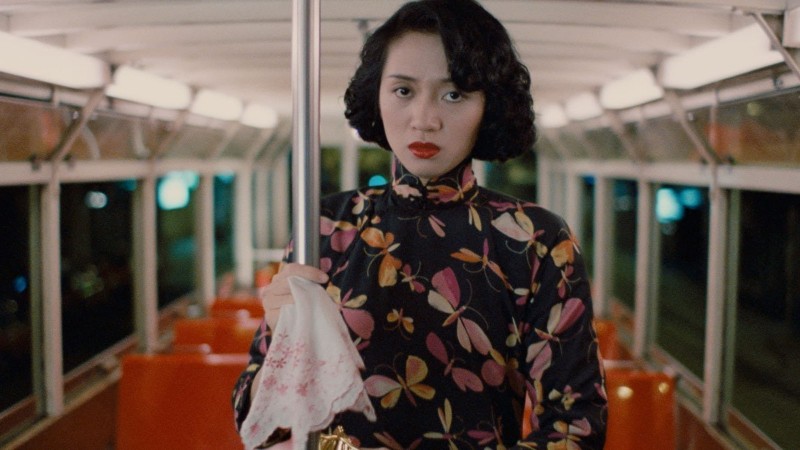
Chungking Express (1994) was the Masculin féminin of the 1990s, a pop art movie about cool twentysomethings looking for love in the city that has replaced Paris as the center of the world-cinema imagination. What Jean-Luc Godard did for “the generation of Marx and Coca-Cola” in the mid-1960s, Wong Kar-wai did for restless Hong Kong youth during the anxious decade that preceded the handoff to China. Masculin féminin (1966) and Chungking Express were the first films in which their respective directors focused predominantly on characters who were around ten years their juniors. This generation gap imparts a sense of distance mixed with tenderness, and also focuses the films on the dominant issue for heterosexual young adults: how to negotiate the desire and confusion they feel vis-à-vis the opposite sex.

Made while Wong was taking a break from the lengthy, difficult post­production of his only martial arts period picture, Ashes of Time (1994), Chungking Express was intended as a money-generating quickie for the director’s Jet Tone company, and indeed the movie, which was made in three months, start to finish, has a wacky spontaneity that is unique in his oeuvre. Wong piled on the commercial elements: the first half is a nod to the gangster thriller, the second is pure screwball romance. The protagonists of both sections are cops, and the four main actors are all Asian box office attractions: pop music idols Takeshi Kaneshiro and Faye Wong, Hong Kong action/dramatic star Tony Leung Chiu-wai, and veteran actress Brigitte Lin Ching-hsia (the film’s only fortysomething star, coming out of retirement for a cameo appearance as a drug smuggler, fashioned as an homage to another middle-aged cult actress, Gena Rowlands in Gloria). Again comparing the film with Masculin féminin, the female leads in both are played by singers with youth culture followings. But unlike Masculin féminin’s Chantal Goya, a pop singer playing the role of a pop singer, Faye Wong in Chungking Express plays a waitress, albeit one who becomes identified with two songs—the Mamas and the Papas’ “California Dreamin’” and a Cantonese cover of the Cranberries’ “Dreams” by a singer named Faye Wong—which accompany her as she works. While the difference in strategy is minimal—at one point or another, both performers either lip-synch or dance to their own recorded voices—the difference between Godard’s and Wong’s depictions of the female characters is enormous. The Goya character is monstrous in her narcissism and vacuity. On the other hand, Wong is as empathetic with Faye Wong’s waitress as he is with the cops played by Kaneshiro and Leung.  

P_w160

Chungking Express

Wong Kar-wai

1994

102 min

Color

1.66:1

1 Comments

13Nov08

Mitch Mitchell, 1947–2008

Mitch Mitchell, the inimitable drummer featured in all of the Jimi Hendrix material in Monterey Pop, died this week at age sixty-one. A one-of-a-kind player, Mitchell was the perfect foil for Hendrix and integral to the sound of the Jimi Hendrix Experience. His roiling, explosive approach was a rhythmic analogue to Jimi’s redefinition of the guitar.

For the Monterey Pop Criterion release, we had a hell of a time trying to re-create that huge drum sound from the studio records. The great remote recordist at Monterey, Wally Heider, did a valiant job just trying to get anything on tape. The seven-track master we had to work with had mics being moved and repatched in the middle of songs. Drums were an afterthought to the vocals and guitar, so legendary engineer Eddie Kramer had to build much of the drum sound from bass player Noel Redding’s open vocal mic!

Mitchell was a great drummer and musician. The world is indeed a lesser place without him.—Michael W. Wiese

0 Comments

12Nov08

Need a Lift?

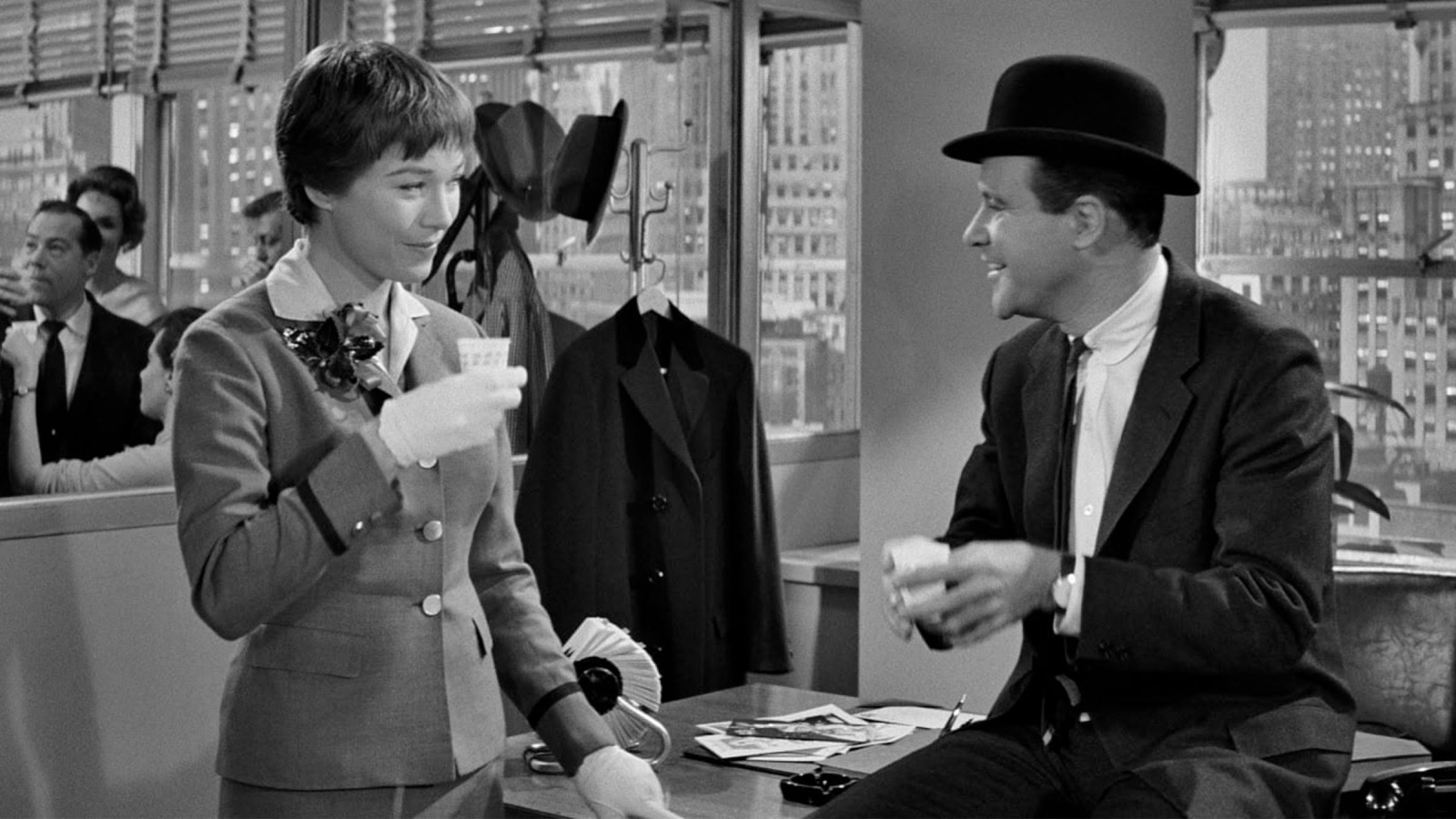
Philip French rates cinema’s greatest elevator scenes here, in the Guardian. Claustrophobics stay clear!

1957

92 min

Black and White

1.66:1

0 Comments

11Nov08

Strand Preserved

Groundbreaking modernist artist Paul Strand (1890–1976) might have been better known for his photography than his filmmaking, but the two films he directed are both extraordinary testaments to his brilliance. The first, his silent 1921 avant-garde masterpiece Manhatta, a luminous visual essay on New York City codirected with the equally renowned shutterbug Charles Sheeler, will be shown this week in a digitally restored print at the Museum of Modern Art, as part of its ongoing film series To Save and Project, an annual film preservation festival now in its sixth year.

And you can see a restored version of Strand’s second film, the popular-front docudrama Native Land, as part of our four-disc set Paul Robeson: Tribute to an Artist, released last year. This striking rarity, codirected with Brooklyn-born artist Leo Hurwitz, with narration and songs by Robeson, was made in 1941 as a call to action for U.S. workers, and is a fascinating dispatch from a troubled time.

Film_373w_nativeland_w160

Native Land

Leo Hurwitz and Paul Strand

1942

89 min

Black and White

1.33:1

0 Comments

10Nov08

A Festival for Farber

The life and work of American writer and painter Manny Farber, one of the most celebrated and idiosyncratic voices in the history of film criticism, will be honored by New York's Film Society of Lincoln Center in a two-week festival—simply titled Manny Farber, 1917–2008—beginning Friday, November 14. The program consists of films he championed in his writings for such publications as the Nation and Time, as well as those he presented in classes he taught at the University of California at San Diego, and includes Yasujiro Ozu’s I Was Born, But . . . , Robert Bresson’s Mouchette, and Nicolas Roeg’s Walkabout. Other Farber favorites on the slate come from Jean-Luc Godard, Alain Resnais, Preston Sturges, Don Siegel, Roberto Rossellini, and, of course, Howard Hawks. Farber died in August at the age of ninety-one. You can also read two interviews with Farber, from 1977 and 2000, on Film Comment's website.

0 Comments

9Nov08

Life of a Salesman

“Though the Maysles are best known for their hippie-era music docs Monterey Pop and Gimme Shelter, as well as the opaque weirdness of Grey Gardens from 1975, Salesman stands as the movie where they really found their voice as leading American proponents of the ‘direct cinema’ aesthetic,” writes Andrew Puliver in the Guardian, in his celebration of Albert Maysles, David Maysles, and Charlotte Zwerin’s 1968 Bible salesmen documentary, which he ranks with Arthur Miller’s touchstone of American door-to-door salesmen stories Death of a Salesman, and urges readers on both sides of the Atlantic to revisit in these compassion-deprived times. Read the tribute here.

Salesmanw_w160

Salesman

Albert Maysles, David Maysles and Charlotte Zwerin

1968

91 min

Black and White

1.33:1

0 Comments

9Nov08

Ken Ogata: “His confidence was contagious” BY PAUL SCHRADER

1065_142

Ken Ogata was a brave and talented actor. He took chances in a system that discouraged risk taking. I had been told that no reputable Japanese actor would star in Mishima because of the controversy surrounding Mishima and the notion of an American filming a story about him. The script had been written with Ken Takakura (who had starred in The Yakuza) in mind, but under pressure from the right wing (which, in Japan, is not a wing but the main building), he had to decline. Ogata read the script, liked the challenge, and accepted it without hesitation or apprehension. His confidence was contagious; it brought other talented actors to the project. With his death, Japanese cinema has lost one of its giants.

2 Comments

2009 01 02 03 04 05 06 07 08 09 10 11 12

2008 01 02 03 04 05 06 07 08 09 10 11 12

2007 01 02 03 04 05 06 07 08 09 10 11 12

2006 01 02 03 04 05 06 07 08 09 10 11 12

2005 01 02 03 04 05 06 07 08 09 10 11 12

2004 01 02 03 04 05 06 07 08 09 10 11 12

2003 01 02 03 04 05 06 07 08 09 10 11 12

2002 01 02 03 04 05 06 07 08 09 10 11 12

2001 01 02 03 04 05 06 07 08 09 10 11 12

2000 01 02 03 04 05 06 07 08 09 10 11 12

1999 01 02 03 04 05 06 07 08 09 10 11 12

1998 01 02 03 04 05 06 07 08 09 10 11 12

1997 01 02 03 04 05 06 07 08 09 10 11 12

1996 01 02 03 04 05 06 07 08 09 10 11 12

1995 01 02 03 04 05 06 07 08 09 10 11 12

1994 01 02 03 04 05 06 07 08 09 10 11 12

1993 01 02 03 04 05 06 07 08 09 10 11 12

1992 01 02 03 04 05 06 07 08 09 10 11 12

1991 01 02 03 04 05 06 07 08 09 10 11 12

1990 01 02 03 04 05 06 07 08 09 10 11 12

1989 01 02 03 04 05 06 07 08 09 10 11 12

1988 01 02 03 04 05 06 07 08 09 10 11 12

1987 01 02 03 04 05 06 07 08 09 10 11 12

1986 01 02 03 04 05 06 07 08 09 10 11 12

1985 01 02 03 04 05 06 07 08 09 10 11 12

1984 01 02 03 04 05 06 07 08 09 10 11 12