


30Oct09

TALES FROM THE CRITERION CRYPT

In the spirit of the season, we asked a select coven of horror mavens (including a couple of our own) to write about their favorite Criterion scarefests.


frame grab

CHUCK STEPHENS
Equinox: The Eyebrows of Mr. Asmodeus

There are myriad ways into Equinox, and almost no way out.

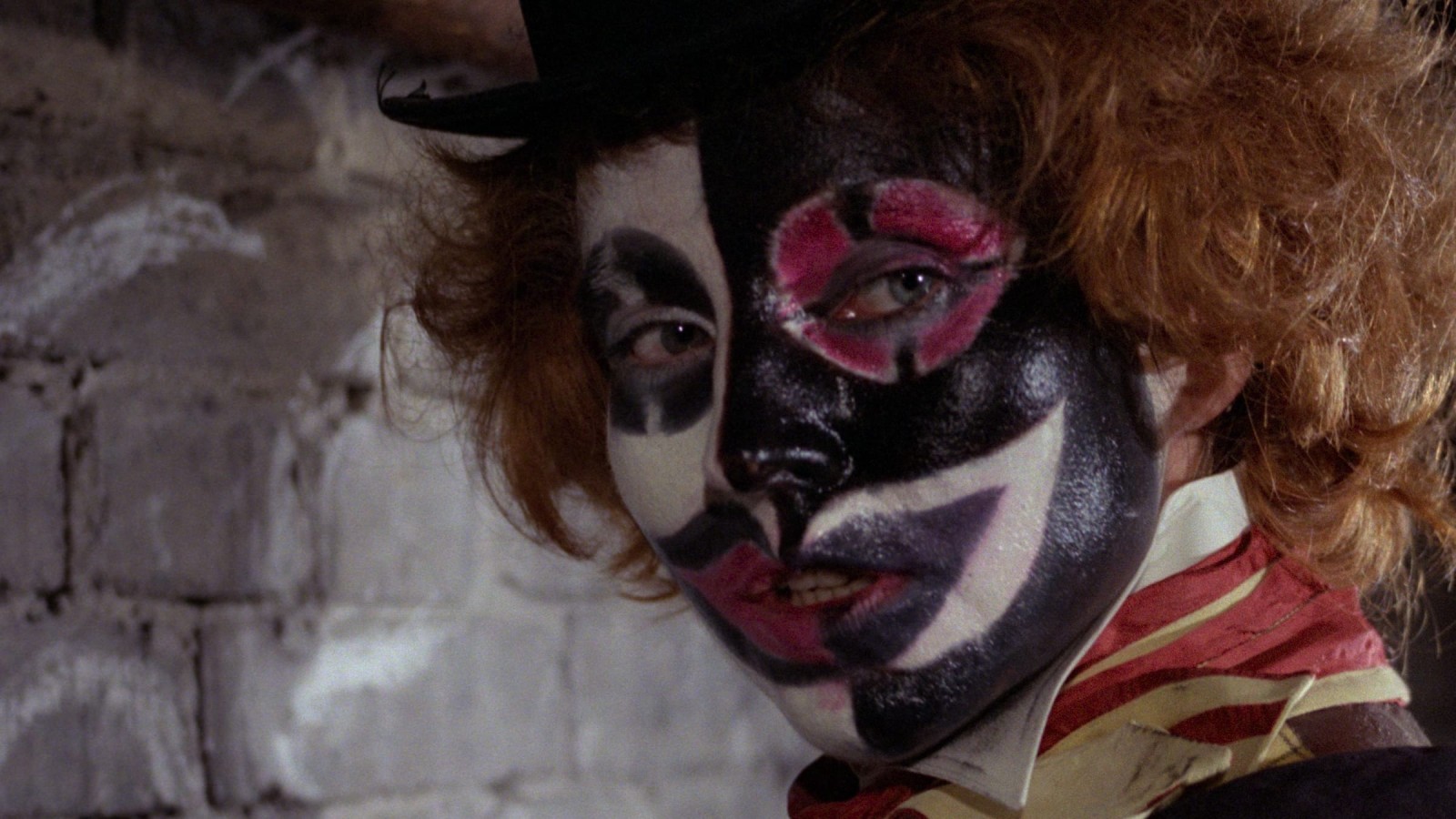
I like to start with the eyebrows of Mr. Asmodeus, the film’s creepy park ranger and ultimate incarnation of drooling evil: two giant worms of squirming fur threatening further metamorphosis while actor/writer/director Jack Woods contorts the rest of his face into a ridiculous rubber succubus of extraordinarily cretinous sexual desire. Starlet (and future minister) Barbara Hewitt cringes in vain as Asmodeus (his name is that of the Hebrew bible’s king of demons, elsewhere known as the demon of lust) advances upon her—a string of slobber unspooling from his hideous maw and nearly coating the anamorphic excesses of the image with a nauseating scrim of saliva—for there is no escape from this grimacing, groping, leg-humping letch from another dimension!

Hired by producer Jack H. Harris (The Blob) to turn future Oscar-winning Industrial Light & Magic guru Dennis Muren’s independently produced, Ray Harryhausen–induced virgin voyage to the lost continent of stop-motion-style special effects into a theatrically releasable feature film (and soon-to-be classic of late night television horror-whatzit-psychotronica), veteran sound editor Woods (who’d go on to sculpt the sonics on everything from the pilot episode of MacGyver to Critters 2: The Main Course) jumped in face-first. Talk about making your mark on a movie: Woods’s decision not only to rewrite and reshoot Muren’s film but also to star as its narrative-altering new main character ensured that he would sign “his” only film as a “director” in indelible spittle and demon seed—and in so doing, forge one of the darkest statements on the nature of auteurism in twentieth-century film history.

There are, perhaps, easier ways into Equinox. One might start with the debt owed it by such later and better-known horror
hoedowns as Don Coscarelli’s Phantasm and Sam Raimi’s Evil Deads, to name but two Equinox-idated examples of anything-goes cinefantastique. Or one might zero in on the sporty white socks and loafers shown off so enthusiastically by the film’s young supporting star, Frank Boers Jr. (soon to be known to living rooms around the country as Frank Bonner, WKRP in Cincinnati’s unctuously polyestered Herb Tarlek), as he haggles with the demonic Asmodeus over the fate of his friends’ picnic in the woods . . . and possibly the fate of the world itself! “All the money in the world, kid!” Asmodeus gleefully bellows as he tempts young proto-Tarlek into some sub-Faustian folly. Director, tempt thyself!

Such is the genius of Equinox, this extraordinary mutt of a movie that, while directed by far too many, finds in its very directionlessness its most impressive quality of all.


After the jump, writers Michael Atkinson, Marc Walkow, Michael Koresky, and Susan Arosteguy on their favorite scary films from the collection.  

Film_92w_fiendwithoutface_w160

Fiend Without a Face

Arthur Crabtree

1958

92 min

1.33:1

Film_352w_jigoku_w160

Jigoku

Nobuo Nakagawa

1960

101 min

Color

2.35:1

Carnival_w_w160

Carnival of Souls

Herk Harvey

1962

83 min

1.33:1

Film_338w_equinox_w160

Equinox

Jack Woods

1970

82 min

Color

1.33:1

P_w160

Sisters

Brian De Palma

1973

93 min

Color

1.85:1

6 Comments

29Oct09

We Have a Winner

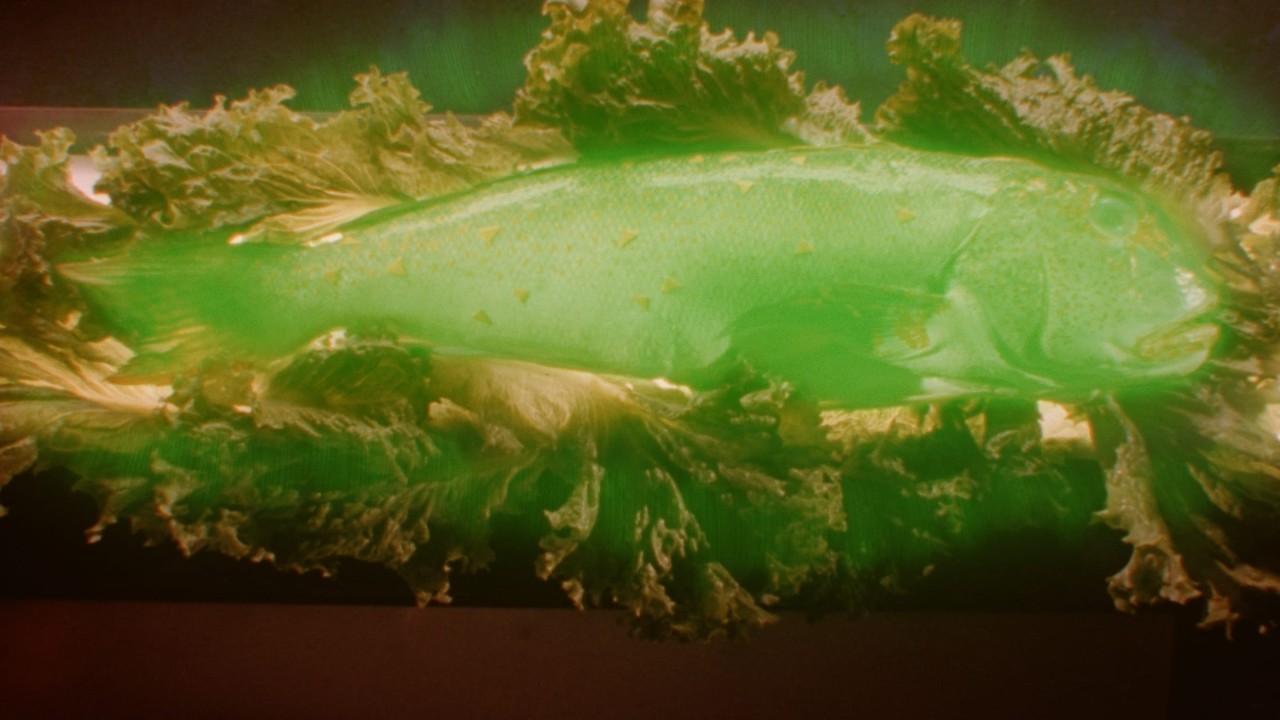
With fifty-six terrific entries and more than six hours of content, it was difficult to pick a winner of the Jeanne Dielman–Criterion Collection Cooking Video Contest, but we finally came to a decision. Selected by Criterion staff members and Jeanne Dielman, 23, quai du Commerce, 1080 Bruxelles director Chantal Akerman, first place goes to Jon Pivko’s methodical, menacing meat loaf movie, Cindy Griffith, 42 Carlton Road, Hopewell, NJ. Pivko will receive a new PlayStation 3, Criterion’s reference Blu-ray player. You can see his film below, and then be sure to watch the five honorable mentions. Thanks to everyone who participated and made the contest such a great success, including our Audience Award winner and runners-up.


Grand Prize winner:


CINDY GRIFFITH, 42 CARLTON ROAD, HOPEWELL, NJ

Click through to watch the honorable mentions.  

1975

201 min

Color

1.66:1

15 Comments

29Oct09

THE FANTASTIC MONSIEURS
ANDERSON AND DESPLECHIN

For the new issue of Interview magazine, Wes Anderson sat down in Paris with another of our favorite contemporary auteurs, Arnaud Desplechin, who interviewed him in anticipation of the November release of Anderson’s animated Roald Dahl adaptation Fantastic Mr. Fox. As you can imagine, these movie-mad men—of the funny-sad family dramas The Royal Tenenbaums and A Christmas Tale, respectivelyhad a lot to gab about, from Paris weather versus Texas to their different takes on reading Proust. Of course, their most energetic discussion had to do with their favorite directors. Here’s a short exchange in which Anderson describes how Scorsese and Bogdanovich opened his eyes to a world of classic filmmakers.

DESPLECHIN: You’ve seen a lot of movies. I wonder if you learned to watch a lot of films from someone like Martin Scorsese. One could say that there are two kinds of directors: those who love to see films and those who actually don’t see that many.

ANDERSON: If you are going to pick directors that make you feel like you should watch old films, I think that would be Martin Scorsese and Peter Bogdanovich. There are so many films I was introduced to by them in one way or another. For example, on the laserdisc commentary of Raging Bull [1980], Scorsese mentions something about Michael Powell, and I had never heard of the Powell and Pressburger films before. From Bogdanovich, I think I first learned about Howard Hawks and Leo McCarey. Bogdanovich saw everything. He had this metal file cabinet with drawers filled with notes. Every time he saw a movie, he typed up a little card that would list the title, director, writer, description, the date he saw the movie, and what he thought. He’d give it a rating. Then if he saw it again, he’d take the card and add a note: “I saw it again, and actually I thought it was a little better this time.”

DESPLECHIN: Do you do that?

ANDERSON: No.

DESPLECHIN: I think it’s a critic thing.

P_w160

The Royal Tenenbaums

Wes Anderson

2001

110 min

Color

2.35:1

Film_christmastale_w160

A Christmas Tale

Arnaud Desplechin

2008

152 min

Color

2.35:1

1 Comments

28Oct09

Howards End: All Is Grace BY KENNETH TURAN

Who speaks of Howards End these days? Who expounds on the virtues of this magnificent drama, whose traditional style seems almost as distant as its Edwardian setting? Seen today, years past its 1992 release, it strikes one as not only the ultimate accomplishment of the Merchant Ivory team but also the high-water mark of a certain kind of filmmaking, a landmark example of movies of passion, taste, and sensitivity that honestly touch every emotion. Below its exquisitely modulated surface, this film may set off lasting and heartfelt reverberations in the viewer; every time you see it, it moves you in different ways.

Certainly, Howards End was appreciated in its day. Made for only eight million dollars, it received nine Oscar nominations, including for best picture, director, cinematography, and supporting and lead actress, for Vanessa Redgrave and Emma Thompson. The latter won, along with Ruth Prawer Jhabvala’s script and Luciana Arrighi and Ian Whittaker’s art direction and set decoration. But the film seems to have been half-forgotten precisely because of those old-fashioned qualities once heralded as its strengths. Beyond its already distant source material—E. M. Forster’s 1910 novel of families in love and conflict—it offers filmmaking techniques that owe nothing to the flash and dash of contemporary movies. Yet alongside an elegantly unfolding script and impeccable acting across the board from people like Anthony Hopkins, as well as Redgrave and most especially Thompson, extravagant directorial flourishes would have just gotten in the way.

After creating a number of films in Edwardian dress, producer Ismail Merchant and director James Ivory knew how to be more than merely faithful to the look of those times—they knew how to make that world seem genuinely inhabited. From production designer Arrighi, who was after “how people lived, not a set,” to costume designer Jenny Beavan, who wanted “real clothes made in an authentic way,” the level of realism in Howards End is all the more convincing for its having been so casually accomplished.  

Howardsend_filmstill_w160

Howards End

James Ivory

1992

142 min

Color

2.35:1

4 Comments

27Oct09

A BRAND-NEW WOMAN AT MoMA

For Halloween week, the Museum of Modern Art is showcasing a different kind of horror film. John Cassavetes’s domestic meltdown epic A Woman Under the Influence (which Kent Jones calls “alternately soaring and gut-wrenching” in his Criterion essay) is playing until October 30, in a new, restored print inaugurating MoMA’s seventh annual international festival of film preservation, To Save 
and Project. And even if you’re not in the New York area, you can read Keith Uhlich’s new interview with the scary-good Gena Rowlands in Time Out New York, in which the actress, whose disturbed protagonist Mabel is one of cinema’s most heartbreaking creations, provides a little insight into Cassavetes’s motivations for making the movie: “His feeling was that the world is set up to 
drive women crazy.”

Film_253w_womanunderinfluence_w160

A Woman Under the Influence

John Cassavetes

1974

155 min

Color

1.85:1

2 Comments

27Oct09

KINUYO TANAKA: 100 YEARS, 100-PLUS MOVIES

This month marks the centenary of Kinuyo Tanaka, one of Japan’s most prolific actors as well as a director in her own right. In honor of the occasion, Tokyo’s National Museum of Modern Art is holding a retrospective, and critic Chris Fujiwara has written a revealing new piece for Moving Image Source about this beloved star, whose career stretched from the early 1920s to the late 1970s. Even if you don’t know her by name, you have probably seen at least one of her movies—Tanaka worked most often with Kenji Mizoguchi (Women of the Night, Life of Oharu, Sansho the Bailiff) but also appeared in films by Yasujiro Ozu (I Graduated, But . . ., Equinox Flower), Hiroshi Shimizu (Ornamental Hairpin), Mikio Naruse (Flowing), Keisuke Kinoshita (The Ballad of Narayama), and Akira Kurosawa (Red Beard). Fujiwara details not only her on-screen roles but also her three-month tour of the United States as a cultural goodwill ambassador in the late forties, a turning point in her life.

Ornamental-hairpin_014_w160

Ornamental Hairpin

Hiroshi Shimizu

1941

71 min

Black and White

1.33:1

Film_386w_sanshobaliff_w160

Sansho the Bailiff

Kenji Mizoguchi

1954

124 min

Black and White

1.33:1

0 Comments

26Oct09

Z: Sounding the Alarm BY ARMOND WHITE

Costa-Gavras’s 1969 political assassination thriller Z appeared at the end of a decade of burgeoning cultural change and rampant paranoia. In the United States, this Algerian-French coproduction sparked a sensation, not just relaying the European political crisis but perfectly capturing a global mood of apprehension at a moment when America was at its most vulnerable, our domestic security seemingly breached by the consecutive concussive shocks of our own political assassinations (John F. Kennedy, Malcolm X, Dr. Martin Luther King, Robert F. Kennedy). Based on true events, the film vividly imagined and uncovered the machinations behind the May 22, 1963, killing of the Greek social democrat and pacifist Gregoris Lambrakis in Thessaloníki. It made the fact of political murder cinematically real, as no Hollywood film at that time could dare. And by borrowing Hollywood action techniques, the Greek-born Constantinos Gavras raised the genre to a new level—one that he would define as his own.

This type of filmmaking, of course, was familiar to American moviegoers from the work of such post–World War II Hollywood directors as Elia Kazan, John Huston, Robert Siodmak, and Jules Dassin, who all combined startling social observation with narratives powered by violence and suspense. The activist-aesthete’s genre was not part of the peaceable 1960s counterculture, however. Not even John Frankenheimer’s now-vaunted The Manchurian Candidate was a box-office success. It took a European with one foot in a family political legacy and the other in cinematic craft to update the political thriller in terms both commercial and vital.  

Film_491w_z_w160

Z

Costa-Gavras

1969

127 min

Color

1.66:1

0 Comments

23Oct09

Agnès Varda in the Believer

Sheila Heti of the Believer had a chance to talk to Agnès Varda during the Toronto International Film Festival—or rather, a chance to be one of a group of reporters whom Varda, at the festival with her film The Beaches of Agnes, addressed in her Toronto hotel room. Varda was a bit skittish about the event, directing attendees’ attention to her press kit and suggesting that they needn’t hold the gathering at all: “You could even invent that you met me!” Heti decided to take that cue, in part. “This interview is invented; many of the questions are made up,” she writes. “She was not interested in speaking to each reporter individually, and since her latest films, in particular, are more interested in the feeling of truth than the truth, there is no reason for me to argue with her method. The result, published in this month’s issue of the magazine, is a fittingly unorthodox conversation with the proto–New Wave artist, in which she touches on how filmmaking is different from carpentry, her hairstyle, the difficulty of getting in touch with Harrison Ford, turning Chris Marker into a cartoon cat, and the speedlike properties of rosemary—plus humanity’s need for the idea of family, her relationship with Jacques Demy, and how and why she became a director.

Trained as a photographer, Varda made her first film, La Pointe Courte (included in Criterion’s 4 by Agnès Varda set, which, Heti writes, “shows her mastery, her sensitivity, her imagination and range”) at a time when, she says, “cinema was just following the path of theater. Theater! I mean, psychology and drama and dialogue and making sense!” Having seen only a few movies in her life, she made a cinematic debut that was both instinctual and assured. As she says in the interview, “I made a film. Then when I finished, I said, ‘Oh my God, it’s so beautiful—I should be a filmmaker!’”

Pointecourte_w160

La Pointe Courte

Agnès Varda

1956

80 min

Black and White

1.33:1

0 Comments

23Oct09

Catherine Breillat on Sisterhood

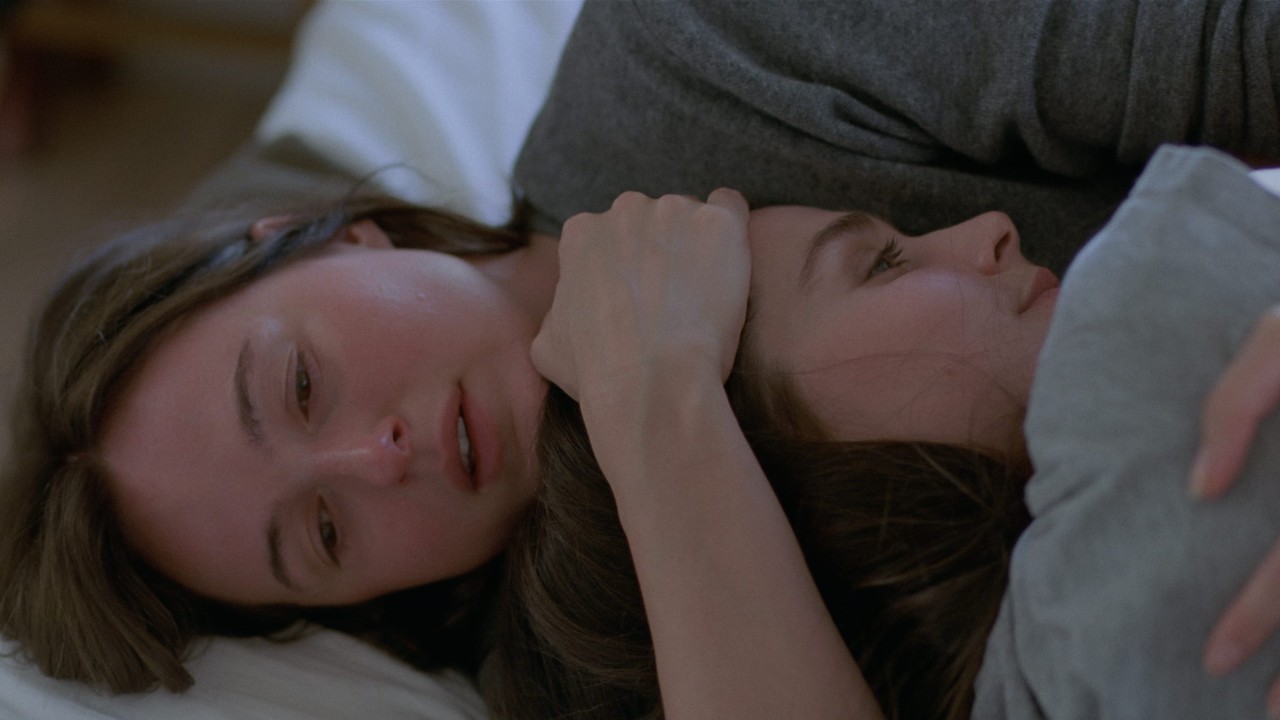
Almost a decade ago, Catherine Breillat, one of contemporary cinema’s great provocateurs, gave us Fat Girl (À ma soeur!), a disturbing and graphic look at the pitfalls of adolescent sexuality from the point of view of a pair of young sisters. With her latest film—which recently had its North American premiere at the New York Film Festival—Breillat has returned to the subject of little girls playing with desire: Bluebeard is a very Breillat version of the well-known (and famously violent) bedtime story, about the beastly nobleman who cuts off the heads of his many wives, as well as a film about the sexual politics of fairy tales. And though at times it is a fastidiously faithful adaptation, it has a tantalizing, even hilarious twist: a wraparound device in which two very young contemporary sisters read the gruesome story in their attic and provide commentary. We sat down with Breillat while she was in town for the festival and discussed sibling rivalry, adolescence, and fairy tales. —Michael Koresky


Like Fat Girl, Bluebeard is a film about the power dynamics between sisters, both the little girls reading the fairy tale and the sisters in the story itself. Are these taken from your own sibling relationships?

After Fat Girl, my sister was very angry with me. And that has only ended now with Bluebeard. She’s seen the film and finds it magnificent, and we’ve been reconciled. But the problems between sisters are very complex. They deal with jealousy, with love, with rivalry, and their relationships are even more difficult in the teenage years, when sexuality is just coming out. It’s more complex because one of the two always seems more desirable, more attractive, while the other sister is more in the background, more of an observer, as you see in Fat Girl. The younger sister inevitably thinks she’s more intelligent than the older sister; when I was a young girl I was convinced I was far more beautiful than my older sister, and it was only as a teenager that I realized that she was far more attractive, and that was a big disappointment.  

Fatgirl_w160

Fat Girl

Catherine Breillat

2001

86 min

Color

1.85:1

2 Comments

23Oct09

Press Notes: Monsoon Wedding

“Mira Nair’s joyous movie about a wedding in Delhi . . . is both her most popular film and her best. It’s her Rules of the Game, an ensemble masterpiece,” writes Michael Wilmington in a review of our new special edition of Monsoon Wedding that is downright jubilant itself. Chris Vognar of the Dallas Morning News is similarly intoxicated by the 2001 film: “[Its] colors, motion, music, and spirited cross-cultural ensemble convey an infectious sense of unabashed joy and romance.” But Amanda Mae Meyncke, at Film.com, trumps them both with her praise. “Simply put,” she writes, “Monsoon Wedding is one of the finest films I have ever seen.”

Film_489w_monsoonwedding_w160

Monsoon Wedding

Mira Nair

2001

114 min

Color

1.85:1

0 Comments

2009 01 02 03 04 05 06 07 08 09 10 11 12

2008 01 02 03 04 05 06 07 08 09 10 11 12

2007 01 02 03 04 05 06 07 08 09 10 11 12

2006 01 02 03 04 05 06 07 08 09 10 11 12

2005 01 02 03 04 05 06 07 08 09 10 11 12

2004 01 02 03 04 05 06 07 08 09 10 11 12

2003 01 02 03 04 05 06 07 08 09 10 11 12

2002 01 02 03 04 05 06 07 08 09 10 11 12

2001 01 02 03 04 05 06 07 08 09 10 11 12

2000 01 02 03 04 05 06 07 08 09 10 11 12

1999 01 02 03 04 05 06 07 08 09 10 11 12

1998 01 02 03 04 05 06 07 08 09 10 11 12

1997 01 02 03 04 05 06 07 08 09 10 11 12

1996 01 02 03 04 05 06 07 08 09 10 11 12

1995 01 02 03 04 05 06 07 08 09 10 11 12

1994 01 02 03 04 05 06 07 08 09 10 11 12

1993 01 02 03 04 05 06 07 08 09 10 11 12

1992 01 02 03 04 05 06 07 08 09 10 11 12

1991 01 02 03 04 05 06 07 08 09 10 11 12

1990 01 02 03 04 05 06 07 08 09 10 11 12

1989 01 02 03 04 05 06 07 08 09 10 11 12

1988 01 02 03 04 05 06 07 08 09 10 11 12

1987 01 02 03 04 05 06 07 08 09 10 11 12

1986 01 02 03 04 05 06 07 08 09 10 11 12

1985 01 02 03 04 05 06 07 08 09 10 11 12

1984 01 02 03 04 05 06 07 08 09 10 11 12