


30Oct08

New York Times Holiday DVD Picks

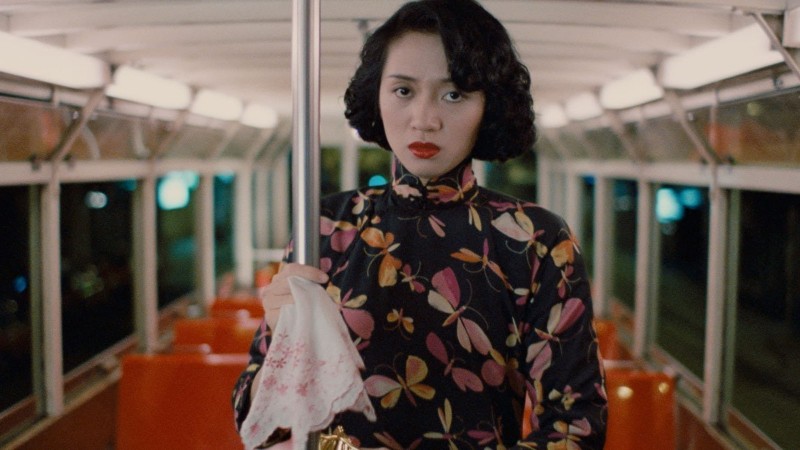
This week, the New York Times compiled its special annual holiday movie preview, and judging by Charles Taylor and Stephanie Zacharek’s enthusiasm for a slew of upcoming DVD releases for November and December, it seems critics are looking forward to what’s going to be on the small screen as much as on the large. Taylor’s first choice is Criterion’s upcoming edition of Wong Kar-wai’s Chungking Express, which he calls a “comedy of romantic befuddlement . . . Chungking Express is one of those rare classics that isn’t just admired but cherished.” Samuel Fuller’s White Dog, on the other hand, is a film that hasn’t been fully embraced for many years. Taylor explains the controversy surrounding this film, preventing its theatrical release in 1982 and keeping it long misunderstood (and unseen), before concluding: “White Dog is among his [Fuller’s] most potent films, and also his most elegant, thanks to the photography of Bruce Surtees and Ennio Morricone’s score . . . It should never have taken this long for Americans to see White Dog.

Meanwhile, Zacharek touts Criterion’s release of Douglas Sirk’s wild melodrama Magnificent Obsession. Much has been written about Sirk’s gorgeous compositions and social commentary in such films as All That Heaven Allows and Written on the Wind, and Zacharek extends that praise to this earlier film: “Sirk’s placement of nature in relation to humans—with everything painted in lush colors, brighter than those of real life—amounts to a kind of visual optimism, a reassurance that not even the biggest problems are as dire as they might seem. These are larger-than-life issues rendered on a human scale.”

P_w160

Chungking Express

Wong Kar-wai

1994

102 min

Color

1.66:1

Magobsessionw_w160

Magnificent Obsession

Douglas Sirk

1954

108 min

Color

2.00:1

Whitedogw_w160

White Dog

Samuel Fuller

1982

90 min

Color

1.78:1

0 Comments

30Oct08

Christmas Tales

In town for the New York Film Festival screenings of his much-admired A Christmas Tale, French director Arnaud Desplechin talked to Dennis Lim about his always allusive filmmaking style and his particular influences in making this dysfunctional-family holiday film, including Ingmar Bergman’s Fanny and Alexander (“It’s a film I know by heart”), John Huston’s The Dead, and Wes Anderson’s The Royal Tenenbaums. Read the whole lively exchange here, in the New York Times.

1982

188 min

Color

1.33:1

Film_276w_river_w160

The River

Jean Renoir

1951

99 min

Color

1.33:1

P_w160

The Royal Tenenbaums

Wes Anderson

2001

110 min

Color

2.35:1

0 Comments

29Oct08

Janus and Criterion Team Up for Revanche

Goetz Spielmann’s Revanche, a 2008 festival favorite and Austria’s submission for the best foreign film Oscar, has found a North American home with sister companies Janus Films and the Criterion Collection. In a rare step into the first-run business, Janus will launch the thriller theatrically early next year, followed by a Criterion DVD release. “This was a staff pick,” explains Criterion president Peter Becker. “We’re not in the habit of acquiring new films before they’re released, but Goetz Spielmann is such a commanding filmmaker that we wanted to be able to present his work in the Criterion Collection. The theatrical arm of Janus Films has made that possible, and we’re very proud to have the opportunity.”

Los Angeles–area audiences have a chance to see Revanche this weekend at the AFI Film Festival, with the director in attendance. The film will be screening at the Arclight Hollywood on Saturday, November 1, at noon, and Sunday, November 2, at 10:15 pm. To learn more or order tickets, click here.

6 Comments

27Oct08

Higher and Lower: Nichols Takes Up a Classic

Variety reported today that Mike Nichols is getting ready to direct a remake of Akira Kurosawa’s beloved 1963 thriller High and Low, from a new screenplay by David Mamet, and likely to be executive produced by Martin Scorsese, who originally commissioned the Mamet script. Casting hasn’t begun yet, and we eagerly await news of who will take on the role the formidable Toshiro Mifune made so much his own.

Film_23w_highandlow_w160

High and Low

Akira Kurosawa

1963

143 min

Black and White

2.35:1

0 Comments

27Oct08

Press Notes: Tuesday Heartbreak—Missing

“Greek director Costa-Gavras is like Oliver Stone with subtlety,” declares Chris Nashawaty in his Entertainment Weekly review of Missing. More than two decades have passed since Costa-Gavras’s political thriller won awards around the world (including the Palme d’Or at Cannes and an Academy Award for its screenplay), but our recent two-disc DVD release of the film is wowing a new generation of critics. Of the filmmaker’s intense dramatization of the real-life search for vanished American writer Charles Horman in Chile during the American-aided coup that put dictator Augusto Pinochet in power, Leba Hertz writes in the San Francisco Chronicle, “Costa-Gavras makes the story move like a thriller . . . The acting is great across the board, and the story is still relevant decades later.” 

One of the film’s key lasting ingredients is the performance of Jack Lemmon, as Charles’s crumbling, desperate father. “Lemmon was perhaps the quintessential everyman of American cinema, a reliably down-to-earth performer who was equally good at playing the put-upon hero in Billy Wilder comedies and embodying an average, relatable guy in dramas like The China Syndrome and Glengarry Glen Ross . . . So it’s especially heartbreaking to watch Lemmon’s performance in Missing,” writes Scott Tobias in the Onion.

Film_449w_missing_w160

Missing

Costa-Gavras

1982

122 min

Color

1.85:1

0 Comments

26Oct08

Press Notes: Mizoguchi Ascendant

The ongoing rediscovery of the multitude of masterworks that made up the career of Kenji Mizoguchi continues with the release of Eclipse Series 13: Kenji Mizoguchi’s Fallen Women. The set, writes Dennis Lim in the Los Angeles Times, “rescues four more films from relative obscurity and highlights the central theme in Mizoguchi’s work: the anguish of women in a society set up to exploit and enslave them.”

“From his earliest surviving films, like Tokyo March (1929) and The Water Magician (1933), this great Japanese filmmaker showed his dedication to those women driven to the margins of society—actresses, geishas, ordinary prostitutes—by the hypocrisy of men,” the New York Timess Dave Kehr elaborates on the director. And on the box set: “All of his major creative phases are covered: the romantic, expressionist-tinged work of the silent and early sound periods; the politically engaged work of the postwar period, influenced by Italian neorealism; and the final creative surge of the 1950s, in which a distanced, contemplative tone conveys an infinite solicitude for human suffering, balanced by a sense of its insignificance in the cosmic order.”

In an article for UCLA’s Asia Pacific Arts, Rowena Aquino explains that part of the reason the films in this set were overshadowed is because of their contemporary setting: “No doubt Mizoguchi is most known for his period films,” particularly Ugetsu and Sansho the Bailiff. “With this in mind, the collection is significant because it represents the films he made that take place in the present.” It also nicely spans two periods of Japanese film history, she notes: “For some Japanese film history scholars, the 1930s mark the first ‘golden age’ of Japanese cinema, while the 1950s mark the second. The box set proves that Mizoguchi represents the best of both worlds.”

Update (17NOV08): Tirdad Derakhshani has a nice overview of the set, and Mizoguchi’s career, at the Philadelphia Inquirer.

Osakaelegy_image1_w160

Osaka Elegy

Kenji Mizoguchi

1936

71 min

Black and White

1.33:1

Sistersofthegion_image1_w160

Sisters of the Gion

Kenji Mizoguchi

1936

69 min

Black and White

1.33:1

Streetofshame_image1_w160

Street of Shame

Kenji Mizoguchi

1956

85 min

Black and White

1.33:1

Womenofthenight_image3_w160

Women of the Night

Kenji Mizoguchi

1948

74 min

Black and White

1.33:1

0 Comments

23Oct08

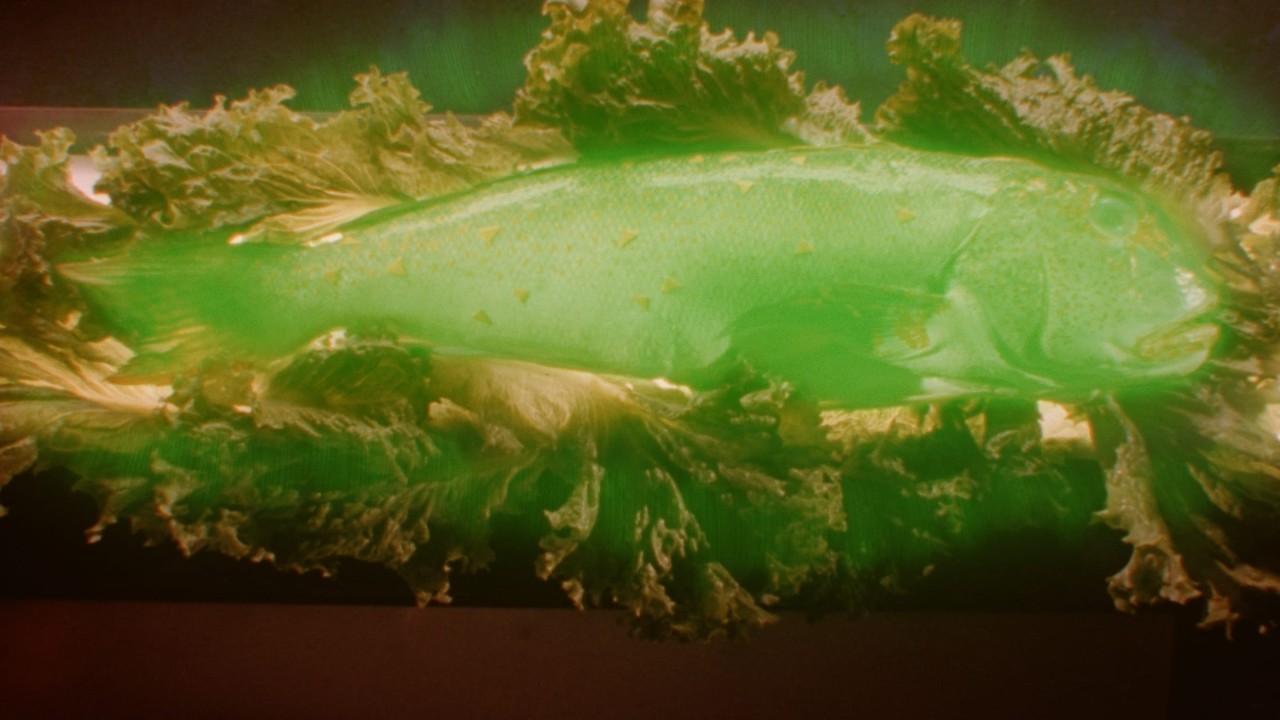
Even if I set out to make a film about a fillet of sole, it would be about me.”

– Federico Fellini

Film_140_8_1_2w_w160

8 1/2

Federico Fellini

1963

138 min

Black and White

1.85:1

1 Comments

21Oct08

When in Rome . . .

TECHNICOLOR, ROME—What a day! After spending the morning with Antonio Salvatori, the original color timer on Rosi’s The Moment of Truth and Antonioni’s Identification of a Woman, we were lucky enough to run into the great master Giuseppe Rotunno, who is supervising Janus's new print of Amarcord, and to be able to sit in on the color-timing review with him. “Peppino,” as he is affectionately known to all the technicians here, has taken a personal interest in the print, since we’re using the negative he restored a few years back. The lab was pulling out all the stops for the maestro, showing him the same reel printed on two different types of film stock. Watching him study the reels, we could see that the eighty-six-year-old’s eye was as sharp as ever. We asked him if we could take a picture with him in front of the gigantic Amarcord poster hanging in the hallway, and he happily agreed. —Lee Kline and Fumiko Takagi

P_w160

Amarcord

Federico Fellini

1974

123 min

Color

1.85:1

0 Comments

20Oct08

Missing:
“Who Would Care About Us If We Disappeared?”
BY MICHAEL WOOD

1038_177

The films of Constantin Costa-Gavras are often described as political thrillers, and the phrase is helpful as long as we pause over it a little. There is always a strongly personal element to his stories, a human factor, and the thrills are in the politics rather than set against a political background. The corpses and the cover-ups, whether in Europe or in Latin America, are intimate features of actual historical situations—an assassination in Greece, an execution in Chile, genocide in Germany—rather than fictional elements woven into a political context, as in The Manchurian Candidate (1962), say, or Salvador (1986) or In the Line of Fire (1993).

Of course, the films of Costa-Gavras are fictionalized, too, and he insists that he is not a maker of documentaries. But the very act of fictionalization, in his case, is discreetly political. Z (1969), a film about the murder of a Greek politician and the ensuing inquiry, doesn’t mention Greece and is not, Costa-Gavras says, “a movie about Greece only.” But a title card at the beginning says, “Any resemblance to actual events, to persons living or dead, is not accidental. It is intended.” Similarly, the director says of Missing (1982) that “the country where the story takes place is not identified in the film,” and yet the film opens with the statement, readable on the screen and pronounced on the soundtrack by the voice of Jack Lemmon, that “some of the names have been changed to protect the innocent, and also to protect the film.” In the version I saw long ago at a preview, the sentence ended at “protect the innocent,” and was followed by another: “The guilty are already protected."  

Film_449w_missing_w160

Missing

Costa-Gavras

1982

122 min

Color

1.85:1

0 Comments

20Oct08

Eclipse Series 13:
Kenji Mizoguchi’s Fallen Women
BY MICHAEL KORESKY

Though he had been directing films since the silent era, collaborating with many different film studios in various genres, Kenji Mizoguchi didn’t become an international sensation until after the Second World War, benefiting, as did his compatriot Akira Kurosawa, from a new fascination with Japan’s cinematic output. Mizoguchi’s breakout came in 1952, with the triumphant response at the Venice Film Festival to The Life of Oharu. His subsequent 1950s films, including Ugetsu and Sansho the Bailiff, would receive wide attention, including from such important critics as André Bazin and Jean-Luc Godard. It’s telling that The Life of Oharu was the catalyst for Mizoguchi’s international emergence, since the film’s plot—the epic suffering of a woman as she declines from good social standing into disgraceful prostitution—reflected one of the most common thematic threads running through the director’s career.

Mizoguchi’s focus on, and obvious compassion for, the most downtrodden of his nation’s women has led to his often being labeled a feminist filmmaker, although this brand of feminism is evident in Japan’s strong tradition of female-centered art and literature. It’s been noted that two such artistic influences on Mizoguchi were the writings on prostitution by famed novelist Kafu Nagai (1879–1959), which he greatly admired, and the “social tendency film” (realist, politically minded works), popular in the twenties, when Mizoguchi was coming into his own as a filmmaker. And though Mizoguchi was never identified nor, indeed, identified himself as a political filmmaker (“In the realm of social ideas, his films connected with the fashionable thinking of every period,” writes scholar Donald Kirihara), his work, specifically his stories of women’s struggles, nevertheless had great social impact.  

Osakaelegy_image1_w160

Osaka Elegy

Kenji Mizoguchi

1936

71 min

Black and White

1.33:1

Sistersofthegion_image1_w160

Sisters of the Gion

Kenji Mizoguchi

1936

69 min

Black and White

1.33:1

Streetofshame_image1_w160

Street of Shame

Kenji Mizoguchi

1956

85 min

Black and White

1.33:1

Womenofthenight_image3_w160

Women of the Night

Kenji Mizoguchi

1948

74 min

Black and White

1.33:1

0 Comments

2009 01 02 03 04 05 06 07 08 09 10 11 12

2008 01 02 03 04 05 06 07 08 09 10 11 12

2007 01 02 03 04 05 06 07 08 09 10 11 12

2006 01 02 03 04 05 06 07 08 09 10 11 12

2005 01 02 03 04 05 06 07 08 09 10 11 12

2004 01 02 03 04 05 06 07 08 09 10 11 12

2003 01 02 03 04 05 06 07 08 09 10 11 12

2002 01 02 03 04 05 06 07 08 09 10 11 12

2001 01 02 03 04 05 06 07 08 09 10 11 12

2000 01 02 03 04 05 06 07 08 09 10 11 12

1999 01 02 03 04 05 06 07 08 09 10 11 12

1998 01 02 03 04 05 06 07 08 09 10 11 12

1997 01 02 03 04 05 06 07 08 09 10 11 12

1996 01 02 03 04 05 06 07 08 09 10 11 12

1995 01 02 03 04 05 06 07 08 09 10 11 12

1994 01 02 03 04 05 06 07 08 09 10 11 12

1993 01 02 03 04 05 06 07 08 09 10 11 12

1992 01 02 03 04 05 06 07 08 09 10 11 12

1991 01 02 03 04 05 06 07 08 09 10 11 12

1990 01 02 03 04 05 06 07 08 09 10 11 12

1989 01 02 03 04 05 06 07 08 09 10 11 12

1988 01 02 03 04 05 06 07 08 09 10 11 12

1987 01 02 03 04 05 06 07 08 09 10 11 12

1986 01 02 03 04 05 06 07 08 09 10 11 12

1985 01 02 03 04 05 06 07 08 09 10 11 12

1984 01 02 03 04 05 06 07 08 09 10 11 12