
28Oct07
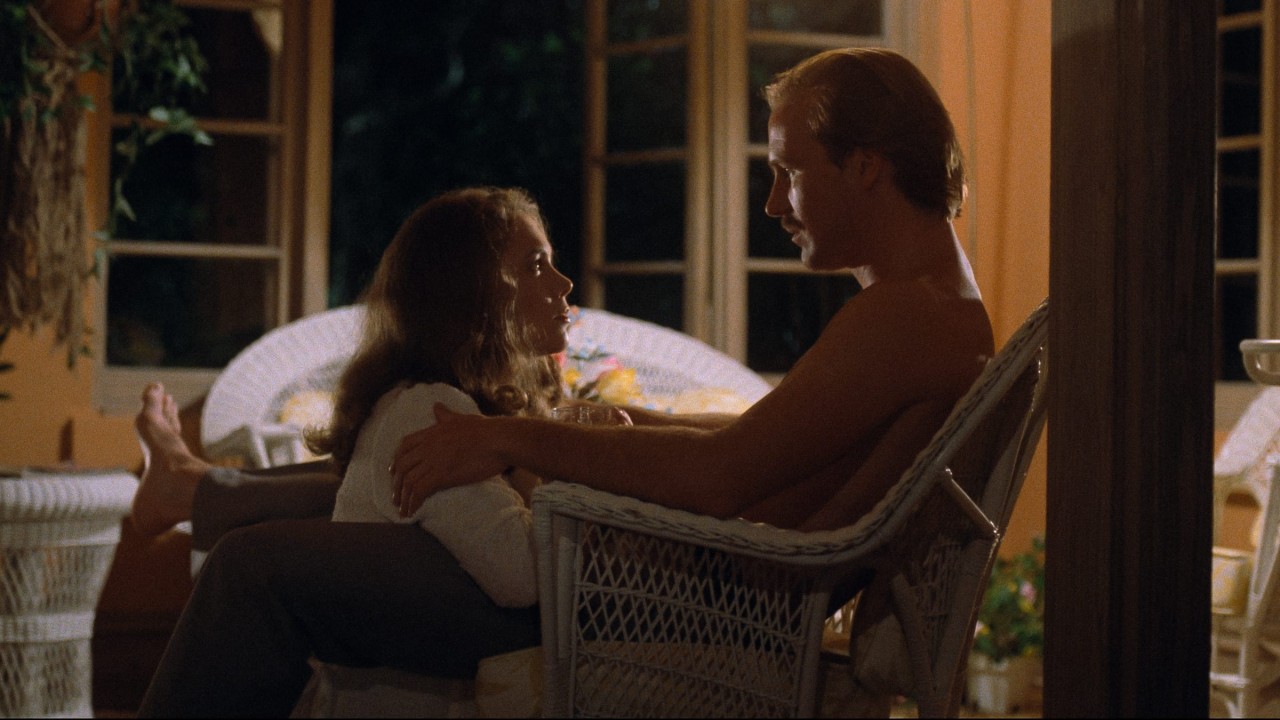
When I started preparing for a new transfer of The Ice Storm, I asked director Ang Lee if he wanted to supervise the session. Ang said that he’d like the cinematographer, Fred Elmes, to supervise, and that he would come in at the end and review the color correction with us. That’s typically the way many directors go about the process these days, although they’re all different. Years ago, it wasn’t so easy to get a director in the room for a color-correction session, but things have changed. As Ang put it, “More people are watching the film on video than they are in the theater, and this is the way the film is going to live and be seen.”
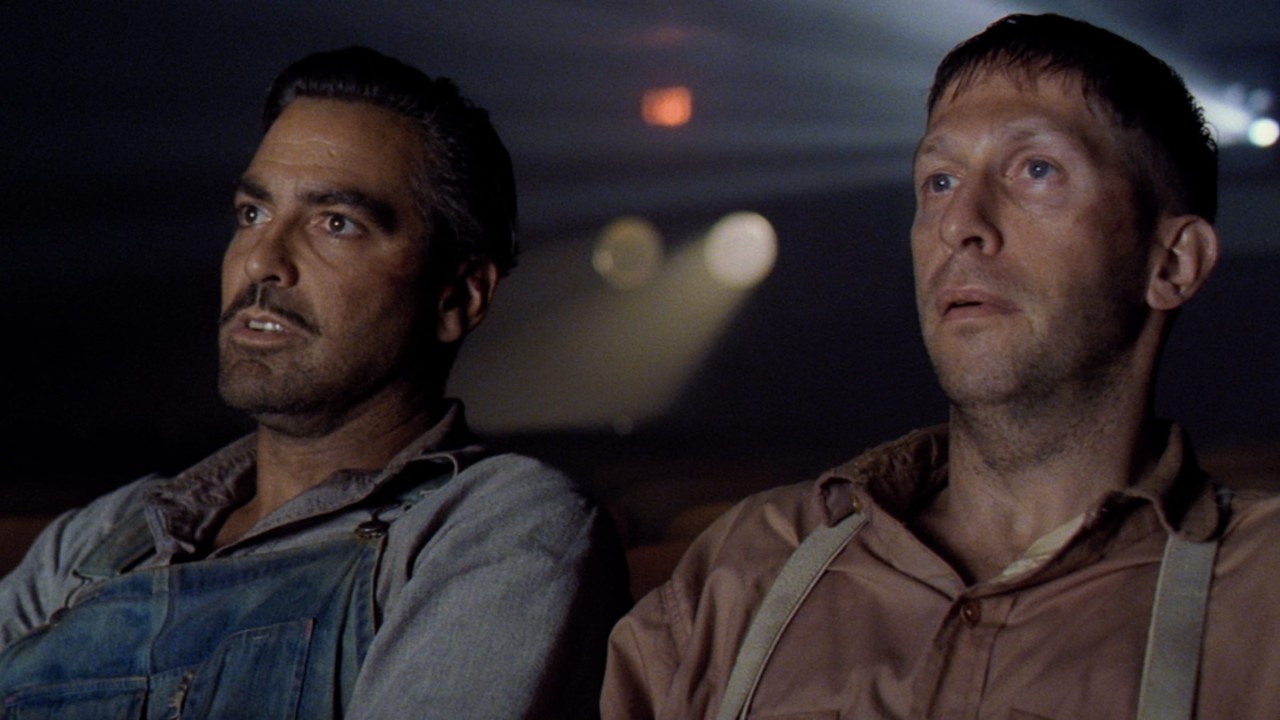
I often find that directors are noncommittal about coming into a transfer session. When I asked Lars von Trier to come in for Zentropa recently, he said, “Thanks, but we trust you to do a good job.” That’s while I was in Copenhagen, mind you, just a few miles away! (Luckily I got to screen an original print at the lab while timing, therefore keeping the original ideas intact.) Then there is Jim Jarmusch, the complete opposite. Jim not only wants to watch the color correction, but he wants to review any fixes, check the compression on the DVD, and talk through the entire process. There were a few issues with Down by Law that had to be corrected in the transfer room, and Jim spent hours on one scene, making sure the black and white levels in the swamp were just right.
22Oct07
The opening of Breathless is “unprecedented,” in that we never learn what route brought Michel Poiccard to the Vieux Port of Marseille, where he surveys the future from the very edge of France. This first shot strikes a match to touch off an oil fire that will race through the film’s incidents and images, indeed through the new wave altogether. A girlie tabloid filling the screen slips down to reveal the face of Jean-Paul Belmondo, cigarette dangling from his lips, as he looks out from under his rakishly cocked hat. His head swivels, and he rubs those lips with his thumb; he is ready for action. At a signal from a female accomplice he hot-wires a big Oldsmobile just parked by an American military man touring with his wife. Abandoning the girl, who begs to be taken along, Poiccard drives off, exhaling in the flush of freedom, “Maintenant je fonce, Alphonse!” We can feel Godard’s own outlaw freedom in this sequence, carjacking a Hollywood genre and putting it into drive. The film lurches forward as he shifts up with wild shot changes; it charges ahead (il fonce) on bursts of music and sound effects, and on Belmondo’s spontaneous speeches, directed right to the camera, to us. Character and auteur will gun down the French authorities when stopped for questioning. From Marseille, Poiccard makes his way to Paris, to the Cathedral of Notre Dame and the Latin Quarter, then to the Champs-Élysées and its movie theaters (right under the offices of Cahiers du cinéma), where he shares the street with the crowds cheering Charles de Gaulle, head of the brand-new Fifth Republic. He will wind up in Montparnasse, on the rue Campagne-Première, the legendary street where Kiki hung out, as did Man Ray, Marcel Duchamp, Francis Picabia, and Yves Klein. Breathless brings anarchy into the heart of Paris.
Auteur will meet character midway through the film, when Godard comes out into the open. Playing a concerned citizen, he exchanges suspicious glances with Poiccard, both from behind their newspapers and sunglasses. The filmmaker then reroutes the action by literally directing the police to the quarry that has eluded them. As Poiccard’s stolen car pulls out of frame, ominous music rises and an iris closes around Godard, who is seen fingering his hero to the cops. Genre will have its revenge in the final third of the film. And so we must ask: did Godard take himself to be an anarchic force, working his way from the outside into Paris, where he would flout the rules for the fun of it, or did he play the conscience of the art form, the critic who would reinvent the cinema by channeling the original energy of D. W. Griffith, Abel Gance, and Monogram Pictures that he plugged into at the Cinémathèque?
22Oct07

Like many American directors who emerged in the early 1970s, Terrence Malick went to film school—to the American Film Institute, where, indeed, his fellow students included Paul Schrader and David Lynch. But unlike many film school graduates, Malick arrived there, in 1969, with an already rich and varied past—in the study of philosophy (he translated a book by Martin Heidegger) and in journalism (Newsweek, the New Yorker). He also arrived with a script fully worked out down to the last detail: Badlands, a “criminal lovers on the run” tale inspired by the exploits of real-life teen killers Charles Starkweather and Caril Fugate. Immediately after graduating, he began taking studio script writing and rewriting assignments (he even worked on an early, discarded draft of Dirty Harry). But, determined to bring his long-conceived first feature to the screen, he was simultaneously pushing to get Badlands produced as a truly independent, “on the run” project, gathering financing through a partnership with several investors and ultimately shooting with a nonunion crew on a budget of less than $350,000. Warner Bros. released it to great acclaim in 1973.
Badlands, for all its exceptional qualities of style and tone (especially Sissy Spacek’s blankly ironic voice-over narration), seemed to blend in with the general drift of 1970s New American Cinema—the pointed reworking of movie formulas and the debunking of social myths familiar from the films of Robert Altman, Arthur Penn, or Bob Rafelson. But his next feature, Days of Heaven, scrambled all presumptions (even the most glowing) about Malick. He put the project together quietly, with producers Bert and Harold Schneider and close collaborators who included art director Jack Fisk, and shot in the wheat fields of Alberta, Canada, in 1976. He then spent two years in the editing room with another friend, Billy Weber, crafting the material to achieve the aura he first dreamed of: “a drop of water on a pond, that moment of perfection."
22Oct07
Under the Volcano, made in 1984, is the thirty-fourth of thirty-six feature films in a body of work that began in 1941 with The Maltese Falcon. Already ill but brimming with vitality, John Huston was then seventy-eight years old. He had always alternated personal projects, often adaptations of books he admired (The Treasure of the Sierra Madre, 1948; The Red Badge of Courage, 1951; Moby Dick, 1956), with more overtly “mainstream” works, succeeding brilliantly at reconciling the demands of both in the genre film (The Maltese Falcon; The Asphalt Jungle, 1950; The African Queen, 1951). Yet in the final years of his life and his career, he tended to save his passion for his personal literary projects, and his commissioned works from the period—Phobia (1980) and Victory (1981)—demonstrate a total lack of commitment (in contrast, even a film as impersonal, and as difficult to shoot, as 1958’s The Barbarian and the Geisha contains some “Hustonian” touches). Perhaps it was a sense of being at the end of his life that made Huston stop pretending to be interested in other people’s projects. It seems he couldn’t be bothered even to try to hide the mediocrity of the material he had been handed in Phobia and Victory, films that could have been made by a more anonymous director without anyone noticing the difference.
It was with The Man Who Would Be King (1975), a project that he had been thinking about since the 1950s—based on a Rudyard Kipling story—that Huston made his return to literary adaptation. After the success of that bold “action-adventure” (in which both the action and the adventure are more within the characters than on the screen), Huston began favoring fictional works that were problematic, in terms of translating them to screen, because of the importance given to internal monologue or their absence of action. In less than ten years Huston would adapt three stories considered to be “unadapt-able”: Wise Blood, by Flannery O’Connor, Under the Volcano, by Malcolm Lowry, and “The Dead,” by James Joyce. In each case the adaptation rose to the challenge by deliberately ignoring false problems and by choosing to render the spirit rather than the letter of the original. It was not a matter of filming everything but of filming only what Huston liked, which is, in fact, a constant throughout his work. The culmination of this approach, The Dead (1987), is a film that is both respectful and free, and it became a kind of legacy work, in which Huston does not so much film Joyce’s story as use it as a pretext for offering his daughter Anjelica and his son Tony the gift of his artistic heritage.
16Oct07
I didn’t create the Criterion office’s word-of-the-day bulletin board, but I’m the latest logophile to carry the torch, er, dry-erase marker and update the white board in the kitchen. Occasionally someone will ask me what a certain word means (psocid was particularly popular), but for the most part I just write one each morning while I’m waiting for the coffee to brew and imagine that it’s quietly fomenting an atmosphere of word appreciation throughout the day.
I often get the word of the day from one of the countless scraps littering my purse: words discovered while reading and compulsively scribbled on the back of bookmarks, receipts, Netflix envelopes, or gum wrappers. Some are only suitable for the Urban Dictionary (um, deekis?), but many (especially if I’m reading Cormac McCarthy) find their way to the board later on. For a peek at the dense and violent verbal jungle of Blood Meridian, or simply a preview of some words of the day to come, here are the latest bookmark scrawlings: suzerain, ciborium, groundsel, argosy, esker.
15Oct07
One of Spain’s most acclaimed and prolific directors, Carlos Saura emerged as an artist in the late 1950s under Franco’s dictatorship and immediately made his mark as an incisive, if necessarily allusive, social and political commentator. In such films as The Hooligans (1960), a neorealist look at a group of wayward young men, and The Hunt (1965), about four veterans (it is only implied of the Spanish civil war) on a weekend hunting trip, Saura revealed his skill at melding the gritty with the heavily allegorical. For these investigations into his nation’s identity—which took many forms, from documentary (Cuenca, 1958) to historical and contemporary drama (La prima Angelica, 1974; Cría cuervos . . . , 1976) to comedy (Mama Turns One Hundred, 1979), and spanned Spain’s transition to democracy—Saura was lauded around the world. Yet it was by peeking into the world of flamenco that he reached the pinnacle of his international renown.
Though Saura didn’t set out to create a triptych of dance films, the works that would come to be known as his “Flamenco Trilogy”—Blood Wedding (1981), Carmen (1983), and El amor brujo (1986)—defined him as his nation’s leading visual stylist of dance on film, and among its most popular cinematic exports. The multifaceted flamenco, which encompasses song (cante), dance (baile), and guitar (toque), and contains more than fifty music styles, originated in the ethnic melting pot of Andalusia, the southernmost region of Spain, and the many traditions found there, including Islamic, Sephardic, Greek, and Latin American; Gypsies, who entered the region in recent centuries, helped flamenco survive in the modern age. This subject, then, gave Saura a perfect canvas on which to paint a colorful portrait of one part of his country’s complex heritage. Over the course of the three films, he would experiment with different styles for capturing the various aspects of flamenco, moving from an organic, vérité approach to an ever more self-conscious theatricality.
12Oct07
From an interview with Ang Lee in the Northwest Asia Weekly:
NWAW: Two years ago, you recorded an introduction for the Criterion Collection DVD of Ingmar Bergman’s The Virgin Spring, a film that had a tremendous impact on you as a student in Taiwan. Does Bergman continue to be an influence? Is there a trace of him in Lust, Caution?
Lee: During preproduction, I was told there would be a delay in the art direction, so I got a chance to go to his island to see the man himself. This was a spiritual pilgrimage, to give me the strength to finish this movie. Lust, Caution is more film noir than Bergman. It doesn’t ask where God is. It’s a much more Buddhist, existential deconstruct.
In the time we had together, he mostly asked how I worked with actors. And I said to him, "Sometimes I hate myself because I tear them apart to see myself. I tear them [he pantomimes ripping something in half], kill them to expose what’s underneath—that’s how I feel about my relationship with actors."
Bergman said, “You have to love your actors.” He was a very warm, lovely person. Because of The Virgin Spring, it felt like thirty-some years ago the man took my innocence. And then years later, he gave me a very motherly hug. It’s a strange, miraculous, magic power. I never think the way I make movies has any relation to his; he’s like God to me. I will take inspiration. I won’t dare to imitate. But a hug is a hug, filmmaker to filmmaker.
6Oct07
“They all say that I’m ‘openly gay.’ But they put that in as a little political footnote . . . They don’t say anything about gayness. They just say, ‘He’s openly gay.’ They relate it a little bit to something, but they just get through with that bit.” —Gus Van Sant on his press coverage, in an interview by Gary Indiana in the Village Voice, October 1, 1991
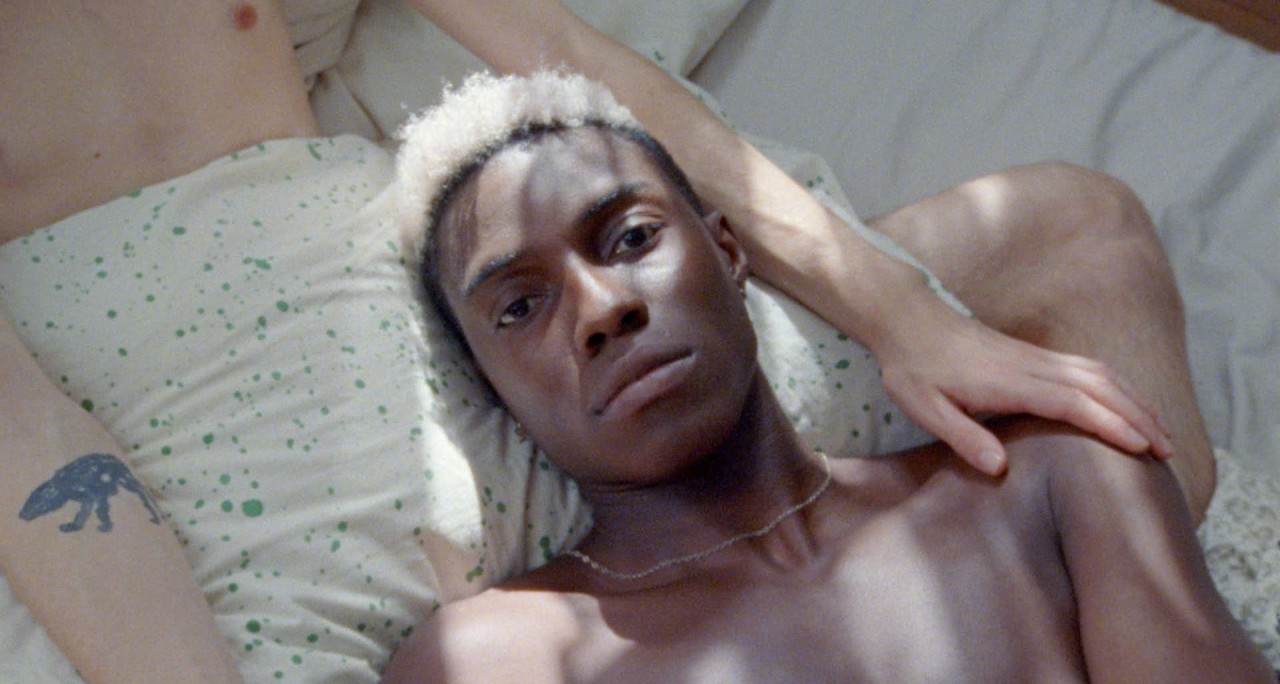
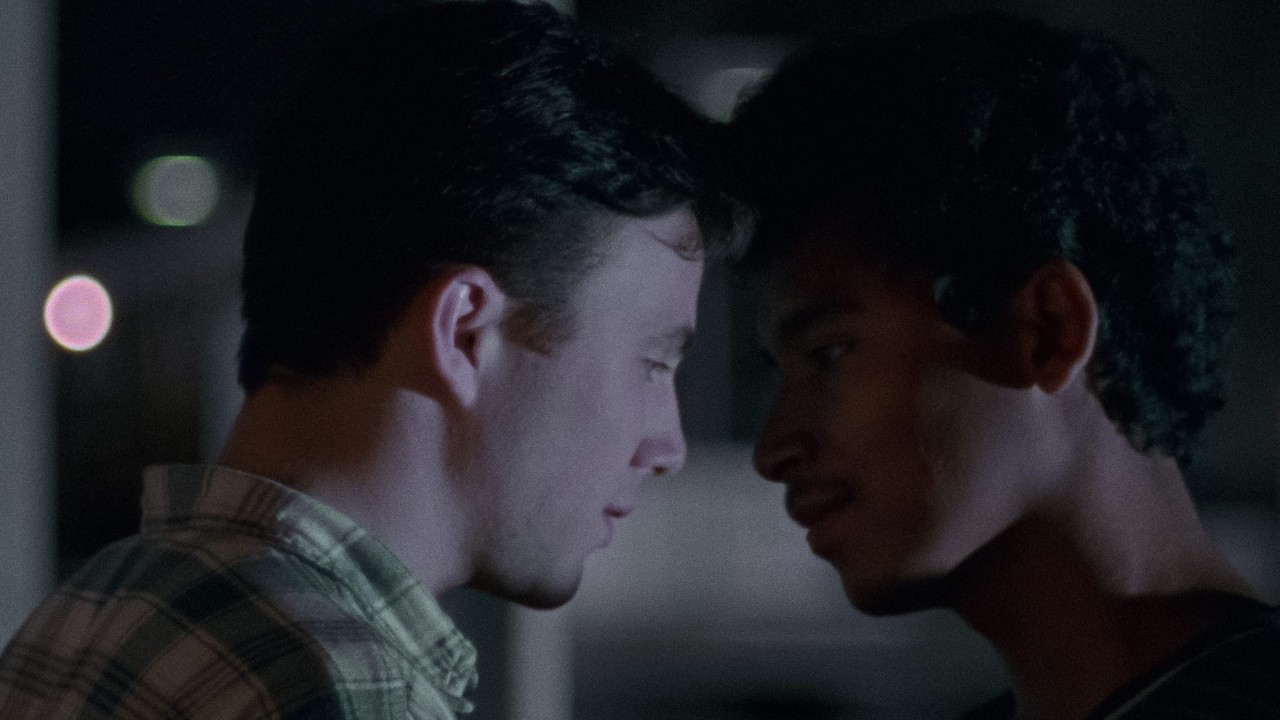
You could say that Mala Noche, Gus Van Sant’s first feature, completed in 1985, is openly gay. So open in its gayness, in fact, that the narrative’s driving force—blind, unembarrassed homosexual lust—is established in a matter of seconds. Before we’ve quite found our bearings (the image is dark, the framing tight), Walt (Tim Streeter), a stubbled, sleepy-eyed guy behind the counter of a scuzzy liquor store, delivers a deadpan stoner voice-over paean to the teenage cutie who’s just sauntered in: “I want to drink this Mexican boy, Johnny Alonzo, from L.A. near Riverside. He makes my heart throb—thumpety, bum, bum, bum, bum, bum—when I see him."
2Oct07
Longtime Criterionites remember the days when we were a part of the Voyager Company. Voyager had a long history of innovations, hooking up laserdisc players to early Macintosh computers to explore the world’s museums or inventing interactive software to explore classical music on the first consumer CD-ROMs, but what has always been at the heart of the Voyager ideal is the concept of publishing. The original circa-1984 Criterion logo, lovingly known as the “P” around here, was actually a book turning into a disc, and it wasn’t long before Voyager made the eBook a floppy-disc reality when it brought out the expanded book tool kit in 1992 and started publishing Random House’s Modern Library in electronic form. Many of the eighty or so CD-ROM projects that followed were built on the ideas behind the expanded book tool kit, and Voyager founder Bob Stein has continued to push the boundaries with his Institute for the Future of the Book. But the most recent innovation to come out of the Voyager legacy is from Voyager Japan, our intrepid overseas partner company run by Masaaki Hagino. Apologies for the Japanese link—the Babelfish-style English translation is not much help—but it seems Voyager Japan has created an eBook reader for the iPhone and iPod Touch. Congratulations, Hagino!
On another note, Lee had Vittorio Storaro in the office last week to ask him some questions about the transfer on The Last Emperor. For anyone who doesn’t know, Storaro is the cinematographer who shot Last Tango in Paris, Apocalypse Now, Reds, The Conformist, and on and on. There’s a game we play sometimes—Is so-and-so a master? We always say it takes three great films. Storaro is definitely a master, and it’s always a special occasion when someone of that stature passes through. The Last Emperor was transferred in Rome under Storaro’s supervision, and he had made some surprising choices. Lee and Stéphane went through the HD master in detail with him, asking questions about color, light, and framing, and Storaro answered them one by one. Afterward, Lee brought him around, and a few of us hung out and talked with him. He’s a whirlwind. Any question ties into a theory or an overlooked fact. Colors have absolute emotional resonances and inherent meanings. The ideal aspect ratio of film is 2.0:1 (so all future TV sets should be 18:9). Movie theaters in Europe project faster than theaters in America because of the differences in current. 50 kHz and 60 kHz? At this point I’m in way over my head, but it was fascinating to hear how he ties the world together. Everything is connected, and he seems to harbor absolutely no doubt about his views. As I listened to him, I couldn’t help thinking that even aside from his mastery of his art, I’ve never met anyone who so totally embodies the sentence from Emerson “To believe your own thought, to believe that what is true for you in your private heart is true for all men—that is genius.”
And finally, the cinematic equivalent of "Ninety-nine Bottles of Beer on the Wall," but a lot more work!