James Ellroy’s Top10
James Ellroy is the author of, among other works, the Underworld U.S.A. Trilogy (American Tabloid, The Cold Six Thousand, and Blood’s a Rover) and the L.A. Quartet novels (The Black Dahlia, The Big Nowhere, L.A. Confidential, and White Jazz). He was awarded the 2022 Los Angeles Times Robert Kirsch Award for lifetime achievement and lives in Colorado. His latest novel is Red Sheet.
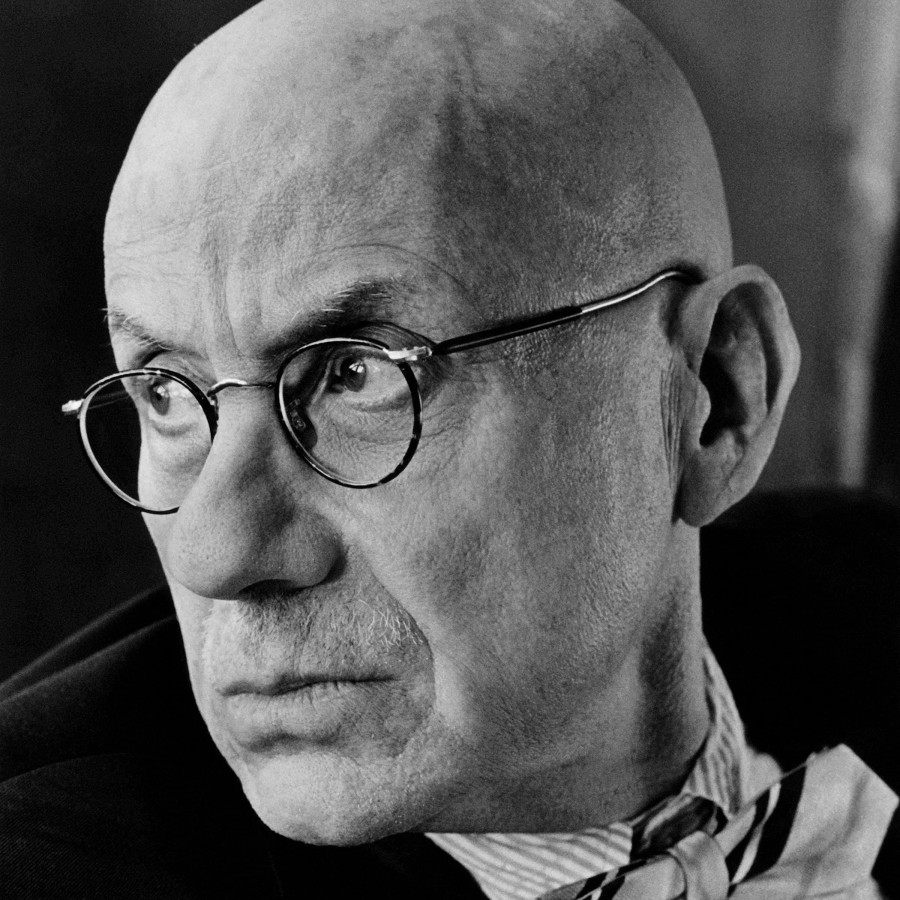
Photo by Marion Ettlinger
-
1
Akira Kurosawa
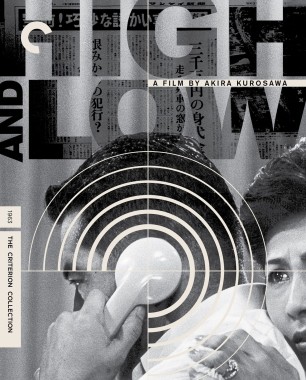
High and Low
When I first saw this, I’d already read the novel it’s based on—King’s Ransom, which is one of Ed McBain’s crummier 87th Precinct books. Kurosawa’s version is filmed in TohoScope and in black and white, and the first forty-five minutes are confined to the home of Toshiro Mifune’s character, a shoemaker-industrialist whose company is being taken over when his son is kidnapped.
Lo and behold, the kidnapped kid is not his son but the son of his chauffeur. Mifune is short of cash, so what’s he going to do? He calls the cops. It’s then that the frame shifts from including just Mifune and the few people he talks to in his immediate family to showing a room full of cops. The scene suddenly becomes dense and breathlessly exciting. There are a great many policemen who are only very slightly differentiated initially—one smokes a lot, another chews gum—but become indelible as individuals as they go about the shitwork entailed by a massive police investigation. What a gas.
-
2
David Lean
Brief Encounter
Brief Encounter is my favorite of David Lean’s films. I saw it on TV with my first ex-wife, and it immediately brought to mind how close I had been to several other women—and how, if the wind had blown in a certain direction or if one of us had five more minutes, fate would have thrown us a curveball. I dig the fact that Trevor Howard’s character—the man in the affair—punks out. The woman (Celia Johnson) will stay the course of it; she has the guts to leave her husband. Meanwhile, Howard is a physician with a hot new job waiting for him in South Africa . . . and (why mince words?) there will be other women there. The movie also features an unforgettable use of Rachmaninoff’s Piano Concerto No. 2.
-
3
Jean-Pierre Melville
Le cercle rouge
Le cercle rouge is a satire of bad men—all of whom are very good-looking, in a blunt way. They speak in a singular monotone, and there’s not much in the way of emotional ups and downs. It’s all very deliberate, and Jean-Pierre Melville falls back on coincidence too often. Something that stands out is the presence of comedic actor André Bourvil, who was deathly ill during the making of the film and did not live to catch the premiere. He plays Captain Mattei, an oddball policeman who none of his superiors can figure out. There’s a moment when we see him go into his stylish apartment, where he’s greeted by the twenty-odd cats he lives with and begins doting on them. Mattei is unlike any other character in Melville’s movies, and the cats are the plump puffball type that you want your dog to chomp.
-
4
Samuel Fuller
Pickup on South Street
I just wrote an anticommunist novel called Red Sheet, and I chose a film that resonates with Red Sheet’s themes. For me, the idea that weaselly Richard Widmark would come to the aid of his country to help expose a commie cell is ridiculous, and only Sam Fuller could have thought it up.
-
5
Robert Aldrich
Kiss Me Deadly
Kiss Me Deadly takes place in Los Angeles at the tail end of 1954. Ralph Meeker as Mickey Spillane’s Mike Hammer lives in a boss pad at Wilshire and Beverly Glen, and he’s got snazzy sleazebag threads, a fast ride, and a jazzy woman operative. She’s also a character in the novel, and sleeps with Hammer and anyone he tells her to. When I first read the book and saw the movie at roughly age ten, that struck me as racy, groovy, and squirm-inducing.
The movie has a lackluster Nat King Cole theme song and features that doomsday black box with the A-bomb in it. We don’t know whether the characters survive at the end. I still dig the A-bomb.
-
6
Otto Preminger
Anatomy of a Murder
This is the most beautifully formal two-hour-and-forty-one-minute movie you’ll ever see. The time flies by. It is decorous in the extreme, dramatically flawless, and James Stewart gives a perfect leading-man performance. He’s everything in it—he’s stern, he mollifies and rebukes, he’s malleable, and you feel his regret when he turns down the prime-time Lee Remick. Ben Gazzara plays Remick’s lowlife husband, and George C. Scott, who hadn’t yet learned to control his hambone tendencies, is an unsubtle foil for the great Stewart.
-
7
Robert Altman
Nashville
Nashville represents all of America. It celebrates America, it critiques America, it conveys a troubled love of America. I was dumbstruck by this motion picture. Nashville is the movie that cine-dinks claim Citizen Kane is. I saw the film on its release in 1975. The murder at the end takes place at the Parthenon replica outside of Nashville, and as the final shot tilted up at the sky, I thought: this is still God’s country.
-
8
Michelangelo Antonioni
L’avventura
L’avventura runs dead even with La dolce vita in the Degenerate Euro Sweepstakes of 1960. There’s one scene that sticks out in my mind. The two leads, Gabriele Ferzetti and Monica Vitti, are on a wild-goose chase, looking for a woman who disappeared after they chartered a yacht to tour the islands off the Italian coast. The yachting party represents a new indolent social class. These cats and kittens are bored out of their skulls.
At one point, Ferzetti and Vitti run into each other in a tight corridor below decks. They’re the two best-looking people in the movie, but prior to this scene they’re in no way intimate. They have a hard time scooching past each other, but suddenly they stop, grab each other, and clinch. Thus begins a passionate affair motivated strictly by ennui.
-
9
Joel Coen
Miller’s Crossing
Miller’s Crossing speaks to me. It’s an homage to Dashiell Hammett’s penultimate novel, The Glass Key. The film dissects the loss of masculinity and resultant loss of control. In the book, the character of Ned Beaumont—a political fixer in a small town—is always losing his hat. Gabriel Byrne plays Beaumont (named Tom Reagan in the film), and his first line is “Where’s me hat?”
He’s always losing his hat, and if he can find it, he’ll know why he’s so unformed, so obtuse, and so unaware of the lives swirling around him. He doesn’t even know why he does what he does. He’s in a constant state of reaction throughout the film, which reflects Hammett’s technique in the book. You never know why Tom Reagan is doing what he’s doing. The last shot of Miller’s Crossing is both moving and dead cold. Reagan has his hat in his hand, and he pulls it down over his eyes. In that moment, you know less about him than you did when the movie began.
-
10
Jean-Luc Godard
Band of Outsiders
Band of Outsiders is based on Dolores Hitchens’s Fools’ Gold, which I’ve read backwards and forwards. The young woman is different in the book; she’s not as worldly as Anna Karina, who plays the consort of the two men in the movie. There’s the nifty line dance they do together, the Madison. All three are wondering what the others are thinking. It’s a boss set piece.
Here’s the best single moment: they’ve just pulled a robbery and in the process killed a person. Godard chooses to end the sequence with a yuk. There’s a dog chained outside the house they’re fleeing, and instead of just getting in the car and splitting, the better-natured of the two guys has to stop and pet the dog. Godard knew that was some funny shit.