Marine Atlan’s Top10
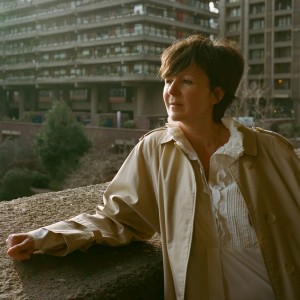
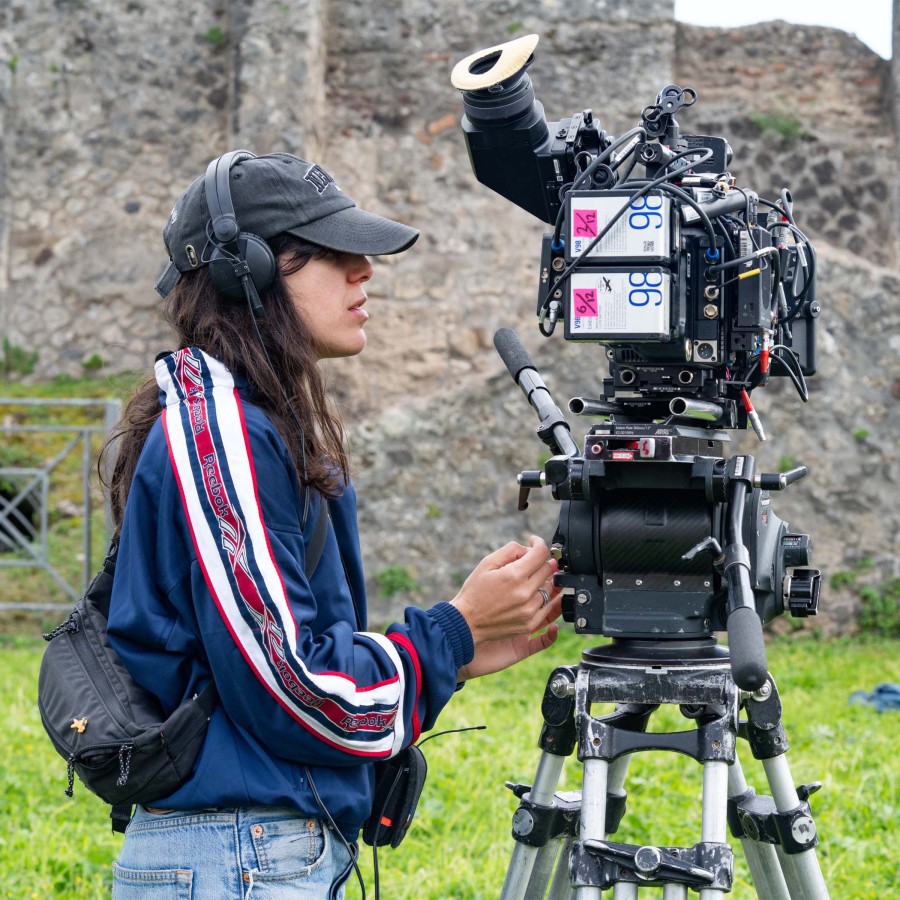
Marine Atlan is a cinematographer, screenwriter, and director. She served as director of photography on Jessica Forever (by Jonathan Vinel and Caroline Poggi), Nos cérémonies (by Simon Rieth), Le ravissement (by Iris Kaltenbäck), Les reines du drame (by Alexis Langlois), and L’engloutie (by Louise Hémon), which earned her a César nomination in 2026. After two award-winning medium-length films—which were recognized at the Berlinale, Clermont-Ferrand, and Brive festivals—her debut feature, La Gradiva, premiered at the Cannes Film Festival 2026, winning the Ami Paris Grand Prize in Critics’ Week.
-
1
Maurice Pialat
L’enfance nue
L’enfance nue forever shaped me as a viewer. I discovered Maurice Pialat when I was studying at La Fémis and saw a retrospective of his work at Cinémathèque française. This film immediately had a huge impact on me and really determined the cinematic gestures that I would later develop in my work, especially the extreme approach to realism. Pialat once said of realism that “the cinema transforms what is sordid into something marvelous; it makes the ordinary exceptional”—and I see it the same way.
His films are very frank. Through the naturalistic dynamic he creates, he portrays moments of vulnerability that have tremendous emotional power and intensity. He has a very particular way of organizing and putting together the cruelty of the world with the beauty of the world, and this singular and raw alliance is what stays with me from this film.
-

2
Roberto Rossellini
Stromboli
Something I admire about Stromboli is that it brings a heightened sense of tragedy into a realist context. There’s such a power to Roberto Rossellini’s neorealist perspective and his confidence in his filmmaking.
The film was very important to me in the making of La Gradiva. There’s the relationship to the Italian territory, to the volcano and what is rumbling beneath. And there’s the way Rossellini captures images that contain elements of both fiction and documentary. For example, I love the tuna-fishing scene in which we see Ingrid Bergman among the fishermen. On the one hand, there’s this huge star who we understand is acting, and whom the film crew is splashing water on to make the scene seem real. And on the other hand, you have the fishermen who are dealing with the actual challenges of their work. It’s a powerful display of how you can have two different registers together in one film.
-
3
Douglas Sirk
All That Heaven Allows
I remember clearly when I discovered Douglas Sirk. I took a course on melodrama at university and was struck by the formal and lyrical excesses of the genre, and how they give direct access to characters in a way that can reach a mainstream audience.
In All That Heaven Allows, there’s a faith in the transgressive power of narrative that goes beyond morals. The film is about how society directs our desire—forbidding certain desires and creating ideas about what is normal. And all of this unfolds in an extraordinary form.
There’s an incredible shot in which we see a stag outside a window, and it nearly looks like a collage. It almost feels fake, like it’s been achieved using superimposition; the lights are exaggerated, and it’s very colorful. But even though this shot looks like an illusion, its power stays with you and transcends the trajectory of the characters.
In my own work, I’m torn between a desire for naturalism and the power of lyricism to get across ideas and emotions on an intuitive level. The combination of those two qualities is what I admire in Sirk’s films.
-
4
Rainer Werner Fassbinder
Fox and His Friends
For me, Rainer Werner Fassbinder is in conversation with Douglas Sirk, but he has an invigoratingly modern power. He’s very particular in his form, but he has a discreet way of being dazzling. It’s in his compositions, in the colors, in the organization of things. Each shot is strange and uncomfortable, but it’s in this discomfort that he tells the story of a character who is dealing with a system that is cruel, a system from which he can’t emancipate himself. It’s a way of saying that life is poorly conceived. Fassbinder goes all the way with that tragic power, and he always stays raw and real.
He also has an unflinching way of looking at faces. There’s nothing fake about it, which leads to films that are severe and rough while also having a tragic softness or gentleness to them. That’s something that inspired me for La Gradiva—the freedom to go all the way with tragedy and not look away.
-
5
Claire Denis
Beau travail
When you’re a young French cinephile, Claire Denis is a filmmaker you encounter early. Right away, I was impressed by the radical formal aspects of her films and their relationship to the body. I don’t think anyone could possibly forget Denis Lavant in the dance sequence at the end of Beau travail.
This film is always present in all my discussions as a director of photography. There is a rhythmic purity to her films—in the direction, in the way she chooses shots, and in the editing. She often has a still frame that’s very composed, and yet the body is free to move within it. Within the constraints of the frame, the bodies are so powerful and alive.
-
6
John Cassavetes
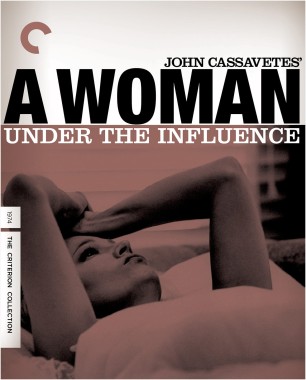
A Woman Under the Influence
I can never get enough of John Cassavetes. I’m always diving back into his films, especially A Woman Under the Influence, which I find to be so compassionate in its way of looking at Gena Rowlands and her character. Each time I see it, I’m overwhelmed by its tenderness, as well as the way Cassavetes drives things all the way to their limits. You have a character who is so fragile that you’re scared for her, and yet you can’t look away.
I’m interested in the durational aspect of his films and their feverish nature. You have the feeling that the whole crew is waiting to see what’s going to happen. He’s doing a high-wire act in his mise-en-scène, and yet there’s tremendous grace in his gestures as a filmmaker. What is so powerful about the duration in his films is what it reveals: the silences, the gazes, these scenes that go on and on to the point that you’re nearly suffering.
I also appreciate that he always talked about the conditions of the industry and recognized how they were constantly impacting the films that get made.
-
7
Kelly Reichardt
Old Joy
Kelly Reichardt and John Cassavetes both have duration in common. I watched Old Joy a lot while I was writing La Gradiva, and I really tried to understand the secret of this film, because there’s something so commonplace about it. Her films are so hard to pitch; they defy summarization. She stakes a great deal on the actors’ power of embodiment, and in Old Joy, it’s all about what happens between the lines and what’s not said.
She also has a relationship to sound that is surprising and specific. I feel like she achieves a musical harmony in the dialogue and the silences, so that one constantly has the sense of being lulled by the film—and that harmony leads to the title of the film, which is a joy that has passed. That is insanely delicate and subtle.
-

8
Chris Marker
Sans Soleil
I discovered Chris Marker’s work rather early. I was in my late teens, and I must say it was like a first love. At one point I even had something like a fetishistic passion for him, because his life was very enigmatic and he was so mysterious. He taught me a lot and made me understand my own relationship to cinema.
I love Sans Soleil for its openness and its idea of happiness. There’s a moment in the film when a group of kids are walking in the light, and it just feels like a crystallization of happiness. I’m fascinated by Marker’s relationship to memory. He famously said, “We do not remember. We rewrite memory much as history is rewritten.” This speaks to an idea that cinema modifies our memory by organizing it. I feel very close to that sentiment.
-

9
Chantal Akerman
Je tu il elle
I dove into Chantal Akerman’s work quite late, as if I felt I had to wait before I went there. Like all her films, Je tu il elle is very impressive for its radical form. It contains three stripped-down chapters that are very head-on, and I’ve rarely seen a film that captures the power of depression the way this film does. At the same time, there’s a portrayal of desire. The love scene at the end is completely different from any other representation of sex that I’ve seen on-screen. There’s eroticism with a strangeness and an intense voyeurism.
The film reveals the deep wells and dizzying heights that this young woman experiences, and it does so without being afraid of taking us to those heights. For that reason, the film acts on the viewer long after it is over.
There’s a moment in which Akerman is talking to a truck driver, and the image is so underexposed that it’s as if you’re looking at a ghost. You can’t really see what’s there, but for that reason it has stayed in my head as a way of revealing specters.
-
10
David Lynch
Blue Velvet
What I love so deeply about Blue Velvet is how it explores the intense duality between the space of fantasy and the space of normal life. It captures this idea that normal life is never anything but a way of pretending or making believe—and then there’s the way that fantasy erupts. I’ll never forget the shot of Isabella Rossellini naked. It’s the moment where daily life, which attempts to control your desires, collides with all these impulses as they rise to the surface. That collision produces chaos for a time, but then everything returns to normal. What’s so magnificent about the film is that after that powerful scene, everyone slowly returns to their place as if nothing had happened.