Kent Jones’s Top10
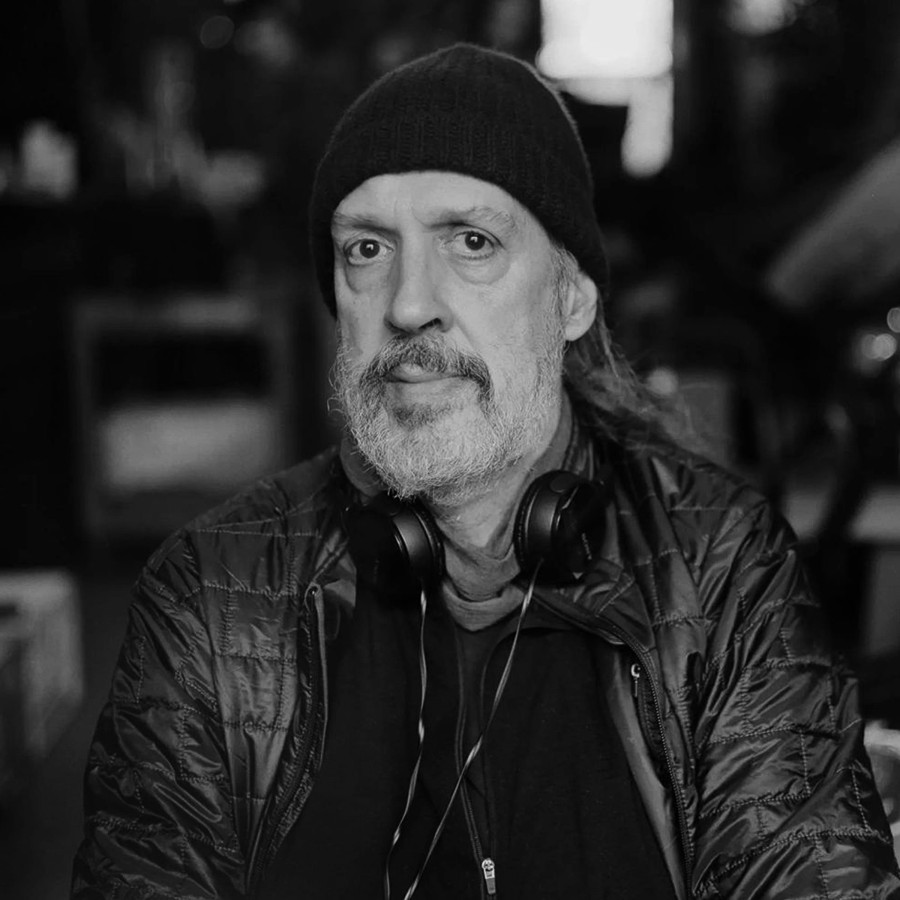
Kent Jones’s work as a director includes the multiple-award-winning Diane (2019); the documentary landmark Hitchcock/Truffaut (2015); and A Letter to Elia (2010), codirected with Martin Scorsese. A longtime collaborator of Scorsese’s, Jones cowrote the director’s epic documentary My Voyage to Italy (1999). Jones’s film criticism has appeared in multiple journals, magazines, catalogues, newspapers, and web publications. He is the author of several books, including Physical Evidence, a collection of his criticism, and the BFI Modern Classics volume on Robert Bresson’s L’argent. In addition, he is the editor of a 2012 book on Olivier Assayas, published by the Vienna Film Museum. He served as executive director of the World Cinema Project from 2009 to 2012 and as director of the New York Film Festival from 2013 to 2019. Jones was a 2012 Guggenheim fellow, and in 2015, he was made a Chevalier de l’Ordre des Arts et Lettres by the French government. He lives in New York City.
-
1
Luchino Visconti
The Damned
I first saw The Damned many years ago. I knew Rainer Werner Fassbinder loved it, and I understood why, but I didn’t quite connect with it. As you get older, though, you start to see things again as if for the first time, and when I saw this film properly restored, I found it astonishing to such a degree that I watched it twice in a row. The best teacher I ever had at NYU loved The Damned and likened it to Shakespeare, and now I think he was right. It has a heightened majesty, and it’s extremely haunting and upsetting, as most good films are in one way or another.
The idea of how to deal with Nazism and Nazi Germany in cinema has always been a very vexed subject, but Luchino Visconti was someone who really understood history. He was such a unique figure, and he had a true grasp of European aristocracy—because he was from an aristocratic family. The only other person in the same ballpark was Visconti’s mentor Jean Renoir, who came from great wealth, though he wasn’t a member of the aristocracy. Both of them used their clout and their power in a very interesting way.
-
2
Billy Wilder
Double Indemnity
When it was originally released, Double Indemnity was dismissed by a lot of people as an academic-thesis version of crime fiction, which seems so absurd now. It’s a great film about Los Angeles, and the depiction of the relationship between these two characters is represented in a much more interesting and intense way than it is in the novel. Fred MacMurray, Barbara Stanwyck, and Edward G. Robinson are perfectly cast, as is Tom Powers, who plays Stanwyck’s husband. And Raymond Chandler makes a cameo appearance, as a man sitting on a couch waiting to get into Robinson’s suite.
I first saw Double Indemnity on TV. When a great film like this is restored, it feels like you can actually see the actors’ performances in the way they were intended to be seen. You can see them come to life in a way that you couldn’t on an old 16 mm print altered for TV. With the new restoration, every image just glows.
-
3
Martin Scorsese
Mean Streets
Mean Streets brings me to a very personal part of my life, which has to do with my relationship with Marty Scorsese. My connection to his work begins with this movie. Long before I met him, I saw the film with my mother, when it came out in theaters. I was just thirteen, and I didn’t really understand everything in it. But I’m part Italian American on my mom’s side, and it was very freeing for both of us to see Mean Streets, and The Godfather before it. It didn’t matter that the subject was gangsters; the texture of life on-screen felt real. As I did with many of Marty’s other movies, I went to see Mean Streets again and again in theaters. At this point, it courses through my bloodstream.
Marty’s use of popular music astonished me. He wasn’t the first person to use preexisting songs, but he was the first to make them feel absolutely integral to the cinematic experience. The way the beat of “Be My Baby,” by the Ronettes, comes at you in the opening moments, and the interaction between the music and those home movies—it’s absolutely enthralling, and it sets the tone for the whole movie. It blows me away every time I see it.
-
4
Michael Powell and Emeric Pressburger
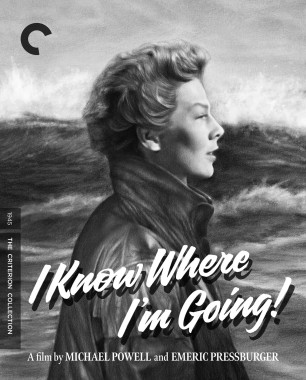
I Know Where I’m Going!
This one strikes deep. Again, I have to go back to my friendship with Marty. When I started to work for him in the early nineties, I hadn’t seen most of Powell and Pressburger’s films. I’d been dying to see I Know Where I’m Going!, but it was almost impossible because it never turned up on television. Marty would screen movies, and that’s the way I saw this and others for the first time.
The film moves in the same way that a romantic comedy moves, like The Shop Around the Corner or Design for Living, or any of the films Stanley Cavell wrote about in his book Pursuits of Happiness. But it has other dimensions, mystical and historical and class-related. The emotional undercurrent runs so deep.
I recently looked at the new Criterion 4K disc, which includes the Film Foundation/BFI restoration, and my god it’s beautiful! The original DVD was also very beautiful in its own way. But to see the restored I Know Where I’m Going! is almost like watching a new movie.
-
5
Alain Resnais
Muriel, or The Time of Return
This is a film I find myself returning to a lot. Alain Resnais was a singular artist. He was working in what I guess you would call a “modernist” idiom, with collaborators like Alain Robbe-Grillet and Marguerite Duras, or, in this case, Jean Cayrol and the German composer Hans Werner Henze. Henze’s score is unlike any other film score—atonal, with an unusual combination of instruments and the voice of the lyric coloratura Rita Streich singing verses written by Cayrol.
I wouldn’t say Resnais’s films are tender, but he was an ethically grounded artist who was doing his best to describe the feeling of the aftermath of the war in Europe and stick to what Michelangelo Antonioni referred to as “the traces of feeling” in people. There’s something so mysterious about what goes on between the characters in Muriel, and what’s happened to them in the past. You have to put it all together like a puzzle. It feels jagged and visceral and painfully human.
You can’t talk about the film without discussing Delphine Seyrig, who was absolutely one of the greatest artists who ever stepped in front of a camera. It’s difficult to imagine anyone else being able to execute what the role and the film demanded. She was an unbelievable and fearless actress, but she was also so subtle and perceptive. It’s the kind of acting that never wins Césars or Academy Awards.
-
6
Jean-Luc Godard
Every Man for Himself
I was recently at the Geneva Film Festival with my new film Late Fame, and I realized how close I was to Rolle, the city where Jean-Luc Godard lived and died. I decided to hop on a train and make a pilgrimage out to his house.
There aren’t that many filmmakers whose work I’ve been so engaged with for such a long time. I actually met him briefly in Montreal when I was a teenager. He was doing the second round of his Histoire(s) du cinéma lectures. Nothing too important was said between us, but I remember every detail of the interaction vividly. During my first year running the New York Film Festival, it was of paramount importance to me that I do a Godard retrospective. His body of work is vast, and so much of it is so precious to me.
I’m very inspired by the spirit in which people make films. By the time Godard made Every Man for Himself, he had been gone from mainstream filmmaking for a long time, and it was difficult to see the work he was doing on video. And then, in 1980, there was Every Man for Himself, a feature film with stars shot on 35 mm, opening in New York. I was in my early twenties, and I went back to see it many times, but I don’t even know how I could have described it at the time. I didn’t try, I just experienced it: just the feeling of the countryside, the stop-motion images of Nathalie Baye out on her bicycle, the movement back and forth from being within someone’s consciousness to being in the outside world, the way Isabelle Huppert embodies her character—all of it affected me deeply. As is the case with a lot of Godard’s work, it captures precisely what it is to be alive.
-

7 (tie)
-

Pier Paolo Pasolini
Arabian Nights
Pier Paolo Pasolini strikes a different chord for me. I saw his Trilogy of Life only recently.
Being “an inconvenient guest” was how he explained his place in the world. He came from a family that suffered through the fascist era, then through the war. He wrote novels and poetry and essays, and when he turned to making films he basically created his own cinematic language that was quite different from what anyone else was doing at the time. There’s absolutely no alignment with anything officially sanctioned in any of his work. The inconvenient guest was a free man.
These three movies were bigger productions than his other work, and they are based on classics of medieval literature. The films were much maligned when they came out, and it’s interesting to look at them now and see how alive and vibrant they are. Pasolini’s connection to medieval life is unapologetically, even militantly nostalgic, a reaction to the corrosive effects of industrial life and consumerism in real terms. I find the films, as well as his relationship with his collaborators, invigorating and inspiring.
-
8
Wes Anderson
Rushmore
To me, the eighties were not a great decade for American movies. Around 1983, Hollywood really clamped down. It became much harder to work as an individual artist, and a lot of people had to retrench and reinvent. By the nineties, I was waiting for someone new to come along.
A friend of mine was working at Sony and invited me to a screening of Bottle Rocket. I watched it and thought, oh my god, here’s the movie I’ve been waiting for. The film was very poorly marketed and, I think, misunderstood, so it came and went. But then there was Rushmore. I was completely bowled over by it.
People really underestimate Wes’s movies. They see the surfaces, they look at the set design and the costumes, they hear the made-up names, but they don’t see past all those things to the real, tough core, the emotions that the carefully curated surfaces are designed to conceal. His films are very funny; they’re great entertainments. But they have many dimensions under the surface. Rushmore is about a boy who has lost his mother and is really mad at the world, taking a roundabout way to creating a community with others who are just as lost. In the notes for the soundtrack, Wes talked about referencing the British “Angry Young Men” genre of music, because Jason Schwartzman’s character was himself an angry young man. And to watch Jason at that point in his life, I felt like I was seeing lightning in a bottle.
There are moments in the movie when the emotion just catches in your throat. I think of the scene when Bill Murray is watching Schwartzman in that ridiculous play about Vietnam, and there’s a close-up of his tear-filled eyes as we hear “Semper fi, soldier, semper fi.” Or that final exchange between Schwartzman and Olivia Williams, when she takes off his glasses and gazes into his eyes. That movie just sits in a very special place for me.
-
9
Claude Lanzmann
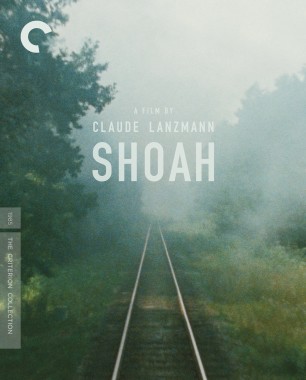
Shoah
In his book The Sixties, the sociologist Todd Gitlin said that the Holocaust was a “square in the middle of the through route to progress,” and everybody had to reckon with it. There was also the famous Theodor Adorno statement that “to write poetry after Auschwitz is barbaric.” He said afterward he didn’t mean it literally, he meant it as a negative dialectic, but the point was still that everyone had to come to terms with it. I really think reckoning with the Holocaust was the great motivating factor for postwar cinema in the West, for directors like Visconti, Rossellini, Resnais, Godard, and beyond. It gave the art form a moral, ethical, and spiritual grounding that powered cinema for decades.
Shoah was ten years in the making, and Lanzmann interviewed all these people in the Jewish community who were shunned because they were the ones who lived, because they were the ones who did the horrible work. He also just understood what the film experience was and that this history couldn’t be told chronologically. The film is atemporal and works like a spiral. It’s endless; you can’t ever know everything. It’s a mistake to call Shoah a “great documentary” or “the best movie about the Holocaust.” It’s a great movie. One of the greatest I’ve ever seen.
-
10
Charles Chaplin
Limelight
I rewatched all of Chaplin’s features quite recently. With such a monumental figure, it’s important to let time go by before going back and rediscovering the work. And it’s even better when you can see it restored properly.
There’s nobody in cinema who even comes close to Chaplin. He was completely grounded in the experience of being human. He understood what it was to have nothing, so for him to become who he ended up being meant something very different than the fame that comes for most other stars or directors. I suppose that’s why he created so fearlessly.
The relationship between Chaplin’s and Claire Bloom’s characters has a kind of Star Is Born–like up-down trajectory. But there’s nothing expected about it, because you’re with both of them on such an intimate wavelength. The borders between character and actor and art and life simply disappear. What a wonder.