Reflection, Refraction, Distortion
Share
Hundreds of filmmakers and programmers are once again rallying behind Jafar Panahi, who has been sentenced to five years and one month in prison and banned—as he has been so often in the past—from working and traveling. The Cannes Film Festival has called for “the lifting of all restrictions that prevent him from traveling, creating, and expressing himself freely,” adding that Panahi’s “freedom is not just about one filmmaker, it is about the rights of all artists to think, create, and express themselves without fear of imprisonment.”
A similar statement issued by the International Coalition of Filmmakers at Risk has been signed by the artistic directors of festivals in Venice, Rotterdam, Berlin, Locarno, New York, Toronto, London, Tokyo, Busan, and Karlovy Vary. They’re joined by dozens of leading institutions as well as an impressively long list of filmmakers including Martin Scorsese, Kleber Mendonça Filho, Olivier Assayas, Agnieszka Holland, Barry Jenkins, Lucrecia Martel, and producer Christine Vachon.
These petitions are not empty gestures. As Sheila O’Malley points out, whether or not there was a direct correlation, when Panahi went on a hunger strike while behind bars in 2023, “the entire world of filmmakers, festivals, film lovers, erupted in outrage. He was released a couple days later.”
A couple of quick shout-outs before we turn to this week’s highlights. Tonight, the Chicago Film Society will present Fred Camper’s Suicide Note (1976–1984), which Brian O’Connell, who interviews Camper for Film Comment, calls “perhaps his most haunting exploration of the nonnarrative image.” And at L’Alliance New York, Lucy Sante will introduce Olivier Assayas’s Something in the Air (2012) and Guy Debord’s In girum imus nocte et consumimur igni (1981), two films discussed in her new book, My Heart & I Agree.
The European Film Academy, in the meantime, has announced that it will present its Lifetime Achievement Award to Jean-Pierre and Luc Dardenne during the European Film Awards ceremony in Athens on January 16. The nominations are out, and Paweł Pawlikowski’s Fatherland leads with eleven, followed by Javier Calvo and Javier Ambrossi’s La bola negra with ten and Cristian Mungiu’s Fjord with five. If there were any doubt that this is Sandra Hüller’s year, she has been nominated twice for the European Actress award for her lead performances in Fatherland and Markus Schleinzer’s Rose.
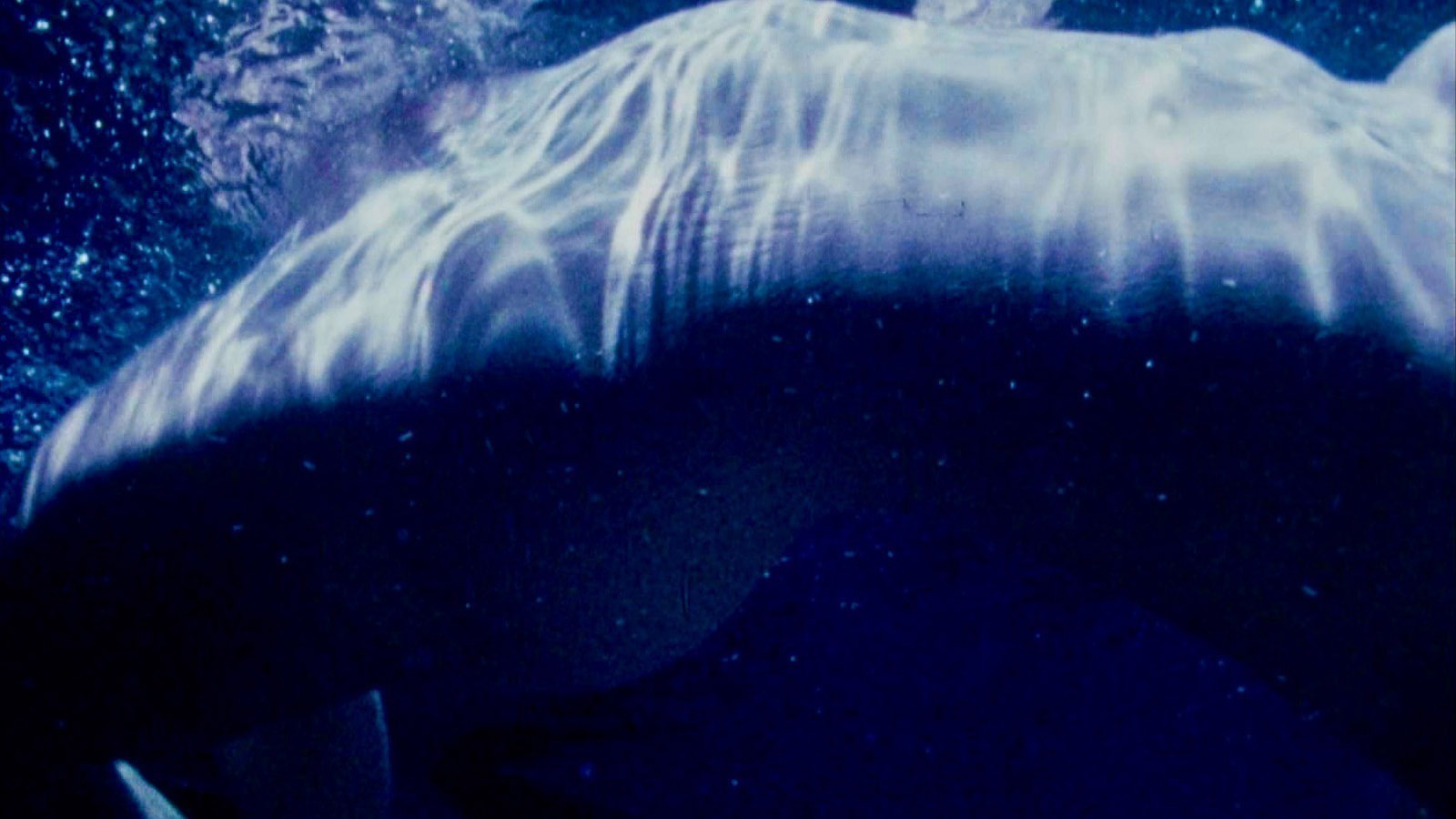
- Gunvor Nelson’s Personal Cinema opens tomorrow in New York, and curator David Schwartz observes in Metrograph’s Journal that “water suffuses Nelson’s films, as she frequently turns her camera towards not only oceans but bathtubs, swimming pools, harbors, streams, and rain. She loved the kaleidoscopic visual effects she could achieve with water, including reflection, refraction, and distortion, and she was drawn to water’s fluidity—both literally and artistically—allowing for wavering, unstable images. The key to Nelson’s work is that the films are expressionistic—taking us inside her mind and her artistic outlook (she was trained as a painter)—while her interior landscapes remain grounded in the reality of physical landscapes. Simply put, she blends surrealism with realism.”
- Composer, sound designer, and rerecording mixer Dean Hurley ran David Lynch’s Asymmetrical Studio from 2005 to 2018, the year he was nominated for two Emmys for his work on Twin Peaks: The Return. Writing for Screen Slate, he notes that late in his career, Lynch “made a point to present and celebrate his outtakes,” and Hurley mixed these deleted scene assemblies, beginning in 2008 with Wild at Heart (1990), an adaptation of the novel by Barry Gifford. “The material left on the cutting room floor amounts to nearly another feature worth of material,” writes Hurley. “It’s not surprising that most of the deleted material from Wild at Heart adheres closely to scenes from Gifford’s novel, and its removal actually works to shape Lynch’s version further into his own voice.”
- Patrick Z. McGavin recently rediscovered a never-before-published interview he conducted in 2009 with Michel Ciment, the late editor of Positif and the author of Kubrick: The Definitive Edition. “As usual with Kubrick, when you talked with him, he was more interviewing you,” Ciment told McGavin. And Stanley Kubrick had a lot of questions about how Napoleon was regarded at the time in France. “I was kind of naive and I said there are so many films about Napoleon, why do you want to make another one? I did not understand [that] what Kubrick wanted to do every time he made a film was [outperform] everybody else. To make the best war film ever. To do a better film about Vietnam, to do a better work about eighteenth-century costume film, or to do better than every other horror film.” Kubrick once told Ciment that “Eisenstein is all form and Chaplin is all content. If somebody could combine the form of Eisenstein with the content of Chaplin, he’d be the greatest filmmaker.”
- The symposium By the Very Blue Sea: Boris Barnet and His Films was held at the University of Chicago back in March, and Jonathan Rosenbaum has posted the lecture he delivered in two parts. In Barnet’s By the Bluest of Seas (1936), two shipwrecked sailors are rescued and taken to an island where they both fall for the woman running a collective farm. But “arguably the major player” is “the eponymous, roaring sea,” suggests Rosenbaum. “As metaphysical as Fritz Lang, though far less judgmental, Barnet employs overhead shots to convey a sense of ruthless yet positive futility, expressed and sometimes seemingly enjoyed or at least tolerated by his human characters when they’re being swept along by water and air like an infant being rocked by a fretful and angry mother.”
- A couple of weeks ago, we briefly surveyed the work of Roberto Rossellini, and now that Rossellini 120 is opening at Film Forum in New York, Slant is running a terrific piece by Fernando F. Croce. “Here lies the Rossellini paradox,” writes Croce, “a filmmaker whose unadorned style is attuned to the physicality of the world, yet who continually searches for abstract concepts such as faith, identity, and redemption . . . The debate invited by Rossellini’s work is not so much between image and meaning as it is between viewer and screen, with the director encouraging us to gaze beyond the interpretative spectrum as active participants; the drive of the films is that of a journeying conscience, and we are continuously asked to share in it.”
Don’t miss out on your Daily briefing! Subscribe to the RSS feed.