Jane Schoenbrun’s Public Access Afterworld
Share
“Do you feel beautifully schizophrenic when you write stuff like this?” Kristen Stewart asks Jane Schoenbrun in a conversation recorded for Interview. Stewart is a fan. When she presided over the jury at the Biarritz Nouvelles Vagues Festival this summer, she declared that Schoenbrun’s Teenage Sex and Death at Camp Miasma was “the best time I’ve ever had at a movie theater. Ever.”
Stewart was asking Schoenbrun about creating a vast array of characters in the wide network of stories told in their first novel, Public Access Afterworld. “No one sounds the same,” notes Stewart. “To think they all came from one person always stymies me, because their voices are so different, but they all feel like you.”
Public Access Afterworld is essentially a novelization of the first season of an unrealized television show—and Schoenbrun wrote screenplays for three seasons, typing up a stack of 1,600 pages. In the book, chapters are episodes, and in the first one, teens David and Erin are hunkered down in front of the TV in her suburban basement on June 12, 2009, the night that broadcasting switched from analog to digital.
They kiss, David is weirded out, and he leaves. Erin stares into the TV static and sees something emerge from the electric cloud as if from another dimension: Public Access Afterworld. And she disappears. Some suspect that David has killed her. But many other characters will disappear in the episodes that follow, and David may well have something to do with it.
The second episode leaps ahead seventeen years and introduces Bethany, a trans woman working in Austin as a content moderator for a giant corporation that will remind more than a few readers of YouTube. Even with the billionaire CEO of the company secretly microdosing her with psychedelics, Bethany is determined to squelch her fears and get to the bottom of the Public Access Afterworld mystery.
“She should have a cape,” suggests Stewart. “I love her,” says Schoenbrun, “but she’s also a fictional version of me. David and Bethany—I feel like one is my worst nightmare version of my pre-transition self and one is my imagined post-transition ideal self. By the end of the book, it’s like they’re duking it out for literally which one of us is real.”
“At 592 pages,” writes Coleman Spilde in Salon, “this book could easily feel like a smug kiss-off to all those—present company included—who have criticized Schoenbrun’s reluctance to pare down their concepts into less dense works. But while the novel is imposing from sheer size alone, the shift in medium lends their elaborate, occasionally exhausting storytelling a curious new potency.”
“Schoenbrun has written a doozy of a debut that reimagines the Orpheus myth for our hypermediated age,” writes Junot Díaz in the New York Times. “A purveyor of cinematic opacities, Schoenbrun is far more accessible here, though they haven’t abandoned their propensity for the uncanny. Schoenbrun draws upon a cosmos of influences and genres: Public Access Afterworld is not just an Orphic epic, but also a political conspiracy, an urban fantasy, and a neo-slave narrative that recalls Videodrome, The Matrix, and even Neal Stephenson’s Snow Crash.”
Public Access Afterworld is the third part of a “screen trilogy” that began with We’re All Going to the World’s Fair (2021) and continued with I Saw the TV Glow (2024). But in the New York Review of Books, Kristen Roupenian finds that the novel is “closer in tone to Teenage Sex than to Schoenbrun’s previous films. It’s a fast-paced, enjoyable read, full of twists and jokes; like all of Schoenbrun’s work, it has a close, affectionate, reference-dense relationship to the horror genre yet contains few outright scares.” Each and every one of Schoenbrun’s works “is, to varying degrees, a success. Taken together, they form the kind of ambitious, labyrinthine corpus that most artists require a lifetime to create.”
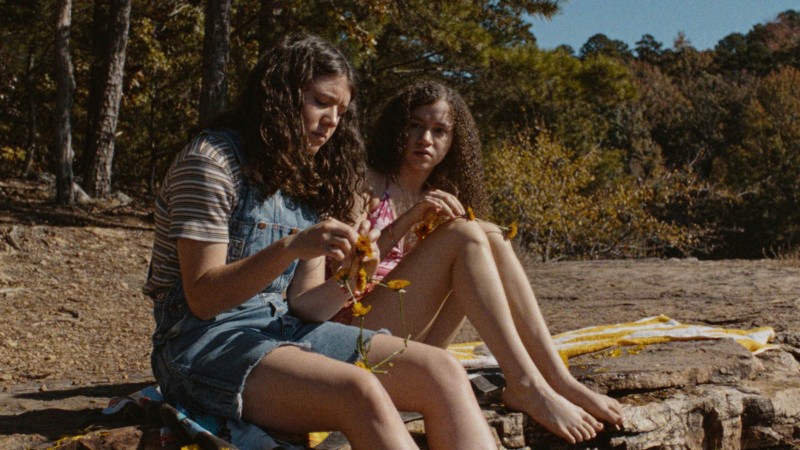
Writing about the novel for the Chicago Review of Books, Ruth Joffre, too, sees in Teenage Sex “a significant similarity: that hole in the bottom of the lake ‘where the movies come from’ in Camp Miasma leads to a kind of pocket dimension one could compare to Public Access Afterworld, the place where the TV shows come from (although Public Access Afterworld is far less liberatory and more densely populated). Given the proximity of the novel and film releases, it’s likely that the projects cross-pollinated, giving Schoenbrun a chance to explore an idea in multiple mediums.”
“And now that the world of Public Access Afterworld has been activated,” writes Eric Grode in a profile of Schoenbrun for the New York Times, “the second and third seasons—er, novels—feel like a foregone conclusion. ‘Jane has been pretty up front about the fact that they are just beginning in this world,’ said Bill Clegg, Schoenbrun’s literary agent. ‘This novel has its own powerful center of gravity, but I know Jane has much more in mind.’”
Don’t miss out on your Daily briefing! Subscribe to the RSS feed.