Shadows of the Spring
Share
When the Czechoslovak New Wave rolled in, it made a profound cultural impact, but crested and declined within a few short years. In the early 1960s, a cluster of filmmakers associated with the movement drew international plaudits and awards. Among the most significant works of this period are Miloš Forman’s Black Peter (1963) and Loves of a Blonde (1965), Jiří Menzel’s Closely Watched Trains (1966), and Věra Chytilová’s Daisies (1966).
In January 1968, Alexander Dubček, the newly elected First Secretary of the Communist Party of Czechoslovakia, introduced a series of reforms and inaugurated what would become known as the Prague Spring. Just over half a year later, four fellow Warsaw Pact countries led by the Soviet Union invaded and put a stop to the reforms, reintroducing restrictions on the media and the arts and reinstating centralized, authoritarian control. Soviet loyalist Gustáv Husák replaced Dubček, and the period grimly referred to as “normalization” lasted until either Husák’s ouster in 1987, or at the very latest, the Velvet Revolution of 1989.
During the Soviet occupation, some directors, such as Forman, fled the country, but others, including Menzel and Chytilová, stayed to work—when they were allowed—within the confines of the state’s strict demands. Shadows of the Spring: The Normalization Era in Czechoslovakia, a series running at the Museum of Modern Art in New York from Friday through December 12, is “not the story of these filmmakers’ capitulation,” as curators Christopher Small and Francisco Valente explain, “but rather of the indomitability of the human spirit, as they remained standing upon shifting aesthetic and political sands, and maintained a measure of creative integrity against the odds.”
Writing for MoMA’s Magazine, Small outlines Chytilová’s struggles and frustrations during these years. For a time, she was “quietly blacklisted,” but she fought back, working her way from having to use her husband’s surname while making commercial shorts to eventually directing features again. MoMA will screen The Very Late Afternoon of a Faun (1983), the comedic story of an aging Don Juan (Leoš Suchařípa) attempting to reclaim his youth by seducing women far younger than he is. Or at least trying to.
“Male misogynists were a persistent subject of interest for Chytilová,” writes Small. “She railed against their chauvinism all her life yet always bristled at being labeled a feminist. The Very Late Afternoon of a Faun was her most thorough deconstruction of a lecherous macho ethos, even if, ultimately, she cannot help but bask in his assertive amorality as much as send it up. By the hilarious finale, the Faun is drunk, storming a stairwell in an apartment building—shoving over furniture, smashing the walls with his fists—in the kind of manic, senseless act of destruction that consumes the last acts of so many classic Chytilová movies.”
One of the highlights of the series will be the presence of Magdalena Vášáryová, who is probably best known internationally as the young star of František Vláčil’s Marketa Lazarová (1967). For more than two decades, she turned in dozens of winning performances in film and television before retiring from acting to pursue a diplomatic career. After the Velvet Revolution, Václav Havel asked her to serve as his vice president, but she politely declined the offer, opting instead to serve as an ambassador, first in Austria, and then in Poland.
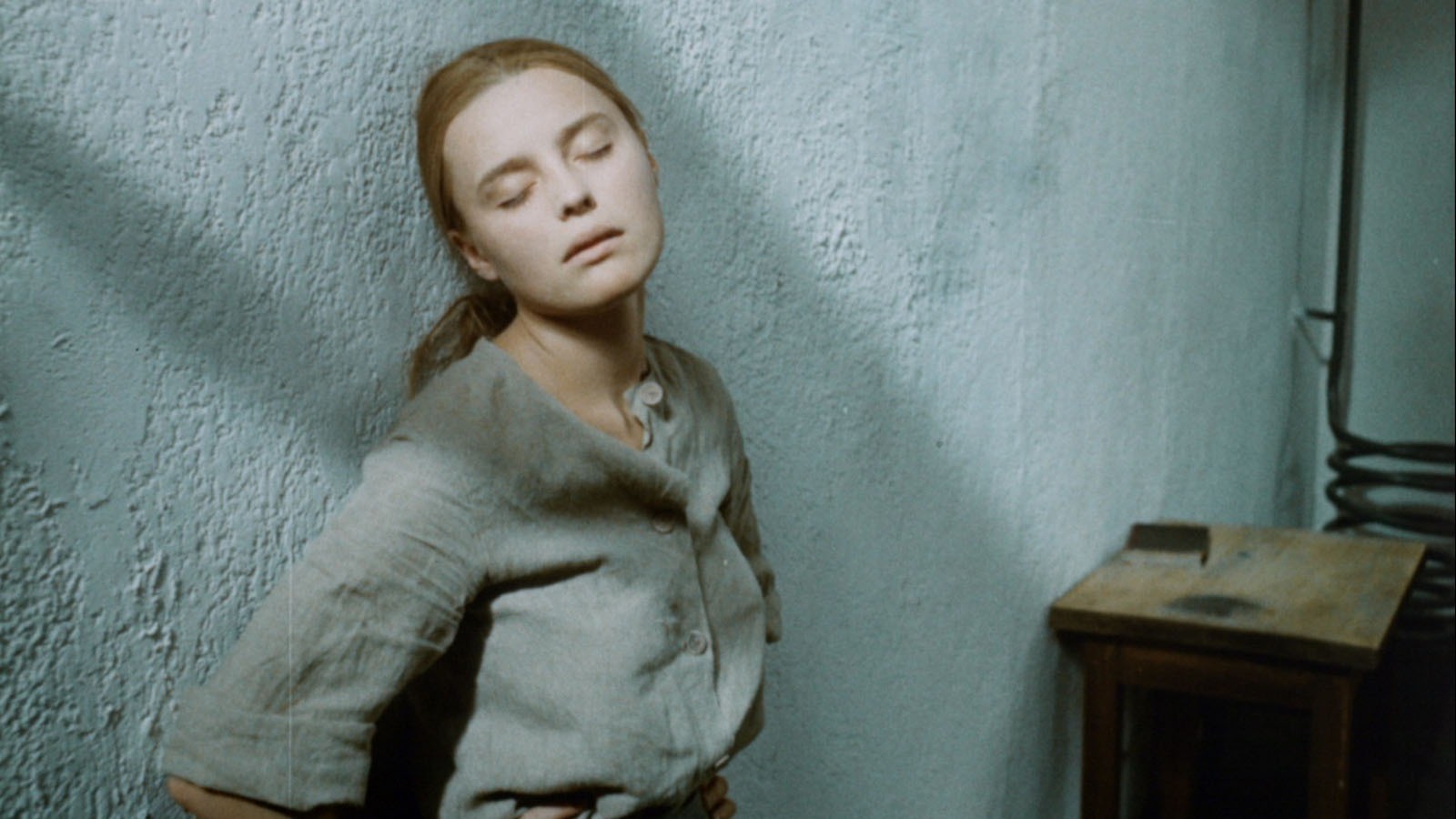
Vášáryová will join Small in introducing three films. In Jaromil Jireš’s . . . And Give My Love to the Swallows (1972), she stars as Marie Kudeříková, a twenty-two-year-old resistance fighter executed by the Nazis. “Ricocheting from The Joke’s anti-totalitarian satire to the loopy Grimm-ness of Valerie and Her Week of Wonders to this howl of injustice,” wrote Michael Atkinson for the Village Voice in 2005, “Jireš nevertheless maintains a distinctive style—fragmented, impressionistic, de-dramatized, stuffed with crass Czech gusto, but always hyper-real and soaked in ’70s weather.”
Vášáryová plays Maryška, the fetching wife of a brewery manager, in Jiří Menzel’s Cutting It Short (1980), which Lee Robert Adams calls “one of Menzel’s best-looking films, a sun-dappled dreamland of such simple Czech pleasures as beer, plentiful meat, sex, and glorious nature. Cinematographer Jaromír Šofr’s lens finds its muse in the captivating presence of Maryška. Vášáryová is absolutely radiant in the role.” Dušan Hanák’s Silent Joy (1986) features Vášáryová as a nurse who breaks free from a moribund marriage to live her life on her own terms.
A quick sidenote: Small and Vášáryová will be at the Czech Center New York on Monday to present and discuss Juraj Jakubisko’s Birds, Orphans, and Fools (1969), which Amos Vogel, writing for the Village Voice, called “a delirious film, a tour de force of creative camerawork and montage which whirls us through a mad surrealist universe, with every composition a poem in design and color. Two fellows and a girl [Vášáryová]—war orphans and dropouts from organized society—attempt to live a life of freedom and innocence in a world of insanity and war in a marvelously broken down house where closets hang from ceilings and birds, old men, and animals wander freely.”
Federico Fellini admired Jakubisko’s work, and he encouraged Giulietta Masina to star in Jakubisko’s The Feather Fairy (1985), which screens in the MoMA series on December 5 and 10. The lineup also features Beauty and the Beast (1978), directed by Juraj Herz (The Cremator), and František Vláčil’s Serpent’s Poison (1981). First, though, Shadows of the Spring will open with Karel Kachyňa’s The Little Mermaid (1976), “an interpretation of this story that is far darker and bleaker than the more innocuous adaptations,” finds Matthew Joseph Jenner, “but also a beautiful, challenging work that is undoubtedly magic manifested onscreen.”
Don’t miss out on your Daily briefing! Subscribe to the RSS feed.