Beatrice Gibson’s At Night
Share
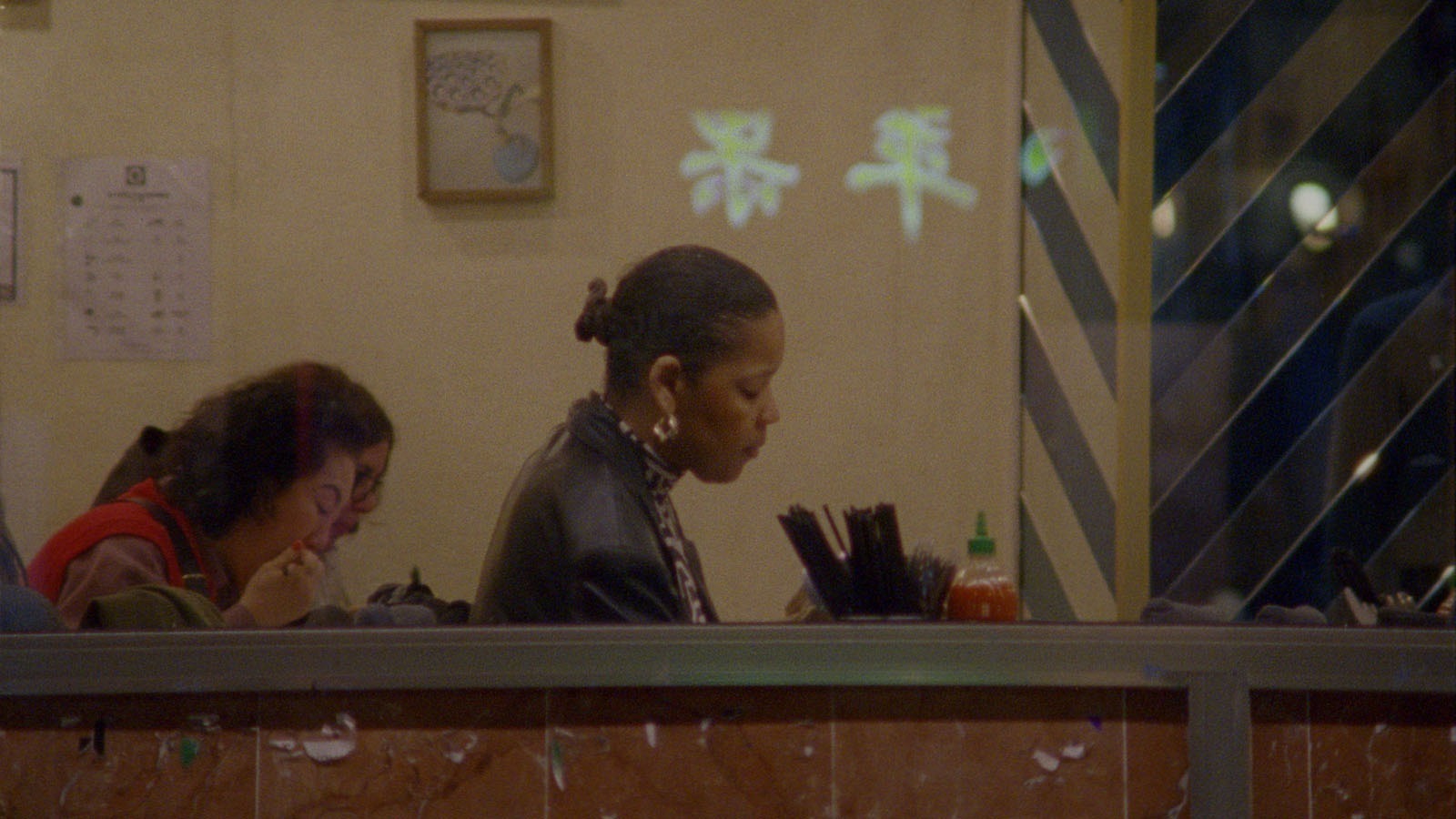
Beatrice Gibson may have won a Best Emerging Director Award when her first feature, At Night, premiered in Locarno this summer, but for nearly twenty years, her short films have been drawing accolades at festivals such as the Directors’ Fortnight in Cannes, the Viennale, and the Courtisane Film Festival. Her work has been exhibited at Tate Modern, Tate Britain, and the Institute of Contemporary Art in London and at Centre Pompidou in Paris. And she’s won the Tiger Award for Short Film in Rotterdam twice—for Agatha (2012) and The Tiger’s Mind (2013).
“Gibson’s short films have partaken of a promising new trend in experimental cinema, one which I think has everything to do with the nonsectarian ways that people come to cinema these days,” writes Michael Sicinski. “The avant-garde was long considered another country, even a ghetto, that had little in common with narrative filmmaking. But today we very much live in a One Cinema universe, where artists see nothing unnatural or transgressive about drawing equally from experimental and ‘commercial’ filmmaking. Folks like Ross Meckfessel, Zachary Epcar, and Basma Alsharif pull from the ambiance and performance elements of art cinema (Lynch, Cronenberg, Godard, Fassbinder) while also foregrounding the medium’s formal potentials and material elements. Gibson’s work is situated in this zone, something best exemplified by her 2018 film I Hope I’m Loud When I’m Dead, which concludes with a joyous reimagining of the final scene of Claire Denis’s Beau travail.”
Screening in New York on Sunday, in London on Sunday and Tuesday, and at AFI Fest in Los Angeles on October 25, At Night is “a pensive picture set on a hypnotic Parisian night whose dreaminess belies the urgency of the film’s curiosity,” writes Robert Daniels at RogerEbert.com. Corey Atad finds that the film’s “directness and its lyricism recalls everything from Akerman’s News from Home, to the films of Pedro Costa, to Wim Wenders’s Wings of Desire. A sequence at a concert by an accordion-playing queer artist is one of the best things I’ve seen this year.” At Night’s run time is just eighty-seven minutes, “but I could have watched it for hours.”
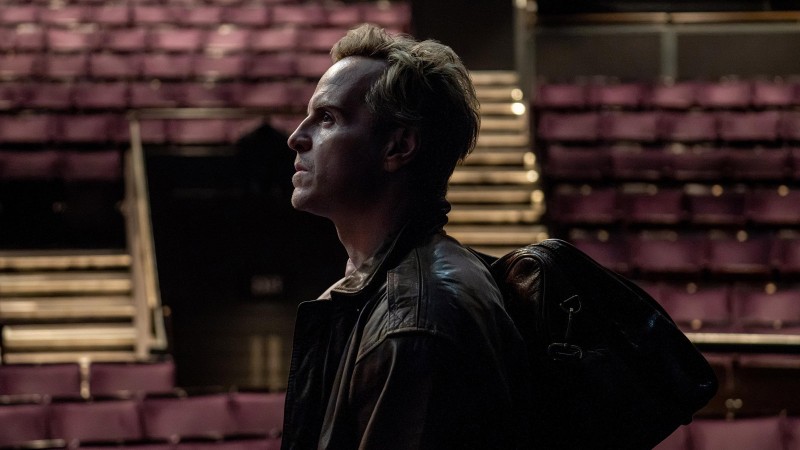
Gibson herself appears as B, a British filmmaker who has arrived in Paris to scout locations for a film that hasn’t yet taken shape. “It is easy to make good images,” says B as she records something of a cross between a voicemail and a note to herself. “And the film, wonderfully shot by Ben Rivers, is beautiful,” writes Sam Bodrojan for IndieWire. “The nocturnal photography spills out from dive bars into back-alleys, transforms nondescript storefronts into a magic garden of forgotten infrastructure.”
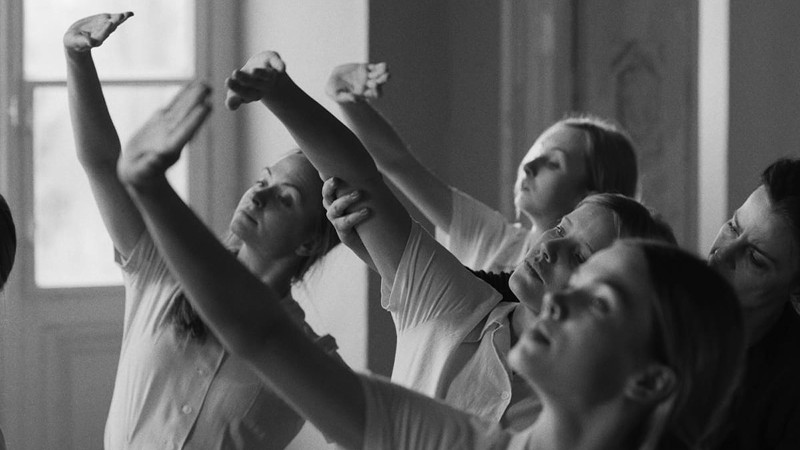
At Night wanders along Metro tracks, bus lines, and walkways, alighting here and there on the women it finds. Six of them gather in a bar after a reading, and Gibson says that the ten-minute sequence was “inspired by a scene in Bette Gordon’s Variety (1983) featuring her friends—artists and sex workers—in a bar talking. The bar scene in my own film is so fascinating to me, so prismatic, it manages to hold many different points of view with relative tenderness, at the same time as maintaining a kind of tension.”
Artist Pauline Curnier Jardin, poet Sophie Robinson, producer Denna Cartamkhoob, psychotherapist Katia Belo Cardoso, and filmmakers Amy Gwatkin and Laida Lertxundi are more or less playing themselves, and so, too, is Diocouda Diaoune, whose Didi has not only previously collaborated with B on other films but also worked for B as her son’s nanny. B and Didi aren’t exactly estranged, but they’re getting there, and in the back of a convenience store, they try to talk it out. A definitive resolution, though, turns out to be elusive.
“It’s Gibson’s refusal to pin her film down that makes At Night so refreshing, and one of the few films from this decade that tackles ideas around privilege, class, and identity with the complexity they deserve,” writes C. J. Prince. “I didn’t realize the extent to which race and class would play out,” Gibson tells Sophia Satchell-Baeza in an interview for the BFI. “I come from a place of privilege and several other characters don’t. There was a critical tension in that, so I wrote my character in as a way to explore it.” Liyo Gong is “an amazing editor. I can honestly say that she coauthored this film . . . My lonely, wandering, sad self was constructed in the edit.”
Structurally, At Night draws on what Gibson tells Jordan Cronk in Filmmaker are “two key sources: the poet Alice Notley’s cult epic poem The Descent of Alette, in which a woman ventures down toward the core of the earth via an oneiric series of subways and caves, and Kathy Acker’s novel Don Quixote, whose gender-flipped protagonist is a knight who rides around on an epic quest following an abortion.”
Talking with George MacBeth at e-flux, Gibson says that “the central question of the film is quite simple to my mind: What is the best way to be, to exist, inside the particular historical moment that we find ourselves? How should we be in relation to it? How should I be in relation to it and in relation to others? . . . I think we live in fucking complex times, and I wanted to make a complex film.”
“The opening quote from Alice Notley (‘I am a tone of voice, warming, shifting, pausing, changing, including, asserting, exulting, including, turning and including’) is as much a manifesto for the late poet’s craft as it is for the director’s,” writes Leonardo Goi for Filmmaker. “Like Notley, who viewed poetry as a permeable realm into which different voices could coalesce, Gibson treats cinema as a polyphonic world, a medium that brings together not just disparate art forms, but disparate people: all her films are odes to the sanctity of communal work and friendship.”
Don’t miss out on your Daily briefing! Subscribe to the RSS feed.