Locarno’s Leopards
Share
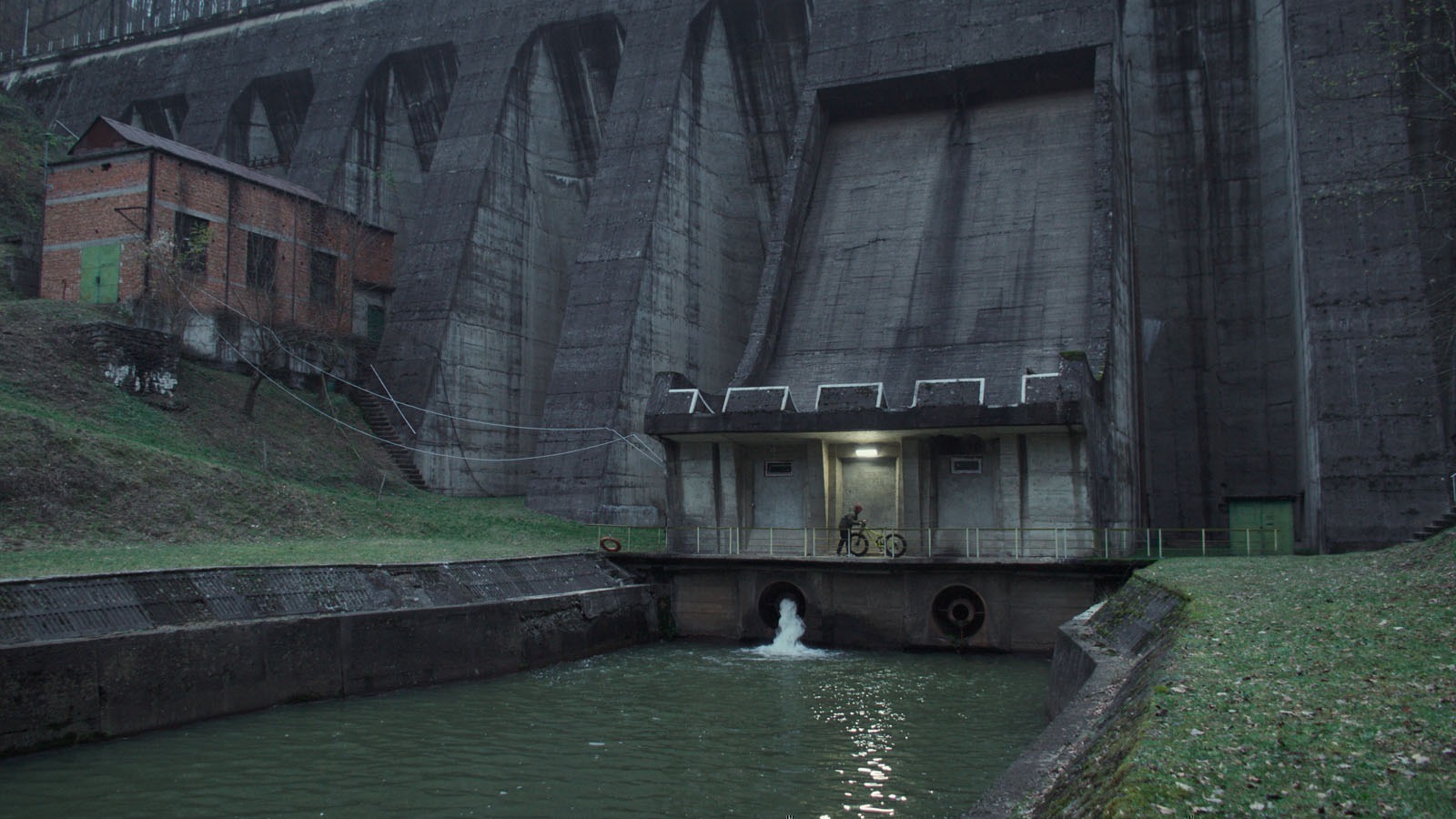
In the opening sequence of You Don’t Belong Here, the winner of the Golden Leopard at this year’s Locarno Film Festival, thugs on bikes descend at night on a Roma community in Reșița, the postindustrial city in western Romania where director Florin Șerban was born. Tires are slashed, windshields are shattered, and as lights along the roused street flick on, a man runs out from his apartment to protest. He’s beaten and left for dead.
You Don’t Belong Here “opens with great promise and finishes with a stupefyingly misguided coda,” writes Jay Weissberg in Variety, but for Lida Bach, who interviews Șerban for RTL, that coda is the emotional crux of the entire film. For most of its running time—just over two and a half hours—You Don’t Belong Here plays like a self-aware homage to the Romanian New Wave, its long and static shots allowing tension to mount as viewers wait for Marius (Adrian Văncică), a respected surgeon, to realize that it was his son, Ioan (Teodor Butănescu, honored in Locarno with a Special Mention), who unintentionally delivered the fatal blow.
At Cineuropa, Giorgia Del Don calls You Don’t Belong Here “a powerful, precise film unafraid to expose the grotesque side of a masculinity in crisis.” Like Weissberg, though, Screen’s Amber Wilkinson is thrown off by that coda, which plays “like a strange left turn towards unnecessary theatricality.”
More International Competition Winners
The International Competition jury presided over by filmmaker Fabrice Du Welz awarded its Special Jury Prize to The Riverbank, codirected by Matheus Farias (who edited Kleber Mendonça Filho’s Pictures of Ghosts and The Secret Agent) and his professional and life partner, Enock Carvalho. The Riverbank shares with The Secret Agent its setting—the Brazilian coastal city of Recife—and a few cast members, including Robério Diógenes, Rubens Santos, and Carlos Francisco.
When Izaquiel (Caique Copque) isn’t cleaning a church driven by a fiercely homophobic mission or partying with his queer roommates, he cruises the riverbank, where he finds himself irresistibly drawn to a fisherman, Jeremias (Ítalo Martins). The Riverbank takes viewers “on a journey that is at once hyperrealist and dreamlike, into the darkest recesses of a Brazil gripped by violence and religious fanaticism,” writes Muriel Del Don at Cineuropa.
Hong Sangsoo won the award for Best Direction for Nowhere to Lay My Eyes, and Variety’s Guy Lodge finds that the prolific filmmaker’s thirty-fifth feature is “as classically and welcomingly Hong as it gets: a brief, bittersweet comedy of familial distance and personal drift, crisply and candidly shot, and built around a marvelous performance of quiet, more-than-meets-the-eye feeling by his partner and longtime muse Kim Minhee.”
Kim won one of the two gender-neutral awards presented for Best Performance, and the other one went to Monica Bellucci, whose “sneer is a thing of wonder,” writes Jay Weissberg, “so why have so few directors used it properly? When allowed full rein to her sense of irony, as given her by Giovanni Tortorici in Ketticè, Bellucci has few equals in her ability to project self-aware drama queen with just the right dose of camp icon.”
We’ve noted the Special Mention given to Teodor Butănescu for his turn in You Don’t Belong Here; another one went to Xavier Bergeron for his supporting performance as a live wire who wins over Larissa Corriveau’s Mira—“a laconic wanderer who helps terminally ill people end their lives,” as Leonardo Goi puts it at the Film Stage—in Denis Côté’s Nobody’s Violence.
Filmmakers of the Present
The Golden Leopard for Best Film in the Filmmakers of the Present competition dedicated to first and second features and the First Feature Award went to The Illusion of an Everlasting Summer, directed by the renowned photographer Alessandra Sanguinetti. For twenty-five years, Sanguinetti chronicled the lives of cousins Guillermina “Guile” Aranciaga and Belinda “Beli” Stutz—who were ten and eight in 1999—as they grew up on the Argentinean pampas and eventually became mothers with children of their own.
Guile and Beli have been the subjects of several of Sanguinetti’s books and exhibitions, but in the Hollywood Reporter, Leslie Felperin finds that this “luminous, indelible documentary” has “its own integral coherence and doesn’t feel like an addendum or just another chapter; it’s a freestanding, self-sufficient work in its own right.”
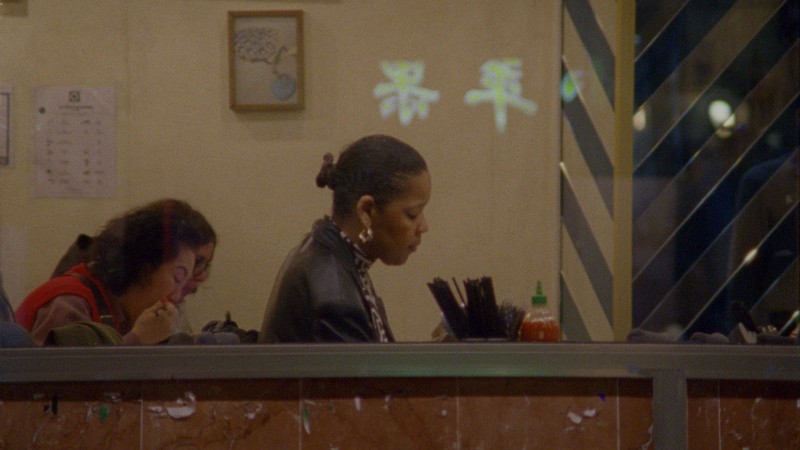
For nearly twenty years, Beatrice Gibson has been winning awards for her short films, and now she’s won the Best Emerging Director Award for her first feature, At Night. “The best movie I’ve seen in Locarno this year is set in Paris after dark, on sleepy side streets, in fluorescent eateries and nocturnal cafes and bars,” writes Rory O’Connor at the Film Stage. “At Night plays at the unhurried clip of a Rachel Cusk novel, and with similar shades of that author’s displaced POV and melancholic allure. As its images wash over you, you get a sense of an artist yearning for somewhere else while remaining resolutely curious for what’s around the corner.”
For Dazed MENA, Lujain Benatia talks with Palestinian filmmaker Mohanad Yaqubi about Revolutionaries Never Die, the winner of the Special Jury Prize. In 2018, Jocelyne Saab, who had spent fifteen years documenting the Lebanese Civil War, sent an email to Yaqubi, proposing a collaboration. Before Yaqubi got around to answering, Saab passed away. Yaqubi turned to Saab’s archive, and he found himself working through her 1982 film Beirut, My City when his own home in Gaza was destroyed. “Suddenly you feel like the two timelines, my timeline today and her timeline, just come together,” he tells Benatia.
Don’t miss out on your Daily briefing! Subscribe to the RSS feed.