Deep Dives
Share
L ocarno has opened with the presentation of its Excellence Award to Isabella Rossellini, the cover star of the first issue of the 2026 edition of Pardo, the magazine that the festival publishes each day during its annual run. For Rossellini, “the choice of a role never depends on the plot premise,” writes Benedetta Pini, “but on the quality of her connection with the director.” And Rossellini adds that “when it comes to particularly unique visions, such as those of Guy Maddin—whose scripts are written in such a baroque style that you can’t really make out how the film will eventually look and feel—you have no choice but to trust your intuition.”
Also up on the festival’s site is Srikanth Srinivasan’s appreciation of Safi Faye’s “piercing debut feature,” Letter from My Village (1975); Filipe Furtado on Kevin Costner’s Dances with Wolves (1990); and, in conjunction with this year’s retrospective, Red & Black: Hollywood Left and the Blacklist, curated by Ehsan Khoshbakht, an interview with filmmaker and writer Abraham Polonsky (Force of Evil, 1948) that ran in a 1970 issue of Film Culture. Polonsky was called before the House Un-American Activities Committee in 1951, and he refused to name names. Though he carried on writing, he wouldn’t direct again until he returned with Tell Them Willie Boy Is Here (1969).
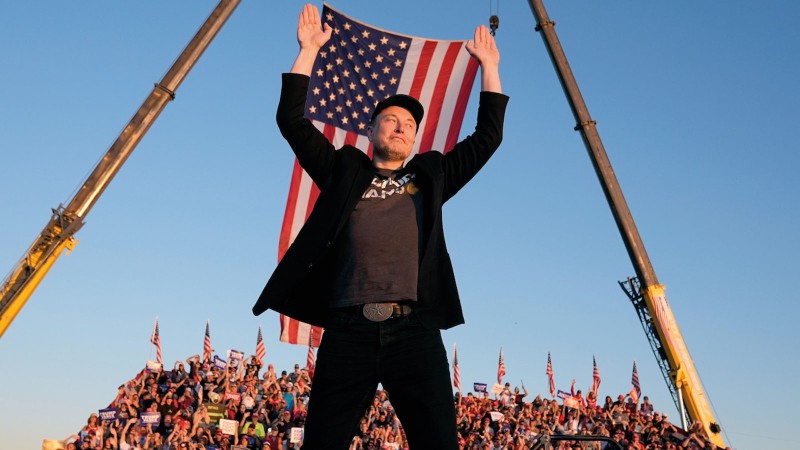
Toronto (September 10 through 20) has rolled out the lineups for its TIFF Docs,Midnight Madness, and Shortcuts programs. TIFF Docs will screen Union Town, Barbara Kopple’s latest report from the front lines of the struggling labor movement, and The Pervert’s Guide to Utopias, the third film Sophie Fiennes has made with Slavoj Žižek—but everyone wants to talk with programmer Thom Powers about Alex Gibney’s Musk.
“We’re talking about someone who has a Marvel villain–like level of power over our lives, from electric cars to space travel to AI to government to social media,” Powers tells the Hollywood Reporter’s Steven Zeitchik. And talking to IndieWire’s Anne Thompson, Powers notes that most reporting on Elon Musk “will look at one thing. It’ll look at X, or SpaceX, or Tesla. Alex is doing something on a more epic scale. That is why the film needs and deserves the length that it has: over three and a half hours.”
On Wednesday, the New York Film Festival (September 25 through October 12) unveiled its Main Slate lineup, a walloping program of thirty-two features. As always, the selection of some of the most critically acclaimed films to have premiered so far this year serves as an expertly curated check-up on the state of cinema. Perhaps the most intriguing surprise here is the decision to present the world premiere of Iranian director Mani Haghighi’s I Deserve a Lover Whose Every Rise Sets Fiery Dooms Raging Across the Skies, “a lively, stimulating, and unorthodox documentary” about painter, conceptual artist, and collector Nasser Bakhshi and his partner, the surrealist artist Roghayeh Najd.
The forty-fifth Pordenone Silent Film Festival (October 3 through 10) will open with Donald Crisp’s newly restored Don Q, Son of Zorro (1925), starring Douglas Fairbanks and Mary Astor, and will close with John Ford’s The Iron Horse (1924). The orchestral scores of both films will be performed live. And the theme of this year’s retrospective will be Weimar Uncensored: Taboos and Transgressions in German Cinema, 1919–1920. To wrap this week’s round of festival news, let’s note that the seventieth BFI London Film Festival (October 7 through 18) will close with the UK premiere of Jesse Eisenberg’s The Debut, starring Julianne Moore and Paul Giamatti.
In May, we put together an overview of newly restored films by António Reis and Margarida Cordeiro, and from today through Thursday, they will be screening at the Brooklyn Academy of Music. Starting tomorrow, New York’s Metrograph will present Otar Iosseliani: Fables of Modern Life, and Steve Macfarlane introduces his program of films marking their twentieth anniversaries: 2006 Movies You Must See Before You Die opens today at the Roxy Cinema.
Grace Chang, the Hong Kong singer and actor who was especially popular in the 1950s and ’60s, passed away on Monday at the age of ninety-three. In 2006, Michael Guillen put together an appreciative primer on Chang’s work, and when Edo Choi recently interviewed Tsai Ming-liang for Metrograph’s Journal, Choi asked about the director’s use of Chang’s recordings in The Hole (1998). “I had been watching a lot of films from the ’60s, not only Mandarin-speaking films but Hollywood films too,” said Tsai. “Grace Chang became someone I fell in love with.” For Tsai, “she really represents that era, and her songs have such sustaining power; even today, people are still listening to them.”
This week’s highlights:
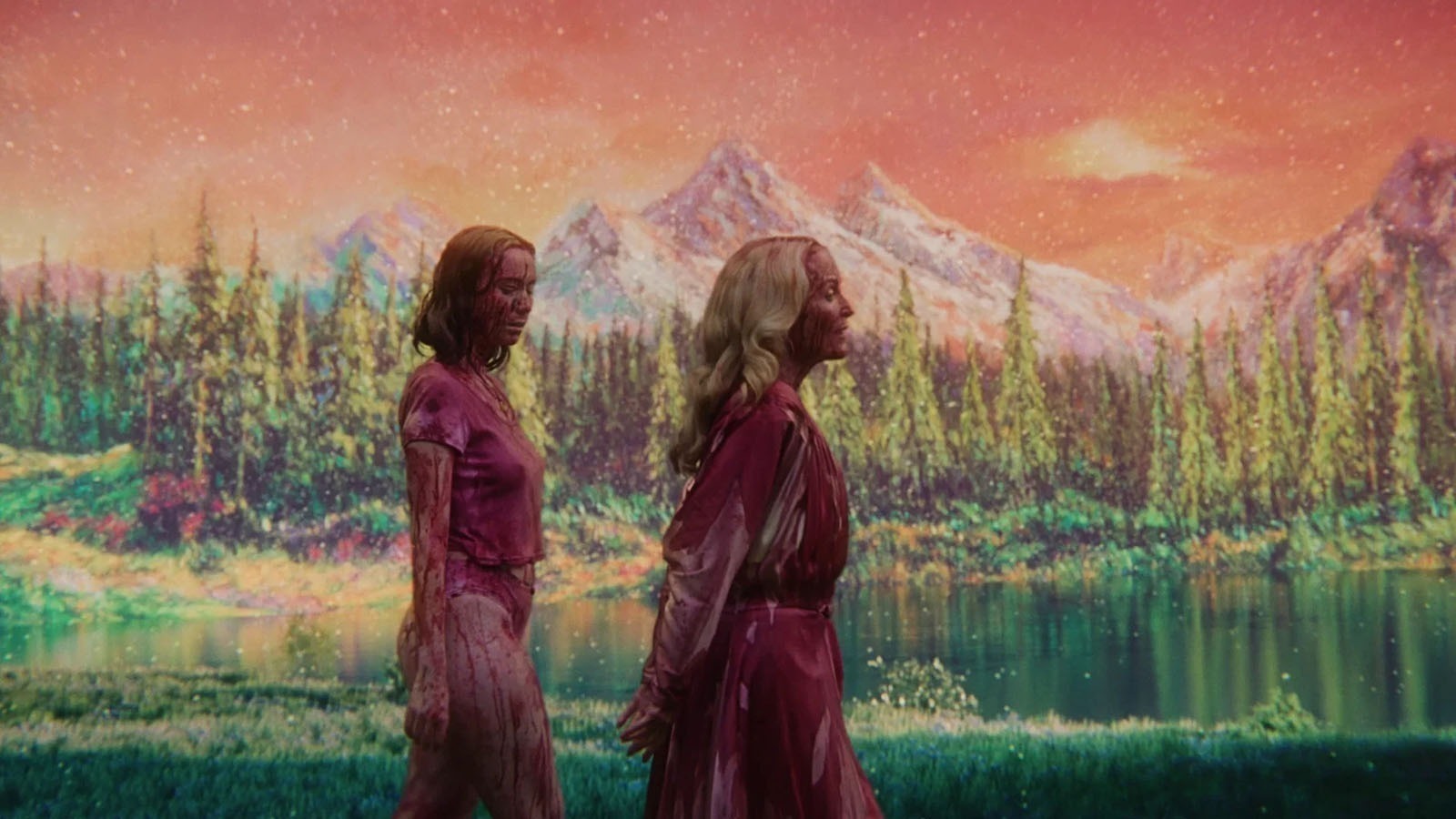
- After making We’re All Going to the World’s Fair (2021) and I Saw the TV Glow (2024), Jane Schoenbrun returned this year to open the Un Certain Regard program in Cannes with Teenage Sex and Death at Camp Miasma. Hannah Einbinder stars as a filmmaker out to reboot a horror franchise whose star (Gillian Anderson) has become a recluse, but as Alison Willmore points out in her excellent profile of Schoenbrun for Vulture, “summarizing Schoenbrun’s films can be tricky. Describing the elliptical plots only gets at a fraction of what unfolds onscreen, as Schoenbrun attempts to capture emotions and moods that are spongier, stranger, and less easy to place.” Neither of the first two features, for example, is “autobiographical in a conventional sense—instead, Schoenbrun describes them as the cinematic equivalent of ‘wails.’”
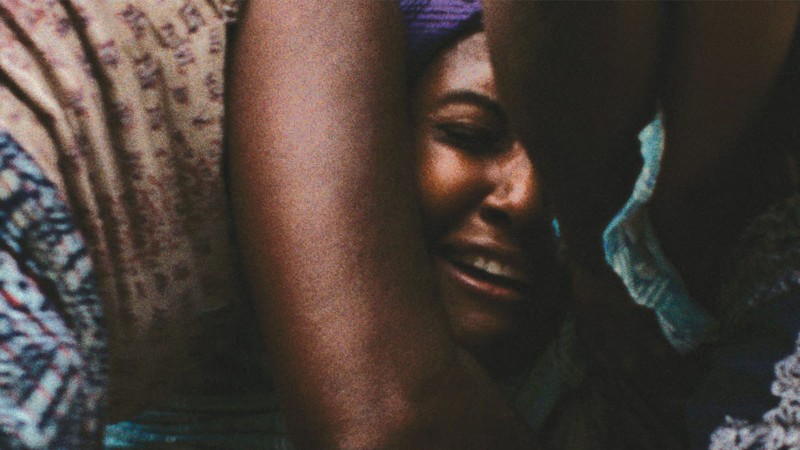
- Newly restored, Ngozi Onwurah’s Welcome II The Terrordome (1995) is the first feature directed by a Black woman to open in British theaters. It depicts a near-future in which people of color struggle to survive in what Brandon Streussnig describes at In Review Online as “a prison ghetto where Black people live under white dictatorial rule.” Terrordome is “a blistering, unique debut,” writes Steve Macfarlane at the top of his interview with Onwurah for Filmmaker. “It has a pop sensibility, unapologetic in its references to Public Enemy and Do the Right Thing (1989), and uses a dystopian sci-fi hook to address very real concurrent crises of drug trafficking, gang violence, and police racism.” Thirty years ago, “people indicted me for being a nihilist,” says Onwurah. “I couldn’t just be angry, I also had to offer some ‘solution.’ I do not have the solution to violence or racism. Why can’t I tell my story without a ‘solution’? I don’t get to be silenced just because I don’t provide options to ‘solve’ the problem.”
“Jean Epstein was an aquatic filmmaker, an artist who saw water as embodying the kind of cinema he aspired to create: fluid, tempestuous, unpredictable,” writes Leonardo Goi, opening a rich critical survey for Notebook. The films Epstein made in Brittany “have an alien beauty to them. Out on the desolate islands dotting the Atlantic where Epstein brought his camera, nature reigns supreme. People do not live in Ouessant, Bannec, or Sein; they’re simply trying to survive them. Nine-foot tidal differentials, biblical winter storms, deafening winds and vertiginous waves: Epstein saw those unforgiving places as an apocalyptic outpost, and found communities virtually untouched by industrialization who were held together by ancient myths and superstitions. All the works that emerged out of those turbulent waters are drawn to the mysterious, and their director, who believed the fantastic should be unveiled rather than manufactured, did so through films perched along the border between magic and documentary.”
- Nick Newman’s interview with Kent Jones for the Film Stage is a delightful, just-hanging-out sort of meander that naturally gets around to the matter at hand—this week’s release of Jones’s second fictional feature, Late Fame—but not before a chat about Roxy Music that eventually segues into a discussion of Jones’s Diane (2018) and the vital importance of establishing the world of a film. “There’s nothing deadlier than a movie where you’ve got the sense that the people talking is one thing and the room that they’re in is something else,” says Jones. The conversation then touches on John Carpenter, Akira Kurosawa’s High and Low (1963), what Greta Lee brings to Late Fame, the prospect of more writing from Jones, and Bob Dylan.
- A newly restored director’s cut of Stanley Kwan’s Center Stage (1991), starring Maggie Cheung as Ruan Lingyu, a tragic legend of the silent screen, opens at Film Forum in New York today. “Less melodrama than meta-drama,” writes J. Hoberman in the New York Times, “Center Stage was the first movie to address the history of Chinese film—conflating the golden age of Shanghainese cinema (and Shanghai) with that of Hong Kong. It also has points of contact with classic Hollywood. The scenes in which producers plot Ruan’s career could have unfolded in Culver City. As a director of actresses, Kwan has been likened to George Cukor; his clever use of backdrops recalls Josef von Sternberg and his frequent mirroring suggests Douglas Sirk.”
Don’t miss out on your Daily briefing! Subscribe to the RSS feed.