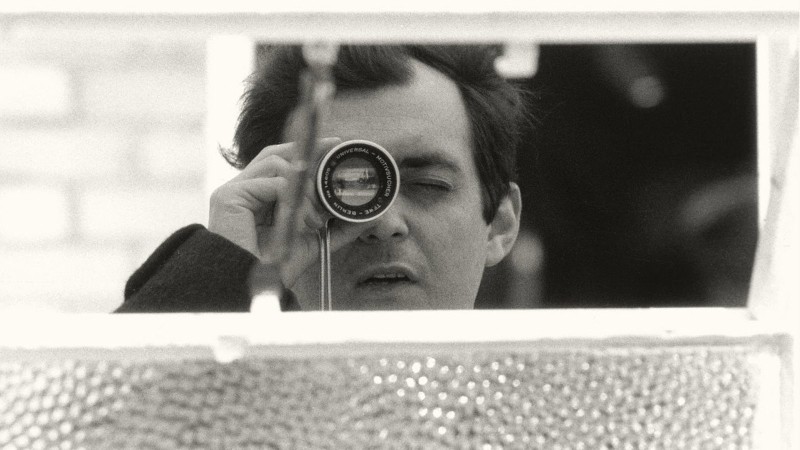
Three by John Gianvito
Share
From this evening through the end of the month, the Brooklyn microcinema Spectacle will present two features by John Gianvito, a former curator at Harvard Film Archive who teaches at Emerson College, plus a third omnibus film he spearheaded, Far from Afghanistan (2012). Completed midway through what would become the longest-running war in U.S. history, the project took as its template Far from Vietnam (1967), a project overseen by Chris Marker, who pieced together segments directed by himself, Jean-Luc Godard, Joris Ivens, William Klein, Claude Lelouch, Alain Resnais, and Agnès Varda.
“For us, Far from Vietnam stood as a rare and exemplary model of an omnibus film whose sum was greater than any one of its parts,” Gianvito told Michael Atkinson in the New York Times. “It was both an ethic and a strategy from which we could draw sustenance.”
With segments directed by Gianvito, Jon Jost, Minda Martin, Travis Wilkerson, and Soon-Mi Yoo, Far from Afghanistan is “unified by Gianvito’s editing as the earlier film is unified by Chris Marker’s, even though the unity in this case is far less obvious,” wrote Jonathan Rosenbaum in a 2012 dispatch to Film Comment from the Viennale. “In Wilkerson’s closing episode, Fragments of Dissolution, the relevance of interviews about the American victims of fires caused by illegal electrical hookups might well seem extraneous at first to the remainder of the film, but it’s central to Gianvito’s overall achievement to make and illustrate connections between diverse topics that are far from obvious; indeed, coping with disconnection—the Marker theme par excellence—is in many ways the driving force behind the film.”
Rosenbaum had been championing Gianvito’s work for years, and in a 2008 issue of Film Quarterly, he wrote about the two other films screening at Spectacle, The Mad Songs of Fernanda Hussein (2001) and Profit Motive and the Whispering Wind (2007). The first—“six years and thirteen credit cards in the making,” as Dennis Lim noted in a 2002 Village Voice profile of Gianvito—blends fiction and nonfiction to tell three stories set in New Mexico.
Fernanda Hussein (Thia Gonzales) is a Mexican American whose long-gone Egyptian husband has left her with a name that has made her a target of harassment in the wake of 9/11. Her children are missing, and as Dennis Harvey put it in Variety, “Fernanda takes to the desert hills, howling for her offspring like a Greek tragedienne.” In the second storyline, Carlos returns home from the First Gulf War and finds it impossible to adjust to civilian life, and in the third, a teen and his well-to-do parents bicker over U.S. foreign policy. Mad Songs culminates with the burning of the Zozobra, a giant effigy sent up in flames each autumn ahead of the Fiestas de Santa Fe.
For Rosenbaum, while Mad Songs “can be described in some ways as an amateur production, it arguably has the kind of amateur credentials called to mind by filmmakers as diverse as Jean Cocteau, Emile de Antonio, Robert Kramer, and Jean Rouch. And even if it begins in rage, it concludes, in the powerful and cathartic Zozobra sequence, with intimations of sorrow, mystery, simple curiosity, and awe as Gianvito steadily contemplates, through the giant burning figure and its orgiastic effect on a large crowd, all the things he has been railing against for past two and a half hours.”
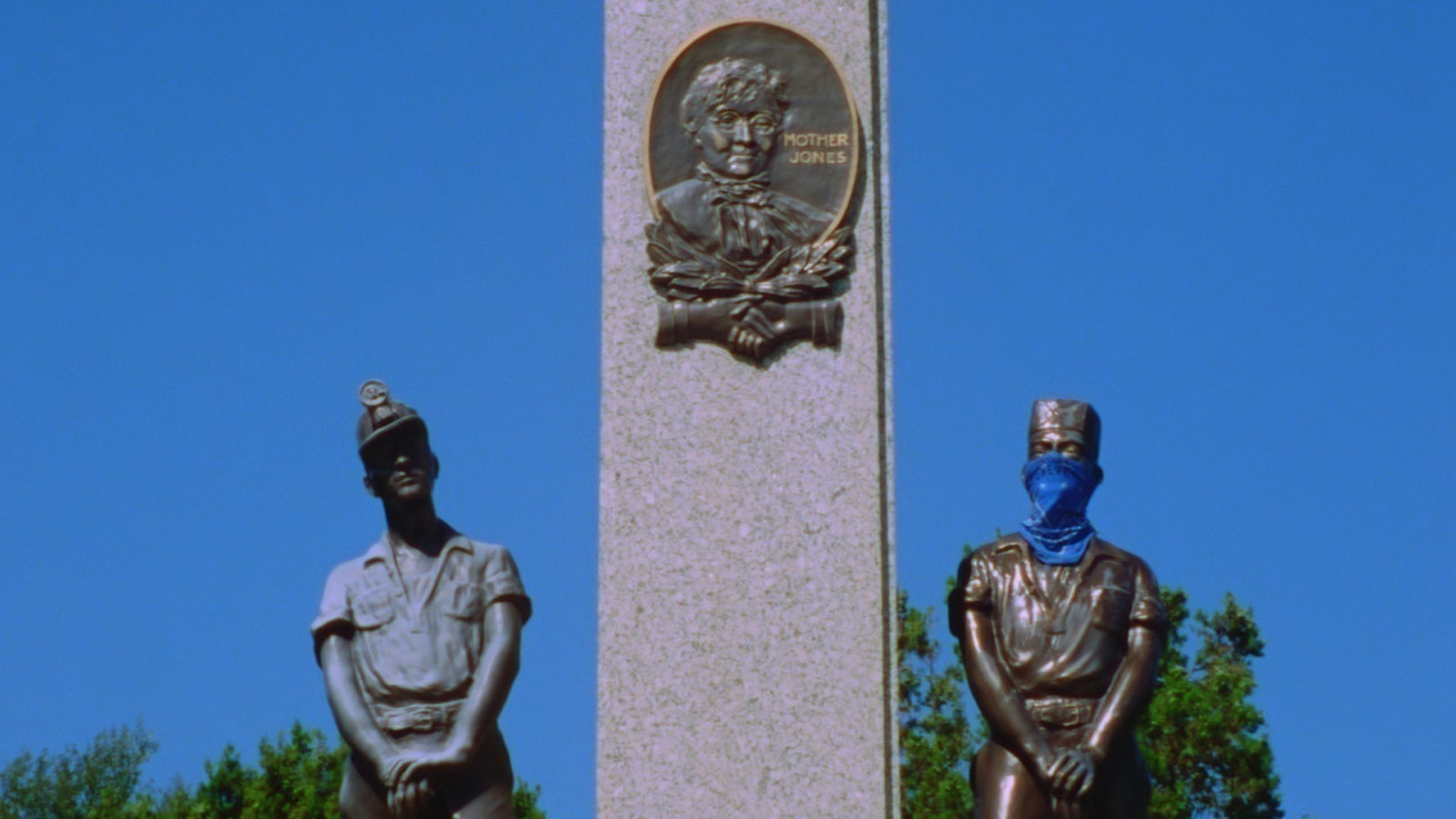
Inspired by Howard Zinn’s A People’s History of the United States, Profit Motive is a contemplative tour of gravestones and historical markers that runs just under an hour. “Gianvito has created an unconventional landscape film, one that recalls the strategies of certain avant-gardists (James Benning in particular, and perhaps Peter Hutton to a somewhat lesser degree) while at the same delivering a bracingly unique experience, one that leaves viewers awestruck by its rigorous simplicity,” wrote Michael Sicinski in the introduction to his interview with Gianvito for Cinema Scope. “Over the course of the film, it becomes clear that we and the film are tracing a chronological path through the American Left, paying near-silent homage to our comrades, those who fell in battle (slain by police or Pinkertons during strikes; felled by assassins) or those whose lives had simply run their natural course.”
“I would hope that Profit Motive doesn’t come across as solely or even predominantly a chronicle of victimhood under capitalism,” Gianvito told José Sarmiento Hinojosa and Mónica Delgado in a 2017 interview for desistfilm. “Indeed those cut down through their efforts to forge a better, fairer world are countless, and many are represented. But alongside them are scores of individuals who successfully brought about the vast majority of what rights and freedoms we as a country have secured, however precarious these rights may be. In journeying across this history and these landscapes, my wish with the film would be that the viewer find seeds of hope and inspiration along the way. If it also encourages folks, as I’ve been told it has, to get more intimately acquainted with their history, especially arenas of history that have been consciously suppressed by concentrated power, I’m pleased.”
Don’t miss out on your Daily briefing! Subscribe to the RSS feed.