Between Moments
Share
It’s heartening to know that before he passed away this week at the age of ninety-three, Tinto Brass could bask in a tribute from the Venice International Film Festival. On September 1, the festival presented a new restoration of the Venetian filmmaker’s Deadly Sweet (1967), a pop-art thriller set in swinging-sixties London and starring Jean-Louis Trintignant and Ewa Aulin.
Starting out as an archivist at the Cinémathèque française, Brass worked for a time as an assistant to Roberto Rossellini and Joris Ivens. His debut feature, Who Works Is Lost (1963), was well received in Venice, and in 1964, Umberto Eco commissioned him to make two experimental films for the Triennale di Milano. Four years later, a scheduling conflict kept him from directing A Clockwork Orange, but of course, that project eventually landed in the hands of Stanley Kubrick.
Brass’s La vacanza (1971), starring Vanessa Redgrave and Franco Nero, won an award for Best Italian Film in Venice, but internationally, Brass is best known for Salon Kitty (1976), the story of a brothel in Berlin that the Nazis used as a honey trap, and the notorious Caligula (1979), starring Malcolm McDowell, Helen Mirren, Peter O’Toole, and John Gielgud. Penthouse publisher Bob Guccione infamously spliced in hardcore footage, leading Brass and screenwriter Gore Vidal to disown the project.
Attempts to reconstruct Vidal’s and/or Brass’s original visions of Caligula came and went, and then, in 2023, Caligula: The Ultimate Cut premiered in Cannes. “Because of the brilliant work of [producer] Thomas Negovan, one of my best performances has finally come to light after forty-seven years!” exclaimed McDowell.
Most of us were obsessing over the midterms on Tuesday, so you may have missed the announcement of the nominations for the British Independent Film Awards. Simon Stone’s Elsinore leads with twelve, followed by Clio Barnard’s I See Buildings Fall Like Lightning with eight, Ashley Walters’s Animol with seven, and Mike Leigh’s Tender Loving Carewith four.
The sixth Sag Harbor Cinema Festival of Preservation opens today and will run through Monday, spotlighting silent-cinema pioneer Elvira Notari as well as work by Raoul Walsh, Michael Powell and Emeric Pressburger, Roger Corman, Med Hondo, Samuel Fuller, and Alexander Payne. Tomorrow is Home Movie Day in Chicago, and James Gray’s New York, a series programmed by the director, will be on at the Museum of the Moving Image from tomorrow through November 22.
This week’s highlights:
- Unspoken Gestures: The Films of Sho Miyake opens at New York’s Metrograph tomorrow with Two Seasons, Two Strangers, last year’s winner of the Golden Leopard in Locarno. “That there is a steady evolution in his own filmography, even after having officially entered the Japanese commercial film production system, struck me as a feat,” writes Ryusuke Hamaguchi in Metrograph’s Journal. “No decisive events occur” in All the Long Nights (2024), “but by simply sitting together, walking, and occasionally visiting one another, the two characters help each other heal . . . Coming together and drifting apart—that is what makes up life. If I were to name a film that lends a similar impression, it would be Yasujiro Ozu’s Early Summer (1951), which portrays the corrosive effects of time without depicting any major incidents. Yet, to depict the healing power of time so precisely in just two hours is actually far more difficult. This film was immensely influential to me in writing the screenplay for All of a Sudden.”
- The British Film Institute has announced its first season of 2027, David Cronenberg: Mind, Body, Reality, running from January 1 through March 16. For the Los Angeles Review of Books, Jeff Hewitt looks back on The Fly forty years on, and Bomb has recently flagged its 1989 interview with Cronenberg. “Because of our necessity to impose our own structure of perception on things, we look on ourselves as being relatively stable,” Cronenberg told fellow filmmaker Bette Gordon (Variety). “But, in fact, when I look at a person I see this maelstrom of organic, chemical, and electron chaos; volatility and instability, shimmering; and the ability to change and transform and transmute.”
- “In the time it takes not only to see but to really sense what’s happening in any one image, it’s possible for a village to be razed because somebody somewhere imagined a highway,” writes Shiv Kotecha in the new issue of Frieze. “For nearly twenty years, Brazilian artist and filmmaker Ana Vaz has produced a body of work about the savage encroachment of land by empire, and the displacement of people, animals, and plants from those lands. Fragmentary and choral, her films slowly suture 16 mm footage with dense, layered terrains of sound and language, only ever partially revealing her subjects. Though they rarely move with cascading speed, underlying Vaz’s pictures is the swirling maelstrom of violent colonial force that continues to ensnare its logic onto the lands and minds it occupies.” A câmera é o corpo (The Camera Is the Body), Vaz’s first major institutional exhibition, will be on view at Luxembourg’s Mudam museum from November 13 through May 2.
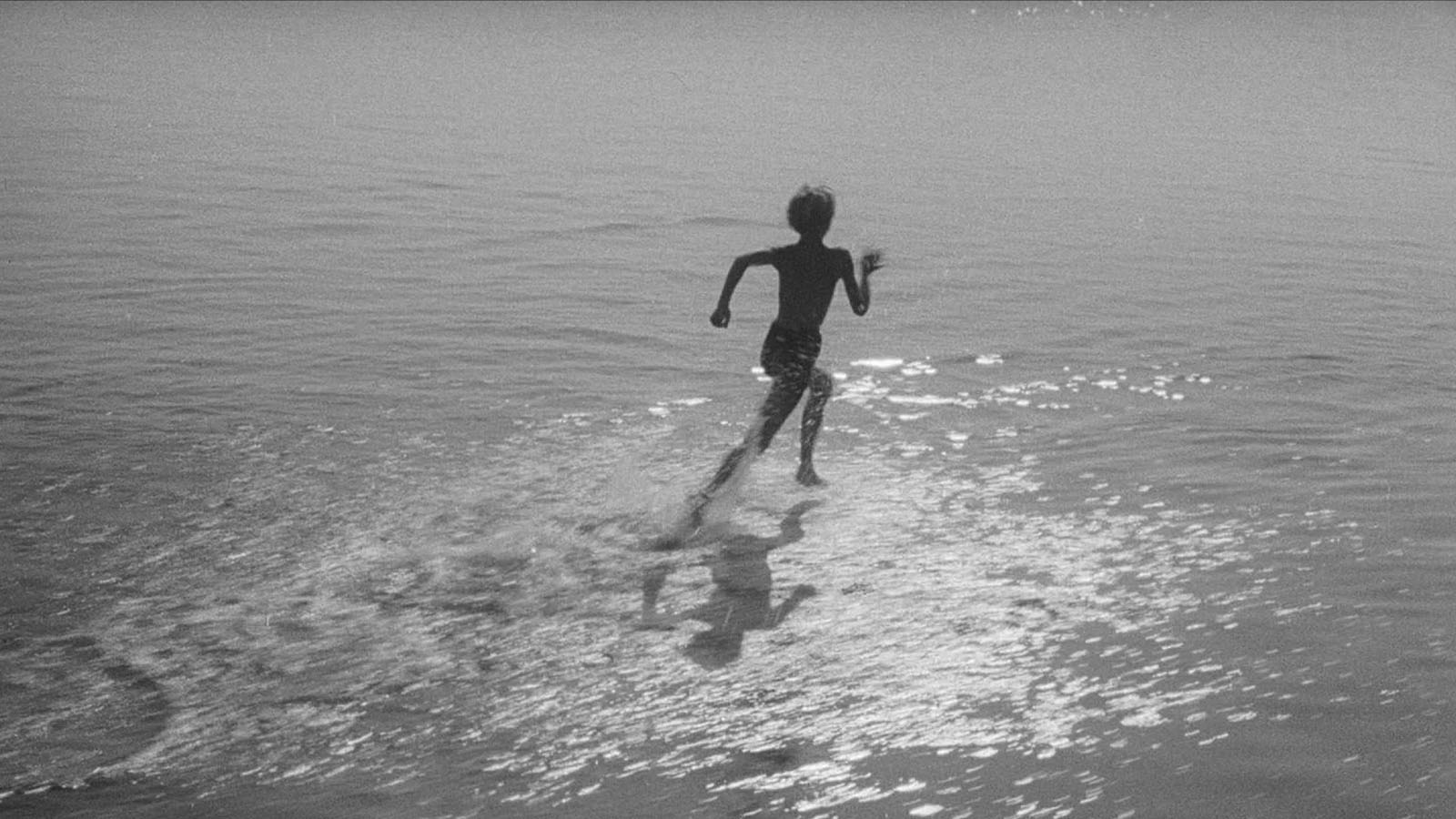
- In the New Left Review, Emilie Bickerton looks back on the debate sparked by Andrei Tarkovsky’s first feature, Ivan’s Childhood, when it premiered in Venice and won the Golden Lion in 1962. L’Unità critic Ugo Casiraghi admired the film formally, but found it lacking in “thematic innovation.” Jean-Paul Sartre issued a counterargument, and Vittorio Strada, “Italy’s leading Russianist, placed the controversy within a longer Soviet argument over cinematic ‘prose’ versus ‘poetry,’ stretching back through Eisenstein and Shklovsky to the debates of the 1920s. Speaking about the film a decade after its release, Tarkovsky was withering, and seemed to agree more with the first criticisms in l’Unità than Sartre’s defense—too existential, in his opinion . . . Nonetheless, he remained fond of the film, the great adventure shot on the Dnieper River that allowed him to revisit, as he would do time and again in subsequent features, his own memories of childhood, of his mother in particular, and to use cinema to navigate between different moments in time.”
- The new Brooklyn Rail features a scenario by Whit Stillman, who is currently at work on A Night at Claridge’s, his first feature since Love & Friendship (2016). Matthew Biro reviews I Am Tony, the New Museum retrospective of work by Arthur Jafa, who is profiled in AnOther Magazine by Connor Garel. Payton McCarty-Simas talks with J. Hoberman, who will be at Anthology Film Archives on Tuesday and Wednesday to present films discussed in his new book, Across the Movi-verse. Also in the new issue, Weiting Liu interviews moving-image artist Diego Marcon, Travis Woods revisits Lawrence Kasdan’s Body Heat and Bob Rafelson’s The Postman Always Rings Twice, and Meiyi Liu writes about CineCina, an international platform for Chinese cinema: “Before I had any vocabulary for film programming as a practice, I experienced what it could do: to relocate something I had placed elsewhere, or nowhere at all, into my field of vision.”
Don’t miss out on your Daily briefing! Subscribe to the RSS feed.