September Books
Share
In his essay on Gints Zilbalodis’s Flow (2024), the winner of the Oscar for Best Animated Feature and a film that “feels a little like consciousness unromanticized,” Nicolas Rapold notes that Zilbalodis has cited Hayao Miyazaki as an influence. On Wednesday evening, Rapold will be at New York’s IFC Center to present and discuss Miyazaki’s first feature, The Castle of Cagliostro (1979), and to sign copies of his new book, The Worlds of Hayao Miyazaki.
Talking to R. Emmet Sweeney, Rapold explains why Spirited Away (2001)—which will be back in theaters from October 18 through 22—is his favorite Miyazaki feature and why he will always leap to defend The Boy and the Heron (2023). When Saul Austerlitz asks Rapold about a favorite character, he chooses the young goldfish princess who becomes a human girl in Ponyo (2008). “Somehow a word that comes to mind is just eagerness,” says Rapold, “because part of it is that she’s moving from one world to another, with this hunger for learning about the new world, and this spontaneity.”
To coincide with the publication of his new book Nothing but Time: Conversations with Peter Mettler on Life and Cinema, José Teodoro has curated a series running in Toronto from Saturday through October 26. “Mettler’s gifts as an open and unobtrusive interviewer and his capacity to discover shared sensibilities between people of vastly diverse cultures and creeds feels singular,” writes Teodoro in his program notes. “When I asked Mettler’s friend, champion, and occasional collaborator Atom Egoyan what he felt Mettler’s core virtue was as a filmmaker, he replied, without hesitation, ‘The ability to be fully present.’”
A few more events need mentioning before we burrow further into this month’s roundup on more new and noteworthy titles. J. Hoberman will be at Book Soup in West Hollywood this evening, at BAMPFA in Berkeley on Wednesday, and at Mechanics’ Institute and Gray Area in San Francisco on Thursday and Friday to discuss his book Everything Is Now: The 1960s New York Avant-Garde—Primal Happenings, Underground Movies, Radical Pop. And from October 17 through 26, New York’s Museum of the Moving Image will present Dark Magic: Hexes and Haunts for Halloween, a series coprogrammed by Michael Koresky and Jeff Reichert, who have edited a new anthology, Dark Magic: Scary Movies According to Reverse Shot.
Two Oeuvres
In the London Review of Books, Ruby Hamilton points out that Mike Miley’s David Lynch’s American Dreamscape: Music, Literature, Cinema “doesn’t chart ‘direct and unambiguous’ musical or literary influences, which Miley sees as a ‘losing game’: ‘Artist A influenced Artist B: so what?’ . . . Instead, under the auspices of Julia Kristeva, Lynch is ‘best understood intertextually,’ by looking at what was ‘in the air’ around him. The resulting essays, some more enjoyable and convincing than others, situate the films alongside the flotsam and jetsam of postwar America: Twin Peaks and the teenage tragedy song; Blue Velvet and children’s literature; Wild at Heart and rock and roll at the crossroads. It’s an anti-auteurist approach, resisting ‘definitive, reductive or “correct”’ readings, and therefore Lynch-approved, but when you return to the films, this sanctioned obliquity—so often the result of Lynch’s own refusal to talk about his work—begins to grate. The films demand some confrontation.” So Hamilton goes at it.
Simran Hans, in the meantime, is guest-hosting the current season of the MUBI Podcast, “Ladies of Lynch.” In the third episode, she talks with Jennifer Lynch—filmmaker, author, and David Lynch’s eldest daughter—about writing her 1990 novel, The Secret Diary of Laura Palmer. Three times.
In Strangelove Country: Science Fiction, Filmosophy, and the Kubrickian Consciousness, D. Harlan Wilson “makes an elaborate and detailed case for his overriding thesis, arguing with considerable justification (in some spots more strained than others) that all of Kubrick’s films ‘exhibit SF elements, tropes, and critical engagements,’” writes Jeremy Carr for Film International. Wilson’s “views are often unique, frequently provocative, and largely discerning, and his unabashed, anti-academic passion is refreshing.”
Lives Behind the Scenes
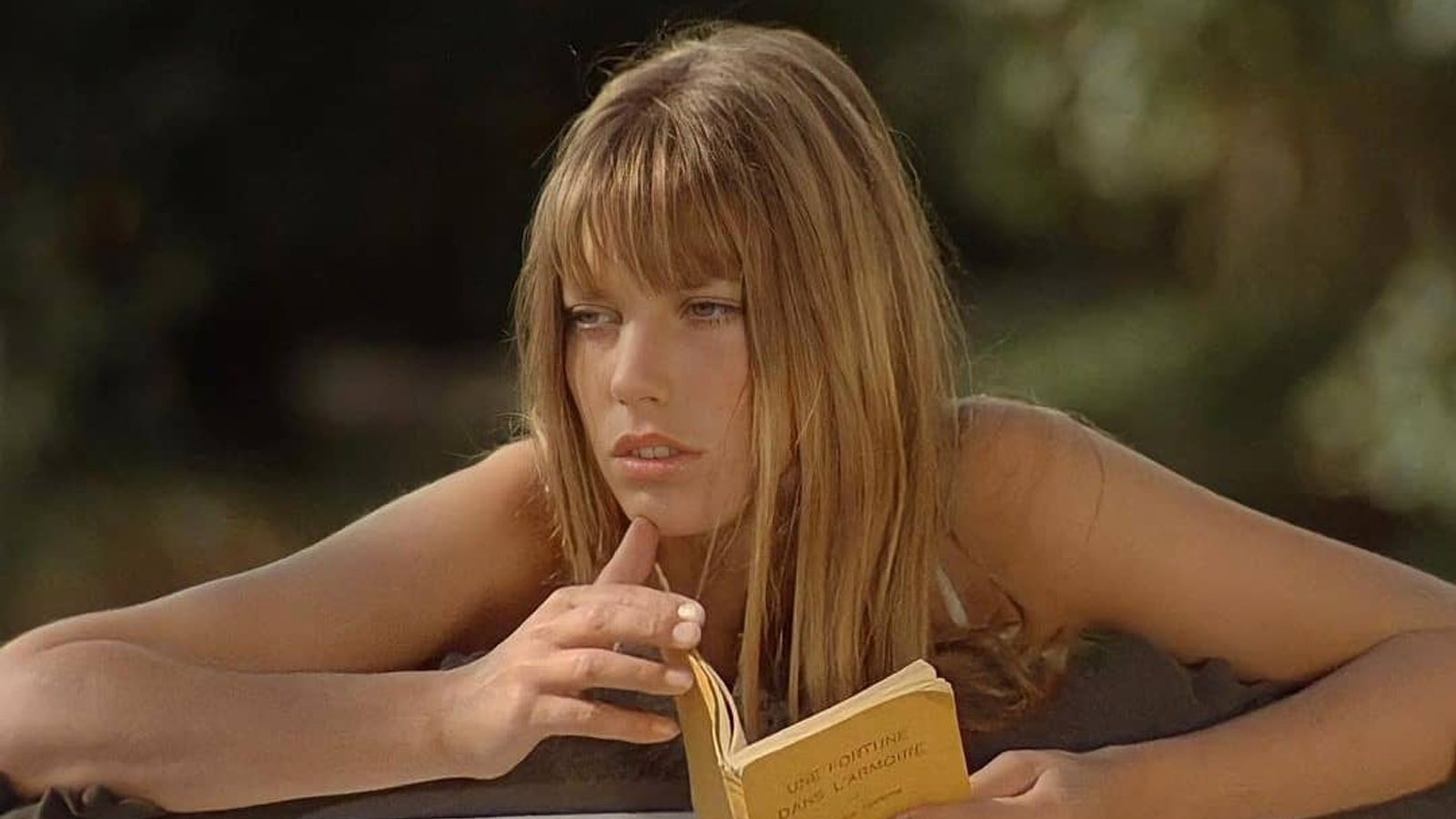
In It Girl: The Life and Legacy of Jane Birkin, Marisa Meltzer calls the late singer and actor “nonchalance personified.” “If this was not exactly an illusion, neither was it the whole story,” writes Anahid Nersessian, who then proceeds to outline that story in the New Yorker. Nersessian seems far more interested in Birkin than in Meltzer’s biography, though she does briefly challenge Meltzer’s views on Birkin’s later years.
Robert Dance’s Ferocious Ambition: Joan Crawford’s March to Stardom is “a beautifully packaged book that reads like it was written by someone with a genuine admiration for their subject, but it’s not without its faults,” writes Olympia Kiriakou in Cineaste. Kiriakou focuses on two of those faults, one of Dance’s sources and his “psychoanalytic interpretations of Crawford’s behavior.” Dance’s “framing is a misstep, but not all is lost. Ferocious Ambition offers rich details about Crawford’s film, radio, and television performances beyond the typical narrative dissection.”
A couple of weeks ago, aka Charlie Sheen, a two-part documentary directed by Andrew Renzi, went up on Netflix the day after the publication of The Book of Sheen. “Written in a very bad-boy, sex, drugs, and rock-and-roll tone,” writes Zoe Guy for Vulture, “the book fills its pages with stories of paid-sex encounters, benders lasting so long that the thought how his house smells makes you mentally gag, and assertions of innocence.” The Hollywood Reporter has an excerpt. Sheen, now sixty, has been sober for seven years, and he talks about looking back on his life with Dina Gachman in the New York Times and with his brother Emilio Estevez in Interview.
A few quick notes on lesser known lives: Thomas J. Slater, the author of June Mathis: The Rise and Fall of a Silent Film Visionary, and Mary Mallory, whose latest book is First Women of Hollywood: Female Pioneers in the Early Motion Picture Business, are guests on Nitrateville Radio. Katherine Fusco discusses her book Hollywood’s Others: Love and Limitation in the Star System on the New Books Network. And in Film International, Maysaa H. Jaber recommends Laura Wagner’s Hollywood Boozers, Brawlers, and Hard-Luck Cases: Fifteen Ill-Fated Actors of the Golden Age.
Filmmakers’ Books
Werner Herzog’s The Future of Truth is “a hyperlinked hodgepodge of fixations, vivid memoir, and Wikipedia-esque snapshots,” writes Siddhartha Mahanta for the New Republic. Herzog “delves into the true, the mostly true, the apocryphal, and the conspiratorial, expanding on themes and experiences that also appear in Every Man for Himself and God Against All, his 2023 memoir. With an all-consuming grandiosity befitting an Aguirre or Fitzcarraldo, he reckons with a world in which accepted truths are no longer sacrosanct, one scrambled by deepfakes, online avatarism, fake news, and artificial intelligence.”
In Snowy Day and Other Stories, Lee Chang-dong seems “most interested in evoking the harsh and paranoid political setting from which they emerged—namely, the dictatorship of Chun Doo-hwan, whose government’s harsh anti-communist fervor pervaded and dampened South Korean civil society,” writes Lily Meyer in the Atlantic. Lee “judges his stories as worth revisiting because they make him feel the time when they were written. Although I hadn’t yet been born in the ’80s and have never visited any of their settings, they did the same for me.”
For Nolan Kelly in the Brooklyn Rail, Immemory, first published as a CD-ROM in 1998, is Chris Marker’s “most alluring and personal masterpiece.” The 480-page Immemory: Gutenberg Version is “a valiant, if inevitably compromised, attempt to preserve Marker’s vision.”
Woody Allen will turn ninety in November, and he’s just published his first novel. What’s With Baum? is “not terrible,” writes Alexandra Jacobs in the New York Times. “It’s fine.” The story centers on Asher Baum, a fifty-one-year-old playwright who has given a female journalist what the Guardian’s Peter Bradshaw calls “a deeply misjudged and inappropriate kiss.” Cancellation looms. Bradshaw finds Allen’s novel to be “more fluent, more plausible on its own terms, than any of his recent movies—though it finally collapses into perfunctory and unresolved farcical silliness in a very familiar way.”
Forthcoming
Having launched his career as a journalist for Rolling Stone when he was just fifteen, Cameron Crowe knows his way around an interview. Talking to David Marchese of the New York Times, Crowe is generous and forthcoming and he proves himself to be a good sport when Marchese rolls out three theories regarding the lesser commercial and critical success of Crowe’s more recent films—as opposed to such early hits as Say Anything (1989), Jerry Maguire (1996), and Almost Famous (2000). The Uncool, Crowe’s memoir, will hit shelves on October 28.
We can also look forward to The Hunger, a collection of writing by critic Melissa Anderson (4Columns, Bookforum, the Village Voice) that will be out on November 20. And January will see the release of Terence Davies Screenplays in two volumes. The first gathers the autobiographical work and the biopics based on the lives of poets Emily Dickinson and Siegfried Sassoon and the second collects the adaptations, from The Neon Bible (1995) through Sunset Song (2015).
Updates
In Clint: The Man and His Movies, a critical biography we took a first look at back in July, Shawn Levy “comes neither to praise Eastwood nor to bury him,” writes Adam Nayman in the Nation, and the same could be said of Nayman’s review. Michael Southard’s piece on The Magic Hours: The Films and Hidden Life of Terrence Malick at In Review Online, though, is a pricklier project.
Author John Bleasdale “makes a noble effort to rescue Malick from irrelevance, arguing for the worthiness of not just the early masterpieces, but also the derided later films,” writes Southard after walking us through the filmmaker’s life so far. “Yet his biography also works at cross-purposes to an artist of uncommon restlessness, pinning him down with a narrative tidiness, a focus, that the artist himself has so long resisted in both his life and work. I myself am complicit in this. Despite my allergy to biographical readings, I’ve nevertheless used the biography in order to describe what I believe is a structuring principle of Malick’s life and work. This is a standard critical strategy. But it’s also, by definition, a reductive one.”
The scope of These Fists Break Bricks: How Kung Fu Movies Swept America and Changed the World is “vast, extending beyond on-screen content to include the productions of various movies as well as merchandise, novelizations, martial arts schools, and the specific theaters that screened the films,” writes Nick Miaoulis for Bright Lights Film Journal. Authors Grady Hendrix and Chris Poggiali “provide a thorough history of kung fu cinema that analyzes each film in multiple contexts at once,” and the results are “entertaining and often very funny.”
Endnotes
Sabzian’s quarterly roundups on new books are a highlight of every season, and in the latest, Tillo Huygelen has notes on titles appearing in English, French, and Dutch. The subjects this time around range from the Japanese cinema of the 1960s and ’70s to the work of filmmakers Pier Paolo Pasolini, Marguerite Duras, Jean Vigo, Radu Jude, Bertrand Bonello, Yvonne Rainer, and others.
A few weeks before One Battle After Another opened, Gideon Leek, writing for the Film Stage and anticipating another Paul Thomas Anderson film inspired by a Thomas Pynchon novel—like Inherent Vice (2014) before it—put together a modest survey of films based on works by American postmodernist writers. Leek writes about eight projects listed in chronological order, beginning with the outlier—Susan Sontag wrote Duet for Cannibals (1969) as an original screenplay—and wrapping with Noah Baumbach’s Don DeLillo adaptation, White Noise (2022).
If Leek has any inclination to revisit his survey in another year or two, he might be able to add another DeLillo adaptation. Deadline reports that Michael Almereyda has written a screenplay based on Zero K (2016) and Caleb Landry Jones, Andrea Riseborough, and Peter Sarsgaard have signed up to star in the film that begins shooting early next year in São Paulo.
Don’t miss out on your Daily briefing! Subscribe to the RSS feed.