Chabrol & Huppert: Doing Wrong
Share
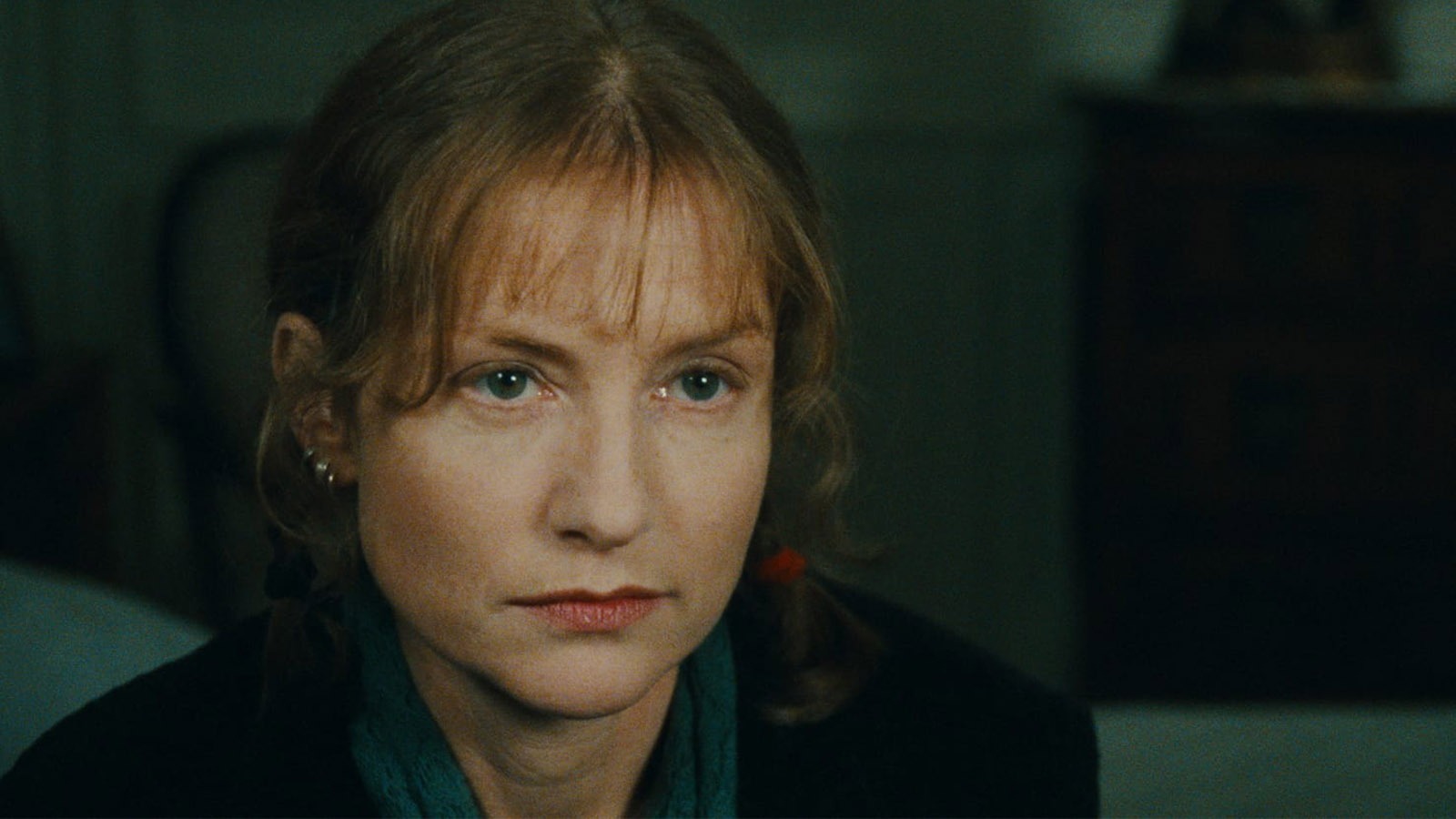
Throughout the twenty-two minutes of Isabelle Huppert and Claude Chabrol: Crossed Portraits, a program Jean-Pierre Devillers directed for French television in 1998 (and now available on the Criterion Channel), the actor and director are playfully testy with each other as they reflect on the characters they have cocreated, beginning with Violette Nozière (1978). Plain and demure at home, eighteen-year-old Violette vamps it up when she heads out to turn tricks. She tries poisoning her parents (Jean Carmet and Stéphane Audran) more than once and eventually succeeds in killing her father.
After his death, the real-life Violette Nozière partied for a week in Montmartre before she was arrested, and the trial dominated headlines in French papers for weeks in the early 1930s. Huppert was twenty-four when she played Violette, but she pulled off a feat twice as astonishing in the flashbacks.
When asked in the 1998 program if there was a particular moment that stood out in what was by then a twenty-year collaboration, Chabrol recalls one that tops a list of many: discovering that Huppert could play a twelve-year-old girl. “And mine is when he asked me to do it,” says Huppert with a proud smile. Chabrol: “At the beginning we thought, ‘This can’t be her, that’s a little girl.’ And no, it was her. This feeling of joy happened several times.”
Writing about Chabrol’s “darkest film” in a dispatch from Cannes, Roger Ebert spotted Huppert as an early frontrunner for the Best Actress award, and his prediction turned out to be at least half right. Huppert tied with Jill Clayburgh, who was also recognized that year for her performance in Paul Mazursky’s An Unmarried Woman.
Tomorrow at L’Alliance New York, Violette Nozière will open Chabrol & Huppert: Doing Wrong, a six-film series running on Tuesdays through July 28. Next week brings Story of Women (1988), another disturbing tale drawn from actual events. In 1943, Marie-Louise Giraud was guillotined for having performed more than two dozen abortions while her husband was being held in a German POW camp. “Huppert is the perfect Chabrol actress,” wrote Darragh O’Donoghue in Senses of Cinema in 2017, “capable at once of immersion and irony, emotional warmth and watchful intelligence, high comedy and harrowing tragedy, fearless physicality and spiritual torment.”
A couple of years ago, B. Panther surveyed Chabrol and Huppert’s collaborations for Paste, and when it came to Madame Bovary (1991), Panther naturally noted that there are “many, many film versions of the canonical Flaubert novel. What makes this one exciting to watch is how Chabrol’s observational style mirrors Emma’s vantage as an outsider . . . Few people have run down a hill with more drama and inflamed passion than Huppert in Madame Bovary. When she drops her shawl, she leaves behind the last of any actorly pretense. As she comes careening to her epic conclusion, her sudden poisoning feels impulsive, almost improvised in a way that breathes new vitality into a classic text.”
“To watch a Chabrol film is to feel your mind bend slowly, slowly, then all at once,” writes Sarah Weinman. “Nowhere is this quality more apparent than in La cérémonie.” Huppert costars with Sandrine Bonnaire in the 1995 adaptation of Judgement in Stone, Ruth Rendell’s 1977 novel about two working-class friends whose simmering resentment of an upper bourgeois family eventually boils over. Rendell, “who herself called La cérémonie the best adaptation of her work,” as Weinman notes, “proved the best literary match with Chabrol’s style and thought.”
The Swindle (1997) stars Huppert and Michel Serrault as Betty and Victor, a team of low-level scammers who steal from businessmen—but without cleaning them out entirely. All’s well until Betty sets her sights on a fatter loot. The nature of the relationship between Betty and Victor remains intentionally unclear throughout Chabrol’s fiftieth feature.
“Husband and wife?” wondered Ian Johnston at Not Coming to a Theater Near You in 2007. “Lovers, former or otherwise? Partners in crime, and nothing more? Or even father and daughter?” Johnston noted that “Huppert’s own theory is that The Swindle reflects the relationship between a director and his female star, in the way desire and eroticism form part of that relationship even without it becoming a sexual one. There are also within the director-actress relationship issues of control and the will to escape from that control . . . But in a film that plays in some ways as Chabrol’s To Catch a Thief (though one should always be careful not to overplay the Hitchcock connection in a director for whom Fritz Lang is equally if not more important), it’s Chabrol the wry comic who predominates in The Swindle.”
In Merci pour le chocolat (2000), Huppert plays Mika Muller, a Swiss chocolate factory heiress married to a renowned concert pianist (Jacques Dutronc), whom Jeanne (Anna Mouglalis) believes may be her biological father. “Self-contained, enigmatic, illuminated from within, Huppert banks a performance that pays dividends throughout the film,” wrote J. Hoberman in the Village Voice in 2002. “Chabrol has always enjoyed puncturing the balloon of bourgeois complacency, and as his creatures jump to ever quicker conclusions, the movie’s edge of campy self-reflection grows increasingly pronounced. The more one suspects, the funnier Merci becomes. Mika brings her injured stepson a pair of videos—Fritz Lang’s Secret Beyond the Door and Jean Renoir’s La nuit du carrefour—which would alert any habitué of the Paris Cinémathèque to where Chabrol is going.”
Don’t miss out on your Daily briefing! Subscribe to the RSS feed.