Mad Summers
Share
Daniel Blake Schwartz’s debut feature, Cotton Fever, which Tribeca describes as “a portrait of several characters living on the edge in their desperate, daily quest to survive the throes of addiction,” has won the festival’s U.S. Narrative Competition. Topping the International Narrative Competition is Rodrigue Jean’s murder mystery Labrador—Autopsy of Silence, and Dione Roach and Steve Happi’s Jail Time Records, which the jury calls “the jaw-dropping story of a music recording studio built within the confines of an overcrowded prison in Cameroon,” has won the Documentary Competition.
Tribeca wraps on Sunday, and a busy summer follows. If you’re in Rome any time between now and July 12, you may want to swing by one of three outdoor venues where the ongoing series of free screenings Il Cinema in Piazza includes retrospectives of work by Elio Petri, Alice Rohrwacher, and Takashi Miike. In just over a week, the fortieth edition of Il Cinema Ritrovato (June 20 through 28) will present more than five hundred films in Bologna. The program is set, the catalogue is out, and Barbara Stanwyck is on the poster.
Karlovy Vary (July 3 through 11) has lined up its Special Screenings: Classics and Out of the Past: KVIFF 60/80 programs, featuring documentaries on cinematographer Igor Luther (The Tin Drum) and producer Stuart Cornfield (The Elephant Man) and revival screenings of Kaneto Shindo’s Children of Hiroshima (1954), Glauber Rocha’s The Turning Wind (1962), and Mrinal Sen’s The Outsiders (1977). KVIFF’s President’s Awards will be presented to Maggie Gyllenhaal, who is preparing to adapt Rachel Kushner’s 2024 novel Creation Lake, and Jesse Eisenberg, whose third feature, The Debut, starring Julianne Moore and Paul Giamatti, will be out in the fall.
Locarno (August 5 through 15) has launched a six-episode podcast, Red & Black: Hollywood’s Blacklist, in the run-up to the retrospective curated by Ehsan Khoshbakht. In the U.S., Summer with Monica Vitti is on in Berkeley through August 13, and De Palma: Summer of Suspense opens today in New York to run through August 29.
In Los Angeles, Acropolis Cinema will present a sneak preview of Travis Wilkerson’s An Injury to All, a new work in progress, as a live documentary on Thursday. This is both a prequel and a sequel to An Injury to One (2001), and on June 20, Acropolis and Wilkerson will present a 4K reconstruction of what Ed Halter, writing in the Village Voice, has called “a deft, ambitious exercise in old-school socialist agitprop.”
For those sticking close to home screens during the World Cup, Le Cinéma Club has lined up a free series of films to take in between games. It launches today with Francis Alÿs’s eight-minute Paradox of Praxis 5: Sometimes We Dream as We Live & Sometimes We Live as We Dream (2013) and carries on next week with Luiz Carlos Barreto’s 1974 feature This Is Pelé, followed by Kleber Mendonça Filho’s 2014 short The World Cup in Recife.
This week’s highlights:
- For the New York Times, Steven Spielberg explains how he’s juiced up a sequence from Duel (1971) to create a scene that gets mentioned in nearly every review of Disclosure Day. That’s neat, but what’s downright amazing is the oral history of Spielberg’s career that Bilge Ebiri has put together for Vulture. Irresistibly engaging from anecdote to anecdote, this long read also offers insightful observations from a wide range of illustrious collaborators, including George Lucas, Tom Hanks, Harrison Ford, and on and on. “I get angry when I run into people who are condescending about him,” says playwright and screenwriter Tony Kushner (Munich, Lincoln, West Side Story). “‘He’s great, but he’s a sentimentalist.’ I’ve said many times, the artist that I think he most resembles is Charles Dickens. It’s very easy to condescend to Dickens, but Dickens is a second only to Shakespeare.”
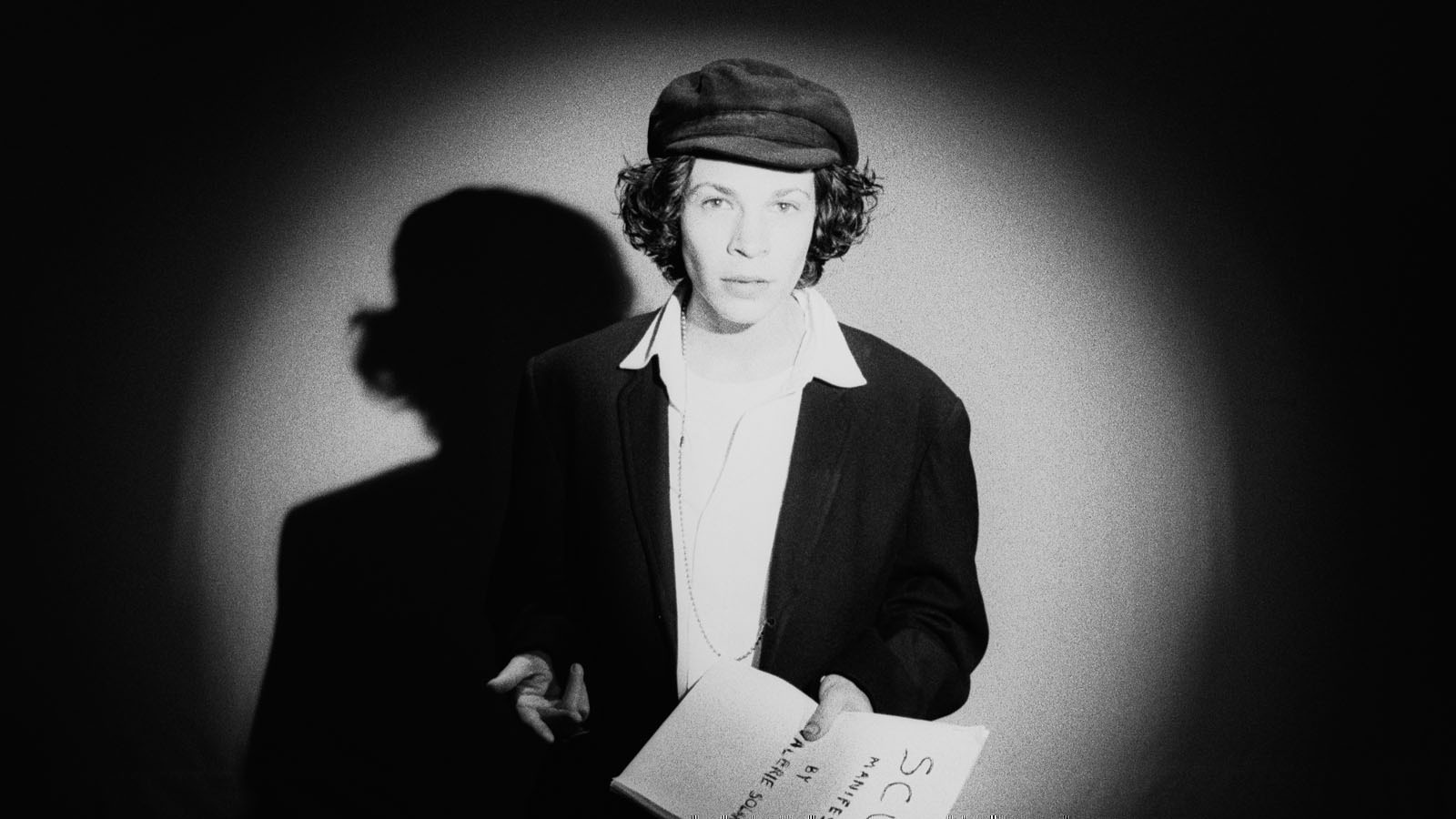
- On Wednesday, the Academy announced that this year’s Governors Awards will go to Glenn Close, Ridley Scott, animator Floyd Norman, and producers Christine Vachon and Pamela Koffler, whose Killer Films has held out a vital hand to the productions of dozens of landmarks of American independent cinema. I Shot Andy Warhol (1996), the debut feature from Mary Harron (American Psycho), is one, and after knocking around for too many years between bankrupt distributors, it’s back in a new restoration opening today in New York and Los Angeles. The stellar cast features Lili Taylor as Valerie Solanas—the author of the radical feminist SCUM Manifesto who did indeed shoot Warhol in the summer of 1968—Jared Harris as Warhol, Stephen Dorff as Candy Darling, and Michael Imperioli as Ondine. Harron has been talking with Monica Castillo (A.V. Club), Jim Hemphill (IndieWire), and Emma Madden (Guardian), and she spoke about Solanas last year with Jadie Stillwell (Screen Slate) and told Anisse Gross in a 2014 issue of the Believer: “What will remain interesting about her is that her work is both blindingly insightful and mad at the same time, which makes it radioactive. It will never lose its power, because the craziness is what allowed her to go there and get those insights.”
- Another film turning thirty this year, Mike Leigh’s Secrets & Lies, premiered in Cannes and won the Palme d’Or and a Best Actress award for Brenda Blethyn. Writing for Notebook,Matthew Eng focuses on Marianne Jean-Baptiste’s portrayal of Hortense, an optometrist who decides to track down her birth mother, Cynthia (Blethyn). “Hortense fosters an unmistakable connection to the viewer yet eludes psychological transparency and refrains from complete knowability,” writes Eng. “It is Jean-Baptiste who, through subtle performance style and primary authorship of the character, carefully sets the terms by which Hortense will and will not be legible to those who surround her and those in the audience who are nonetheless magnetized to the actress’s every delicate move.”
- “I recently wrote to a colleague in Paris that I thought Radu Jude—the prolific author of farcical tragicomedies about our contemporary lives under surveillance, diminished by rapacious capital, plagued by nationalist stupidity, and subject to conspiratorial thinking and multiple pandemics, virtual as well as actual—might be the most important filmmaker in Europe today.” J. Hoberman introduces his exchange with Jude, which is now up at Film Comment. The conversation steers into the tricky issue of AI, the slippery nature of vulgarity, and what goes into the making of a good “bad” movie. Hoberman’s next book, Across the Movie-verse: Writing on Film, 2011–2021, will be out in August, and Jude is very likely shooting Love Diptych, a film “in dialogue” with Robert Rossellini’s L’amore (1948), right about now in a village outside of Bucharest.
- Film Comment Live: Hold Everything Dear—John Berger and Cinema, a series celebrating the critic’s centennial and presented in five New York venues, will open on July 29 with La rabbia di Pasolini, Giuseppe Bertolucci’s 2008 reconstruction of an essay film Pier Paolo Pasolini shot in the early 1960s and then disavowed when his producer mangled it. For the European Review of Books, Fernanda Eberstadt writes about Petrolio, the novel that Pasolini was working on when he was murdered in 1975, and a recent theatrical production of the story staged in Paris by Sylvain Creuzevault. Eberstadt notes that Pasolini considered Petrolio to be “the ‘summa of all my experiences, all my memories’—a novel that is part Salò, part newspaper-essay run mad.” Writing for the the Ideas Letter, Xiaowei Wang realizes that, having watched Salò (1976), “I have participated in a ritual that uncovers not only the driving engine of fascism but the affective substrate of totalitarian culture. This is what Pasolini termed ‘false permissiveness.’ In the age of generative AI, false permissiveness has new and unsettling relevance.”
Don’t miss out on your Daily briefing! Subscribe to the RSS feed.