Suddenly, Virginia Woolf
Share
Last month, the Guardian posted a ranked list of the hundred best English-language novels of all time, the result of a poll of more than 170 novelists, critics, and academics, including Stephen King, Maggie O’Farrell, Siri Hustvedt, Salman Rushdie, and Ian McEwan. At the top we find George Eliot’s Middlemarch, which Virginia Woolf famously called “one of the few English novels written for grown-up people.” Woolf fares pretty well herself, landing five spots on the list, more than any other writer—including Jane Austen and Charles Dickens, who each have a mere four books in the top one hundred.
Woolf’s highest scorer is To the Lighthouse (#4), followed by Mrs. Dalloway at #14. That 1925 stream-of-consciousness novel following Clarissa Dalloway as she toodles around London preparing to host a party in the evening has been adapted for the stage by Jen Heyes and Kit Green as “a playful reexamination of the novel, wrapped up as a multimedia-driven solo show,” as Holly O’Mahony describes it in the Guardian. The production can be seen in London from Tuesday through June 10 and in Manchester in September.
Vanessa Redgrave starred in a 1997 film adaptation directed by Marleen Gorris, and in 2003, Nicole Kidman won an Oscar for her performance as Woolf in Stephen Daldry’s The Hours (2002), an adaptation of Michael Cunningham’s 1998 novel written by David Hare. Both the book and the movie depict Woolf struggling with depression while writing Mrs. Dalloway with cutaways to 1949 Los Angeles and 1999 New York, where two women—played by Julianne Moore and Meryl Streep in the film—prepare for their respective social gatherings.
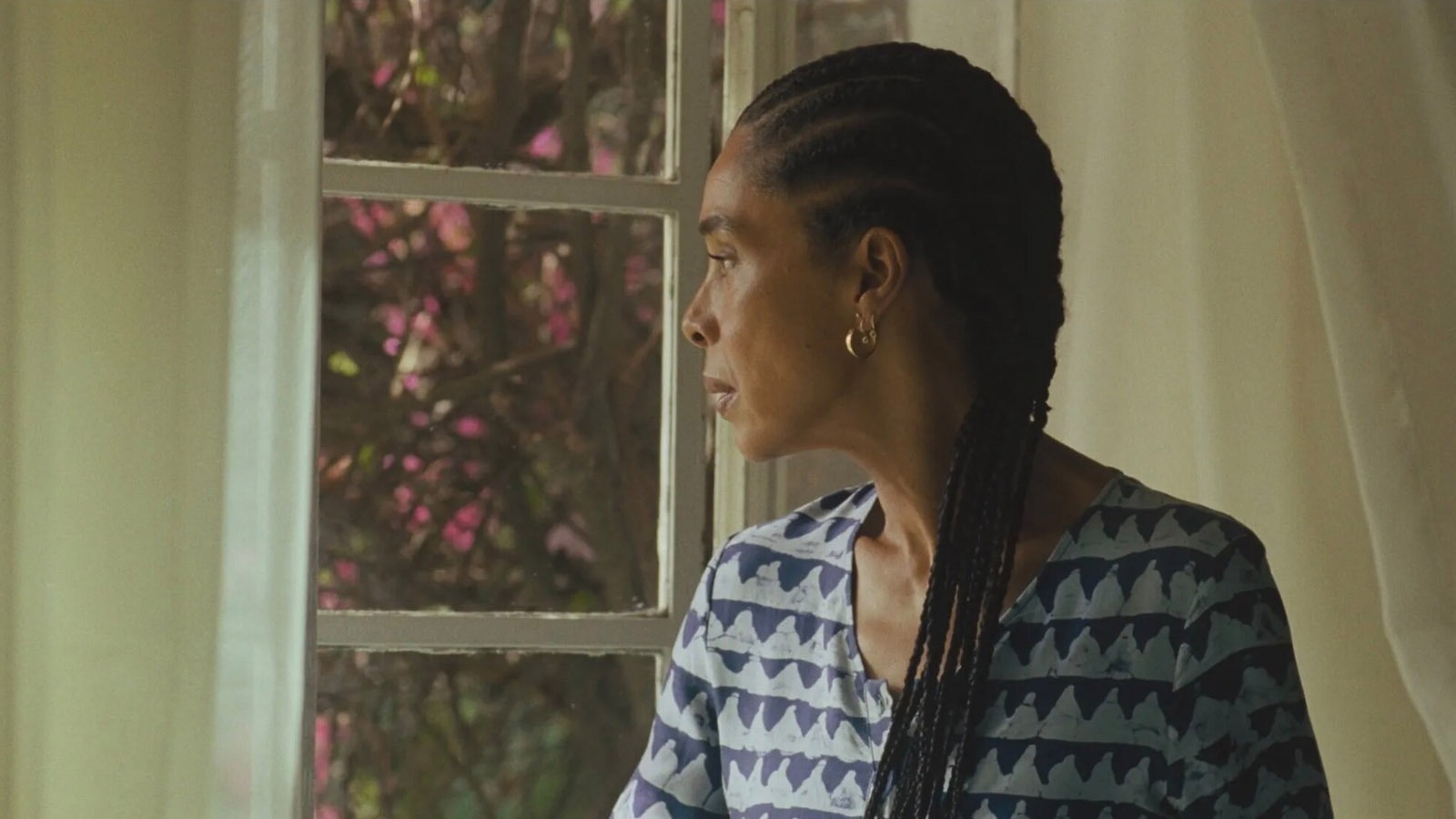
By some odd coincidence, two new reimaginings of Mrs. Dalloway have appeared this year within weeks of each other. Arie and Chuko Esiri’s Clarissa became one of the most critically acclaimed films at Cannes when it premiered last month in the Directors’ Fortnight, and The Last Day, the debut feature from artist Rachel Rose, has just seen its world premiere at the Tribeca Festival.
“By transposing the story to Nigeria, the Esiris have foregrounded the colonialist history that surfaces in the book with its repeated mentions of India and, by extension, the British Empire,” wrote the New York Times’ Manohla Dargis when she interviewed the twin brothers in Cannes. “It’s a brilliant interpretive move, one that’s all the more powerful because of how the Esiris use Woolf’s narrative fragmentation to suggest this crushingly divided world. The young Clarissa grows up into a comfortably cosseted woman who lives in a large, waterfront house filled with servants. Unlike her father, Clarissa tends to smile at the people who do her bidding. Yet while she wears her privilege lightly, the weight of history presses down nevertheless. There’s pathos to how unknowingly Clarissa seems to drift along, but not an iota of sentimentality.”
Film Comment’s Devika Girish also spoke with the Esiris as well as with their editor, Blair McClendon. “The posh elite of Lagos are (perhaps too) much like their colonial counterparts, while the city’s working class grapples with the lingering effects of the coups, political crises, and Nigeria’s ongoing battle against Boko Haram,” wrote Girish in her introduction. “But it’s in the details—for which the Esiris have a keen, patient eye—that the nuances of this postcolonial adaptation emerge: in Clarissa and her friends’ holiday musings on the legacy of colonialism; in the variations of accent, language, and pidgin spoken by the characters; in the sounds of construction and calls of the muezzin that layer the film’s ambiance; and in the yearning glances and lived-in gestures of a tremendous ensemble of actors.”
Clarissa “places a superb Sophie Okonedo, radiant with melancholy, at the heart of its remarkably well-cast ensemble,” writes Jessica Kiang for Variety. “Expanding in ambition and feeling from their promising debut,” Eyimofe (This Is My Desire) (2020), “the Esiris cast a perceptive eye over the elite social constellation that has fallen into orbit around this dutiful but unfulfilled society wife, and have nothing but compassion for her as she spins slowly around and around at its center: loved by some, resented by others, admired by all—and totally alone.”
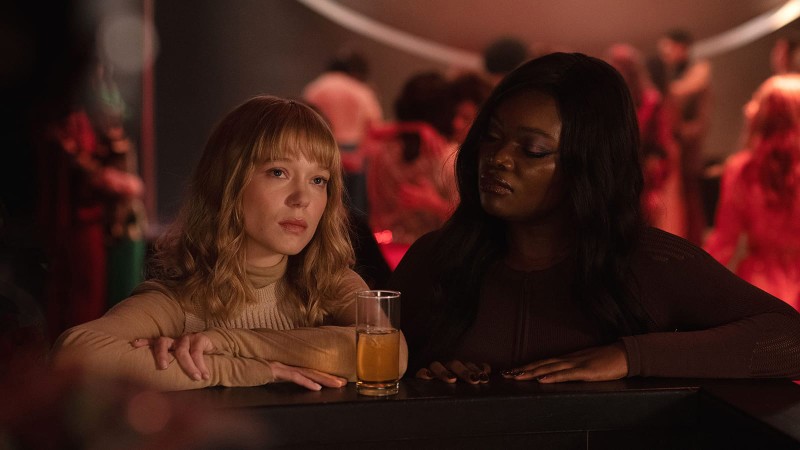
The Last Day is set in New York on the Fourth of July, and Variety’s Guy Lodge finds that “a chill runs through Rachel Rose’s elegantly restrained, internalized character study. It crisps the edges of the film’s immaculately lit frames and causes its two principal characters, tautly played by Alicia Vikander and Victoria Pedretti, to stiffen slightly, unable to give themselves over to the day’s balmy mood. Both are mothers, and holiday or not, there’s much to be done: caterers to organize, groceries to buy, pediatrician appointments to keep, meds to take. But Rose’s film isn’t a standard portrait of domestic discontent, grasping instead at something harder and less tangible to articulate: the sense that you’ve slid out of step with your own life.”
Wagner Moura appears as a novelist and the former boyfriend of Vikander’s Julia, and in the Hollywood Reporter, Angie Han finds that Rose, “known for her video installations, relies more on striking imagery and sound than propulsive storytelling to cast her spell, yielding an experience whose impact is more easily felt than explained.” The Last Day is imbued with “the curiosity to observe its characters’ disillusionment and the empathy to share in their complicated emotions.”
A third new film needs mentioning here. Last week, SXSW London launched Virginia Woolf’s Night & Day, an adaptation of Woolf’s second and longest novel directed by Tina Gharavi (I Am Nasrine). Set in 1910 and published in 1919, Night and Day is in conversation “with the male writers of the Edwardian age, like Henry James, John Galsworthy, and her friend E. M. Forster,” noted Lauren Groff in a 2019 piece for the Paris Review. “This is a book that gazes backward in time with skepticism and a virago’s impulse to shred into tatters all that it sees.”
Gharavi and screenwriter Justine Waddell narrow the focus to Katherine Hilbery (Haley Bennett), a headstrong woman determined to study astronomy at Cambridge. Her parents (Timothy Spall and Jennifer Saunders) insist that she marry instead. Screen’s Nikki Baughan finds that the film “relies heavily on its cast, particularly effervescent lead Haley Bennett, to breathe life into its staid, weighty narrative.” For the Guardian’s Peter Bradshaw, this is “such a sweet story and guilelessly eccentric—a butterfly fluttering just beyond the wheel of realism.”
Don’t miss out on your Daily briefing! Subscribe to the RSS feed.