Other Modernisms, Other Futures
Share
To yesterday’s notes on French cinema screening in New York this month, let’s add Left Bank Cinema, a Metrograph series opening on Friday and running through April 8. Presenting key works by “leading lights” Agnès Varda, Chris Marker, Jacques Demy, and Alain Resnais, the programmers aim “not to compare the Cahiers set”—Godard, Truffaut, Rivette, Chabrol, and so on—“to those of the Left Bank, but to see the currents of inspiration that carried between members of the group, and to reveal another side of the New Wave.”
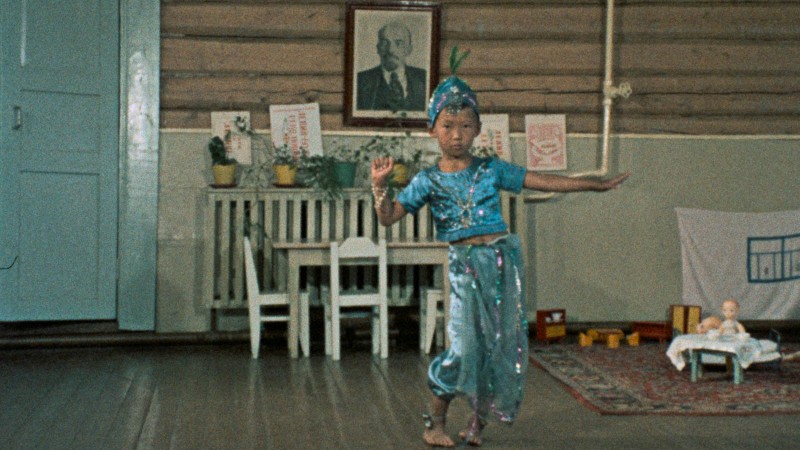
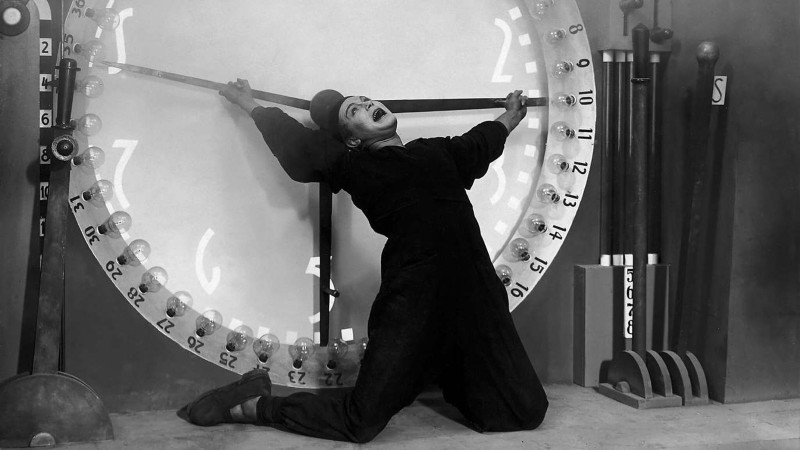
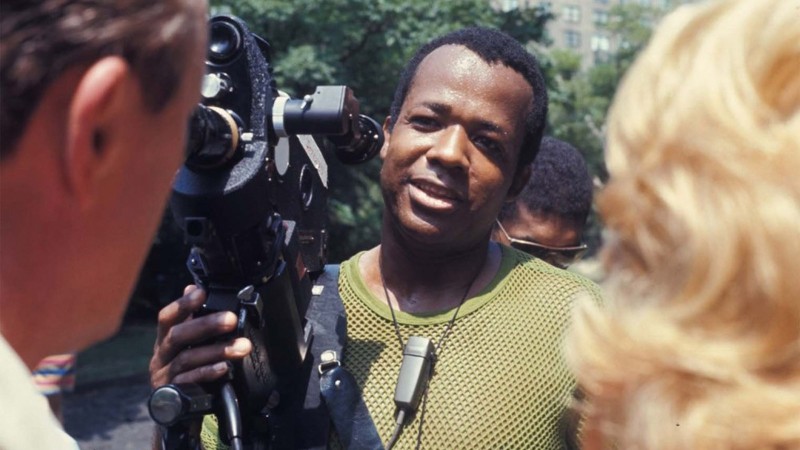
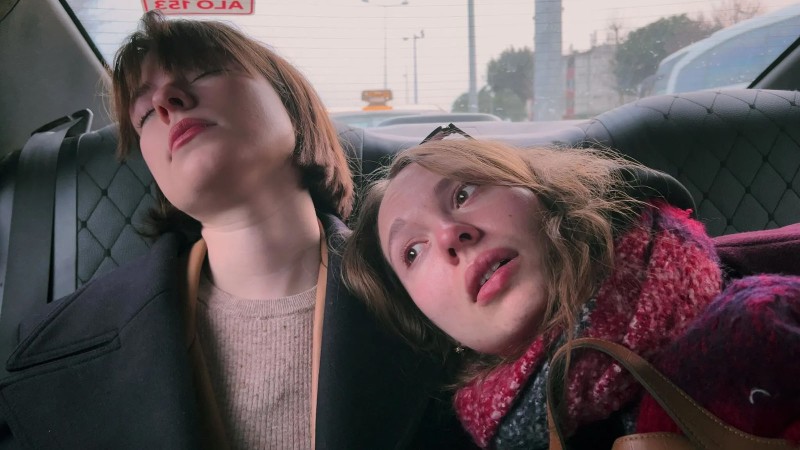
Those currents were not confined to Paris. While they ping-ponged between the banks of the Seine, they were also flowing in and out of France from and to burgeoning scenes around the world. Other Modernisms, Other Futures: Global Art Cinema 1960-80, opening Thursday and running through March 31 at the Barbican in London, spotlights work “influenced by local traditions and the sights and sounds of modern life, and in dialogue with cinema as it was evolving in Europe and North America,” as the programmers explain. “Rather than one modernist art cinema, we might speak of an array of modernisms. None are derivative—they may supersede their Euro-American models, or, indeed, work in opposition to them.”
The survey opens with Marlen Khutsiev’s July Rain (1967), in which, as Cosmo Bjorkenheim notes at Screen Slate, Moscow is “the real protagonist, and Khutsiev spared no effort to invest it with all the glamor and hectic dynamism of a West European metropolis.” Lena (Evgeniya Uralova) and Volodya (Aleksandr Belyavsky), a couple in their twenties, hang with a crowd that’s “oppressed less by Soviet cultural policy than by Antonioniesque ennui . . . If it weren’t for the prevalence of Cyrillic on signs and awnings, the impression of a Parisian boulevard would be perfect. At one point, a young couple in turtlenecks and browline glasses even does the Band of Outsiders dance.”
Artist, critic, and scholar Bahram Beyzaie’s first feature, Downpour (1972), “helped to inaugurate the Iranian New Wave, which placed the country on the world map of engaged cinema,” writes Hamid Naficy in the essay accompanying our release. Mr. Hekmati (Parviz Fannizadeh), a teacher in Tehran, finds himself drawn to Atefeh (Parvaneh Massoumi), the sister of one of his students. Naficy notes that Downpour depicts “a particular slice of Tehrani life at a time when dissent against the authoritarian shah was beginning to percolate below the surface—tensions that would erupt in less than a decade into a full-blown revolution. The perceptive and sensitive artist that he is, Beyzaie had tapped into a deep psychological unease, and brought it to the screen with a remarkable verve and humanity.”
Jorge Sanjinés made his second feature, Blood of the Condor (1969), in cooperation with the Quechuan inhabitants of a remote Bolivian village as a protest against the Peace Corps’ program of forced sterilization of the indigenous population. The film is “raw: technically stripped-down and incisive, yet with a throbbing humanist heart,” writes Screen Slate’s Jon Dieringer. “Blood of the Condor culminates in a revolutionary note—one that effectively transcended the screen, leading to a popular uprising that ejected the Peace Corps from Bolivia, making it one of the Third Cinema films that led to direct action.”
In Mrinal Sen’s Interview (1971), Ranju (Ranjit Mallick) needs to show up at the office of a British firm in Kolkata wearing a western-style suit if he’s to stand a chance at scoring a desperately needed job. But his suit is at the dry cleaners, and as luck would have it, all the laundries in the city have just gone on strike. Ranju must find a suit, and his “frantic dashes through the city are filled with the print ads, billboards, store displays, and movie posters that he sees, which Sen presents as a crucial form of political mind control and a prime target of any future revolution,” writes the New Yorker’s Richard Brody.
Fad’jal, the third feature by Senegalese filmmaker and ethnologist Safi Faye, premiered in Cannes in 1979, and when a restoration screened at Il Cinema Ritrovato a few years ago, Faye wrote about the persistence of the oral tradition. “Every evening, the children scrambled up into the beautiful kapok trees after getting out of school to gather around the village elder. He would then pass on their history, that which hasn’t been written down. Fad’jal speaks of this, of the foundation of the village and all the events that have since unfolded there . . . The rural world, the theme that I chose and which corresponds to my cinematic vision, is timeless. It concerns all rural farmers, whether they are Japanese, Senegalese, or Singaporean, since we’ve all been rural farmers at one time; the entire world comes from the countryside.”
Cuban filmmaker Sara Gómez was editing her first and only feature, One Way or Another (1974), when she died during an asthma attack. She was only thirty-one. Tomás Gutiérrez Alea, Rigoberto Lopez, and Julio García Espinosa supervised postproduction work on a blend of fiction and nonfiction depicting life in the poor neighborhoods of Havana shortly after the 1959 revolution. Writing in the Notebook, Alonso Aguilar calls One Way or Another a “freeform testament to the multiple layers of internal cultural tension within 1960s Cuba, in which form and discourse mutate as different perspectives dialogue on screen, coexisting in the same sequences, and occasionally colliding.”
For news and items of interest throughout the day, every day, follow @CriterionDaily.