Heroes vs. Sloppycats
Share
Film at Lincoln Center has announced that James Gray’s Paper Tiger will open this year’s New York Film Festival on September 25. We took a first look at the enthusiastic critical response to Paper Tiger when it premiered in Cannes, and since then, Beatrice Loayza, writing for Film Comment, has called it “a tense, wacky, weepy crime drama about a Jewish family that gets inadvertently targeted by the Russian mob in 1980s New York. If that sounds like a retread for Gray—our most consistent chronicler of retro NYC, its outer boroughs, and its working-class families—it’s been too long since he’s managed, as he does here, to strike such a satisfying balance between old-school melodrama and muscular suspense.”
Edging back up the calendar a bit, Toronto (September 10 through 20) has begun rolling out its lineup, program by program. It’s going to take a couple of weeks to get it all out there. The world premiere of Being Heumann, Siân Heder’s follow-up to her Oscar-winning CODA (2021), will open the fifty-first edition. Also set to premiere as Gala Presentations are Susanna White’s Prima Facie, starring Cynthia Erivo, and Hur Jin-ho’s The Assassin(s), a drama set in the aftermath of the 1974 attempt to assassinate South Korean president Park Chung Hee.
Toronto has also unveiled five Special Presentations. David and Nathan Zellner’s Alpha Gang is a sci-fi comedy starring Cate Blanchett, Chris Pine, Dave Bautista, Léa Seydoux, Lily-Rose Depp, Riley Keough, Bae Doona, and Adria Arjona, who charmed Glen Powell and many of the rest of us as well in Richard Linklater’s Hit Man (2023). Speaking of hit men, Mahershala Ali’s plays one in Bassam Tariq’s Your Mother Your Mother Your Mother, and his costars will include John Cho and Giancarlo Esposito.
Margaret Qualley stars in cinematographer-turned-director Rachel Morrison’s Love of Your Life, and Ben Shirinian’s The Housewife features Naomi Watts, Tye Sheridan, Michael Imperioli, and Luke Evans. And with Glaxo, Benjamín Naishtat adapts Hernán Ronsino’s 2009 murder mystery set in a derelict town in Argentina.
Venice (September 2 through 12) will open with Danny Boyle’s Ink, starring Guy Pearce as Rupert Murdoch, who bought the Sun in 1969, turning the popular British broadsheet into a controversy-sparking tabloid. The closing film will be Giovanni Veronesi’s Dio ride, the story of a charismatic seventeenth-century preacher whose popularity the Church perceives as a threat.
The Orizzonti and Debut Film juries are set, and Golden Lions for Lifetime Achievement will be presented to Ellen Burstyn and George Clooney.Venice Immersive will mark its tenth anniversary, and shortly before the festival opens, we’ll sort through the Venice Classics lineup.
Locarno (August 5 through 15) is less than three weeks away now, and the festival is preparing to roll out new work from Hong Sangsoo, Denis Côté, Albert Serra, Cristóbal León and Joaquín Cociña, Gurvinder Singh, Lê Bảo, Beatrice Gibson, Ana Vaz, Edgar Pêra, Bertrand Mandico, F. J. Ossang, and Martin Provost. The juries were announced on Wednesday.
Isa Jacobs, in the meantime, has sent a dispatch from Karlovy Vary to e-flux, and for Film Comment, Jessica Kiang looks back on last month’s Il Cinema Ritrovato.Joshua Bogatin was there, too, and at the Film Stage, he writes about “four highlights which not only amazed, but, in true Il Cinema Ritrovato form, surprised me.”
This week’s highlights:
- Newly remastered and restored films made by John Woo and producer Tsui Hark are currently screening in London as the season Bullets and Brotherhood: The Films of John Woo rolls on throughout the month. “Commingling global influences—Akira Kurosawa, Chang Cheh, and Patrick Lung from the East; Jean-Pierre Melville, Martin Scorsese, and Sam Peckinpah from the West—into a singularly exhilarating brew of friendship, honor, and sacrifice, Woo’s violent (but morally rigorous) bullet ballets established the template for a Hong Kong subgenre dubbed ‘heroic bloodshed,’” writes Matthew Thrift at the top of his interview with the director. “I was hugely influenced by musicals,” says Woo. “I saw West Side Story thirty-one times in the cinema. So when I’m shooting an action scene, I think that I’m making a dance sequence. I never learned any kung fu or karate, I just love dancing.”
- By happy coincidence, profiles of three collectives have appeared recently. For Ultra Dogme, Alonso Aguilar writes about Archivistas Salvajes, a trio “dedicated to the preservation of amateur Cuban cinemas; in plural. Their focus is the works of the cine-enthusiasts and cine-club movements that rose in the Caribbean island during the 1970s and 1980s.” For more than twelve years, the Ukrainian collective Babylon’13 has been “filming history while making it, following the escalation from Maidan to the annexation of Crimea and conflict in Donbas, all leading into the ongoing war,” writes Sonya Vseliubska in Documentary. And in the new Filmmaker, Botagoz Koilybayeva tracks the history of La Clef Revival in Paris.
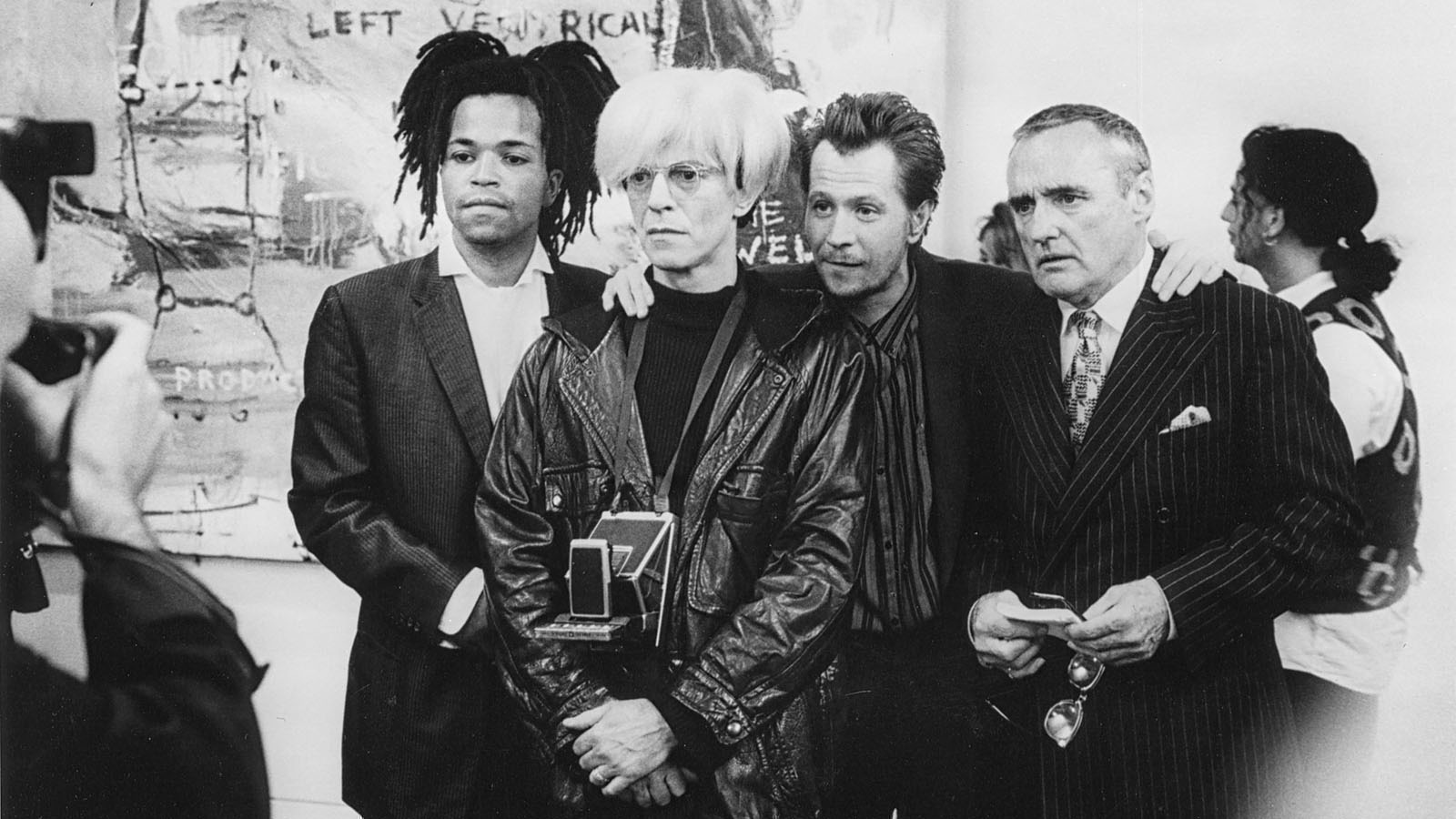
- When Jeffrey Wright was in Karlovy Vary to accept a President’s Award, the festival screened Julian Schnabel’s Basquiat (1996) and Robert Daniels took the opportunity to interview him for RogerEbert.com. Jean-Michel Basquiat’s “art is so encrypted, and it resonates with things that seem like they are not there on the canvas, things that are greater than the sum of their parts,” says Wright, who will play Basquiat’s father in Julius Onah’s forthcoming Samo Lives. “There’s a kind of mysticism within his work that hearkens back to Caribbean ideas and African ideas. But there’s also this stuff that resonates out of it, and that’s not by accident.” Daniels just has to ask Wright about his scenes in Schnabel’s film with Courtney Love. “Courtney showed up fully Courtney,” says Wright.
- The Fantasia International Film Festival is on in Montreal through August 2, and one of tonight’s international premieres is The Origin of Ultraman, a documentary spearheaded by Hirokazu Kore-eda, codirected by Yutaka Nakamura and Kazuki Yoshida, and featuring interviews with Kore-eda, Hideaki Anno, Guillermo del Toro, Shinji Higuchi, Hideo Kojima, and Nicolas Winding Refn. Ultraman, a sci-fi series that premiered on the Tokyo Broadcasting System in 1966, centers on “a silver, forty-meter-tall alien from Nebula M78 who merges with Shin Hayata, a member of the Science Special Search Party, to become Earth’s unlikely defender against a parade of spectacular monsters,” as Sebastien Raineri explains in his profile of the team behind the new doc in the Japan Times.
- An “AI sloppycat of The Odysseyis attempting to capitalize on Christopher Nolan’s work,” notes the A.V. Club’s Jacob Oller, who sees this increasingly common development as “less of a curiosity for the schadenfreude-prone and more of an omen for the future of the cinematic bargain bin.” Quickie cash-ins are nothing new, of course. “Francis Ford Coppola’s Dementia 13 is more than a Psycho copy, even if it was commissioned as such by Roger Corman,” writes Oller. “Even if it’s a dishonest day’s work, filming a knock-off means making choices, which means creating something. The incursion of generative AI robs even the most rapacious industry leech of the ability to accidentally stumble into something interesting. Robbery and deception at least used to take a little bit of work.”
Don’t miss out on your Daily briefing! Subscribe to the RSS feed.