Crash Courses
Share
Before we wrap this short week with brief notes on five highlights, let’s take a moment to note the passing of Marva Nabili. Her debut feature, The Sealed Soil (1977), is the earliest surviving Iranian film directed by a woman. “An act of clandestine resistance shot for a pittance at a two-to-one ratio with available light in six days and a cast of villagers,” wrote J. Hoberman in the New York Times last year, The Sealed Soil is “a triumph of what the Cuban film theorist Julio García Espinosa called ‘imperfect’ cinema.”
Just as Rafael Manuel’s debut feature, Filipiñana, opens in the UK—back in January, it won the Special Jury Award for Creative Vision at Sundance—Jorrybell Agoto, who stars as a “tee girl” at a golf club, has died. The cause was lymphoma, and she was only thirty-two.
“Agoto’s performance is bound up within her placid face and dulcet voice, but she hides a latent rage,” writes Chris Cassingham at In Review Online. “Early inconveniences like a belittling boss simmer underneath the blazing heat until they boil over in the face of deeper, more insidious injustices. When she learns a grave truth about her past, she sets her sights on revenge. Suddenly, her invisibility becomes a weapon, her unassuming presence an asset.”
- Opening a new Reverse Shot symposium, cofounding editors Michael Koresky and Jeff Reichert write that the films of James Gray “exist comfortably and defiantly outside of trends, receiving polite applause while festival flash-in-the-pans reap awards. Yet the artistry is undeniable, his characters’ simmering undercurrents of emotion haunting years and years down the line: these are films that echo the very best of what homegrown, narrative-driven American cinema has always been—an evocation of fundamental truths about the national psyche and how they are reflected in the personal.” Koresky has written about Paper Tiger, and the latest entries offer Jawni Han on The Yards (2000) and Chris Shields on Two Lovers (2008).
- For Sabzian, Tillo Huygelen has put together a dossier on Lionel Rogosin’s On the Bowery (1956), a docufiction shot on New York’s skid row and “an attempt to bring together two traditions that had profoundly inspired him: Robert Flaherty’s poetic realism and the Italian neorealism of Vittorio De Sica and Roberto Rossellini.” When cameraman Dick Bagley “asked Rogosin what he had in mind,” notes Huygelen, “Rogosin pointed to the Rembrandt portraits covering his walls and simply said, ‘That.’ The bristled faces in On the Bowery tell the real story. They’re portraits from what a priest in the film calls ‘the saddest and maddest street in the world.’”
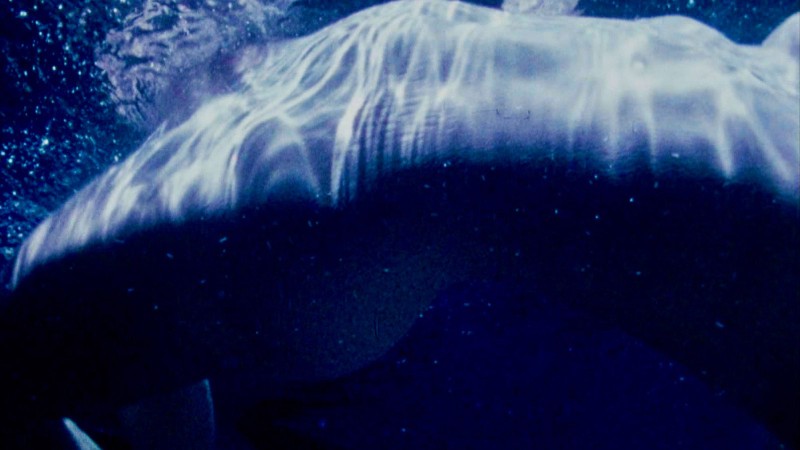
- Experimental filmmaker Phil Solomon “made his name on 16 mm film via alchemical optical printer work (like The Secret Garden, 1988),” writes R. Emmet Sweeney, “but in the 2000s he made a cycle of shorts using in-game footage of Grand Theft Auto. Made to memorialize his friend and collaborator Mark LaPore, they are depopulated, mournful, and deeply moving, finding poetry in pixelation. Though some are streaming on YouTube, I was thrilled to see that Austria’s Sixpack Film published a monograph on Solomon’s GTA work, Still Raining, Still Dreaming, which includes a download link to his entire GTA corpus.” These films are “visions of worlds without a self and the spaces we will leave behind, in real life and in our last PlayStation saves.”
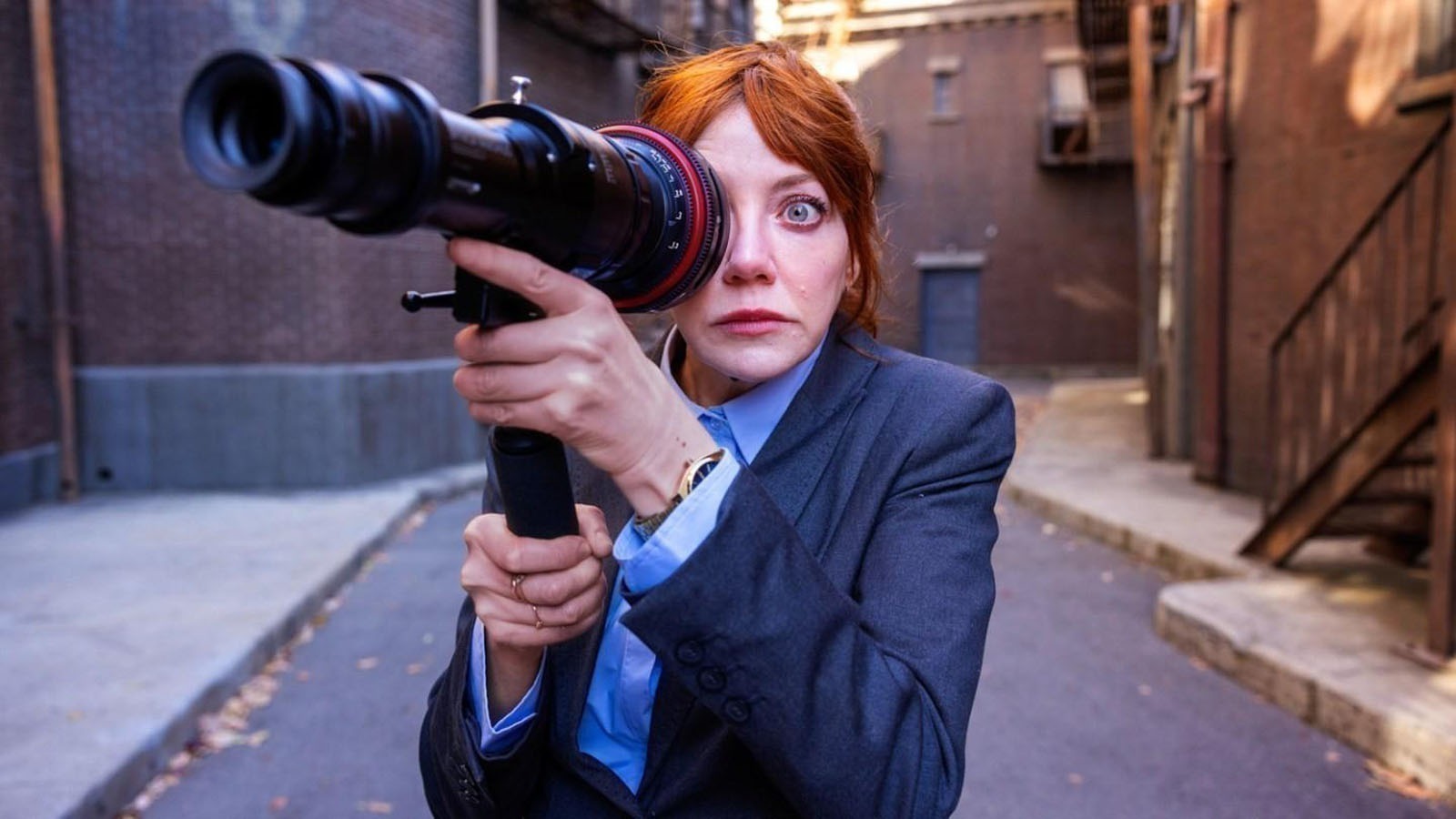
- Cocreated by Charlie Brooker and Diane Morgan, who plays her, Philomena Cunk is a British television presenter who is as supremely confident as she is supremely ignorant. In her latest series, Cunk on Cinema, she authoritatively explains that “Quentin Tarantino” is “Italian for ‘five spiders.’” Slate’s Sam Adams observes that “try as the series might to get everything wrong, it actually ends up being a tiny bit educational.” Time’s Judy Berman admires “the brilliance of Morgan’s deadpan performance” and “Brooker’s jokes, which approach the linguistic density of poetry and tend to contain sneaky insights that would be lost on the character giving voice to them.” Marilyn Monroe, “says Cunk, ‘effortlessly blended sex appeal, vulnerability, comic timing, and innocence into one irresistible package for men to destroy.’”
- You’ve seen the shirts, but did you know that Girls on Tops also publishes essays and interviews? At Read Me, you’ll find Vienne Molinario on Andrzej Żuławski’s Possession (1981), Valentine Fabre on Lizzie Borden, Jessica Kiang on Jeon Do-yeon, and Hannah Strong on Renate Reinsve. Interviewees include Thelma Schoonmaker, Lynne Ramsay, Mona Fastvold, Carla Simón, Andrea Arnold, Laura Mulvey, and Obsession breakout Inde Navarrette. In a mini-dossier on Sandra Hüller, Kiang explains why she’s chosen to write about “a tiny sliver of inaction” in Justine Triet’s Anatomy of a Fall (2023): “Hüller has the rare and astonishing ability to access the fraught, ambivalent truth of who her characters are even when no one is watching.”
Don’t miss out on your Daily briefing! Subscribe to the RSS feed.