Elsinore and The Man I Love
Share
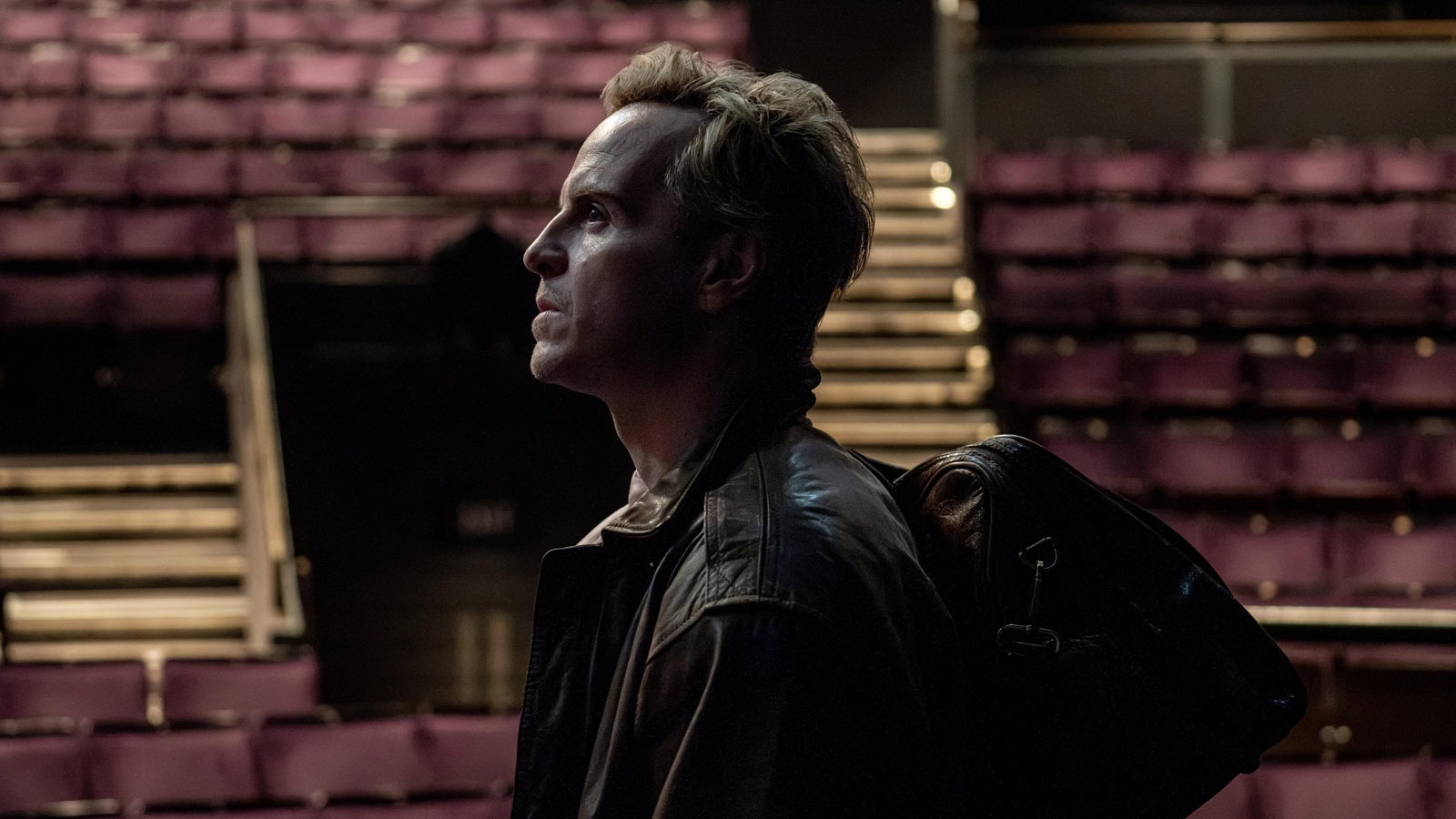
Opening his appreciative review of Simon Stone’s Elsinore in the Guardian, Benjamin Lee reminds us that for a not-so-brief period of time around thirty years ago, the fates of gay characters in movies were determined almost exclusively by the HIV/AIDS epidemic. Jonathan Demme’s Philadelphia (1993) “showed a wider audience a mostly clean and palatable version of the crisis, and won Oscars for doing so,” writes Lee, “and for a time, when gay men weren’t acting as sassy friends to women in need, they were coughing up blood in lonely hospital beds.”
Lee notes that “the inevitable and understandable pushback, allowing for a wider breadth of stories, brought us more ‘queer joy’ and ‘chosen family,’ but it also allowed some to forget just what a time of unimaginable annihilation it was . . . It’s right for us to focus on the increasingly restrictive terrors of the now and hope for a brighter, gayer world in the future, but it’s also vital to remember the nightmares of the past and to honor those who fought their way through it.”
In part, this is what Elsinore sets out to do, and the same might be said of Ira Sachs’s The Man I Love. Both films are set in the late 1980s and in lively and historically vital capitals of the theater world—Elsinore in London, The Man I Love in New York—and both end as they must. Elsinore premiered to raves at Telluride and will open the seventieth BFI London Film Festival on Wednesday, and while The Man I Love was greeted with mixed reviews in Cannes, Sachs’s film seems to be finding and connecting with its audience as it screens this week at the New York Film Festival.
Working for the first time as a producer, Andrew Scott stars in Elsinore as Ian Charleson, the real-life costar of Chariots of Fire (1981) and Gandhi (1982), back-to-back winners of Oscars for Best Picture. Charleson’s movie career didn’t take off as expected, though, and when Daniel Day-Lewis abruptly walked off the stage during a National Theatre production of Hamlet in 1989, Charleson asked director Richard Eyre (played in Elsinore by Johnny Flynn) to allow him to take over.
Eyre, an old friend who was aware of Charleson’s diagnosis, was reluctant at first, but then relented, and Charleson delivered a Hamlet for the ages. When Ian McKellen won the 1989 Evening Standard Award for Best Actor, he handed his statuette to Charleson, saying he’d just seen “the perfect Hamlet” the night before. Charleson died less than two months later.
“Hamlet is a poem of death,” Eyre has written. “It charts one of the great human rites of passage—from immaturity to accommodation with death. Hamlet grows up, in effect, to grow dead.” Scott himself took on the role in 2017, delivering a widely praised performance running nearly four hours about 150 times. “You’ve got 1,500 lines,” Scott tells IndieWire’s Anne Thompson. “He’s got the most actual lines to learn in any Shakespeare character, I think, apart from Iago, and then you’re the Prince, and you’re the grieving son, and you’re the lover. And then in the third act, you have to do a sword fight. I mean, that’s fucking mental. It’s crazy.”
Andrew Haigh, who directed Scott in All of Us Strangers (2023), tells the Guardian’s Catherine Shoard that Scott’s turn as Charleson is “simply astonishing. I struggle to think of a better performance. Andrew embodies the character so completely, it feels as if we are watching lived experience. But make no mistake, this is a performance of incredible skill. Andrew is completely fearless in the role.”
Stone, probably best known among moviegoers for The Dig (2021), started out as an actor himself before becoming a prominent stage director in Australia and London. He tells David Canfield in the Hollywood Reporter that sports movies such as Rocky and The Karate Kid are among the unlikely inspirations for the narrative flow of Elsinore, which was written by Stephen Beresford (Pride). “I studied a lot of ’70s, ’80s, ’90s Hollywood dramas,” says Stone. “Seeing how they were structured, you get that sense of cathartic joy at the end of a struggle.”
So far, C. J. Prince, writing for the Film Stage, is one of the few critics to pan Elsinore. “While it’s clear he gives it his all,” writes Prince, “the shoddy construction of Elsinore as a series of poorly edited Andrew Scott sizzle reels makes it impossible to tell how good a performance he gives. This is prime overwrought awards bait, a star vehicle with Stone drunk at the wheel, crashing over and over again to wring out some precious tears from viewers.”
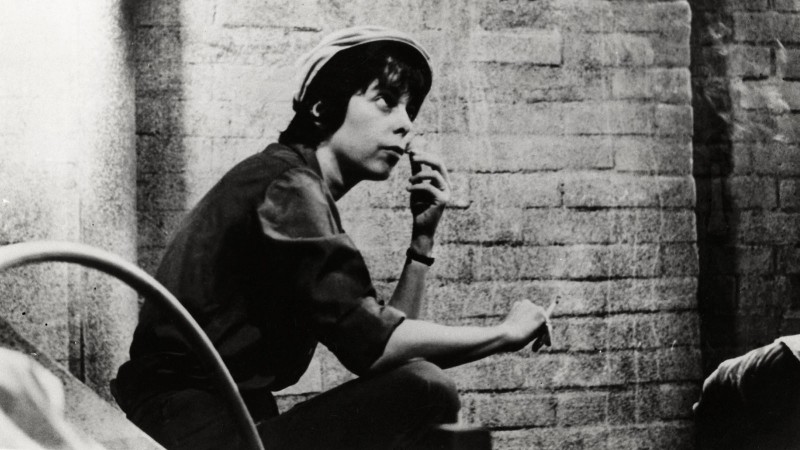
But for the Hollywood Reporter’s David Rooney, Scott’s “searing dual performance” as Ian Charleson and as Charleson’s Hamlet “makes Simon Stone’s film an emotional powerhouse even if it doesn’t avoid inspirational cliché.” Further, “one of the most fascinating insights into queer history comes with the appearances of iconoclastic director Derek Jarman (David Dawson), a friend for whom Charleson had played a punk angel in 1978’s Jubilee,” notes Rooney. “For anyone who recalls Jarman’s seismic influence on queer cinema with uncompromising films like Sebastiane, The Angelic Conversation, Caravaggio, and Edward II, hearing the director say, ‘Ian, remember me,’ with the knowledge that any encounter could be their last cuts deep.”
“For my part,” writes Vulture’s Alison Willmore, “the most wrenching scene in the movie is one in which Ian sits up in bed at the clinic after having been hospitalized, preparing to tell his parents, played by Peter Mullan and Georgie Glen, that he is gay and dying of AIDS. Scott’s face, in this shot, is a whole novel, disintegrating into tears before being shored up again, eventually rearranged into something resembling a welcoming smile that teeters on the edge of collapse. Ian is terrified of the conversation that’s about to happen, of having to admit to lying, of telling his mother and father that they’re due to outlive him. But he’s also an actor, and he works to put together the expression he wants to greet his parents with like he’s creating a masterpiece out of shattered glass.”
The Man I Love, too, “is about a man who refuses to let the fact that he’s dying stop him from making art and about a thriving late-’80s queer scene that similarly refuses to be cowed by the AIDS epidemic decimating its population,” writes Willmore. “More than either, it’s about being with someone who barely has room in their life for you, a theme that Sachs has returned to in different iterations over the years, from the chaotic love triangle in Passages to Keep the Lights On’s chronicle of a yearslong relationship with a man with addiction issues.”
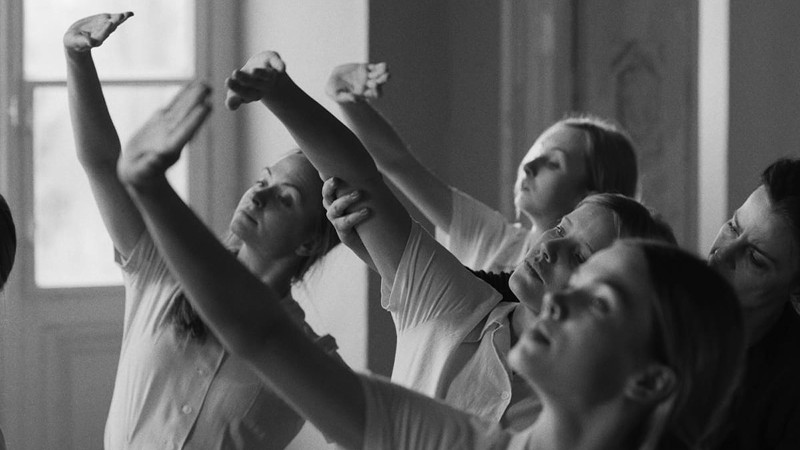
Rami Malek stars as Jimmy George, an actor whose experimental theater company, the Mechanicals, is preparing to stage a word-for-word recreation of André Brassard’s Once Upon a Time in the East (1974), a French-Canadian ensemble piece that plays, as Sachs has put it, “as if Altman’s Nashville had been made by Fassbinder.” While Jimmy’s longtime partner, Dennis (Tom Sturridge), renders tender loving care, a new downstairs tenant, Vincent (Luther Ford), has fallen for Jimmy, who proves eager to welcome the attention from his young admirer.
In the New Yorker, Justin Chang has his reservations about The Man I Love, but Richard Brody is all in. “With subtle brilliance,” writes Chang, “Sachs evokes the tones and textures of his milieu and makes inventive use of music: the George Gershwin song of the title, a recurring French ditty from the Brassard film. What’s missing, though, is a center worthy of the frame. Malek is an actor of lithe physicality—his body language in the dance scenes has a witty expressiveness—but he never conjures a sense of Jimmy’s inner life. Seldom has his emotional range felt more glaringly inadequate.”
“Sachs thrills to the mutual inspiration of theater people at leisure,” writes Brody, and “the domestic riffing of performers, bouncing songs and jokes to one another as if tossing beach balls, offers moments of immortal joy.” The Man I Love is “turbulent and tender, emotionally bruising and vulnerable throughout, its quasi-operatic fervor contrasting poignantly with its physical confines and its clinically inevitable decrescendo.”
“While the movie belongs to Malek—who makes Jimmy both languorous and revitalized by creativity, weakened by declining health but hurling himself with ferocious tenacity into whatever life he has left—Sturridge is the stealth MVP,” writes David Rooney. “With an impressive economy of means, the actor gets at something fundamental to the relationship between artists and their partners, comfortably occupying the tight spaces left available by a magnetic man who sucks up most of the oxygen in a room without even trying. Dennis is a character not given to big emotional displays, but I found Sturridge’s performance ineffably moving.” And Ford plays Vincent “with the dreamy invulnerability of youth and a refusal to consider consequences.”
“In a scene where the camera slowly pans across a room as people simply chat around a dinner table,” writes Kyle Turner for Slant, “or another in which it lands on a dancer in a shimmery red jacket, Sachs makes you believe that this was the sort of creativity that gave the city its lifeblood at a time when so many people were losing their lives. These snapshots of artists hanging around, rehearsing, and partying are a more convincing tribute to that time than the fairly generic love triangle that anchors the film.”
Sachs’s films are “satisfyingly dramatic while understanding that, especially when telling some form of love story, an element of unknowability must be maintained,” writes producer and former Filmmaker editor Scott Macaulay. “Downtown artists John Jesurun and John Kelly were theater advisers here, and as someone who worked in this world in the 1980s, the film’s textures and relationships feel uncannily true to that scene while revealing emotional dynamics within it I had never seen represented on screen.”
“It’s admirable and even exhilaratingly rebellious how much Sachs, from film to film, seems disinterested in expanding his audience,” writes IndieWire’s Ryan Lattanzio. “He is one of the only American filmmakers of a certain profile who is putting gay stories on-screen with a frank emotional honesty and richly literate curiosity about film history, which he pours into every frame.”
Don’t miss out on your Daily briefing! Subscribe to the RSS feed.