Under Watchful Eyes
Share
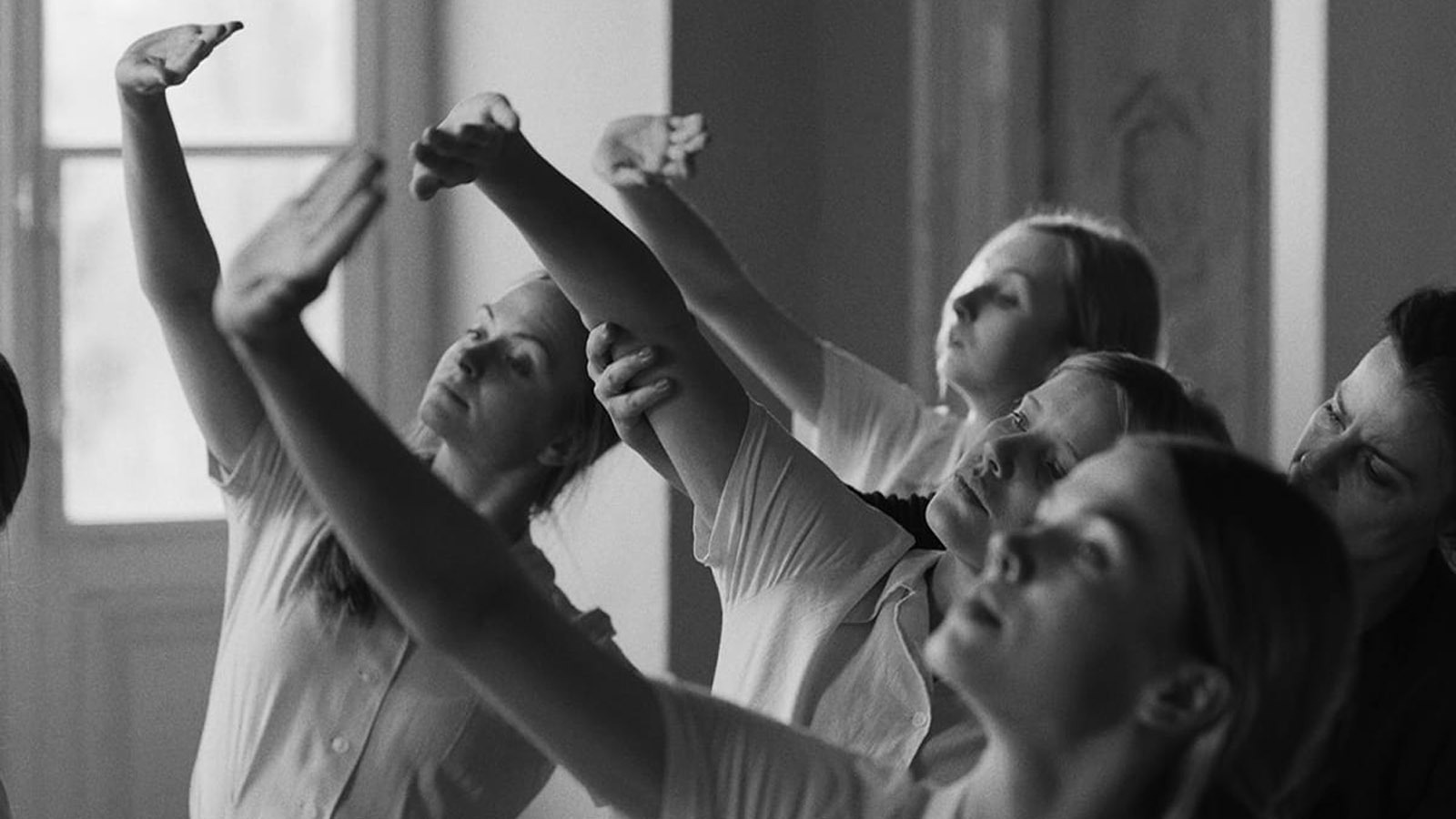
This year marks the hundredth anniversary of the birth of the great Polish director Andrzej Wajda, whose debut feature, A Generation (1955), rerouted the course of his country’s cinema. As Michał Oleszczyk has written, Wajda excelled at the game of “making one’s art under the watchful eye of the Communist authorities—and then turning it against them.” Wajda carried on working at a furious pace right up until he passed away in 2016. From today through October 22, New York’s Film Forum is presenting Andrzej Wajda 100, and further commemorative series are being hosted by the Yale Film Archive (through December 17) and the Jacob Burns Film Center (October 9 through 15).
The Pordenone Silent Film Festival presents a preopening screening tonight before its forty-fifth edition officially launches tomorrow to run through October 11. Harold Lloyd stars in Sam Taylor’s comedic hit For Heaven’s Sake (1926), and for live accompaniment, Oscar Marchioni, who has composed a new score, will conduct the Zerorchestra.
This week’s highlights:
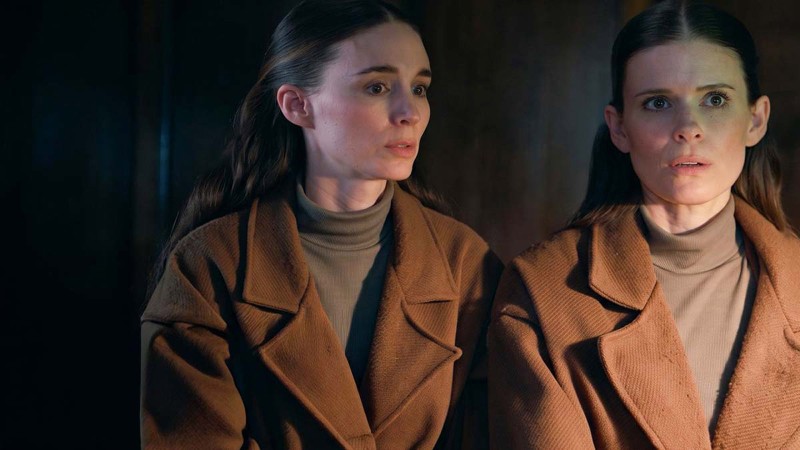
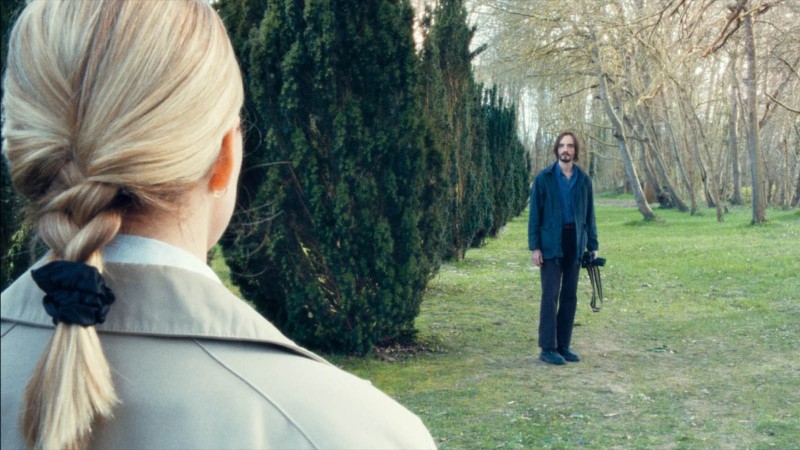
- In this week’s New Yorker, Anthony Lane profiles Paweł Pawlikowski, whose Fatherland completes a trilogy begun with Ida (2014) and Cold War (2018). The three films explore “the mystery of borders, geographical and spiritual, like a doctor tenderly probing an unhealed wound,” writes Lane. “For the many moviegoers who became conscious of Pawlikowski only at the time of Ida, the range of films that preceded it may come as a surprise. Not that it’s easy to get hold of the damn things, even with the aid of Vimeo and YouTube. A few remain elusive, including Václav Havel: A Czech Drama (1989), which is not a drama but a documentary, made in what was then Czechoslovakia before the Communist regime caved in. In short, we could use a full retrospective to plug the gaps.” And Lane gives us a tantalizing preview of what such a program might offer.
- “Perhaps no other filmmaker has portrayed the human difficulties of coupling and uncoupling with such sustained sensitivity and insight,” writes David Polansky in an essay on Eric Rohmer for Liberties. “Much like Jane Austen’s, Rohmer’s plots appear simple and bourgeois on the surface, yet they contain dizzyingly high stakes cloaked in the quotidian. He is among cinema’s great observers of the bourgeoisie. There’s a very funny scene in Whit Stillman’s Metropolitan, in which a character laments the jaundiced view of the bourgeoisie that prevails among the intelligentsia. Well, Rohmer would be the antidote.” In the meantime, the latest reviews of Élisabeth, Rohmer’s only novel, come from Geoff Andrew and, for the New Left Review, Emily Bickerton.
- As the new restoration of My Brother’s Wedding (1983) tours North American theaters, M. Sellers Johnson talks with director Charles Burnett for Film International about his follow-up to his landmark debut feature, Killer of Sheep (1978). In My Brother’s Wedding, Pierce (Everett Silas), a young Black man in South Central LA, must decide whether to attend the titular ceremony or the funeral of a troubled friend scheduled for the same day. Burnett says the dilemma is rooted in an incident in his own life, a period when he felt “being a brother’s keeper” was the most urgent calling. “I was a great fan of Ermanno Olmi, who did The Tree of Wooden Clogs (1978),” Burnett tells Sellers. “His films are like Bresson’s films, to a certain extent. Very dry, in a way. Using real people and not actors. I was a great fan of his.”
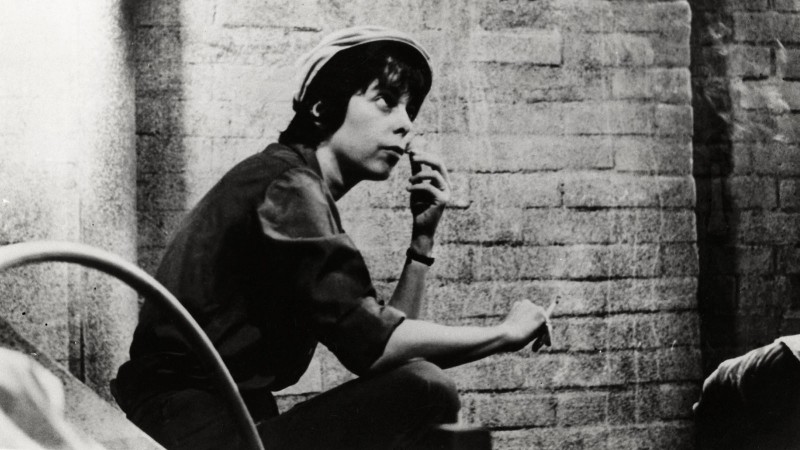
- Directed by Bob Fosse and starring Dustin Hoffman as Lenny Bruce, the stand-up comedian with “a naughty boy’s playful, infectious energy that helped him get away with the comedy equivalent of murder,” Lenny (1974) is “a textbook case of two territorial alphas destined to drive each other crazy,” writes Sean Burns at Crooked Marquee. Fosse was particularly “interested in Bruce’s toxic relationship with his stripper wife, ‘Hot’ Honey Harlow [Valerie Perrine], a destructive duet that made them the Sid and Nancy of the burlesque set . . . As a filmmaker, Fosse was fascinated by fears of inadequacy and secret shames. We get searing, quicksilver glimpses of how the hang-ups and double standards that Lenny ridicules onstage are rooted in his own experiences. It takes one to know one.”
- Let’s wrap with a poem. Robert Wiene’s The Cabinet of Dr. Caligari (1920), featuring an immortal performance from Conrad Veidt as a haunted and haunting sleepwalker, is the quintessential work of German Expressionism and, as Clayton Dillard wrote in Slant in 2014, it “remains cinema’s preeminent embodiment of dream-screen anguish.” The latest issue of the New York Review of Books offers “Paging Dr. Caligari” by Elaine Equi, whose work has appeared in several volumes of The Best American Poetry and who has written extensively about the poetry of Frank O’Hara and Ed Ruscha. Here are two lines from three stanzas: “Can a person already in a trance be hypnotized again? / I need to decide something—anything will do.”
Don’t miss out on your Daily briefing! Subscribe to the RSS feed.