Film Follows Function
Share
Vincente Minnelli’s An American in Paris (1951) has just turned seventy-five, prompting Josh Spiegel at Crooked Marquee to revisit this “apotheosis of the American movie musical,” which he calls “a lush, colorful, vibrant celebration of love and dance. It’s also notable for its protagonist being in equal measures charming and cruel, an antiheroic figure whose presence heavily inspired future, more revisionist musicals.” The Minnellis, a sweeping series showcasing work by the director and his daughter Liza Minnelli opens today at the Museum of the Moving Image in New York and runs through January 24.
The weeklong series Filming Filmmakers opens today at the Brooklyn Academy of Music and features two works by Chris Marker—one on Akira Kurosawa and the other on Alexander Medvedkin—as well as Claire Denis’s profile of Jacques Rivette, and self-portraits by Chantal Akerman and Jean-Luc Godard. In Nashville, the Belcourt’s Restoration Roundup runs from today through December 11, and the AFI Silver Classic Film Weekend, already in progress in Silver Spring, Maryland, is on through Sunday.
A couple of quick notes before we turn to this week’s highlights: Abby Sun, Vadim Rizov, and Grace Gordon have just launched the Holdout, “a new publication reporting on the ecosystem of independent film.” And the MUBI Podcast has returned for a twelfth season, featuring in the first episode host Rico Gagliano talking with Alejandro G. Iñárritu and Fatih Akin about the making of Yilmaz Güney’s Palme d’Or–winning Yol (1982).
- “Animators, by nature, have a very weird relationship to time; it’s not unusual to work for six months on something then see it all go by in twelve seconds,” Don Hertzfeldt tells Isaac Feldberg in a conversation in Letterboxd’s Journal about It’s Such a Beautiful Day (2012) and this year’s Paper Trail, an award winner at Sundance, SXSW, and the Annecy International Animation Film Festival. “Koyaanisqatsi was a huge influence on Paper Trail,” says Hertzfeldt. “There’s a Frank Mouris short film called Frank Film, from the early ’70s, that was a high-speed collage of life. I could also name Powers of Ten; they were trying to change the language of cinema in a way. Paper Trail might not be out of place if it was on PBS in 1982.”
- Those of us with a layman’s passion for great design are going to simply eat up the new feature that Adrian Curry has launched for his Movie Poster of the Week column at Notebook: “I ask seven contemporary movie poster designers seven simple questions about their work, their influences, and the state of the movie poster industry today.” And the “first magnificent seven” are Drusilla Adeline (a.k.a. Sister Hyde), Marcelo Granero (here he is on Instagram), Vasilis Marmatakis (best known for his work with Yorgos Lanthimos), Beth Morris (a.k.a. BAMCreate), Sam Smith (you know this one), Akiko Stehrenberger (deserved winner of countless awards), and Neven Udovičić, who often works with his talented partner, illustrator Sara Kern Gaćeša.
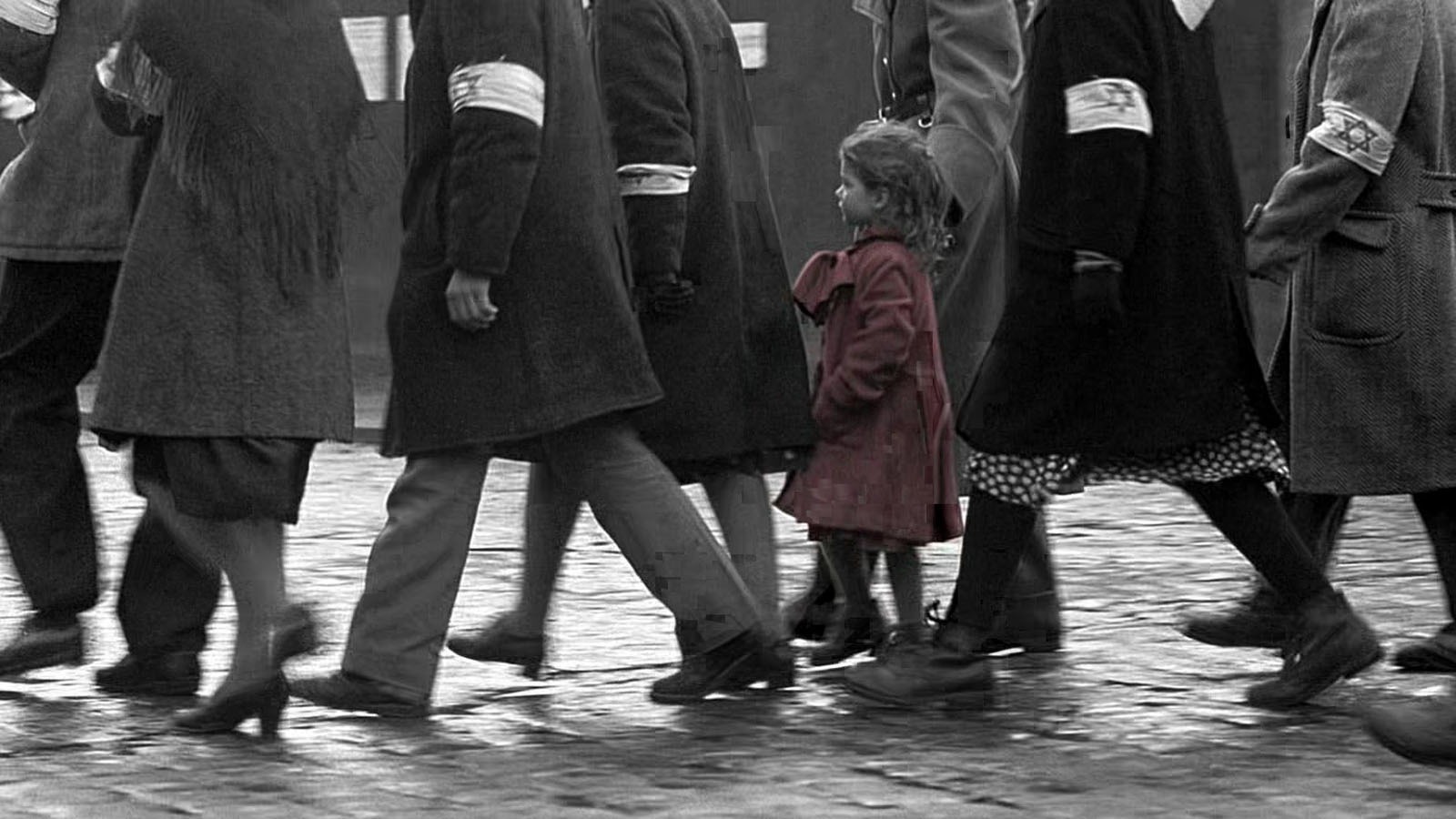
- “Like pretty much every great cinematographer, Janusz Kamiński is Polish,” writes Scott Roxborough at the top of his profile for the Hollywood Reporter. Kamiński won his two Oscars for his work with Steven Spielberg on two films set in the same period but shot in opposing styles, the high-contrast black-and-white Schindler’s List (1993) and the jittery yet propulsive Saving Private Ryan (1998). “Kamiński does not have a signature look,” writes Roxborough. “His approach is film follows function. Cold blues and metallic shadows to evoke the tech-dystopia of Minority Report. Retro pastels and smooth tracking shots to make the ’60s swing in Catch Me If You Can. Grainy, handheld shots of muted oranges and browns in Munich to give the story the feel of a 1970s conspiracy thriller.”
- Roxborough also offers notes on five “Kamiński shots,” noting that in Schindler’s List, “the lone splash of color, the little girl’s red coat, lands as one of the most devastating images in modern film.” As it happens, Dmitry Martov has just written about the roles color can play in black-and-white films. In a few rare instances, these are colors we can see, such as the hand-painted red of the flag in Eisenstein’s Battleship Potemkin (1925). But Martov also points out the colors we don’t see, such as the orange—“the crucial clue to a double murder”—of a convertible in Delmer Daves’s Dark Passage (1947). It’s a brief but dense and fascinating survey.
- Noirvember mini-roundup! Marya E. Gates traces the lines between the ragtag team that made the great Berlin-set silent People on Sunday (1930) and their noir legacies: directors Robert Siodmak and Edgar G. Ulmer, writers Billy Wilder and Curt Siodmak, and cinematographers Eugen Schüfftan and Fred Zinnemann. Cory Atad revisits a favorite, Ulmer’s tight Detour (1945), which is “among the most cynical noirs out there, positing a universe in which choices have consequences unrelated to their underlying morality.” And while Alberto Cavalcanti “worked only occasionally in the realm of true film noir,” writes Farran Smith Nehme, They Made Me a Fugitive (1947) is “an acknowledged great of the genre.”
Don’t miss out on your Daily briefing! Subscribe to the RSS feed.