Beyond Fest 2026
Share
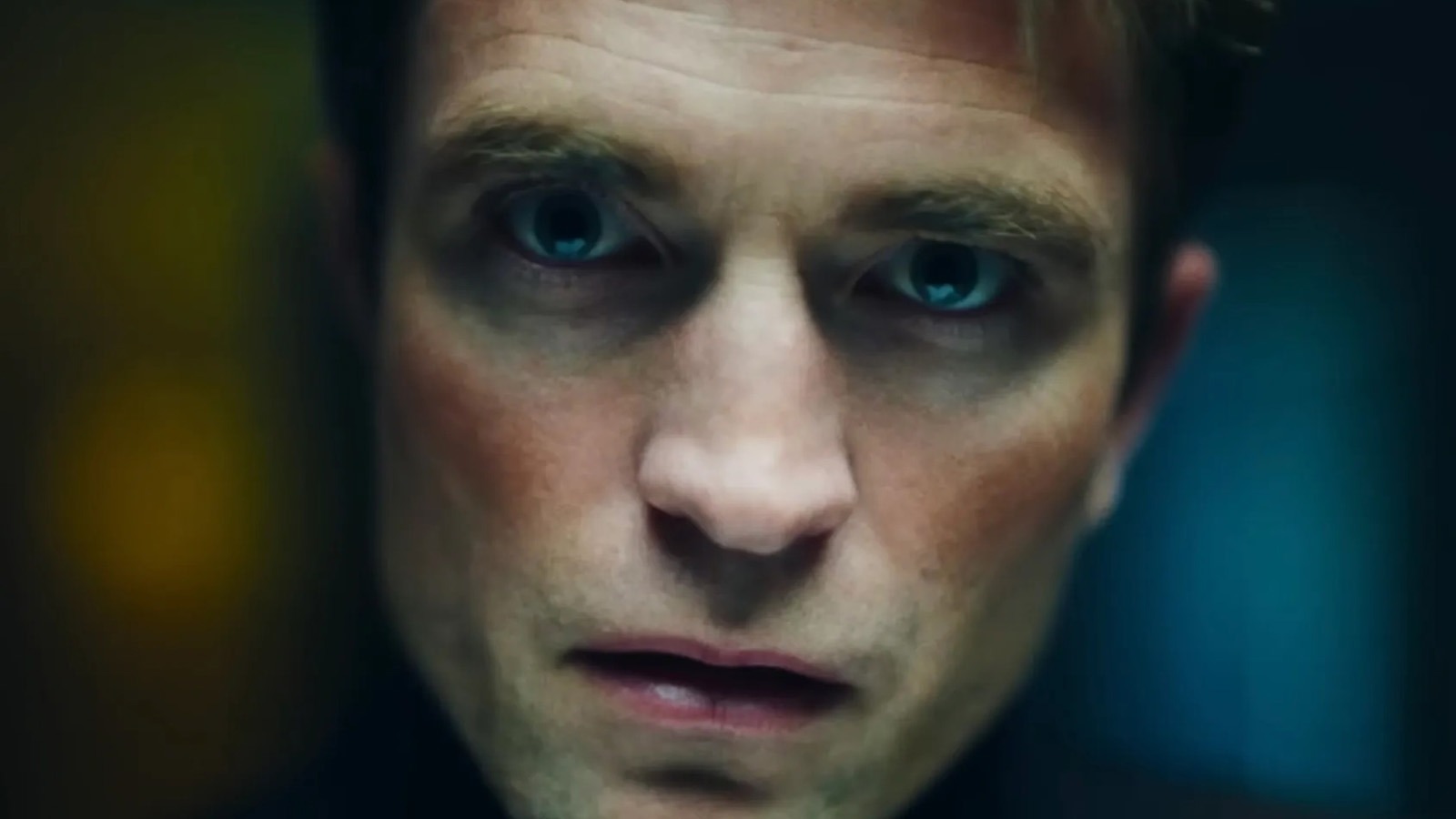
A lineup of eighty-one features may make Beyond Fest the biggest film festival in Los Angeles, but it’s Angelenos who have made it the highest-attended genre festival in the country. Presented in partnership with MUBI and the American Cinematheque, the fourteenth edition will open this evening with Primetime and a Q&A with director Lance Oppenheim.
Robert Pattinson stars as Chris Hansen, the Dateline NBC correspondent who landed his own show when the network decided that To Catch a Predator might be its strongest competitor against ABC’s monster hit Lost. Hansen’s team lured pedophiles into a house where they believed they would be having sex with a minor. Instead, Hansen would stroll onto the set with evidence of their intentions before handing them over to law enforcement.
To Catch a Predator, which ran from late 2004 to late 2007, “functioned first and foremost as entertainment,” writes Noomi Fry in the New Yorker, “which largely mooted its other vaunted missions—to serve justice, to get to the bottom of sexual pathology, to provide solace to abuse survivors—while also flattening the essential humanity of the show’s subjects, turning troubled individuals’ actions into a quasi-pornographic exhibit meant for an audience’s voyeuristic titillation.”
One of the questions Primetime raises is whether we really need a dramatization of a story told so well by David Osit in his documentary Predators, which was named one of the best films of last year by the New York Times and the Guardian. “Strange to say about a film full of child molesters, but Hansen comes off as the most unsympathetic person in the picture,” wrote Sean Burns when Predators premiered at Sundance.
Oppenheim’s version offers at least two justifications for itself. First, besides Pattinson—and yes, there is already Oscar chatter—the film boasts a terrific cast that includes Merritt Wever, Skyler Gisondo, Alex Winter, and Phoebe Bridgers.
In her review for Variety, Jessica Kiang writes that Primetime’s “uncompromisingly grimy approach would be actively repellent were it not for the extraordinary performances, which make Primetime a thing you cannot stop watching even as the desire to flee to the nearest shower cubicle grows. Most obviously, front and center, and in endlessly intrusive close-up, there’s Pattinson—who also serves as producer—playing the arrogant, fame-addicted, megalomaniac Hansen. Pattinson’s mimicry of the real Hansen’s physical mannerisms, like the awkward staging of his gotcha moments while he clutches a sheaf of damning chatroom printouts, is one thing. But his vocal impersonation, capturing the self-consciously over-rehearsed cadences of Hansen’s speech, is uncanny.”
The second justification is the consciously mapped-out historical context. “The screens in the backgrounds of Primetime repeatedly show us the fall of Iraq, the capture and trial of Saddam Hussein, wanted posters of Osama bin Laden,” notes Vulture’s Bilge Ebiri. “Among other things, Oppenheim suggests that To Catch a Predator, among the most popular shows of the early Forever Wars Era, represented the confluence of militarization, surveillance, paranoia, celebrity, and entertainment, as well as the kind of frontier justice George W. Bush often dreamt aloud about—all parts of a legacy our society is still dealing with.”
Festival Favorites
Also screening tonight is Bassam Tariq’s Your Mother Your Mother Your Mother, fresh from its premiere in Toronto. Mahershala Ali stars as Latif, “a recently widowed father of three who’s struggling to maintain the division between his family life and the work he does as a hitman for a local Arab big shot,” as Vulture’s Alison Willmore describes him. Your Mother is “a film about faith, grief, fatherhood, and stabbing people to death, and it whips ass in a way that makes its origin story feel downright serendipitous.”
The director and star had been preparing a reboot of the Blade franchise that ultimately fizzled out. Your Mother is “clearly the film that Tariq and Ali were meant to make together all along,” writes Variety’s Guy Lodge, “a dazzling hardboiled action drama that boasts at least as much lethally fancy swordplay as Blade, and significantly more ideas. Taking the hoariest of premises within the genre—jaded hitman is forced to take one last job—and significantly complicating it with finely drawn family drama and, most unusually and unexpectedly, a nuanced examination of Islamic faith in modern America.”
Half of Toronto’s Midnight Madness program is heading to Los Angeles, including Samjad’s “gory martial arts curry western” Half. Joshua Giuliano’s River is “an intensely meditative slasher with a chilly, arthouse edge,” writes Rocco T. Thompson at Slant. At the Film Stage, C. J. Prince calls Paolo Strippoli’s The Spiral a “devilishly fun Twilight Zone-esque tale told over four chapters and an epilogue. Think Richard Matheson’s short story ‘The Box’ scaled to apocalyptic heights, where a mother’s guilt traps her unaware family into a decades-long barter system from hell.”
Eugene Kotlyarenko’s “adventures in capturing ‘screenlife’ are, in my opinion, some of the most radically exciting feature work in cinema today,” writes Corey Atad. Vintage Violence is “internet-era ADHD filmmaking, done with extraordinary precision, and it’s funny. Extremely funny . . . I don’t know that we need too many more people making movies as online-brained as this, but I’m so glad Kotlyarenko is out there doing it, and doing it so damn well.” And according to Vadim Rizov at IndieWire, Matt Barats’s Anchors Aweigh poses the question, “What if Ross McElwee were a cretin?”
The Liberation, a Telluride premiere, is inspired by the real-life story of director Guy Nattiv’s grandmother. Carrie Coon stars as Rita, a Holocaust survivor who fell in with a community of women in the 1980s. “It was not her fault that this group happened to be a cult,” writes Joshua Rothkopf in the Los Angeles Times, “one that exploited her financially, sexually, and spiritually.” Nattiv “clearly has a lot of anger, turning the structure of a story that usually has an inspiring ending into something dark and cautionary. But I couldn’t shake it for days.” Coon is “endlessly fascinating, toggling between desperation and euphoria, while also bringing the best out of costars Tracy Letts and Bella Ramsey.”
Retrospectives and Revivals
Night Visions: The Shock and Awe of M. Night Shyamalan, a twelve-film retrospective, will open with the Eastrail 177 Trilogy—Unbreakable (2000), Split (2016), and Glass (2019)—and the director will be there. “The official history of M. Night Shyamalan’s career reads something like this,” wrote Josh Cabrita for Reverse Shot in 2019. “While hitting the jackpot with 1999’s The Sixth Sense and proceeding to make whatever he willed for the next decade, Shyamalan continually proved himself a gifted director often sabotaged by his lackluster writing and penchant for self-aggrandizement. For me, a true believer, the most sound argument for Shyamalan’s body of work has little to do with his auteurist status—that is, the formal and thematic continuities that can be taken as de facto evidence of his mastery. The most persuasive counter-narrative to the above history would instead upend misconceptions about the individual films themselves, demonstrating their mastery over form, the value of their nondenominational spirituality, and their complicated philosophical frameworks.”
Word came just yesterday from the Hollywood Reporter’s Borys Kit that Robert Eggers intends to direct and produce an adaptation of Shakespeare’s Romeo and Juliet. On Friday, Beyond Fest will present A Decade of Decay: A Robert Eggers Marathon, beginning in the afternoon with The Witch (2016), followed by The Lighthouse (2019), The Northman (2022), and Nosferatu (2024), and including a Q&A with Eggers. Dernsie: The Marathon begins on the morning of October 4 with Joe Dante introducing The ’Burbs (1989) and culminating with a chat with Bruce Dern and Mike Mendez, whose Dernsie: The Amazing Life of Bruce Dern will see its U.S. premiere.
E. Elias Merhige will introduce the new restoration of his Begotten (1989), “an underground cinema landmark championed by the likes of Susan Sontag and Amos Vogel,” as Jordan Raup notes at the Film Stage. James Gray will discuss not only this year’s Paper Tiger but also Little Odessa (1994). On October 2, Q&As and screenings will include Richard Kelly and Donnie Darko (2001) and Guillermo del Toro and Pan’s Labyrinth (2006), and Beyond Fest will host the world premiere of the VHS Edition of Jane Schoenbrun’s Teenage Sex and Death at Camp Miasma.
One of the most-anticipated highlights of this year’s Beyond Fest—tickets were snapped up pretty quickly—will be the world premiere of the “Director’s Final Cut” of Miami Vice (2006), and Michael Mann will be on hand to take part in a Q&A. Twenty years ago, the film “seemed primed to quickly fade from cultural memory,” writes Brogan Morris in the Guardian. “Critics have since declared Miami Vice ‘genius’ and a ‘demented masterwork,’ while the fervency of the film’s fandom today rivals that of arguably any movie by the Heat and Collateral filmmaker Mann.”
Don’t miss out on your Daily briefing! Subscribe to the RSS feed.