Presented in VistaVision
Share
Two years ago, Brady Corbet and Mona Fastvold revived a long-dormant format when they shot The Brutalist in VistaVision. A year later, One Battle After Another hit theaters and Paul Thomas Anderson became the leading evangelist for the “very deep, rich, beautiful image” that VistaVision offers. Aligning frames horizontally along a 35 mm negative nearly doubles the size of the exposed surface area, and the impressive result is a finer-grained, higher resolution.
Most prints of The Brutalist and One Battle, though, are struck from VistaVision negatives onto IMAX, 70 mm, or 35 mm stock because there are no more than a handful of theaters in the world equipped to project in VistaVision. Now the Academy Museum in Los Angeles has outfitted its David Geffen Theater for Presented in VistaVision, a series of “ultra-rare VistaVision prints as well as 70 mm remasters and new 6K digital scans” opening on Thursday and running through August 31.
The series features One Battle as well as the first and last films shot in VistaVision during its brief run as Paramount’s big-screen answer to the perceived threat television posed to Hollywood’s bottom line. Michael Curtiz’s White Christmas (1954), starring Bing Crosby, Danny Kaye, and Rosemary Clooney, is “a standard putting-on-a-show movie with swinging tunes (courtesy of Irving Berlin), harmless misogyny, and a nice line in bitching at Rogers and Hammerstein’s expense,” wrote David Jenkins for Time Out in 2008. “It’s as sickly-sweet as an eggnog tsunami, but Bing’s brandy-butter baritone and Kaye’s incessant, proto-Jim Carrey clowning always manage to raise a smile.”
“A muted riot of sweaty brows and deadly stares,” wrote Howard Hampton ten years ago, “star turned director [Marlon] Brando’s ominous, custom-tailored western One-Eyed Jacks [1961] belongs to a line of conflicted, half-mad productions that appear doomed from the outset yet turn into more impactful film experiences than a barrel of cautiously wrought, fastidiously executed ‘classics.’” As it happens, both White Christmas and One-Eyed Jacks were also shot in Technicolor.
Between these chronological bookends, the series will offer more musicals and westerns as well as comedy, drama, and two of the five films Alfred Hitchcock shot in VistaVision. Cary Grant and Grace Kelly star in To Catch a Thief as a retired cat burglar and the heiress who’s caught his eye. “Hitchcock’s superbly insouciant crime caper from 1955 must surely be one of the last movies in which the American super-rich are indulged so extravagantly and adoringly,” writes the Guardian’s Peter Bradshaw. These are “the kind of people who stub their cigarettes out in fried eggs.”
In North by Northwest (1959), Grant is an advertising executive mistaken for a spy. “This is Hitchcock's longest film and also his most self-referential,” noted David Parkinson in Empire in 2000. “Little jokes abound about art and artifice, role play and reality, duty and duplicity, and each viewing reveals something new to enhance the pleasure of watching the Master of Suspense at his most mischievous and assured.”
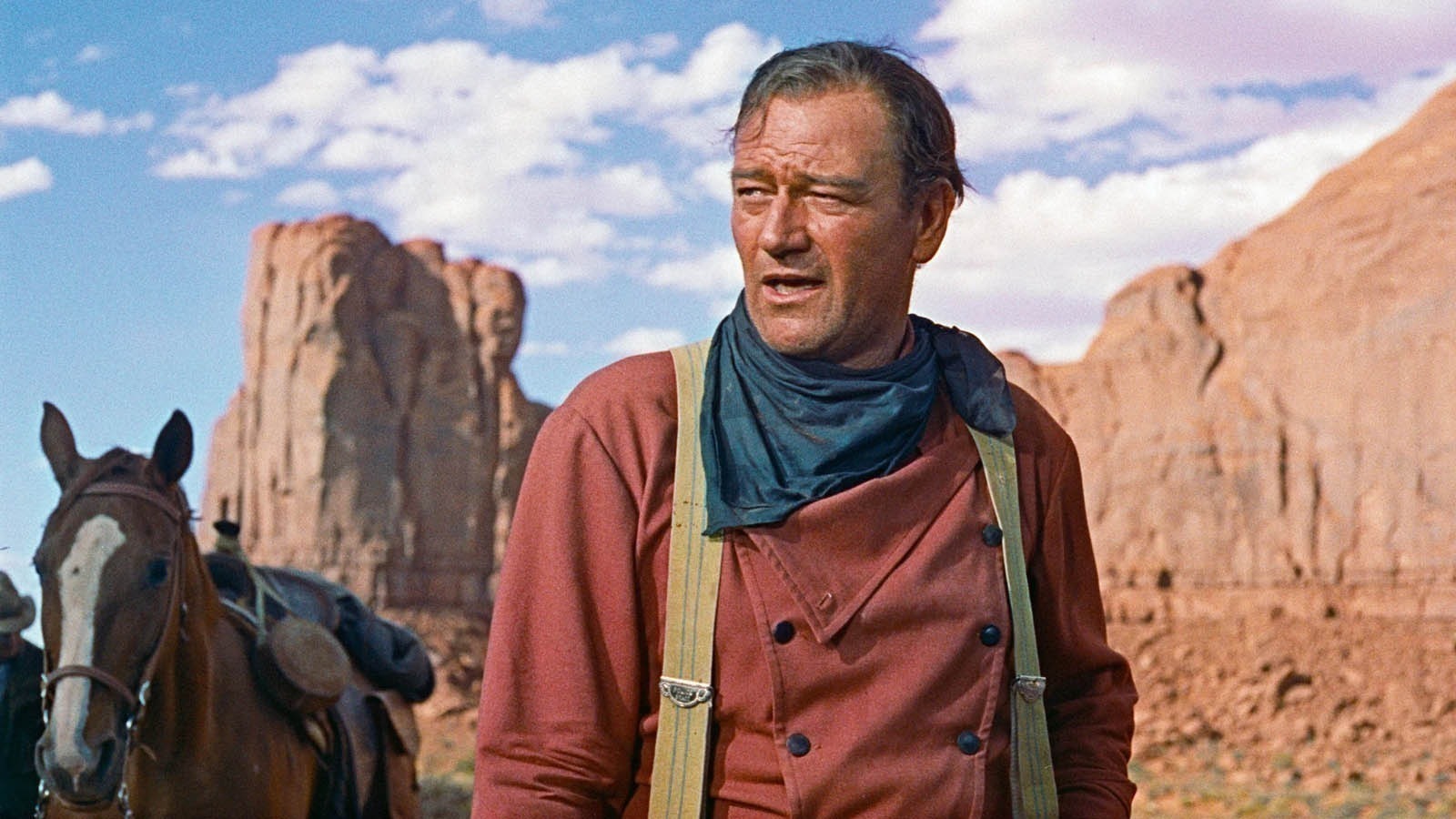
The series will open with John Ford’s The Searchers (1956), widely recognized as one of the greatest westerns ever made. “Aside from directly confronting racist attitudes toward Native Americans,” wrote Jeremy Carr in his 2020 Notebook primer on the genre, “this film, through the personage of Ethan Edwards, played by John Wayne in what is perhaps his finest performance, is a disturbing, multileveled look at barbarism and civilization and the conflicts raging inside one man. The picture’s stunning visuals provide a gorgeous backdrop for Ford’s penetrating delineation of familial responsibility, pathological destruction, and, in the end, the chance for redemption.”
On Friday, Peter Weller will discuss John Sturges’s Gunfight at the O.K. Corral (1957), starring Burt Lancaster as Wyatt Earp and Kirk Douglas as Doc Holliday, and on Saturday, Charlotte Barker, the senior director of film preservation and restoration at Paramount Archives, and Craig Barron, the executive creative director at Magnopus, will present Cecil B. DeMille’s The Ten Commandments (1956), starring Charlton Heston as Moses. The burning bush speaks, the Nile turns to blood, the Red Sea parts, and John Fulton won an Oscar for overseeing the special effects.
Audrey Hepburn and Fred Astaire make an unlikely pair in Stanley Donen’s Funny Face (1957) as a bookshop clerk and the photographer who discovers her, but who’s going to hold that against them as they whisk through a Technicolor Paris? “And the bubble-headed characters are comedy gold,” writes Cath Clarke for Time Out, “from the phony French philosopher sleazing over Hepburn to the fashion mag editor (‘think pink!’) who plucks her out of obscurity—a daffy, dancing version of Miranda Priestly in The Devil Wears Prada.”
More splashy color and song-and-dance numbers are on offer in Robert Lewis’s Anything Goes (1956), featuring Bing Crosby and Donald O’Connor; Norman Panama and Melvin Frank’s The Court Jester (1956), starring Danny Kaye and Glynis Johns; Robert Pirosh’s The Girl Rush (1955), with Rosalind Russell and Fernando Lamas; and Frank Tashlin’s Artists and Models (1955), the great Dean Martin and Jerry Lewis vehicle that also happens to feature Dorothy Malone and Shirley MacLaine.
Martin and Lewis are “typecast to perfection as, respectively, Rick, a womanizing painter on a long losing streak, and Eugene, his idiot-manchild best friend and roommate,” wrote Nathan Rabin for the Dissolve in 2015. “Part of Artists and Models’ genius is that it taps into and exploits [a] pervasive fear that violent entertainment will breed real-life violence, especially where children are concerned—but it sends it up at the same time. That was part of Tashlin’s gift: His satires would feel sour and smug if their creator didn’t have such a genuine appreciation for low culture and cheap kicks.”
VistaVision is intriguingly paired with black-and-white cinematography in two films in the series. Shirley Booth, Anthony Quinn, and Shirley MacLaine star in Daniel Mann’s New Orleans-set drama Hot Spell (1958). “If it doesn’t cause plenty of doting mamas with unruly families to perspire, we’ll miss our guess about this picture,” wrote Bosley Crowther in the New York Times.
Charles Vidor’s The Joker Is Wild (1957) “features one of [Frank] Sinatra’s best dramatic performances since his 1953 career comeback in From Here to Eternity,” wrote Jeff Stafford for TCM in 2005. “It also reveals some obvious parallels between Joe E. Lewis, the gangland connected entertainer he is playing, and rumors of his own possible connection to the Mafia throughout his career.”
Don’t miss out on your Daily briefing! Subscribe to the RSS feed.