Technicolor Weekend 2026
Share
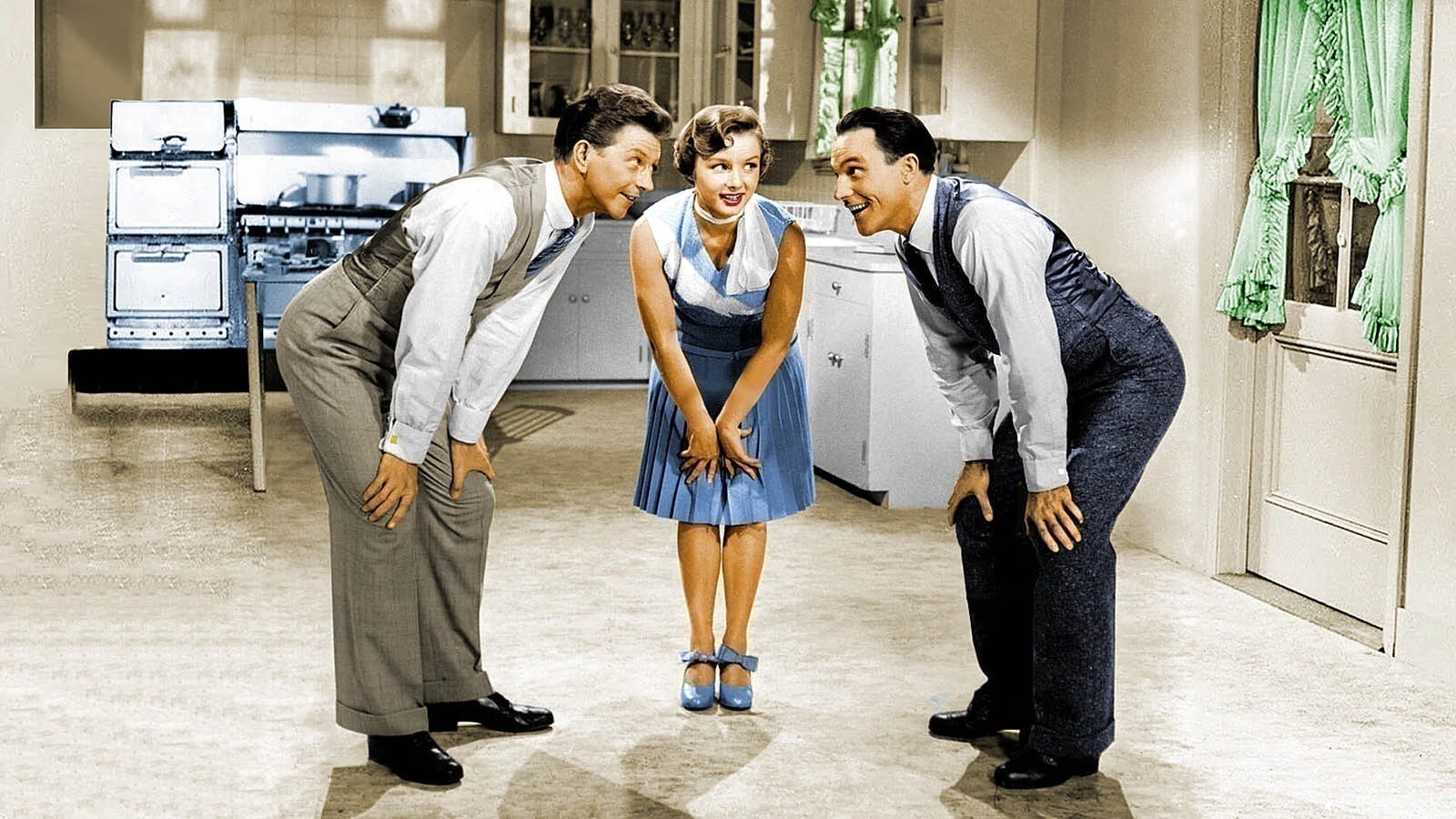
Rivaled perhaps only by a silvery black-and-white nitrate show, a projection from a well-preserved Technicolor print is about as vividly memorable as a theatrical viewing experience can be. Perfected early in the twentieth century, the three-strip filming method was discontinued in 1955, but as a dye-transfer printing process, Technicolor was built to last. The depth and saturation of surviving prints offer, as the Chicago Film Society puts it, a “look” that is “effectively impossible to replicate using 2026’s digital or analog technologies.”
The CFS, founded by projectionists in 2011, will host its fourth annual Technicolor Weekend from Friday through Sunday at the Gene Siskel Film Center, and the opener is an immortal banger. In his Notebook primer on Hollywood musicals, Jeremy Carr isn’t exactly going out on a limb when he suggests that Stanley Donen and Gene Kelly’s Singin’ in the Rain (1952) “may be the greatest of them all . . . Bursting with energy, color, and infectious songs, Singin’ in the Rain was also a casting coup, with nineteen-year-old Debbie Reynolds at her most congenial, circus-trained Donald O’Connor at his most athletic, former ballet student Cyd Charisse at her most tantalizing, and Gene Kelly at his most buoyant.”
Horror of Dracula (1958) follows, and in 2007, the Guardian’s Peter Bradshaw called this first entry in the Hammer Horror series “a fierce melodrama directed by Terence Fisher with Christopher Lee tremendously charismatic as the unspeakable Count and Peter Cushing playing his enemy, Professor Van Helsing. It’s madly over-the-top, with Dracula’s lovely brides resplendent in their naughty nighties and negligées.”
Saturday’s program begins just after lunch with Douglas Sirk’s Meet Me at the Fair (1953), one of the director’s “witty, light-hearted musicals nostalgically evoking small-town America around the turn of the century,” as Geoff Andrew has described it in Time Out. “Sirk’s customary concern with hypocrisy and intolerance is, given the genre and overall tone of the piece, surprisingly to the fore in a subplot about corrupt politicians.”
Fitting for a late Saturday afternoon, William Castle’s The Busy Body (1967), based on Donald Westlake’s novel, stars Sid Caesar as a Chicago crime boss and Robert Ryan as one of his low-level gangsters. The cast features Anne Baxter, Dom DeLuise, and in his film debut, Richard Pryor. CFS programmers note that the tagline nails it: “All this picture has is Sex, Gangsters, Strippers, A Million Stolen Bucks, 3 Stiffs in a Coffin, and some of the other little Happenings in life.”
The tone shifts for the evening with Francis Ford Coppola’s The Godfather Part II (1974), one of the last films printed in Technicolor. “Part II has the same mythic and operatic visual scheme as the first,” wrote Pauline Kael in the New Yorker. “Visually the film is, however, far more complexly beautiful than the first, just as it’s thematically richer, more shadowed, more full.”
A Siamese named D.C. costars with Hayley Mills, Roddy McDowall, and Elsa Lanchester in That Darn Cat! (1965), a live-action Disney comedy directed by Robert Stevenson (Mary Poppins, The Love Bug, Bedknobs and Broomsticks) and screening Sunday afternoon. “Starting with the titular opening upbeat jazzy theme number, sung with verve by famed crooner Bobby Darin over an opening credits montage of a night of D.C’s amusing hijinks,” writes Douglas Buck for Off Screen, That Darn Cat! opens in an “in engaging style” that “it never loses for a second.”
The weekend wraps on Sunday evening with Howard Hawks’s Hatari! (1962), starring John Wayne as the leader of a pack of game catchers in Tanzania. “Hatari! plays not only like a new spin on the director’s pet themes and motifs, but also as a deliberate fusion of reconfigured moments and gestures from his greatest works,” writes Derek Smith at Slant. “One could dismiss the film as a late-career victory lap were it not such a vibrant portrait of another typically Hawksian ragtag team of workers. While the collision of so many deliberately familiar beats and gags could have been hollowly nostalgic, it’s exciting in Hawks’s hands, as he and his collaborators inject new life into them.”
Just before last year’s Technicolor Weekend, Newcity Film’s Ray Pride spoke with the CFS’s Julian Antos. “Inspecting Technicolor prints and preparing them for screenings, one notices the emulsion is a little thicker and more supple,” noted Antos. “When you hold it at an angle to the light, you can physically see that the emulsion is raised like a relief print. When you hold a reel up to the light and look at it from the side, you can see a rainbow of color. Practically speaking, these prints are extraordinary archival records of how these films were exhibited. The color and visual texture of these prints is almost exactly as it was when they were made, and prints of this kind can never be made again. It’s a great joy to be able to bring them to audiences.”
Don’t miss out on your Daily briefing! Subscribe to the RSS feed.