Marcel Carné in Melbourne
Share
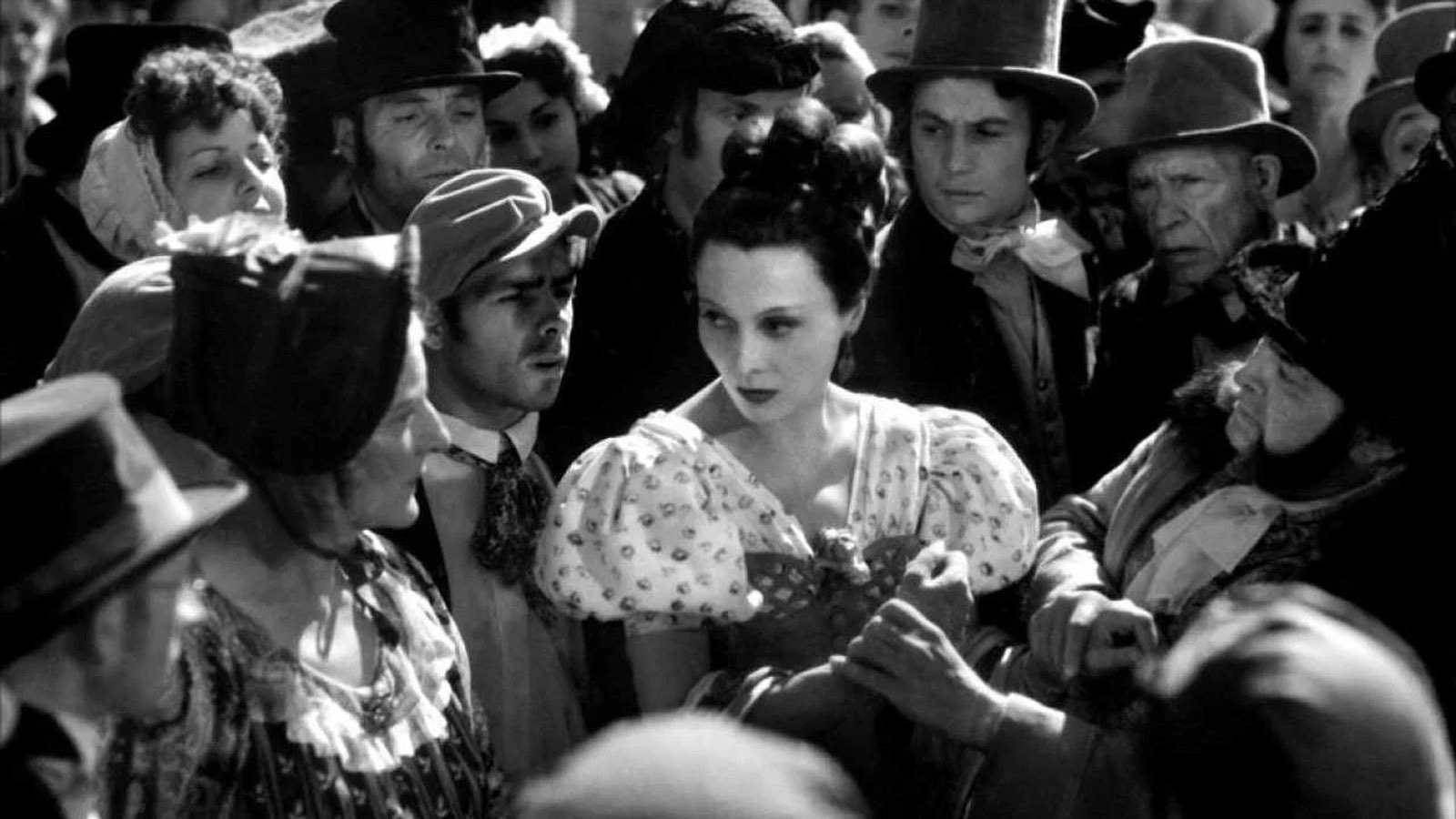
The centerpiece of Illicit Attachments: The Clandestine Cinema of Marcel Carné, a five-film series running on three consecutive Wednesdays at the Melbourne Cinémathèque, is naturally Children of Paradise (1945). “What’s left to be said about Marcel Carné’s towering intimate epic of early nineteenth-century love and the lives of performers, often heralded as the greatest French film of all time?” asked Melissa Anderson in the Village Voice in 2012. “‘I want you to love me the way I love you’ is heard twice in Children of Paradise, a perfect summation of screenwriter Jacques Prévert’s rich detailing of romantic desperation and feelings not reciprocated—or realized too late.”
Four men vie for the affection of Garance, “the elegant, worldly courtesan” played by “the statuesquely tall, dark, and minxish Arletty,” as Gilbert Adair described her when she passed away in 1992. The actor, singer, and model worked with Carné on five features, and in 1945, she served two months of an eighteen-month sentence, having been found guilty of treason for conducting an affair with a German officer during the Second World War. “My heart is French, but my ass is international,” Arletty supposedly remarked, and it would not have been out of character. She bounced back and carried on working in French movies through the 1960s.
Prévert drew on historical figures to create three of Garance’s suitors. The renowned mime Jean-Gaspard Deburau, known in the film as Baptiste, is played by Jean-Louis Barrault. Pierre Brasseur plays the celebrated actor Frédérick Lemaître, and Marcel Herrand plays the dandyish murderer and poet Pierre François Lacenaire, who served as the model for Raskolnikov in Dostoevsky’s Crime and Punishment. The fourth suitor, Count Édouard de Montray (Louis Salou), is a composite character standing in for the seductive power of wealth.
The French and Italian coproduction began shooting in Nice in the summer of 1943, but it had to be halted when the Allies invaded Sicily. The cast and crew hauled off to Paris to resume work in the spring of 1944. “Alexandre Trauner designed the awe-inspiring sets and Joseph Kosma penned the yearning-filled music,” wrote Girish Shambu for Senses of Cinema in 2001, “and yet both men, being Jews, had to perform their work in the strictest of secrecy. The actor Robert Le Vigan (who originally played the part of the informer-thief Jéricho) was sentenced to death for collaboration by the Resistance, and fled the country. His scenes were reshot, this time with Pierre Renoir (brother of the director Jean) playing the part. Just as real-life events threatened to disrupt the project, the film itself used as its central metaphor the tension-charged relationship between theater and life.”
“National pride buoyed the film’s premiere in March 1945, just two months after the Nazis had been driven from the country,” wrote Dudley Andrew in 2012. “Exhibited briefly as two separate films, then consolidated into a single 190-minute experience, it played continuously for decades in Paris.” Andrew also noted that “although he relentlessly skewered him in the years to come, Truffaut ultimately admitted to Carné that he would have traded his entire oeuvre to have made Children of Paradise.”
The film “may be described as one long aching ode to melancholy, but it never descends into mawkish sentimentality,” wrote Peter Cowie in 2002. “It runs the gamut of emotions, from the anguish of infidelity to the rivalry of unrequited lovers, from solitude and rancor to the backstage enthusiasm and commotion of the theater. Carné and Prévert know exactly when to leaven their narrative with witty interludes, and much of the verbal sparring inspired Bergman in films like Smiles of a Summer Night and The Magician.”
Children of Paradise was the seventh film Prévert wrote for Carné, and their collaboration was exemplary of the tendency in French cinema that came to be known as poetic realism. “The term can perhaps best be understood by reference to the popular music of the time,” suggested Lucy Sante in 2004, “specifically the style called chanson réaliste. As made famous by Edith Piaf, Damia, Fréhel, and Lucienne Delyle in particular, this genre evokes a world-weary romanticism with untrained and frequently raspy voices, minor-key melodies, and dark narratives set more often than not in semicriminal milieux. What made it realistic was its scorn for happy endings and bucolic settings; even if it amounted to another sort of fantasy, it was at least a fantasy that was congruent with working-class lives.” Prévert, “who had a way of maintaining an invisible balance between lyricism and snap-brim slang repartee, came closer to owning the poetic-realist franchise than any other figure.”
Jean Gabin stars in Le jour se lève (1939) as a working-class hero who kills for love. In a new Senses of Cinema program note, Shari Kizirian points out that Carné told his biographer, the art historian Edward Baron Turk, that during his military service in Germany, he would slip away from the barracks to watch films. He was especially enthralled by the early expressionist works of Fritz Lang and F. W. Murnau.
Watching Murnau’s The Last Laugh (1924), Carné “observed how shooting through glass and catching reflected light on opalescent surfaces, oilskin raincoats, and wet city streets could create an atmosphere of human dread,” wrote Turk. “Watch Le jour’s Gabin contemplate his fate through the bullet-riddled window,” writes Kizirian, “his face darkened in a kind of reverse mask as smoke billows up from a cigarette. Later, through drawn muslin, François’s shadow swells on the ceiling into a foreboding spectre as he paces. Then, his fate met, the shards of mirror scattered around him on the floor begin to catch the light of the rising sun.”
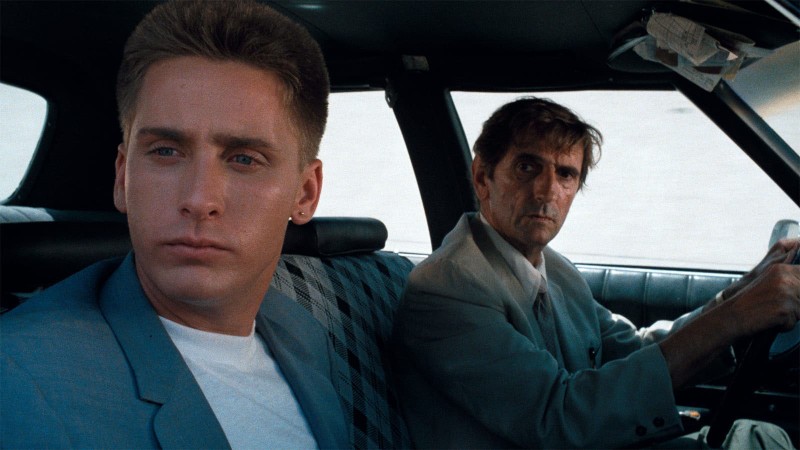
“After the carnage of World War II, the fatalism became cleaner, the worldview a little sharper,” note the Melbourne Cinémathèque programmers. The series opens tomorrow with Les portes de la nuit (1946), starring a young Yves Montand as a Resistance fighter, and Thérèse Raquin (1953), featuring Simone Signoret in a loose adaptation of Émile Zola’s 1867 novel.
Citing Roberto Rossellini’s “1948 exhortation that Carné ‘free himself a little from the straitjacket of the studio,’” Daniel Phuoc Wilson writes for Senses that Thérèse Raquin was “fashioned two years deeper inside that straitjacket, garlanded with the Silver Lion at Venice only months before the Cahiers critics would begin composing the obituary of the cinematic tradition whose afterlife it inhabited. The film occupies a historical disjunction between poetic realism’s waning critical legitimacy—preserving within the postwar cinematic present an ostensibly exhausted sensibility—and its persistent expressive vitality.”
On October 28, the series will wrap with Les tricheurs (1958), also known as The Cheaters and Young Sinners and probably most often remembered now for featuring Jean-Paul Belmondo, barely known at the time, in a minor role. Despite dismissive reviews—see, for example, Luc Moullet’s—Les tricheurs was a box-office hit in France and Switzerland. Reviewing this group portrait of disaffected Parisians in their twenties, Bea Solla finds that “Carné reinvents himself for the Beat generation and doesn’t do half badly.”
Don’t miss out on your Daily briefing! Subscribe to the RSS feed.