Summer in Japan
Share
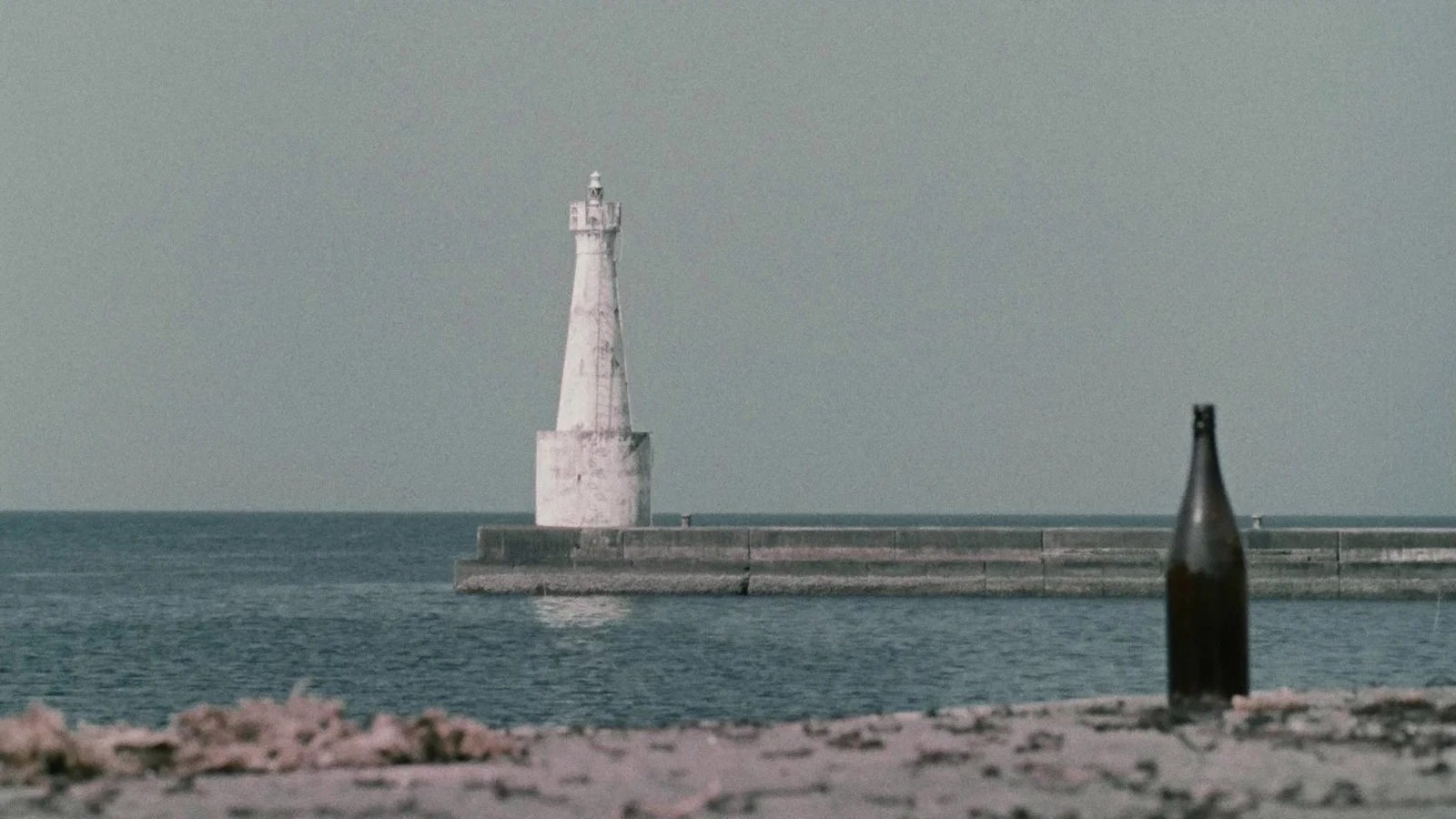
“Tears were warm, and girls were beautiful, like dreams,” says the unnamed narrator of Haruki Murakami’s 1998 novel Dance Dance Dance. “I liked movie theaters, the darkness and intimacy, and I liked the deep, sad summer nights.”
That ineffable quality of the season is captured in Summer in Japan, a series at the Brooklyn Academy of Music programmed by Jesse Trussell. As noted in the series description, “Japanese cinema has always had a special affinity for the floating time, exuberant joy, and quiet melancholy of the summer.” The series will open with Casting Blossoms to the Sky (2012), directed by Nobuhiko Obayashi (House), the only filmmaker with two features selected for the program.
Obayashi once said that, after the Second World War, people in Japan would no longer “think materialistically” but would instead “learn to be compassionate and work together,” notes Hal Young at Senses of Cinema. The first entry in his late War Trilogy, Casting Blossoms to the Sky is an essay film “made with this mindset.” With The Island Closest to Heaven (1984), Obayashi reunited with pop idol Tomoyo Harada after their 1983 hit The Girl Who Leapt Through Time. Here, Harada plays a teenager who travels to the Pacific archipelago of New Caledonia as a sort of rite of passage following the sudden death of her father.
The historical span of the series begins with two undeniable classics. For Roger Ebert, Yasujiro Ozu’s Floating Weeds (1959) was “like a familiar piece of music that I can turn to for reassurance and consolation,” and Karyn Kusama has called Akira Kurosawa’s High and Low (1963) “one of the greatest and most contained crime thrillers ever made.”
Nagisa Oshima’s Japanese Summer: Double Suicide (1967) is “an almost Sartrean study of dead-end youth and the death drive in Japanese culture,” wrote Michael Koresky in 2010. “Featuring a cast of characters that includes some of the most eccentric outlaws in the director’s rebel-heavy oeuvre, it often plays like a damned-to-hell update of Oshima’s breakthrough Cruel Story of Youth.”
Shinji Somai’s PP Rider (1983) “follows summertime abandon to the extreme, as three high-schoolers pursue their bully’s kidnappers across Tokyo and Yokohama,” writes Patrick Preziosi in a 2023 piece for Notebook. “If a spoilt high-school bully is to be kidnapped, it’s best that it happens during the longueurs of summer, heavy on the fireworks and light on the adult supervision.”
When Film at Lincoln Center presented a Yoshimitsu Morita retrospective in 2022, the programmers noted that he had “amassed one of the most fascinatingly idiosyncratic and prolific bodies of work in modern Japanese cinema.” Starring pop idol Hiroko Yakushimaru and Hironobu Nomura, the road movie Main Theme (1984) “takes a grand and summery youthful meander through Japanese beach towns.”
Playing out over the course of a single day in late summer, Shinji Aoyama’s Helpless (1996) focuses, as Hayley Scanlon points out, on “refugees from the Showa era living on borrowed time in Heisei and intensely resentful towards the contemporary society which appears to have no place for them while the glamour of the bubble economy does not appear to have trickled down to their peaceful provincial existence.”
In Takeshi Kitano’s Kikujiro (1999), a boy (Yusuke Sekiguchi) goes searching for his estranged mother accompanied by a former yakuza (Kitano). In his review for the Los Angeles Times, Kevin Thomas wrote that “the result is a heart-tugger made totally irresistible because of the combination of Kitano’s wry, sly sense of humor and his rigorous detachment.”
Teens swoon for a pop star in Shunji Iwai’s All About Lily Chou-Chou (2001). In the Village Voice, Michael Atkinson noted that “the camera succumbs to swooping perspectives, hyper-green grasslands, dust devils, desolate consumer aisles, and spasms of home-video horror.” All About Lily Chou-Chou is “itself an overripe pop song, mourning the despoiling tragedies of pre-adulthood and the infuriating inadequacy of nostalgia.”
The single animated feature in the series, Mamoru Hosoda’s Summer Wars (2009), “flits between a fraught, soap-opera-ish saga about a family reunion near the city of Ueda and the metaverse of Oz,” writes Phil Hoad in the Guardian. “It isn’t as sophisticated perhaps in its understanding of the online/real-world interface as his 2021 film Belle, but the multilayered storytelling still shows plenty of panache, especially on the visual front.”
Marika Ito, yet another pop idol in the series, stars in Soushi Matsumoto’s It’s a Summer Film! (2021) as a teen making a movie, the sort of swordplay epic she’s loved all of her life. “In addition to being a sci-fi film and a loving homage to samurai cinema, It’s a Summer Film! is at heart a fairly standard teen comedy,” notes Selina Lee at In Review Online. Its “time-travel plotline may be a little muddled, but it doesn’t bog down its characters’ aw-shucks earnestness and cinema-loving charm.”
Don’t miss out on your Daily briefing! Subscribe to the RSS feed.