Intimate Epics: The Films of Patrick Wang
Share
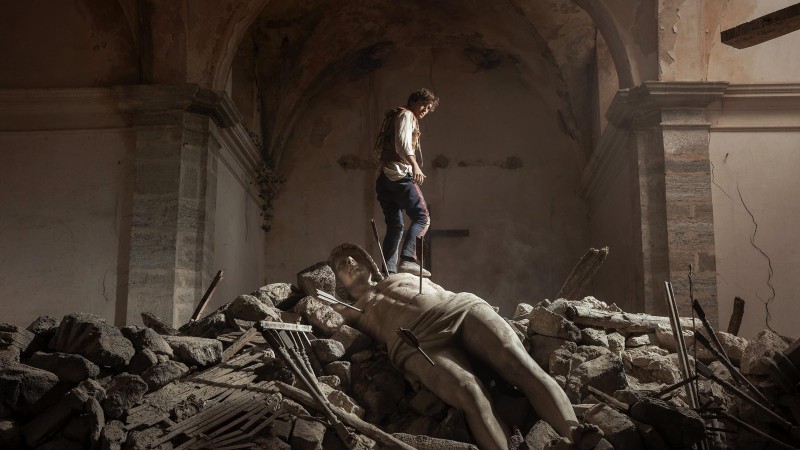
Patrick Wang’s A. Rimbaud, a one-man, three-hour biopic starring Blake Draper as the nineteenth-century French poet, has been gradually building a dedicated audience and selling out screenings since its premiere at the Roxy Cinema in New York back in May. A. Rimbaud will screen at the Roxy again on August 30 and on Friday in San Diego as part of the Digital Gym retrospective Intimate Epics: The Films of Patrick Wang.
“Even as Rimbaud’s life story unfolds in a straightforward chronological manner, Wang uses visual and aural elements to evoke the hallucinatory quality of his writing,” notes Kenji Fujishima at Book and Film. A. Rimbaud is “a biopic made in the manner of a psychological dreamscape, with Wang’s juxtaposition of linear narrative and surreal style doing more to suggest its subject’s inner life than most biopics’ literal-minded attempts at reductive cause-and-effect connections between biography and art.”
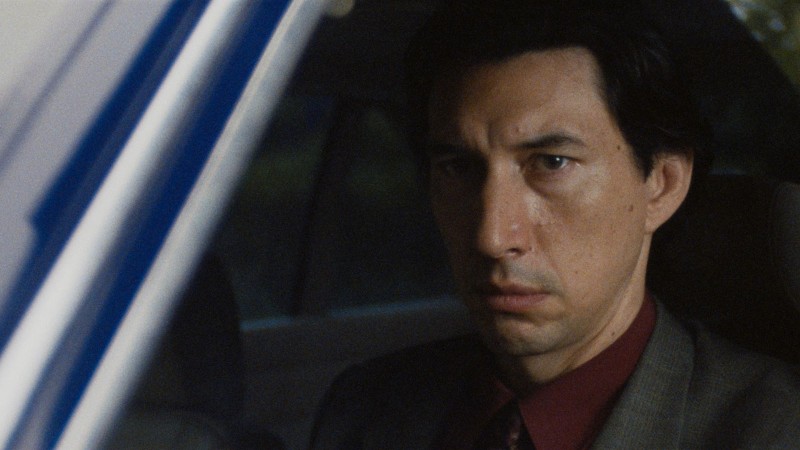
The San Diego series opens on Tuesday with Wang’s first feature, In the Family (2011), a “truly wondrous indie, which the multi-hyphenate writer-director-actor initially distributed himself after multiple festival rejections,” as Keith Uhlich noted in Time Out in 2012. “Every moment counts in this gripping tale of gay Tennessean contractor Joey Williams (Wang), who fights for custody of his nonbiological son, Chip [Sebastian Banes], after the boy’s father, and Joey’s partner, Cody [Trevor St. John], is killed in a car crash . . . Imagine a raw-nerved Cassavetes feature shot with rigorous Zen contemplativeness and you’ll have a sense of In the Family’s mesmeric style.”
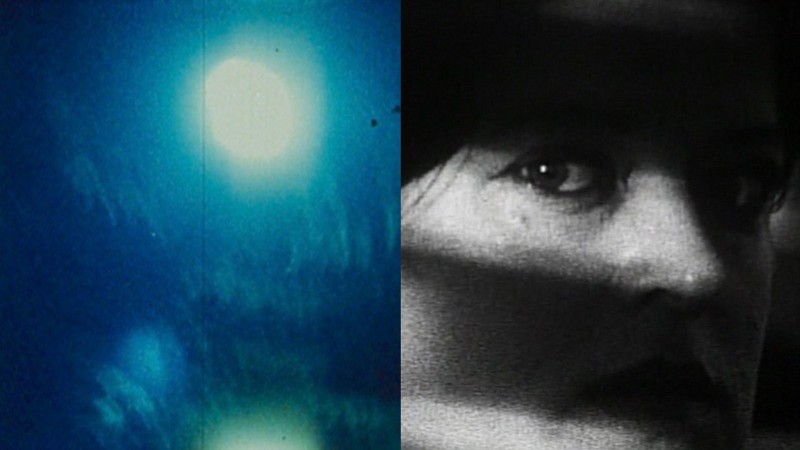
The New Yorker’s Justin Chang was still at Variety when Wang’s follow-up, The Grief of Others, premiered at SXSW in 2015. Chang called it “a delicate, elliptically structured portrait of six wounded souls coping with the aftermath of tragedy. More experimental in form and wobbly in execution than its predecessor, this searching adaptation of Leah Hager Cohen’s 2011 novel nonetheless evokes a family’s fragile inner life in ineffably moving fashion, capturing how distant and isolated parents and children can feel from one another even when living under the same roof.”
“Though we are watching what often appear to be unnervingly even-keeled characters,” wrote Bilge Ebiri in the New York Times, “sometimes we’ll glimpse a painful flashback, or hear a person’s true thoughts. In one marvelous instance, the family gathers in their kitchen, and then, as they leave the room, a part of the frame opens up to reveal the scene’s touching conclusion elsewhere. As with the director’s other works, there’s a self-conscious, constructed quality to The Grief of Others, but it rarely veers into the precious or the phony.”
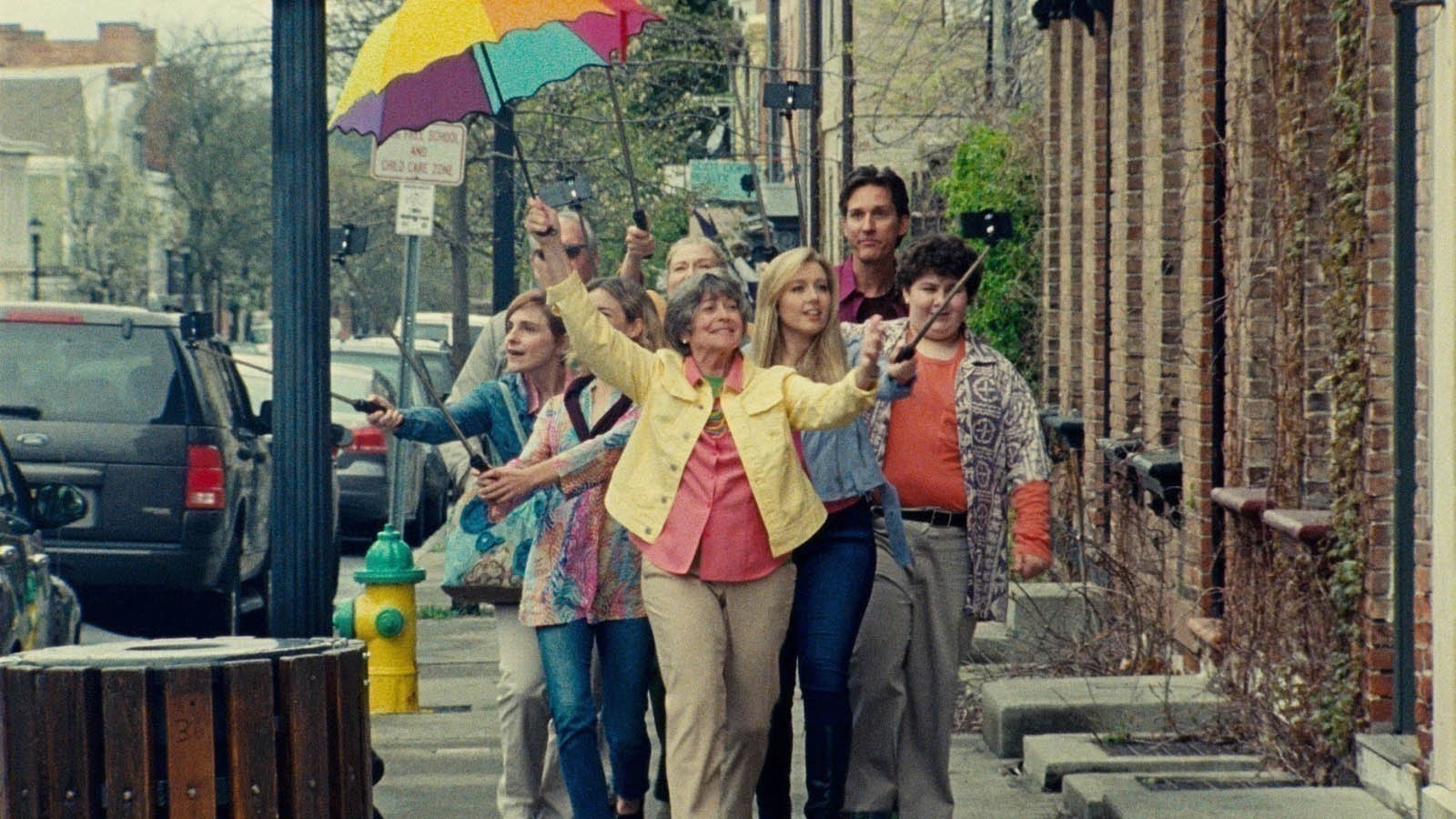
On August 24, Digital Gym will present both parts of A Bread Factory (2018), a portrait of a community anchored by their shared experiences at an arts space in a small New England town. Featuring a cast of over a hundred and a couple of song and dance numbers, the story is driven by the efforts of Dorothea (Tyne Daly) and Greta (Elisabeth Henry) to retain public funding for the center.
There will be an intermission between each two-hour part of A Bread Factory in San Diego, but as Matt Zoller Seitz has noted at RogerEbert.com, “you can watch them independently and come away feeling that you’ve seen a complete work. Any way you watch it, A Bread Factory is a wildly ambitious yet self-effacing epic about a place and its people, written, directed, and acted in the spirit of Robert Altman (Nashville), Richard Linklater (Bernie), and Edward Yang (Yi Yi)—muralists who paint on wide canvases, yet still treat each character as individuals worthy of their own portraits.”
Don’t miss out on your Daily briefing! Subscribe to the RSS feed.