Restorations in Melbourne
Share
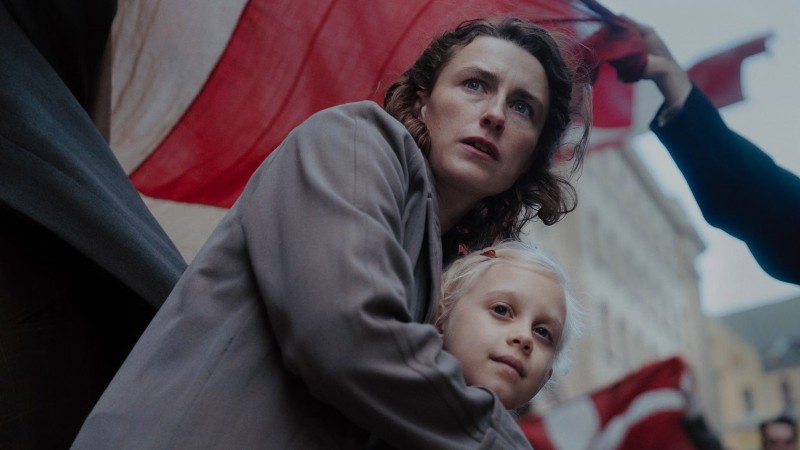
Opening tomorrow with Eleanor Wilson and Alex Huston Fischer’s Wicker—a comedic fable starring Olivia Colman and Alexander Skarsgård that Richard Lawson, writing for the Hollywood Reporter, calls “a warming, sometimes poignant pleasure”—the seventy-fourth Melbourne International Film Festival will present more than three hundred films before wrapping on August 23. Many of these will be highlights from this year’s festival circuit making their Australian premieres, and of course, many more will be Australian films seeing their world premieres.
Special events include a twenty-fifth-anniversary screening of Hedwig and the Angry Inch with live commentary by director and star John Cameron Mitchell and Michael “CAVS” Cavanagh of King Gizzard & the Lizard Wizard performing his new score for Christopher Nolan’s Memento (2000). The Critical Condition strand offers three films focusing on performance: Michael Powell and Emeric Pressburger’s Gone to Earth (1950), Shirley Clarke’s Portrait of Jason (1967), and Claude Chabrol’s The Unfaithful Wife (1969). And there are strands focusing on the work of Lisandro Alonso,Ulrike Ottinger, and Kim Novak.
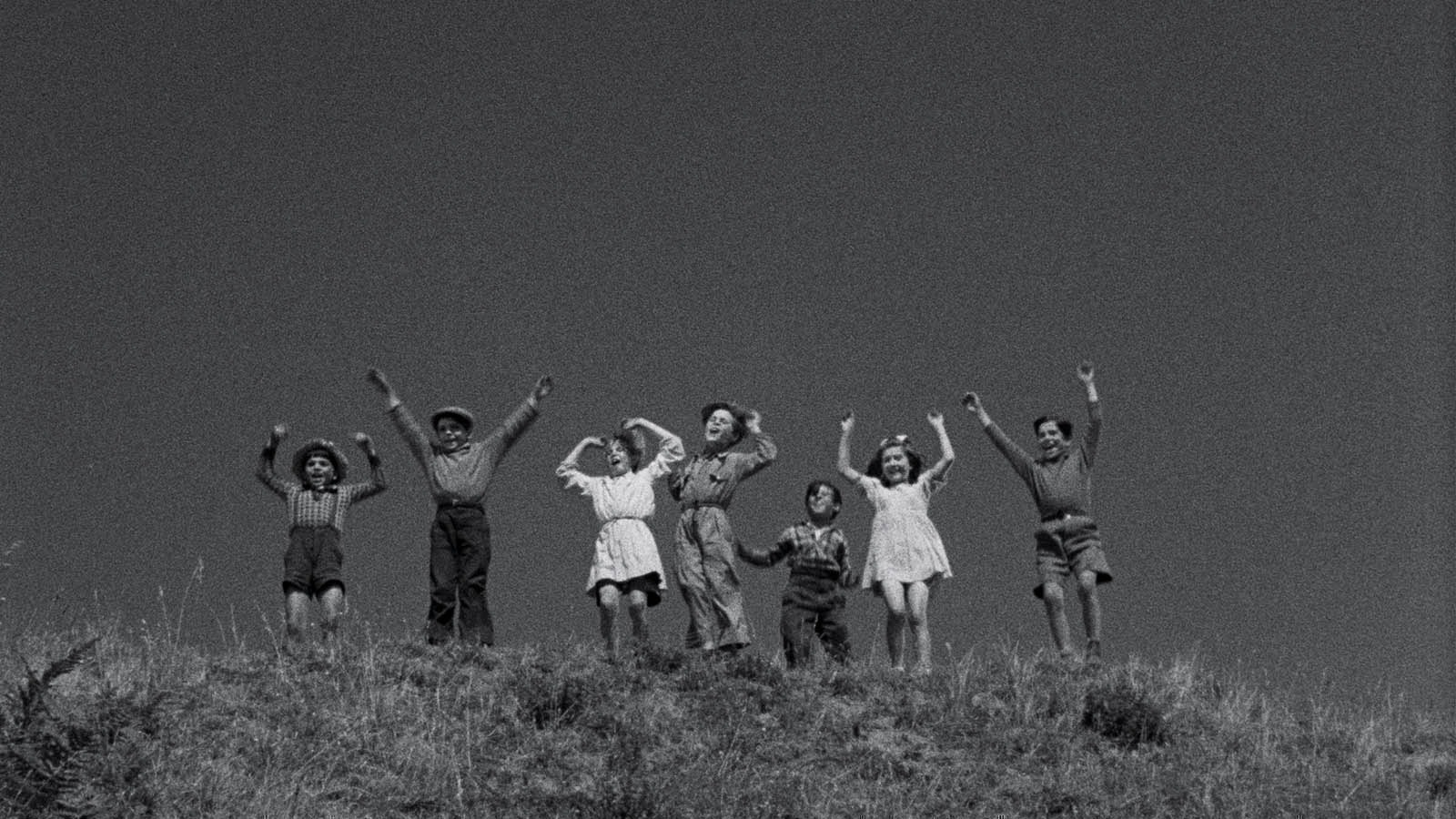
MIFF’s Restorations, a program of nine films, ranges chronologically from Manoel de Oliveira’s Aniki-Bóbó (1942) to Mary Harron’s I Shot Andy Warhol (1996). Oliveira’s first feature centers on a rivalry between two boys over the only girl in their gang. What Serge Daney found “striking” about Aniki-Bóbó is “how clearly it takes sides. I see two motifs: 1. The parents are deliberately eliminated from society. Adults only appear on their own, as exceptions. 2. The children experience adult dramas and also act like them.”
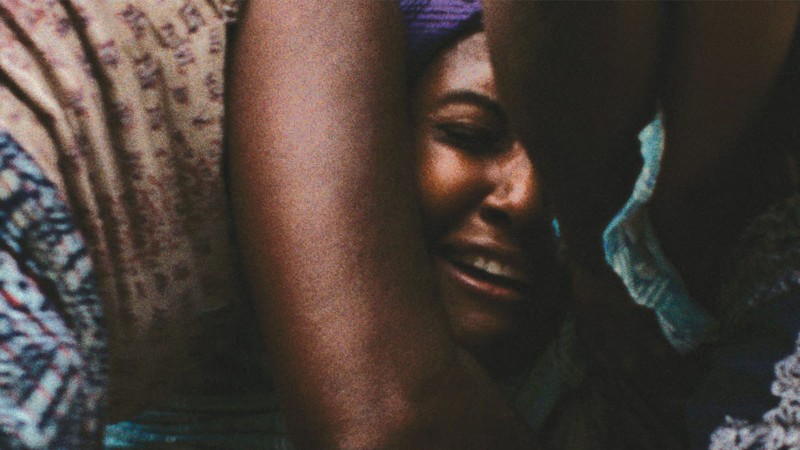
Geographically, the selection circles the globe. Lino Brocka’s Weighed but Found Wanting (1974) “chronicles the awakening conscience of a privileged teenager, Junior (Christopher de León), to hypocrisy and social injustice,” wrote Lawrence Garcia in a 2017 issue of Cinema Scope. The film is “a veritable catalogue of the director’s protean talents: the psychological terror of a forced abortion; the bawdy degradation of a wake and the bitter farce of a burial; and the thrilling, climactic reckoning, in which the entire town converges on an act of desperation.”
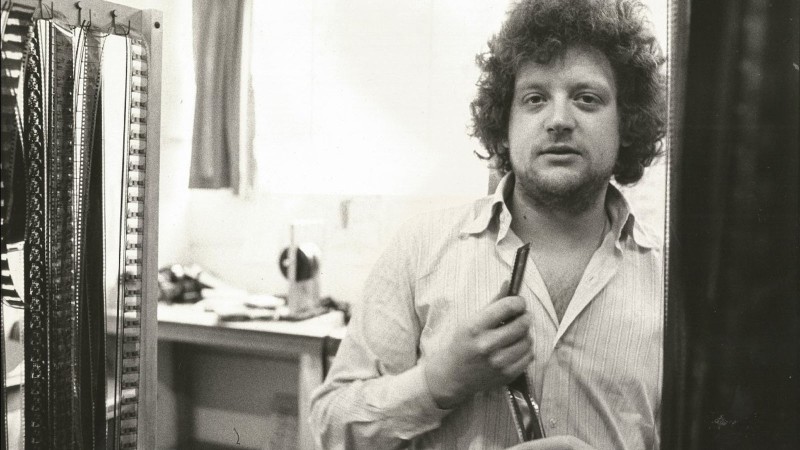
Mary Stephen, who would go on to work as an editor with Eric Rohmer, was twenty-four when she directed her first feature, Shades of Silk (1978). Set in 1935 Shanghai, the story tracks the uneasy friendship between two women. When Michelle Carey interviewed Stephen for Metrograph’s Journal, she noted that Shades of Silk “reveals already a masterful filmmaking sensibility at work. Its long shots, striking sense of space, and hypnotic musical score anticipates the work of the Taiwanese New Wave, with a distinct feminist and postcolonial gaze.”
Henry Jaglom’s Can She Bake a Cherry Pie? (1983) stars Karen Black as Zee, who’s mourning the end of her marriage when Eli, played by Jaglom’s brother Michael Emil, strikes up a conversation. “And so begins, with a barbed-tongued tête-à-tête, this imperfect love story: not so much a match made in heaven as a match made in mutual wallowing,” writes KYK in the Journal. “Yet it’s an entertaining ride to spend time with them, perhaps because through all the ‘ugliness’ and ‘undesirableness,’ there is a sex appeal to the film that seemingly accidentally, though likely intentionally, slips through.”
Alone in her small apartment in Sydney, Liz (Jenny Vuletic) reflects on a recent breakup in Gillian Leahy’s My Life Without Steve (1986), “a story of solitude, pain and obsession, of raw emotions elegantly presented and endlessly interrogated,” as Philippa Hawker writes in Senses of Cinema. The film is “essentially an interior vision of some kind: a first-person narrative, an anguished, irritable, unsparing, self-centering contemplation.”
In Idrissa Ouedraogo’s Tilaï (1990), a man returns home after two years away and discovers that his fiancée has married his father. Tilaï is “something of a modern, West African version of a Greek tragedy, made in villages in Burkina Faso but set in an indeterminate, mythic past that offers some of the trappings of the modern world (notably, a rifle) but not others (such as electricity and automobiles) while also hinting at a clash in mores provoked by the impingement of modernity,” wrote the New Yorker’s Richard Brody in 2018.
As early as 2003, Tasha Robinson, writing for Science Fiction Weekly, could call Yoshiaki Kawajiri’s Ninja Scroll (1993) “a classic, a common entry-level anime film.” It’s “an old tale, and a clear enough one: Boy meets girl, boy and girl fall in love, boy and girl nearly die several times over while slaying evil creatures with power over wasps, snakes, shadows, explosives, human minds, electricity and the dead . . . The whole film drips with lurid avidity. Nudity is almost as common as arterial sprays, and both are depicted with Kawajiri’s typical bravura.”
Shot in New York with a Fisher-Price Pixelvision camcorder, Michael Almereyda’s Nadja (1994) “transposes the premise of the 1936 chestnut Dracula’s Daughter to ungentrified, if elegantly black-and-white, NoHo,” writes J. Hoberman in the New York Times. “Alleyways provide an instant netherworld and the illuminated windows of the old Tower Records on Broadway and East 4th Street are a notable effect. ‘The dead travel fast,’ Van Helsing [Peter Fonda] warns, and indeed, the woods of Transylvania feel but a subway ride away.”
I Shot Andy Warhol “was, for me, probably one of my favorite experiences,” Lili Taylor, who stars as Valeria Solanas, tells Christopher Aaron Blackmon in Interview. “I had come across the SCUM Manifesto in the early ’90s. I had found it in the City Lights Bookstore when I was doing Dogfight of all things.” Taylor bought it, read it, “and I was like, ‘This woman is so out there. I love this’ . . . What’s really wild is Mary [Harron], when she saw Dogfight, thought of me for I Shot Andy Warhol, which is also wild that she saw Valerie in that Rose character. I didn’t see it.”
Don’t miss out on your Daily briefing! Subscribe to the RSS feed.