Il Cinema Ritrovato at Forty
Share
It takes a while to gather some perspective on a program of around five hundred films. While some—such as Geoff Gardner, chair of the Organizing Committee of Cinema Reborn—managed to keep daily diaries during the fortieth edition of Il Cinema Ritrovato (June 20 through 28), Bologna’s festival of restorations and rediscoveries, most have taken a few days to gather their thoughts.
Ehsan Khoshbakht, one of the festival’s four directors, notes that 145,000 people attended this year, and he’s asked 170 of them to name a favorite film and a major discovery from the bounteous 2026 lineup. Gian Luca Farinelli, the director of the Cineteca di Bologna and a cofounder of the festival, tells Angela Giuffrida in the Guardian that Il Cinema Ritrovato “has grown while maintaining its principles—that is, to go in-depth and show films but also the [complexity], richness, and contradictions of the history of cinema.”
This year’s XL edition opened with the San Francisco Film Preserve’s restoration of F. W. Murnau’s Sunrise: A Song of Two Humans (1927), which is, of course, widely regarded as one of the greatest films of the silent era. Variety’s Nick Vivarelli reports that the screening—accompanied by a new score performed live by the Teatro Comunale di Bologna orchestra—drew a crowd of around seven thousand to Bologna’s Piazza Maggiore.
“All week there were three questions on everyone’s lips,” writes Pamela Hutchinson. “Did you see Sunrise? Wasn’t it wonderful? Did you get a fan? SFFP has strong merch game.”
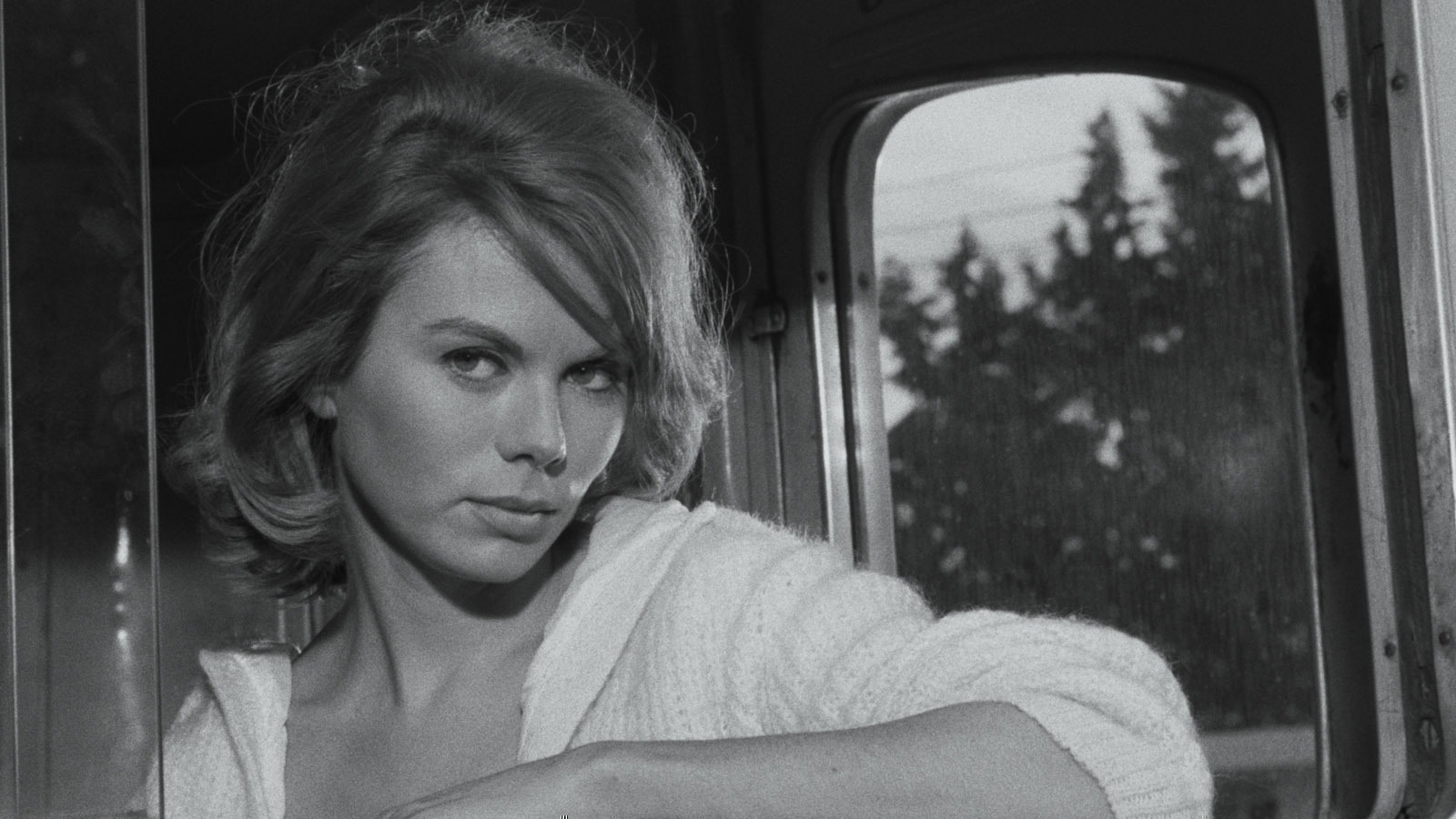
Hutchinson also caught “the comprehensive, beautiful Agnès Varda exhibition in the Modernissimo gallery (her 1980s classic Vagabond played the Piazza Maggiore), and one of my favorite films in the festival was directed by one of her New Wave peers: Paula Delsol. La dérive (1964) offers a small-town Cléo (a feline Jacqueline Vandal) drifting from lover to lover, a fugitive femme on a quest for independence and love—in that order.” The film is “so strikingly modern, so gorgeous, that I was delighted to see it in a new restoration from the Cinémathèque française. La dérive was garlanded at Cannes but had since fallen out of circulation. I highly recommend you catch it when you can.”
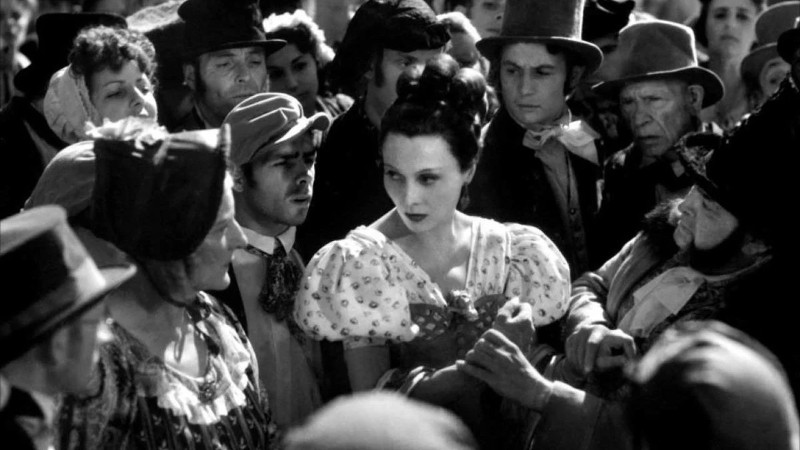
The “unquestionable highlight” of the festival for Forrest Cardamenis was Léonce Perret’s L’enfant de Paris (1913), a two-hour silent feature that tells the story of an orphaned girl who escapes her boarding school only to be kidnapped by an an alcoholic cobbler whose young son is determined to help her escape. Perret’s “naivety vis-à-vis Griffith and cinematic technique is part of what makes the emotional core of this film work,” writes Cardamenis. “And work it does: the climax is certainly the most moving that I’ve seen in early (pre-Intolerance, say) cinema, and among the most moving in all of silent cinema. Its structure may be dramatically unusual, but it is emotionally intuitive.”
Further observations on the 2026 edition come from Notebook contributors in the form of seven-word reviews; Alex Petrescu, who focuses on the Barbara Stanwyck retrospective at In Review Online; and Screen Slate, which has posted dispatches from Joshua Bogatin, Bernardo Rondeau, and Stephen Fisk. “One of the most wonderful things about watching a program dedicated to a year like 1906 is discovering how little movies actually needed to be ossified into the standards of classical film grammar in order to achieve a beautiful expressive potential,” writes Bogatin.
“In previous editions,” Bogatin continues, “the presenters at the festival have described early cinema as a pre-bourgeois cinema, a form focused on vulgar visual pleasures over narrative and the moralism that comes with it. What one often finds in these movies is the pure joy of seeing; when watching them, I often feel a will to naïveté, a desire to put aside all that I’ve come to expect from films in order to sit in simple jaw-dropping wonder.”
“In the festival’s Recovered & Restored section, individual titles hang suspended, set apart from thematic groupings or retrospectives,” writes Rondeau. “One of the festival’s selections with perhaps the most harrowing preservation backstory, Yuri Ilyenko’s A Spring for the Thirsty (1965) was scanned during wartime in Kyiv with equipment provided by Poland's FixaFilm, running on generators as power cuts plagued the capital.” Ilyenko is probably best known internationally for shooting Sergei Parajanov’s Shadows of Forgotten Ancestors (1965), and his directorial debut is “a total masterpiece—one which, due to so-called ‘ideological deviations,’ was banned and unavailable to audiences until the dawn of Perestroika in the mid-1980s—now preserved to entrance audiences anew.”
“Mitchell Leisen remains, seemingly forever, one of classic Hollywood’s best kept secrets, an underdog auteur who gets respectable retrospectives in certain cinephilic cities once a decade and, in the interim, devotion from a small group of slightly overzealous fans (myself among them),” writes Fisk. Cradle Song (1933), “usually billed as Leisen’s ‘directorial debut,’ has never had any official (or even bootleg) release at all. As it is otherwise completely unavailable and has been very rarely screened in the decades since Leisen’s death in 1972, it was, on its own, reason enough for at least a handful of we devotees to justify a trip to Bologna.”
Don’t miss out on your Daily briefing! Subscribe to the RSS feed.