Being There
Share
The Criterion Mobile Closet is back in Los Angeles this weekend as we take part in Music from the Films of Wes Anderson, a series of three concerts at the Hollywood Bowl, all of them hosted by Bill Murray. Among the many artists slated to perform are Devo, Jackson Browne, Karen O, and Jeff Goldblum. “I was surprised how many things we did have to leave out,” Anderson tells Mark Olsen in the Los Angeles Times. “We could do a whole other round of this, but let’s see how it goes on this first one.”
Cinephiles around the world, in the meantime, are mourning the loss of critic, programmer, and translator Tony Rayns, who has passed away at the age of seventy-seven. “Widely regarded as one of the most influential voices in film culture, Rayns helped introduce generations of Western audiences to filmmakers from China, Hong Kong, Taiwan, the Philippines, South Korea, and Japan,” writes Sam Wigley for the BFI, which is passing along remembrances from Bong Joon Ho, Wong Kar Wai, Apichatpong Weerasethakul, and John Woo. “Dear Tony, I didn’t get the chance to say ‘thank you,’” writes Jia Zhang-Ke in a tribute republished in Variety.
Over the years, Rayns wrote for us on the work of Yasujiro Ozu, Nagisa Oshima, Seijun Suzuki, and others. Sight and Sound has gathered his many contributions to the magazine, which include essays on Edward Yang, Lino Brocka, Zhang Yimou, and Park Chan-wook. “For me, as for many others, he was not only a hugely valued colleague but a friend and, to some degree, something of a mentor,” writes former BFI programmer Geoff Andrew. Rayns’s dedication to cinema “knew no geographical or aesthetic boundaries,” writes programmer Ehsan Khoshbakht. “Alongside his unrivaled knowledge of Asian cinema, he was an enthusiastic admirer of Roger Corman and often spoke of his wish to curate a John Farrow retrospective for Il Cinema Ritrovato.”
This week’s highlights:
- “Are you asking me if the whole concept of trying to film a version of your own reality is no longer a valid pursuit?” Ross McElwee raises this question toward the end of Matt Zoller Seitz’s moving conversation with him for RogerEbert.com. The occasion is today’s launch of a theatrical run for Remake, the first film in fourteen years from McElwee, the documentarian who has been tracking his own reality in films ranging from Sherman’s March (1986) through Bright Leaves (2004) to Photographic Memory (2012). As Alissa Wilkinson puts it in the New York Times, Remake, which focuses on McElwee’s son Adrian, who died of a drug overdose in 2016, is “possibly his masterpiece.” Touring with the film has not been easy, he tells Seitz: “I think what I’m bringing to people is a sense of solace. I can never make the pain go away, any more than they can make it go away from their own lives. But the film gives them the sense that they’re not alone, that there are other people who’ve been through this, too. All of that, I think, is worth doing.”
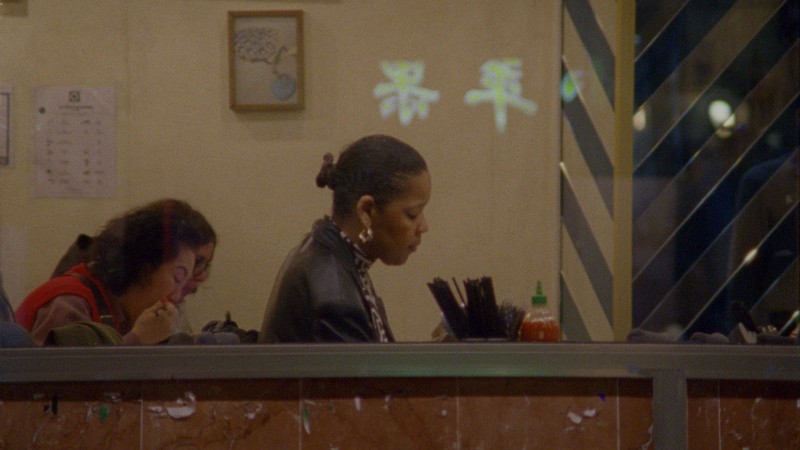
- Set at the turn of the millennium, Tsai Ming-liang’s The Hole (1998) stars Lee Kang-sheng and Yang Kuei-mei as strangers defying government orders to evacuate Taipei during a virus outbreak. For J. Hoberman, writing in the NYT, The Hole brings to mind “a pared-down combination of Samuel Beckett’s Happy Days and one of Pina Bausch’s splashy water dances.” As a newly struck, Tsai-approved 35 mm print opens in New York before heading out to theaters across North America, the director tells Nick Newman at the Film Stage that much of the film is rooted in his own experience. He once lived in a public housing unit where there actually was a hole in his floor through which he could peer down into his neighbor’s apartment below. Tsai also tells Newman that he’s developing a “semi-narrative” project that should “reunite all the actors I have worked with in the past.”
- For e-flux, Vadim Rizov talks with Douglas Fogle—who has curated Bruce Conner / Recording Angel, an exhibition which brings together seven of the late artist’s landmark films at the Marciano Art Foundation in Los Angeles and is now on view through July 18—and Michelle Silva, Conner’s assistant and editor. Silva tells Rizov that Conner resisted digitization of his work for years, but once the technology had advanced to the point that it allowed maximum control over the presentation, “He called me up one day and said, ‘I declare myself a video maker.’” “There’s a purist argument to be made against the decoupling of the work from its medium-specific origins,” writes Rizov, “and it’s an argument I would theoretically be the first to make; the whole premise of the show initially filled me with unease. I entered as a Conner agnostic and exited, if not a convert, at least as an evangelist for this show.”
- “Centuries from now, historians of our era will study footage of Vincent Cassel breakdancing through the Villa Borghese and wonder what was going on with us,” writes Jackson Arn in a terrifically entertaining piece for Art in America on novels and movies centering on art heists. Besides Steven Soderbergh’s Ocean’s Twelve (2004), other titles under consideration here include Terence Young’s Dr. No (1962), William Wyler’s How to Steal a Million (1966), John Woo’s Once a Thief (1991), Vasilis Katsoupis’s Inside (2023), and of course, Kelly Reichardt’s The Mastermind (2025).
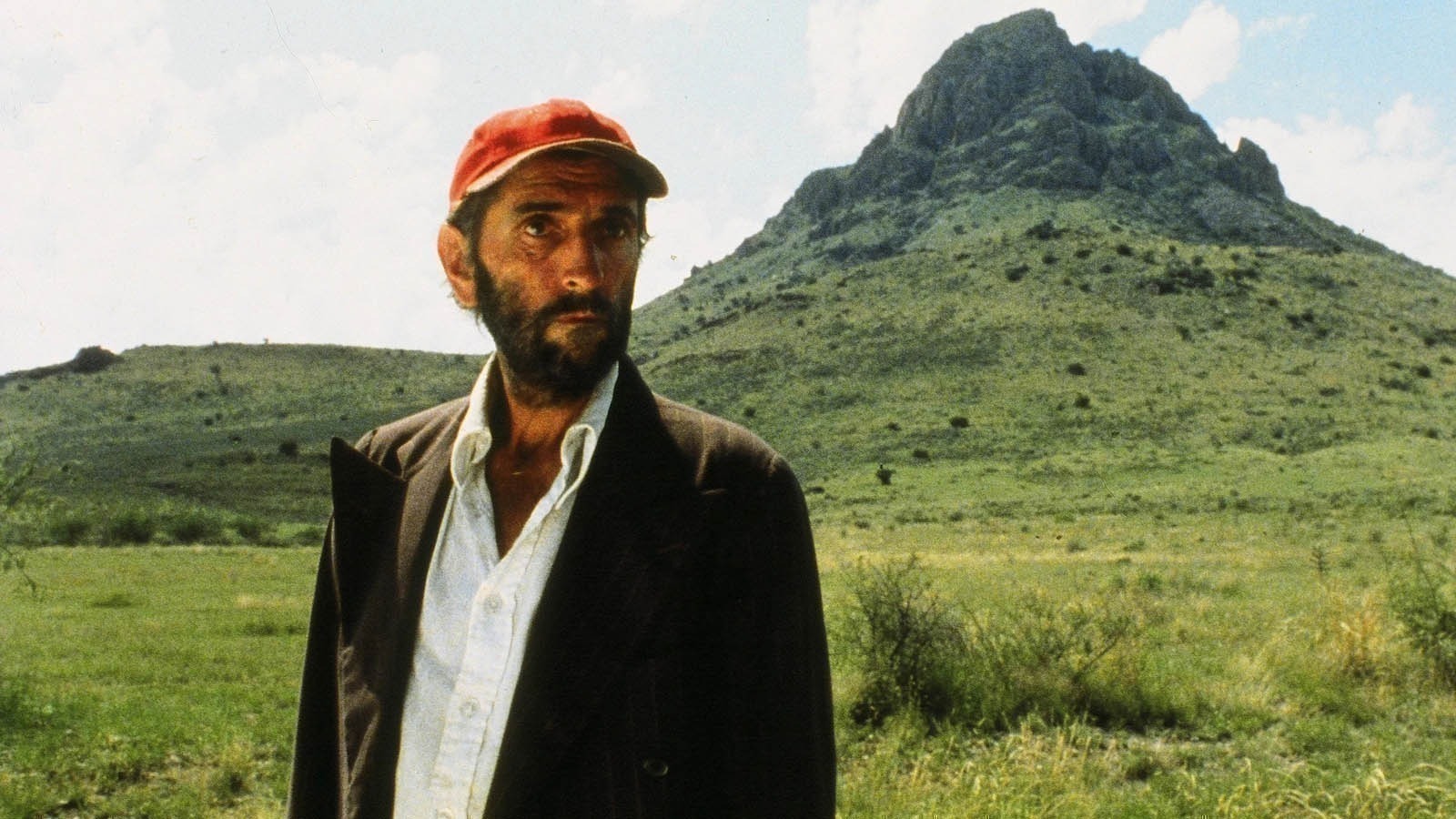
- This coming Tuesday will mark the hundredth anniversary of the birth of Harry Dean Stanton. We’re celebrating with a robust program on the Criterion Channel, and from Sunday through July 19, the Brattle Theatre in Cambridge, Massachusetts, will present The Stanton Rule: A Harry Dean Stanton Centennial. “With his concave, craggy cheeks and haunted eyes, Harry Dean Stanton was nobody’s idea of a movie star,” writes Sean Burns for WBUR. “He looked like hard living personified. Just watching some of his films makes the theater smell like cigarettes. Whether called upon to act kindly, terrifying, or just plain exhausted, Stanton was always effortlessly authentic in ways that made other actors seem phony. ‘He’s there,’ said his friend and frequent collaborator David Lynch in the 2012 documentary Harry Dean Stanton: Partly Fiction, adding, ‘Whatever “there” needs to be, he’s there.’”
Don’t miss out on your Daily briefing! Subscribe to the RSS feed.